
Let’s be honest, the entryway is the one spot in your home that everyone sees first, and yet it’s also the place where shoes pile up, bags get dumped, and random mail goes to die. If your entryway currently looks like a lost-and-found bin, you’re not alone. Most homes have this exact problem, especially when you’re working with a small or oddly shaped space near the front door.
Here’s the thing: you don’t need to gut your entryway and spend $2,000 on a custom mudroom to make it look put-together. I’ve personally transformed an embarrassingly chaotic front hallway into something guests actually compliment and I didn’t spend more than $80 doing it. The secret isn’t a big budget. It’s knowing why certain hacks work and using your space smarter. Let’s get into it.
The Mistakes Most People Make First
Before we get to the good stuff, I want to talk about what almost everyone does wrong. Because if you skip this part, you’ll end up buying things that don’t actually solve the problem.
Buying Storage Before Figuring Out the Problem
This is the number one mistake. Someone sees a cute wicker basket at HomeGoods, buys it, brings it home, and shoves it in the corner. A week later, it’s overflowing and the entryway looks worse than before. Sound familiar?
The real issue is that most entryway clutter comes from specific habits — shoes getting kicked off at the door, keys getting tossed on any flat surface, bags and backpacks ending up on the floor. Until you identify what your household actually dumps in the entryway, buying storage is just guessing.
Spend one week just observing. What lands near your front door every single day? Write it down. That list tells you exactly what you need to organize.
Overcomplicating the System
People also tend to go too ambitious too fast. They want a full command center with labeled bins, a chalkboard wall, a charging station, and a shoe rack — all in a 4-foot entryway. The more complicated the system, the less likely you (or anyone else in your household) will actually use it.
The best low-cost entryway organization hacks are the ones that require zero effort to maintain. One hook per person. One basket for shoes. One spot for mail. That’s it.
What Actually Works: The Core Principles
Vertical Space Is Your Best Friend
Most people stare at the floor when thinking about entryway storage. But if your entryway is small, the floor is precious real estate. Look up. That wall space above your head? It’s completely free.
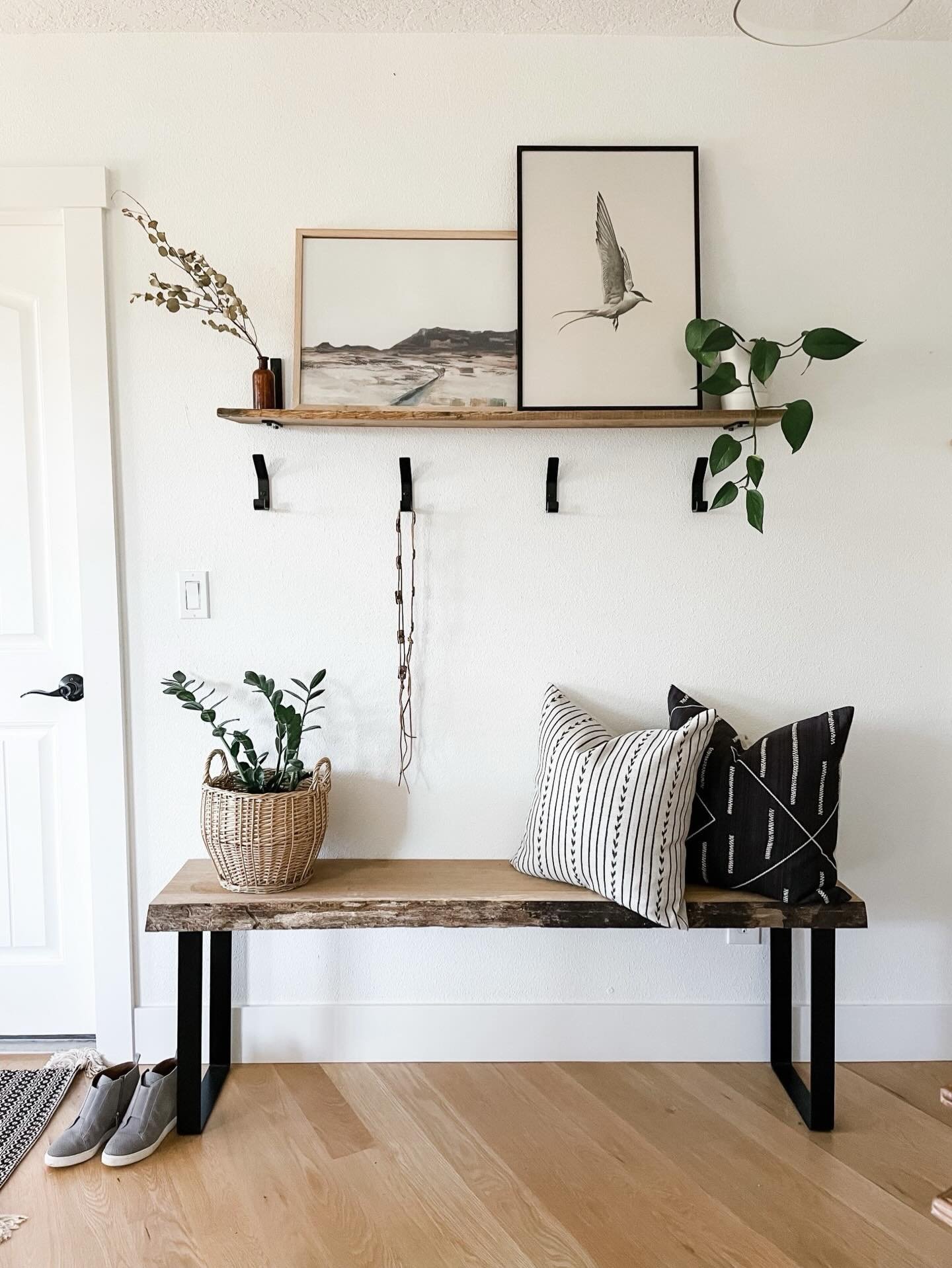
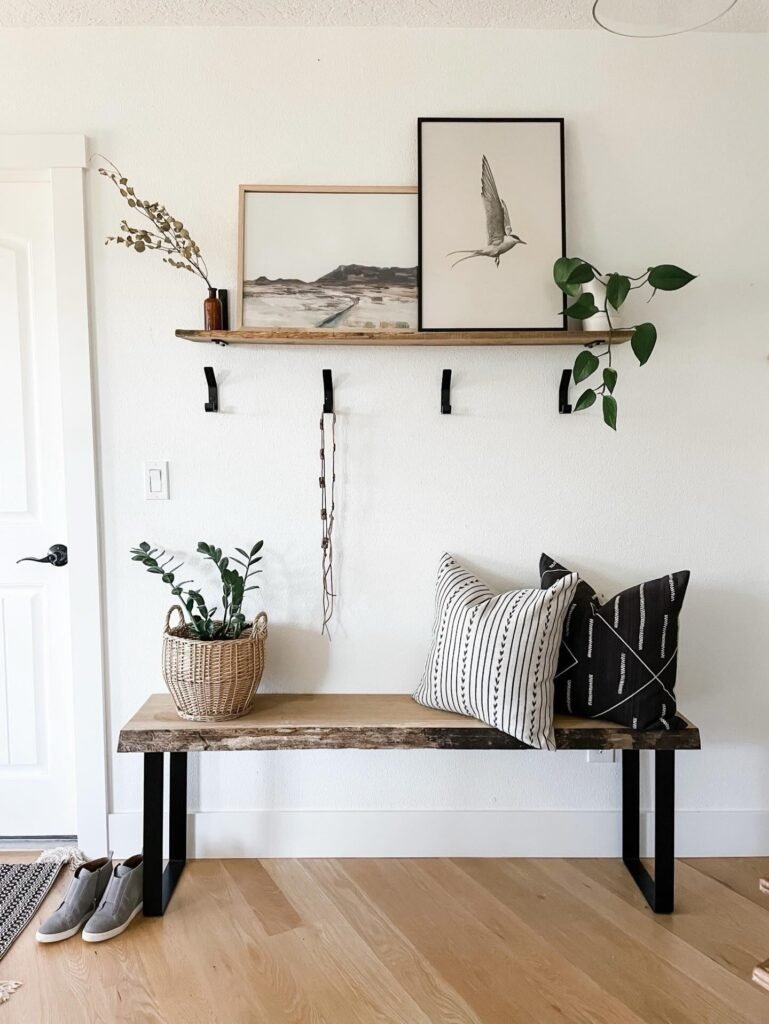
A simple row of wall hooks mounted at different heights — one lower for kids, one higher for adults — costs maybe $15 in hardware and takes 30 minutes to install. You can find floating shelves at IKEA, Amazon, or even Facebook Marketplace for next to nothing. Stack a shelf above the hooks and you’ve got a spot for keys, sunglasses, or a small plant that makes the whole space feel intentional.
The reason vertical storage works so well is psychological, too. When things are off the floor, the space feels cleaner even if you have the same amount of stuff. It’s a visual trick, but it works every time.
The “One Home for Everything” Rule
Clutter is almost always the result of things not having a dedicated home. A key that gets tossed on the counter is a key that doesn’t have a hook. A bag that ends up on the floor is a bag that doesn’t have a dedicated peg.
This sounds obvious but most people miss the nuance. It’s not enough to have a hook — it needs to be conveniently placed. If your hook is around the corner where it’s slightly inconvenient, guess what? Your keys still end up on the counter. Placement matters as much as the storage piece itself.
Low-Cost Entryway Organization Hacks That Actually Hold Up
Now let’s get into the actual hacks. These are things I’ve either done myself or seen work really well in real homes.
1. Command Hooks — Boring But Brilliant
I know, I know. Everyone talks about Command hooks. But hear me out — most people underuse them. A single row at adult height isn’t enough. Here’s how to do it right:
Mount a row at 60–65 inches for coats and bags. Add another row at 40–45 inches for kids or for lightweight tote bags. Then add a single hook right inside the door at about 5 feet for “the coat I’m wearing tomorrow.” That last one is weirdly life-changing. No more hunting for your jacket on busy mornings.
Total cost: under $12 for a pack of large Command hooks.
2. A Shoe Tray Instead of a Shoe Rack
Shoe racks sound like a good idea. In reality, nobody actually puts their shoes on them neatly. A simple boot tray or even a cheap plastic under-bed storage tray placed right at the door is so much more effective because it matches how people actually behave — they kick their shoes off and they land somewhere. Give that “somewhere” a boundary and suddenly the area looks tidy.
You can get a basic boot tray for $10–$20, or DIY one with a shallow plastic bin from the dollar store. Bonus: throw some pebbles or a layer of cedar chips in it to absorb moisture from wet shoes.
3. A Small Bench With Hidden Storage
If you have even two feet of wall space, a small storage bench is one of the highest-impact additions you can make. The reason it works so well is that it solves two problems at once — somewhere to sit while putting shoes on, and hidden storage for things you don’t want visible.
You don’t need to spend $200 on a bench. Thrift stores regularly have ottomans, storage chests, and small benches for $15–$40. A can of spray paint transforms them completely. I picked up a beat-up storage ottoman at a garage sale for $8, painted it black, and it looks like something from a boutique home store.
4. A Mail and Keys Station Using a Small Floating Shelf
Flat surfaces attract clutter. But instead of fighting human nature, design for it. A small floating shelf — even one that’s 10 inches wide — gives mail and keys a dedicated landing spot. Add a small dish or tray on top (thrift stores have these everywhere) for coins, keys, and lip balm. Mount a hook below the shelf for your most-used bag.
This setup costs $15–$25 total and eliminates the “where are my keys” panic from your morning routine. The reason it works is that it takes a chaotic habit (dumping stuff near the door) and channels it into a controlled zone.
5. Use the Back of Your Door
Seriously, the back of your front door is basically unused storage in most homes. An over-the-door organizer can hold umbrellas, reusable shopping bags, small umbrellas, even a dog leash. No drilling required.
For a cleaner look, look for slim over-the-door organizers with hooks rather than bulky pocket organizers. They sit flush against the door and don’t feel junky. Cost: $15–$25 on Amazon.
6. Baskets for “Soft Clutter”
Not everything in an entryway is hard to store. Scarves, hats, gloves, reusable bags — all of that soft stuff can go into a single open-top basket on the floor or on a shelf. It looks intentionally casual rather than messy, and it takes two seconds to toss things in.
A wicker or seagrass basket from T.J.Maxx or even Amazon runs $10–$20. The trick is using one basket per category. One basket for hats and gloves. Done. The moment you add a second basket with no clear purpose, you’re back to chaos.
How to Make It Look Good, Not Just Functional
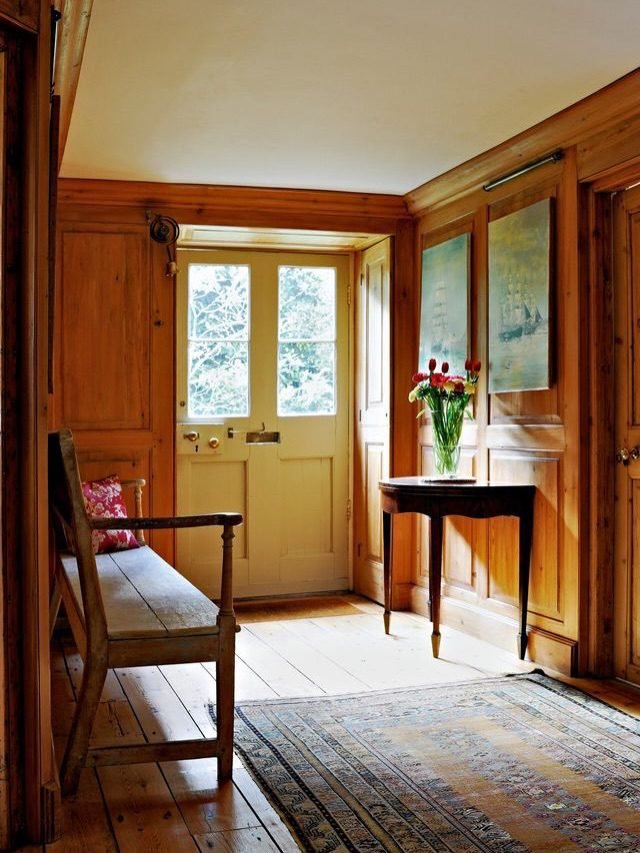
Here’s something a lot of organization content skips: a tidy entryway and a nice-looking entryway are two different things. You can have perfect organization and it still looks cold and clinical.
A couple of easy additions that cost almost nothing:
A small plant or even a fake eucalyptus stem in a vase. It softens the space immediately and signals that someone actually cares about this area. Real plants work great near natural light; for a dark entryway, a quality faux plant does the job just as well.
A small rug. If you don’t have one, get one. It defines the space visually and makes it feel like the entryway was designed rather than just a transition zone. Target and Amazon have decent entryway rugs for $20–$40. Look for something with a pattern that hides dirt — solid light rugs are beautiful and impractical near a front door.
One piece of wall art or a small mirror. A mirror especially does double duty — it makes the space feel bigger and gives guests (and you) a spot to check your look on the way out. Dollar Tree sometimes has small mirrors. Thrift stores almost always do.
Putting It All Together Without Overwhelming Yourself
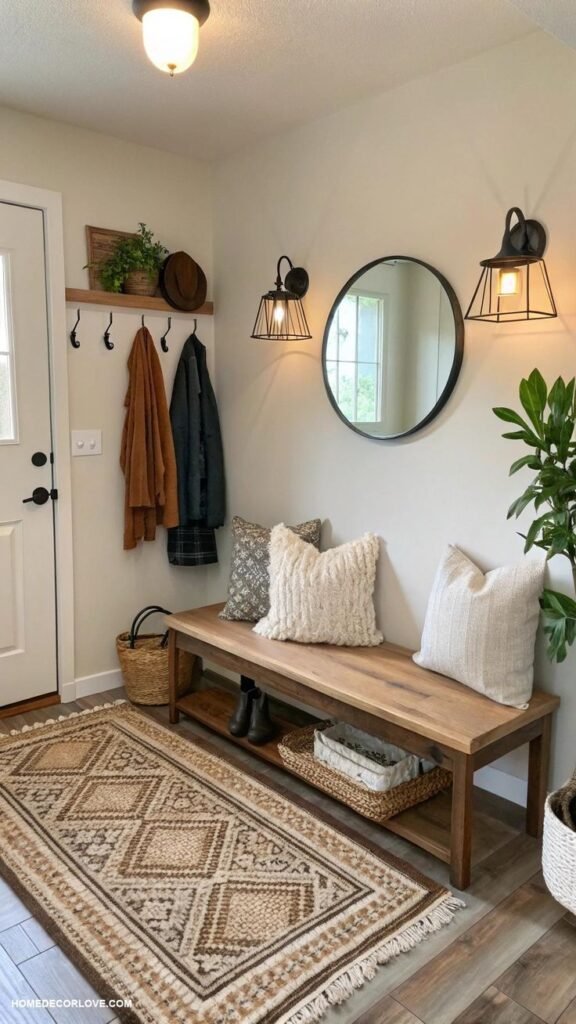
If you’re looking at this list thinking “I can’t do all of this at once,” that’s completely fair. Here’s the order I’d suggest:
- First, do the wall hooks — immediate impact, low cost, takes one afternoon
- Add the shoe tray — contains the biggest source of mess near the door
- Get a key and mail dish or shelf — eliminates the morning panic
- Layer in a basket, rug, and plant over time as budget allows
You don’t have to do everything in one weekend. The best entryway organization happens in stages because you can see what’s actually working and adjust as you go.
Start Small, But Start Today
The biggest thing I want you to take away from this is that you don’t need a big budget or a big space to have an entryway that impresses guests. You need a system that matches how your household actually lives not some Pinterest-perfect setup that falls apart in three days.
Pick one hack from this list and do it this week. Seriously, just one. Mount the hooks. Get the boot tray. Put a small dish by the door for your keys. That single change will give you momentum to keep going, and a month from now your entryway will look nothing like it does today.
It’s one of those projects where the payoff is way bigger than the effort and there’s something really satisfying about guests walking into your home and noticing the difference.