

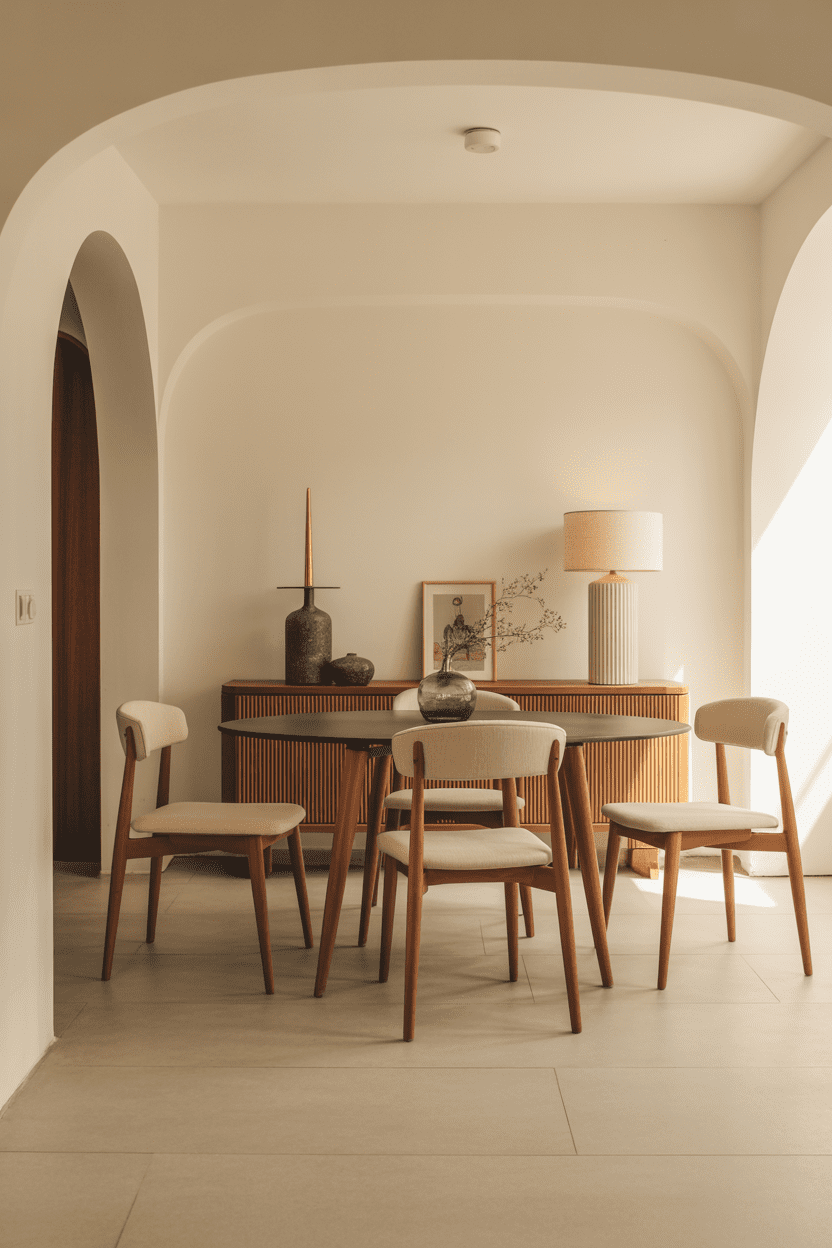
If your dining room feels more cramped than cozy, you are definitely not alone. Small dining spaces can be weirdly tricky. They collect clutter fast, they are hard to style without making them feel crowded, and sometimes they end up looking more like an afterthought than an actual room you want to sit in. And honestly, that’s frustrating when this is the spot where you drink your coffee, eat dinner, help with homework, or catch up with family at the end of the day.
The good news is that a small dining room does not have to feel boring or boxed in. In fact, some of the prettiest dining spaces are the tiny ones because they force you to be a little more intentional. The right table, better lighting, smarter seating, and a few design choices that actually fit the room can make a huge difference.
So if you have been searching for small dining room ideas that are stylish but still realistic, these are the ones worth trying. Some are cozy, some are space-saving, and some are just really good at making a tiny room feel much more open.
Go for a round table instead of a rectangular one
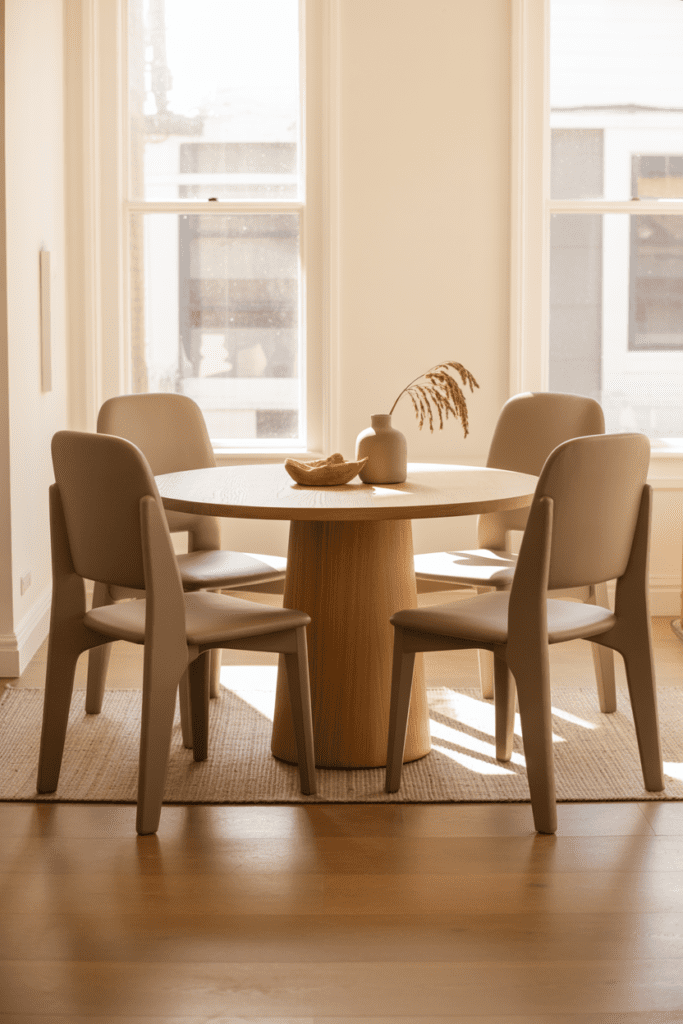
This is one of those ideas that sounds simple, but it really changes the flow of a small room. A round dining table takes up less visual space because there are no hard corners sticking out into walkways. It also makes the whole setup feel softer and more inviting, which helps a tight dining room feel less rigid.
It works especially well in square rooms or awkward breakfast nooks where a rectangular table always seems a little too long. People can move around it more easily, and you can usually squeeze in an extra chair when needed without it looking strange.
If you want something that actually works for everyday life, look for a pedestal base instead of four legs. That gives everyone more legroom and makes the room feel less cluttered underneath. If you are decorating on a budget, even a basic round table in a light wood or white finish can make a small dining space feel instantly more open.
Use a built-in banquette to save space
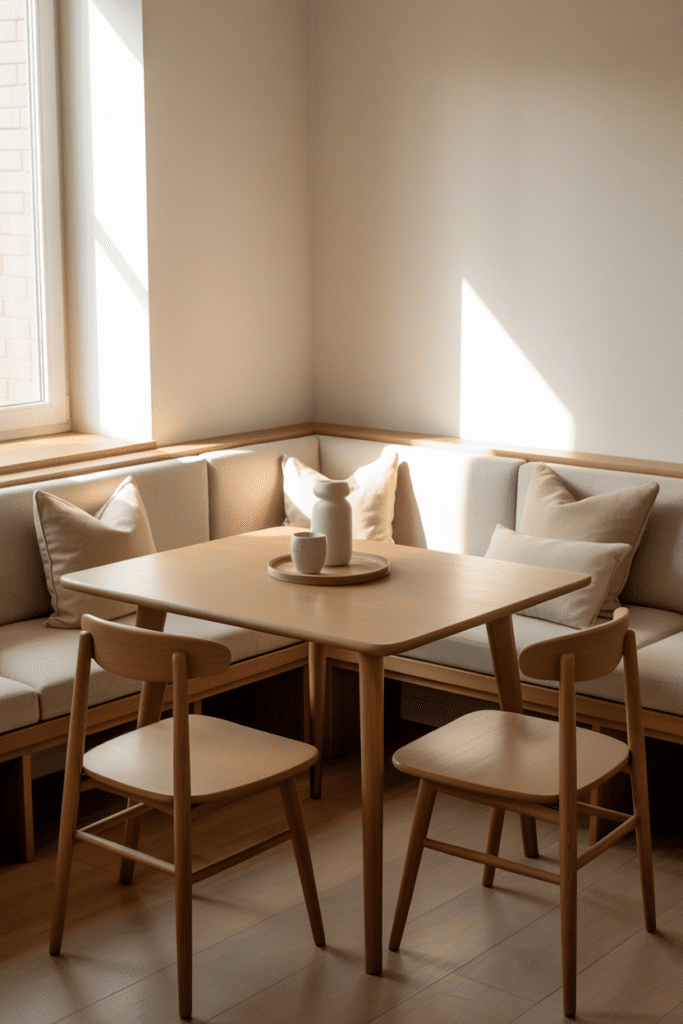
If you have a corner in your dining room that is not doing much, a banquette can turn it into the hardest-working spot in the house. Built-in bench seating takes up less room than pulling chairs in and out, and it gives the whole space that custom, cozy look people love.
Why does it work so well in small dining rooms? Because it uses the wall instead of fighting against it. Chairs need breathing room behind them. A bench tucked neatly into a corner does not. That means you can fit a decent-size table in a smaller footprint without making the room feel jammed.
You do not need full custom millwork to pull this off, either. A freestanding storage bench pushed into a corner can create a very similar effect. Add seat cushions, a couple of pillows, and suddenly the dining area feels intentional instead of squeezed in.
Choose armless chairs that keep things visually light
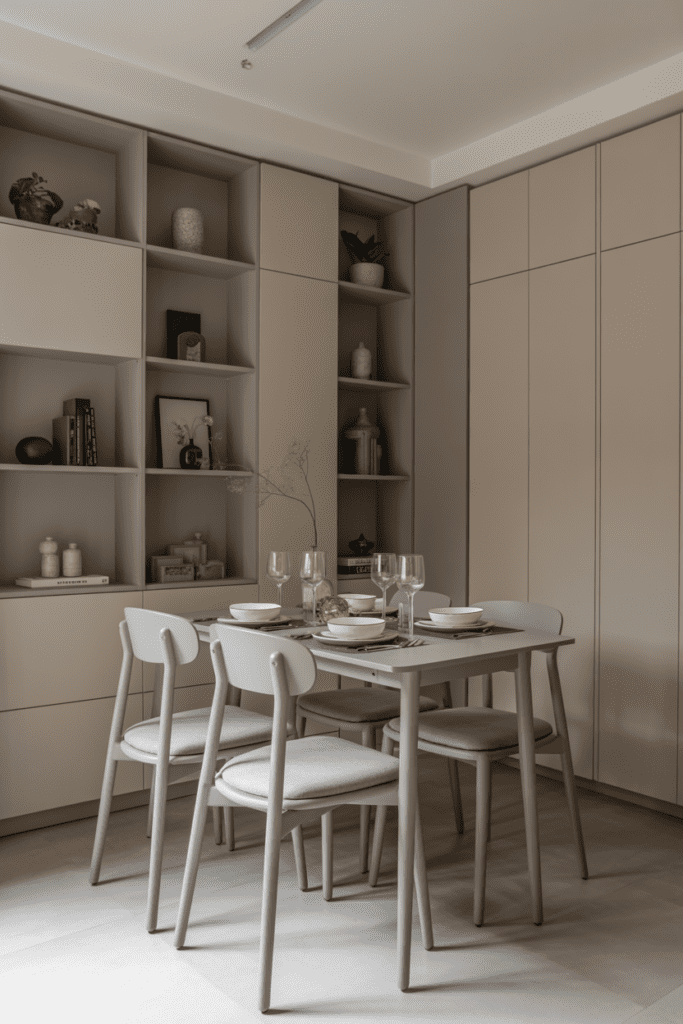
Bulky dining chairs can make a tiny room look full before you even add anything else. Swapping them for slim, armless chairs is one of the easiest small dining room ideas if your current setup feels heavy or crowded.
The reason this works is mostly visual. Armless chairs leave more open space around the table, so the room feels lighter and less blocked. They are also easier to tuck in all the way, which matters a lot when every inch counts.
Look for chairs with narrow frames, open backs, or woven seats if you want that airy feel. Even simple wooden chairs can work beautifully when the lines are clean. And if you like a mixed look, pair two side chairs with a bench on one side to keep the room practical and relaxed.
Hang a statement light that fits the scale
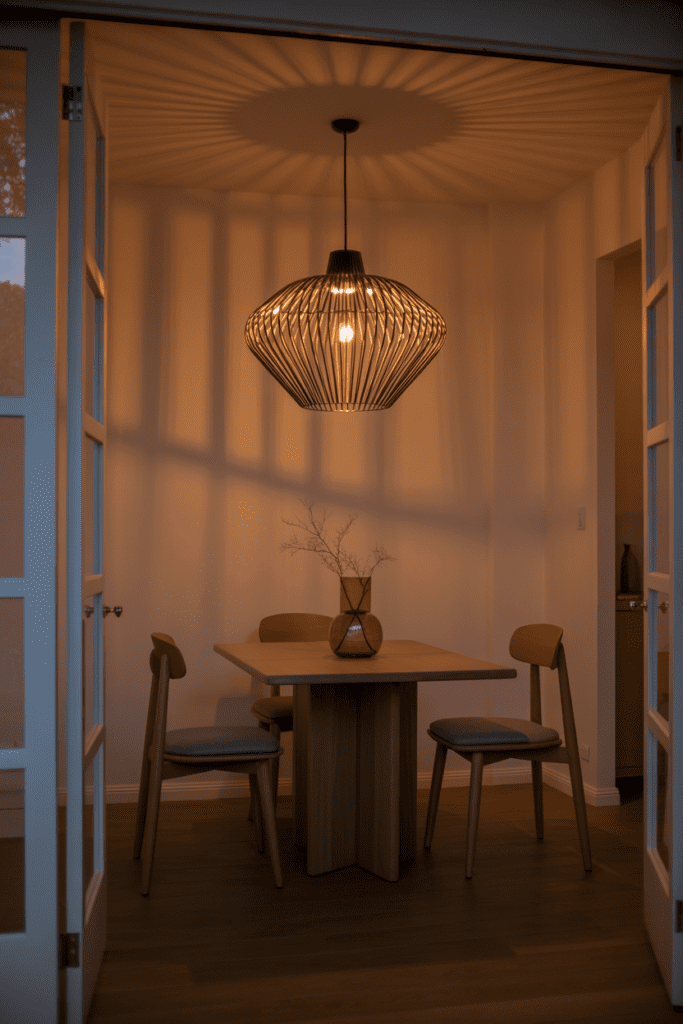
A lot of people skip a bold light fixture in a small room because they think it will overwhelm the space. But honestly, the opposite is often true. A well-scaled pendant or chandelier can make a tiny dining room feel finished and styled on purpose.
The key is proportion. You want something that draws the eye up and gives the room a focal point, but not a fixture so oversized that it takes over everything. A light with an open frame, glass details, or slim arms works really well because it adds interest without visual heaviness.
If your dining room feels flat or forgettable, this is one of the first things I would change. Try hanging the light low enough to feel connected to the table, but still high enough that sightlines stay open. And warm bulbs matter more than people think. They instantly make the whole room feel softer and more welcoming.
Push your table against the wall when the room is extra tight
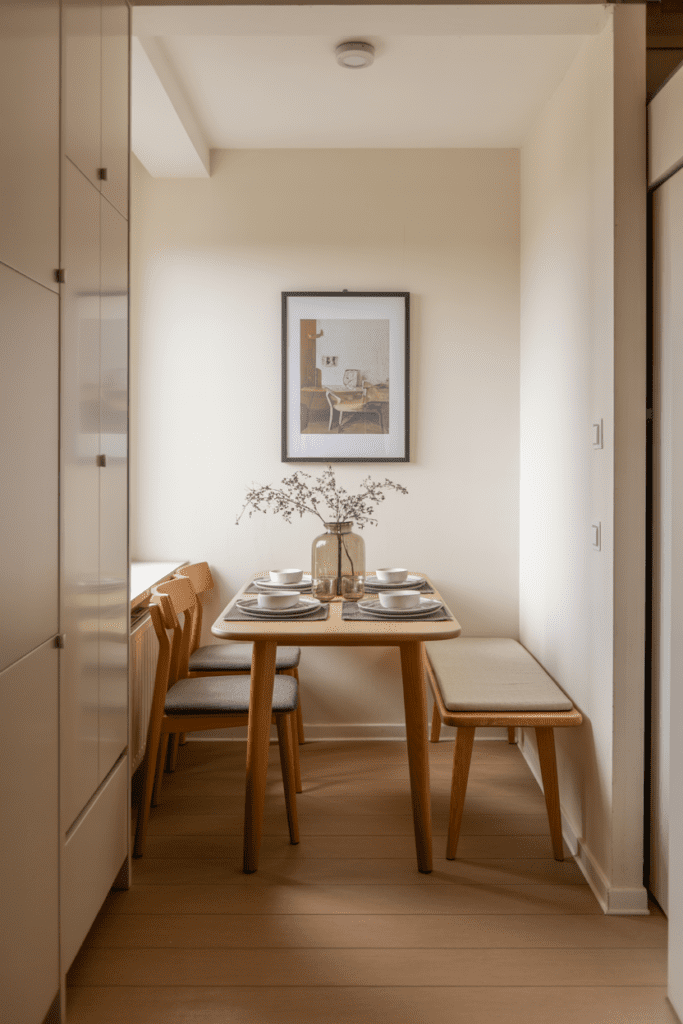
Not every dining room has space for chairs on all four sides, and that is okay. If your layout is really narrow, placing one side of the table against the wall can free up a surprising amount of room.
This setup works best for smaller households or casual everyday dining. It makes the room more functional because you are not wasting space on a walkway you do not actually need. Add two chairs on the open sides and maybe a bench or wall-side seating, and it feels intentional instead of cramped.
To make it look stylish, hang artwork above the table or add a wall sconce nearby so that side of the room does not feel blank. This is one of those small dining room decorating ideas that is more practical than fancy, but when done well, it can look really charming.
Add a large mirror to bounce light around
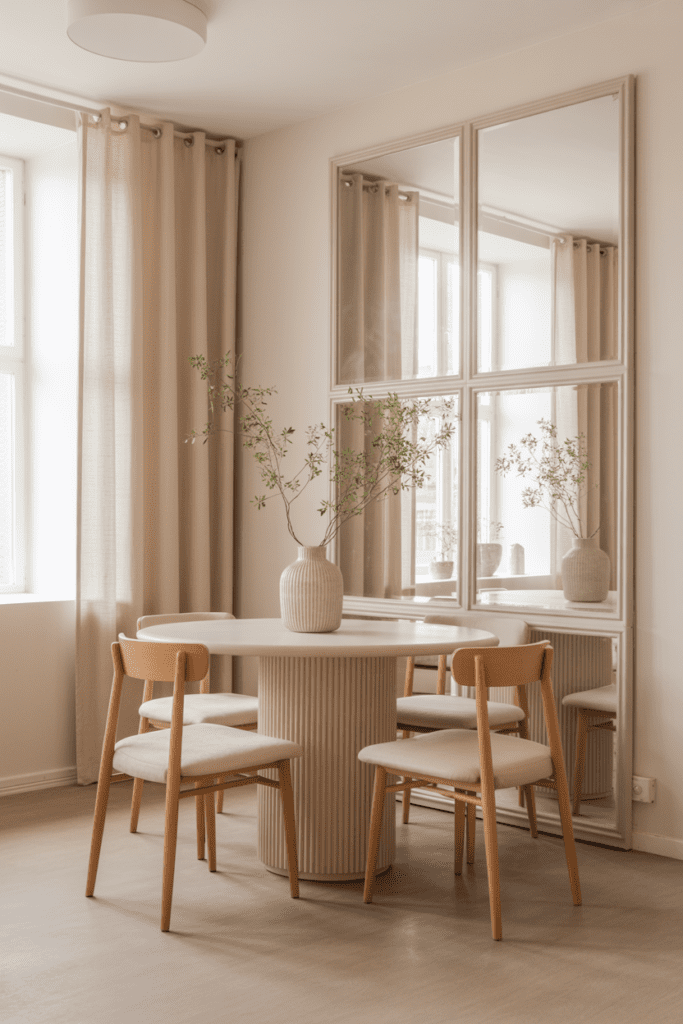
If your dining room feels closed in, a mirror can help almost immediately. It reflects light, opens up the room visually, and makes the entire space feel less boxed in without taking up any floor space.
This trick is especially helpful in darker dining areas or rooms without a lot of windows. A large mirror on one wall can double the sense of brightness and make the room feel wider than it actually is. It is one of the oldest design tricks around because it genuinely works.
For a more modern look, go with a simple black-framed mirror or something thin and minimal. If your style leans more traditional or cozy, a wood or vintage-style frame can add warmth. Just try to position it where it reflects light or a pretty part of the room, not clutter.
Try a dining bench on one side
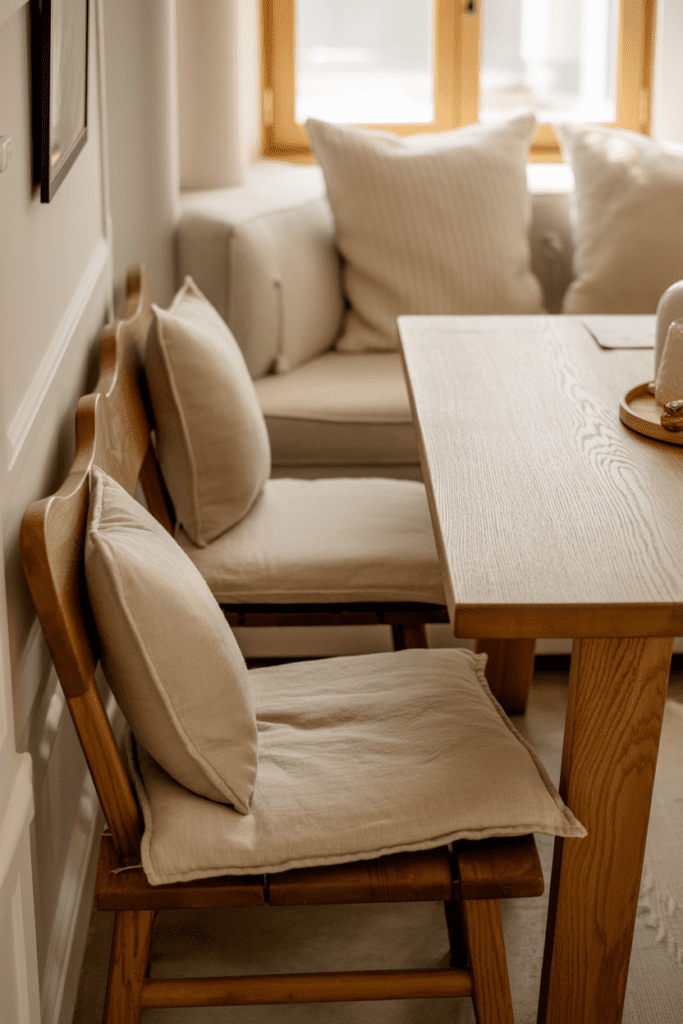
Dining benches are incredibly useful in small spaces because they can slide completely under the table when not in use. That one detail alone can make a tight room feel much easier to move through.
They also create a more casual, collected look that feels less formal than matching chairs all around. If your dining area blends into a kitchen or living room, a bench can help it feel more relaxed and less separate, which usually works better in smaller homes.
If you want this idea to look polished, choose a bench that relates to your table in color or material but does not match it too perfectly. A wood bench with upholstered chairs, for example, keeps things interesting. And if comfort is a concern, add a slim seat cushion so people will actually want to sit there longer than ten minutes.
Keep the color palette soft and simple
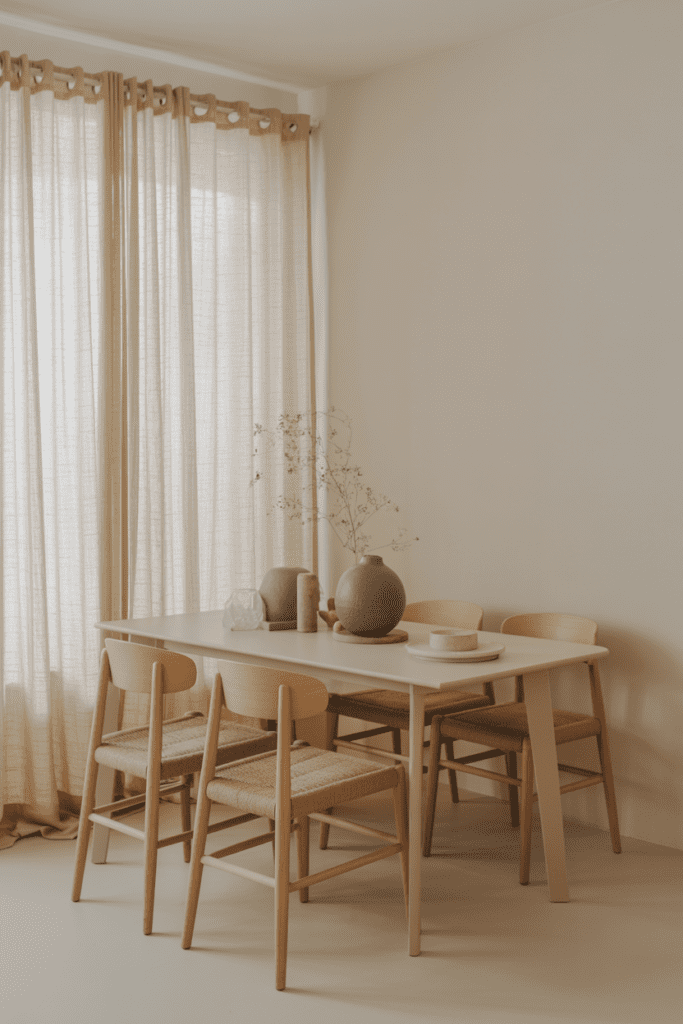
You do not need an all-white dining room, but in a small space, a softer palette usually helps. Light neutrals, warm whites, pale wood tones, muted greens, and soft grays all make a room feel calmer and more open.
Why does this matter so much? Because visual noise adds up fast in a small room. When the walls, furniture, and textiles all compete for attention, the space starts to feel busier than it really is. A simpler palette makes everything feel more cohesive.
That does not mean the room has to be bland. Layer in texture through linen curtains, woven seating, a subtle rug, or matte ceramics on a shelf. If you love color, bring it in through art or a single accent tone rather than spreading it across every surface.
Use wall-mounted shelving instead of bulky furniture
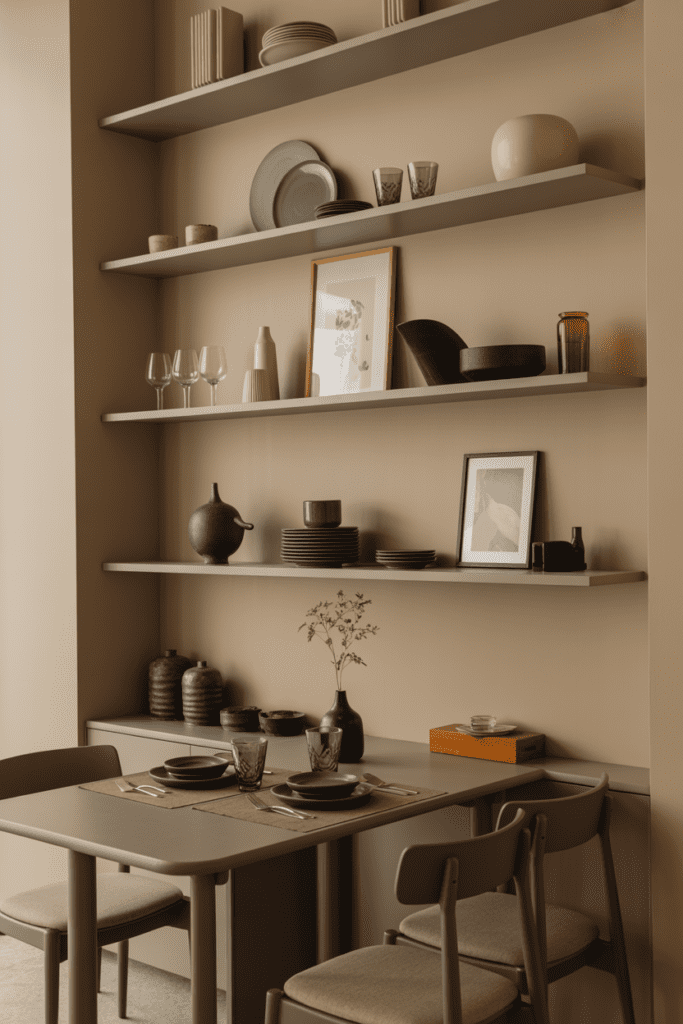
A lot of small dining rooms do not have space for a full sideboard or china cabinet, but they still need storage or styling somewhere. Floating shelves or a slim wall-mounted shelf can solve that problem without eating up valuable floor space.
This works because it keeps the room functional while staying visually open. You can use shelves for everyday dishes, glassware, a few cookbooks, or even just a small piece of art leaned against the wall. It gives the room personality without adding another heavy piece of furniture.
If you want it to look good and not chaotic, be selective. Leave space between items, stick to a loose color palette, and mix practical pieces with decorative ones. A few stacked plates, a small vase, and one framed print go a lot further than cramming every inch.
Pick furniture with exposed legs
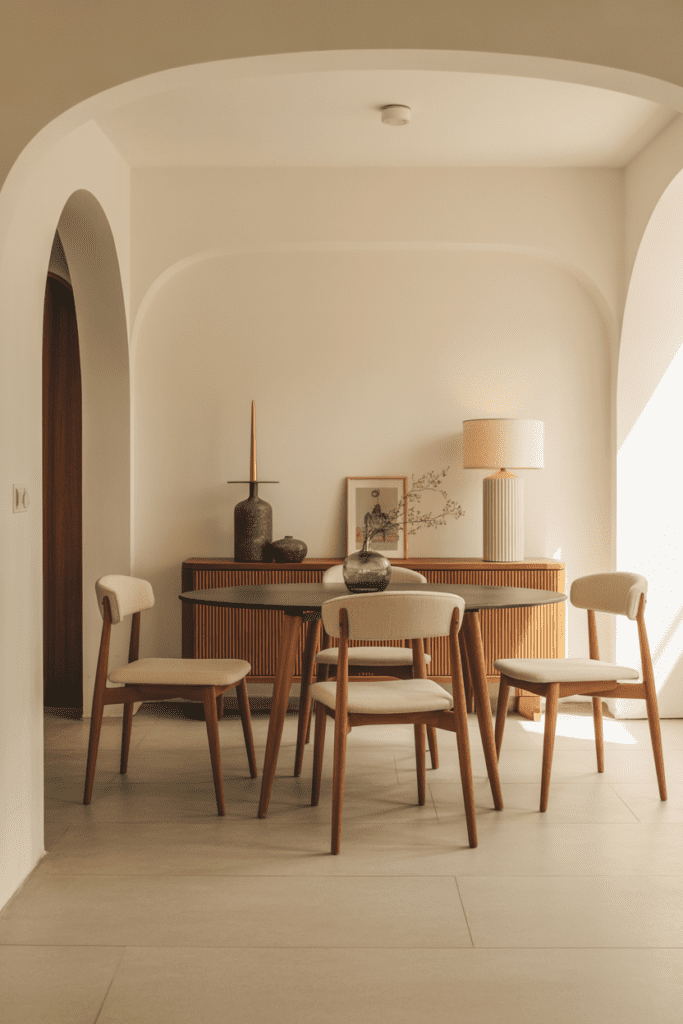
This sounds like a tiny detail, but it makes a huge visual difference. Tables, chairs, and storage pieces with visible legs allow more floor to show, and that makes the room feel less crowded.
Furniture that sits directly on the floor or has a bulky base can feel heavy in a small dining room. Pieces with open space underneath create more breathing room, even if the actual dimensions are similar. It is a subtle trick, but once you notice it, you really notice it.
If you are shopping for a buffet, console, or even a bar cart for the dining area, look for slim shapes and raised legs. Mid-century-inspired furniture often works well here because it tends to have cleaner lines and less visual weight.
Define the space with a rug that is the right size
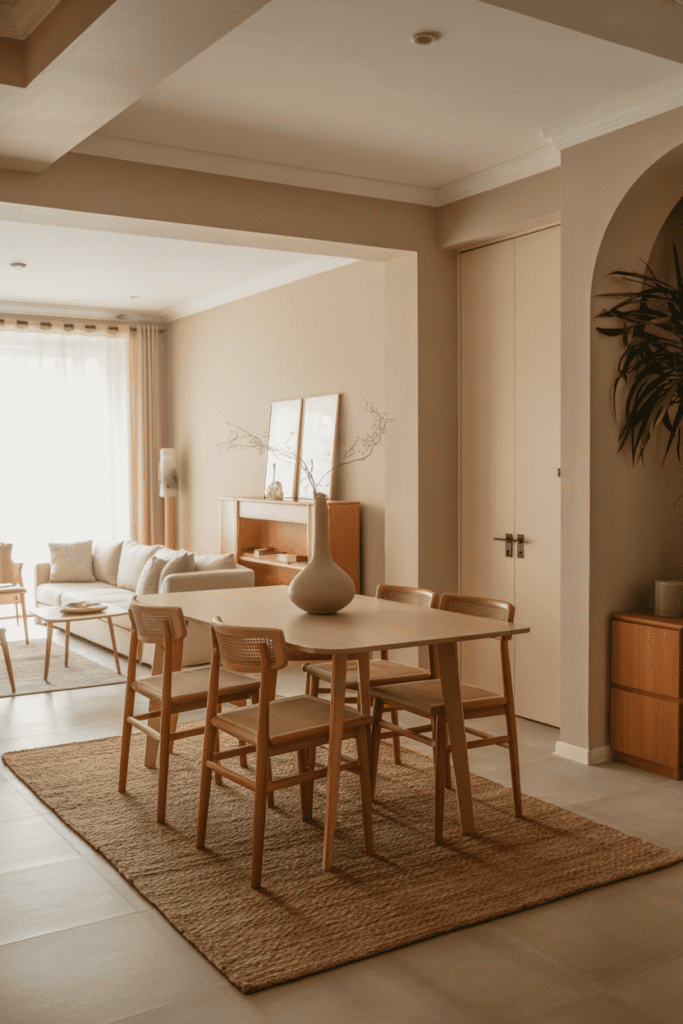
A rug can make a small dining room feel finished, but only if the size is right. Too small, and it makes the whole room look choppy. The table and chairs should sit comfortably on the rug, even when the chairs are pulled out.
This is one of those small dining room ideas that helps the area feel grounded, especially in open-concept homes where the dining space blends into the kitchen or living room. A rug visually tells the eye, this is the dining zone, and that extra structure can make a small space feel more organized.
Flatweave and low-pile rugs are usually the easiest choice because chairs move better on them and they are simpler to clean. If spills are a concern, go for something patterned or washable. Honestly, in a dining room, practicality wins.
Bring in a drop-leaf or extendable table
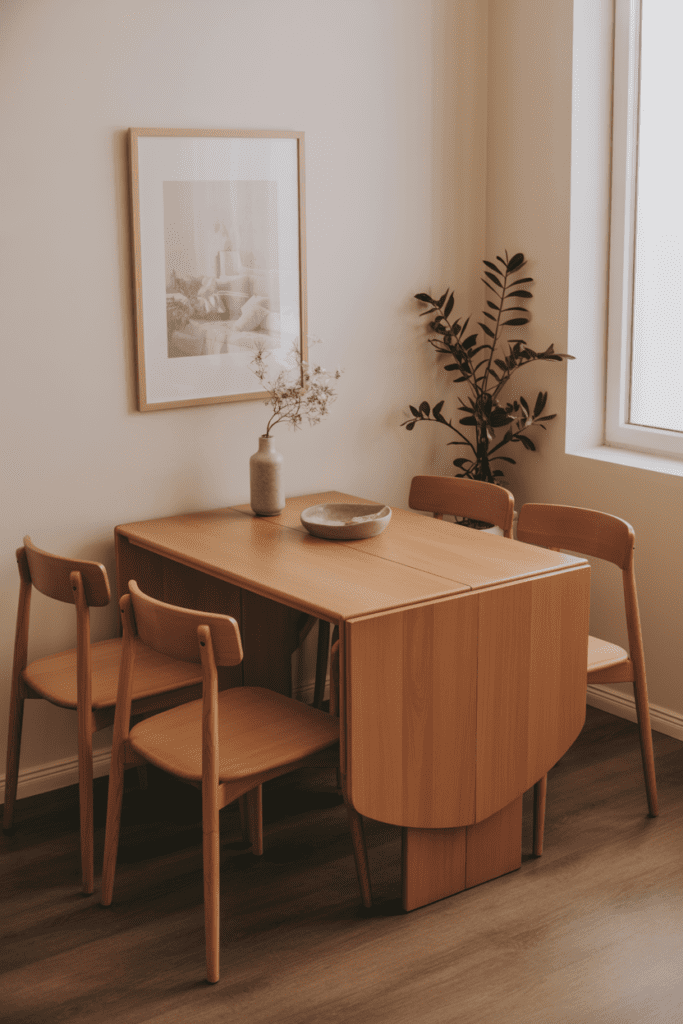
If your dining room has to work hard, a flexible table is worth considering. Drop-leaf and extendable tables are perfect when you need something compact most of the time but still want enough surface area for guests, projects, or holiday meals.
The reason they work so well in small spaces is obvious but important: they adapt. You are not committing to a large table every single day just because you need extra seating once in a while. That makes the room feel more usable overall.
There are some really nice options now that do not look overly traditional or clunky. Look for one with clean lines and a finish that fits your style. Even a small pedestal drop-leaf table can be incredibly charming in a breakfast nook or apartment dining area.
Use curtains to soften the room without crowding it
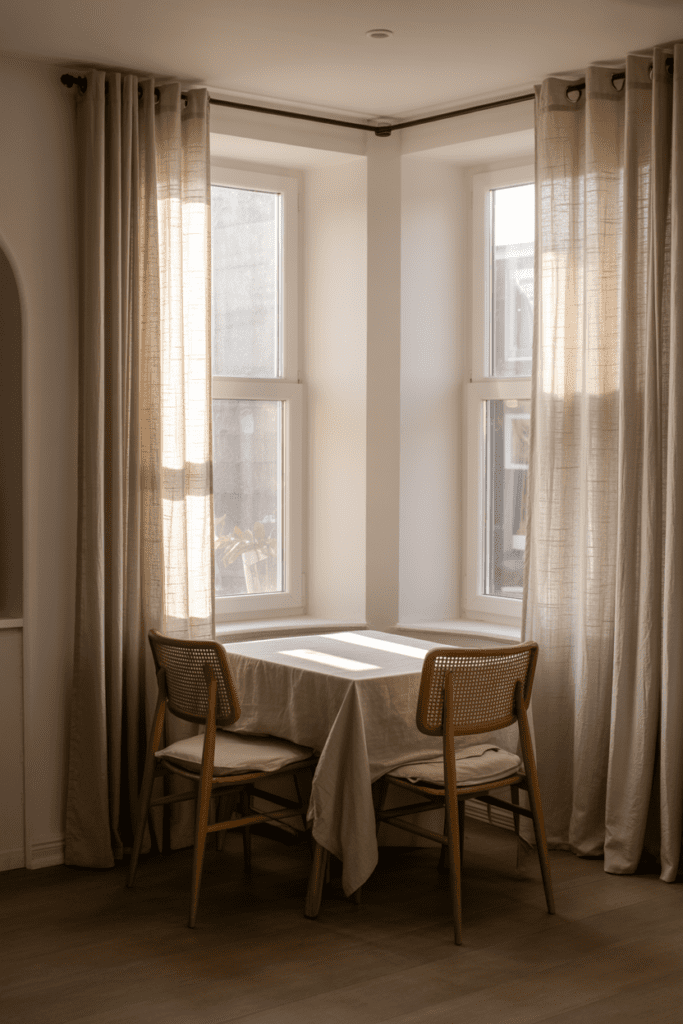
Small dining rooms can sometimes feel a little hard. You have wood, metal, walls, maybe a light fixture, and not much softness. Curtains help balance that out without taking up physical room.
They also draw the eye upward, especially if they are hung a little higher than the window frame. That can make the ceilings feel taller, which is always a win in compact spaces. Light-filtering fabric works especially well because it keeps the room bright while still adding texture.
Stick with simple panels in linen, cotton, or a soft woven fabric. If the room is already tight, avoid heavy drapes unless you really need blackout coverage. You want softness, not weight.
Create a cozy corner with a gallery wall
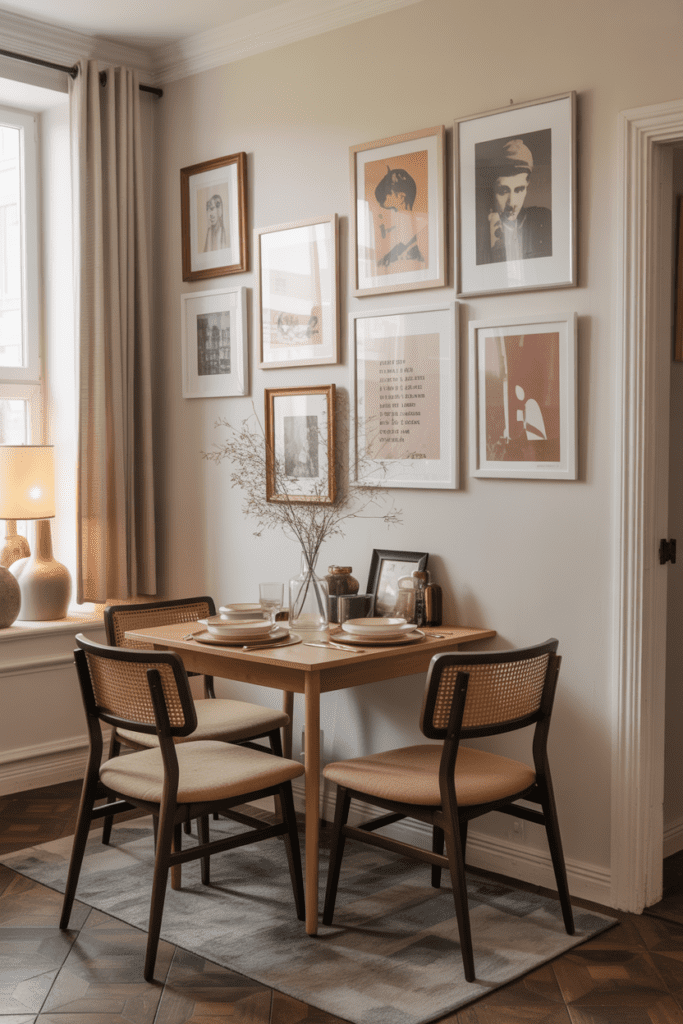
If your dining room is small, leaning into coziness can work better than trying to make it feel huge. A compact gallery wall adds personality and makes the room feel layered, warm, and lived in.
This idea works best when the art feels connected in some way, whether through color, frame style, or subject matter. You do not need anything formal. Family photos, vintage prints, sketches, food art, or black-and-white photography can all look great in a dining area.
Keep the arrangement tight rather than spreading it too far across the wall. In a small room, a clustered gallery usually feels more polished. And if you are nervous about committing, lay everything out on the floor first or use paper templates before hanging.
Add one natural element that warms everything up
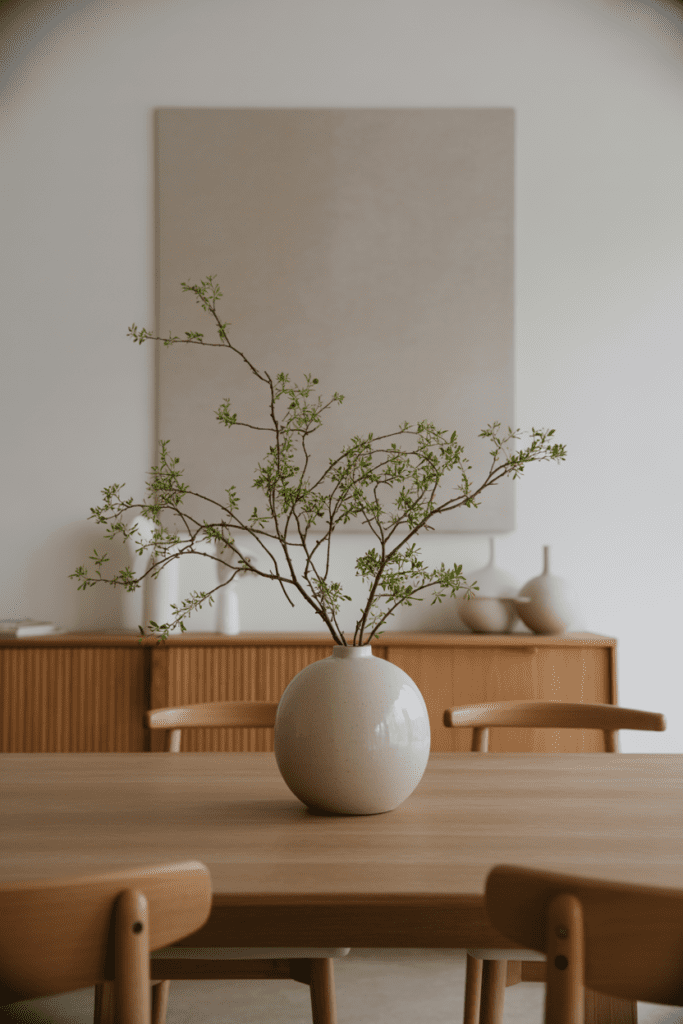
Sometimes a small dining room does not need more furniture or more styling. It just needs one thing that makes it feel alive. A branch in a vase, a bowl of fruit, a potted olive tree in the corner, or a simple floral arrangement can do more than a bunch of random accessories ever will.
Natural elements work because they bring softness, movement, and color into a room that might otherwise feel a little stiff. They also help connect the dining area to the rest of the home, especially if you are already using wood tones, woven textures, or earthy colors nearby.
If you want the easiest version of this idea, start with a ceramic vase and something seasonal. In spring, use fresh greenery. In fall, try branches or dried stems. It is low effort, budget-friendly, and it always makes the room feel more thoughtful.
Quick tips to keep in mind
Before you start changing things, a few small choices can make your small dining room ideas work even better:
- Measure chair clearance before buying a new table.
- Choose fewer, better pieces instead of filling every corner.
- Prioritize lighting because dark rooms always feel smaller.
- Keep surfaces mostly clear so the room can breathe.
- If the space feels off, check scale first because that is usually the real problem.
When a dining room is small, every choice matters a little more. But that is not a bad thing. It just means the room works best when it is edited, intentional, and actually suited to the way you live.
A beautiful small dining room is not about squeezing in more stuff or chasing some perfect catalog look. It is about making the space feel comfortable, useful, and like it belongs in your home. Try one or two of these ideas first, see what changes the feel of the room, and build from there. Honestly, even a small shift like a better table shape or lighter chairs can make the whole room feel easier to live in.