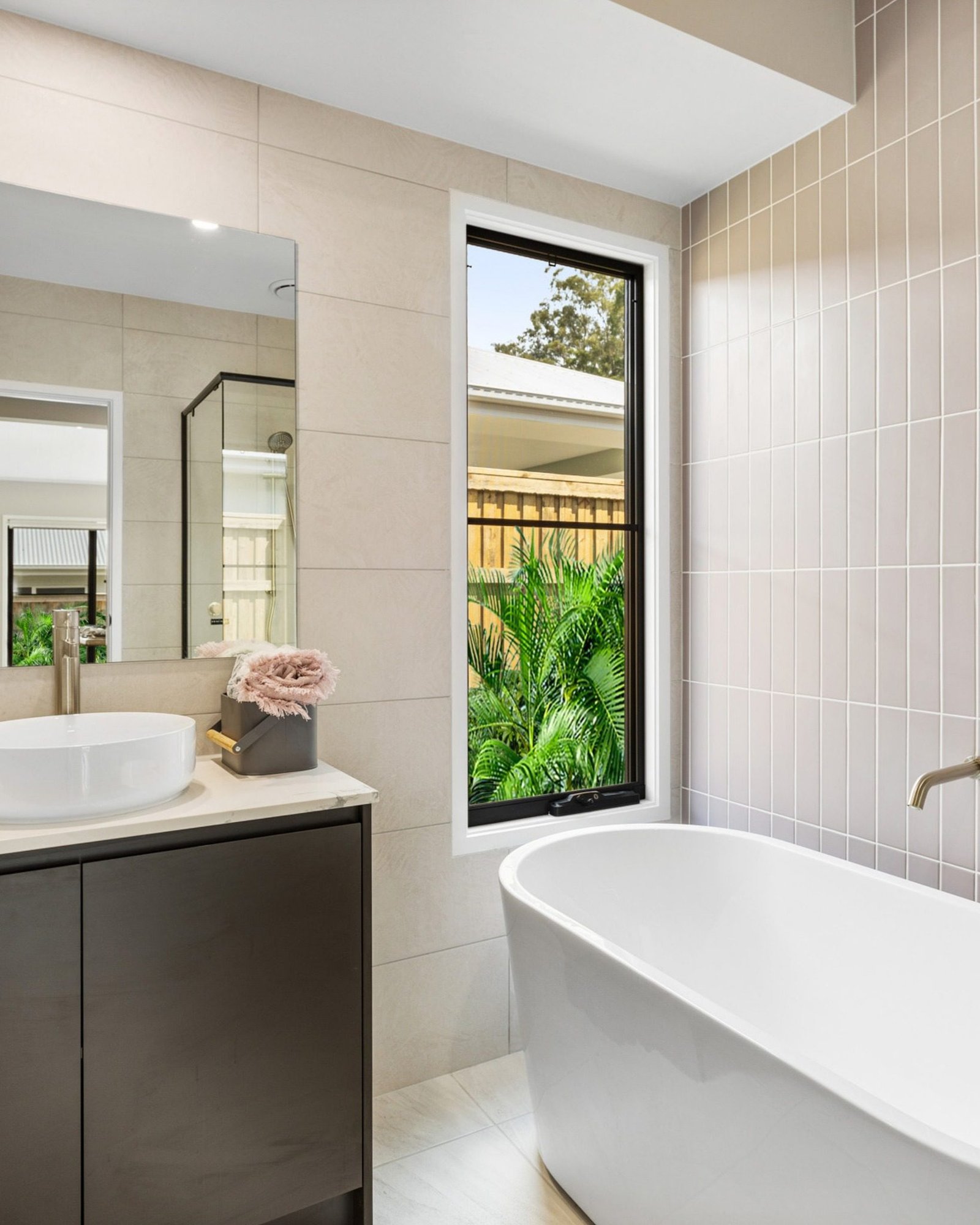

Nobody wants to deal with a tile demo. The dust, the mess, the contractor quotes that make your eyes water. If you’ve been living with dated bathroom tiles and convincing yourself you’ll “deal with it later,” I get it. But here’s the thing: you don’t have to replace a single tile to make your bathroom feel completely different. I’ve seen bathrooms go from dingy and depressing to genuinely beautiful without touching the floors or walls. The secret isn’t the tiles it’s everything around them. Most people stare at their ugly tile and think that’s the whole problem, when really the tile is just one piece of a much bigger picture. Change the right things, and those tiles practically disappear into the background. Here are five ways to do exactly that.
1. Regrout or Paint the Grout Lines (This One’s Underrated)
buildingdoctorcbe
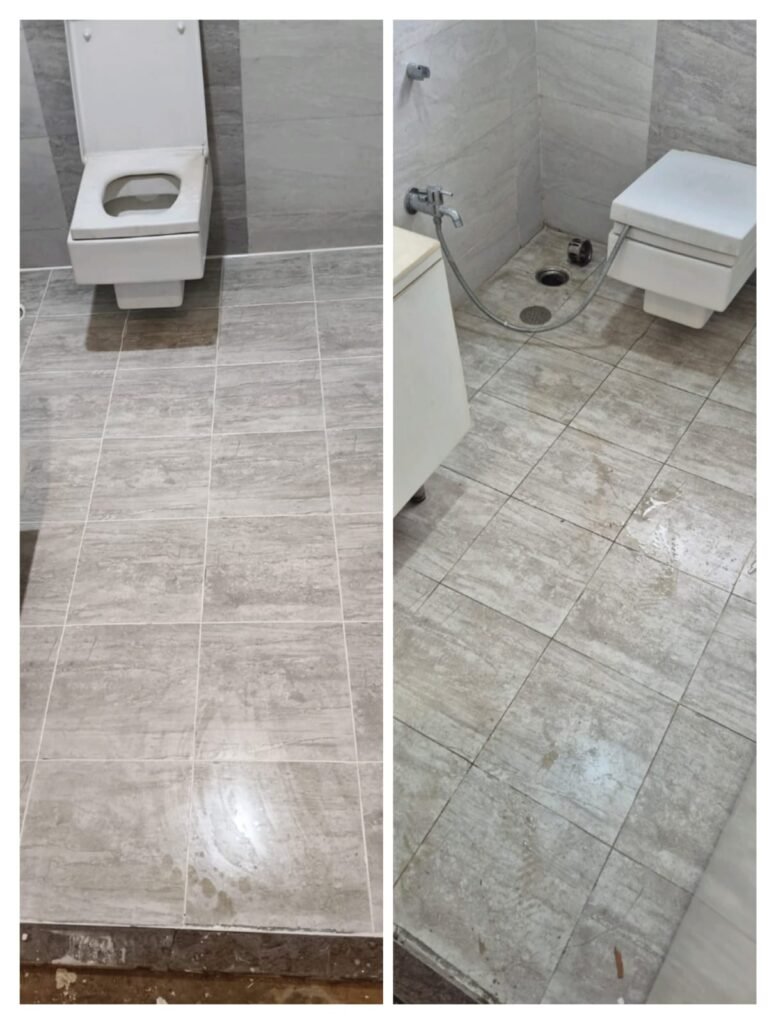
Before you spend a dime on anything else, look at your grout. Seriously, get down there and look at it. Dingy, gray-stained grout makes even decent tiles look terrible. Clean white or freshly colored grout lines, on the other hand, make old tiles look almost intentional.
Regrouting is the obvious fix — and yes, it’s a bit of work — but grout paint is the shortcut most people don’t know about. Products like Rust-Oleum’s grout colorant or Rainbow Chalk Markers’ grout pen let you essentially “paint” your grout lines back to bright white or even change them to a contrasting color like charcoal or warm gray. This works because your eye reads the grout grid as a pattern, and when that pattern is crisp and fresh, the whole surface feels new.
Practical tip: If your grout is just stained (not cracked or crumbling), a mixture of baking soda, dish soap, and hydrogen peroxide scrubbed in with an old toothbrush can restore it dramatically before you even reach for a grout pen. Save the colorant for after cleaning — it adheres better and lasts longer.
The difference this makes is honestly shocking for the effort involved. I’ve seen bathrooms with 1990s builder-grade beige tile look completely respectable after a grout refresh. It’s not glamorous work, but it’s the foundation everything else builds on.
2. Swap the Vanity (Or Just the Hardware and Mirror)
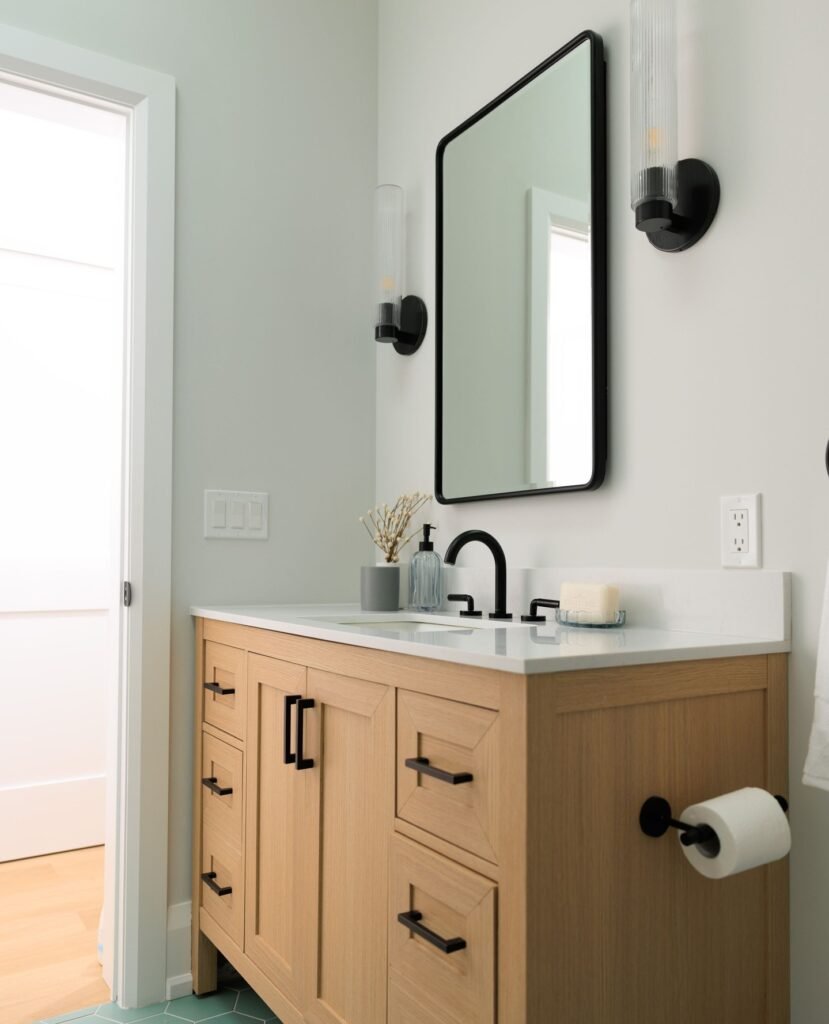
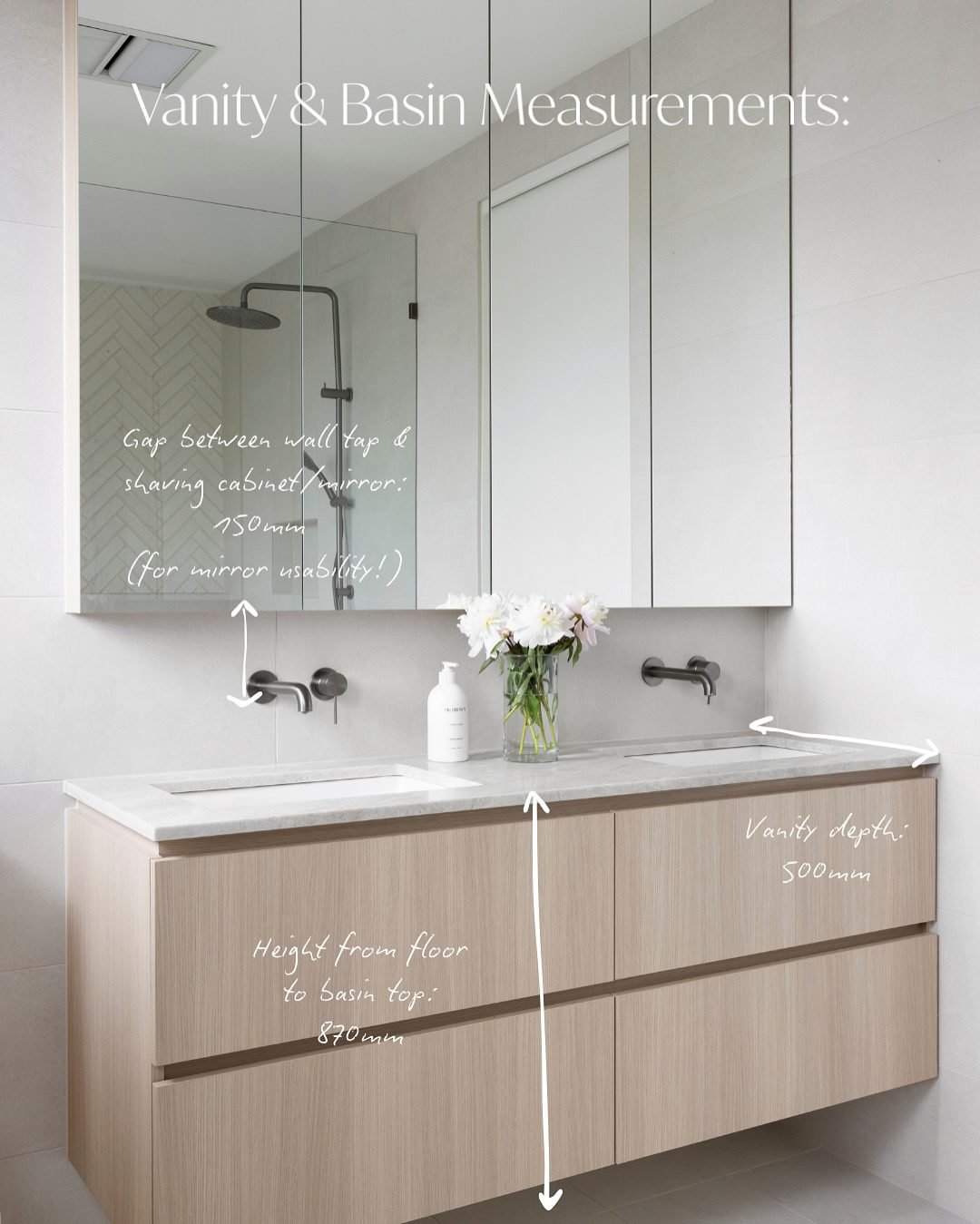
The vanity area is the focal point of most bathrooms. It’s where you stand, where your eye naturally lands, and — here’s the important part — it has nothing to do with your tiles. A new vanity is one of the most impactful changes you can make, and you don’t need to spend thousands. Companies like IKEA (GODMORGON series), Home Depot’s Hampton Bay line, or even Facebook Marketplace finds can be transformed with a fresh coat of paint and new hardware.
But if a full vanity swap isn’t in the budget, just changing the hardware and mirror does more than people expect. Most builder bathrooms come with generic brushed nickel or chrome pulls and a basic frameless mirror. Swapping those pulls for matte black, aged brass, or unlacquered brass hardware immediately signals “this was intentional.” Adding a framed mirror — or framing your existing one with a simple molding kit from Amazon — anchors the whole space.
Here’s why it works: Your brain reads a bathroom in zones. The vanity zone is the most “designed” area, so when it looks intentional and cohesive, it tricks the eye into reading the whole room as updated — including the tiles behind it.
What most people get wrong: They update the vanity but leave old chrome faucets and a plastic light fixture. Everything needs to speak the same language. Mix metals intentionally (warm brass + matte black works), but don’t leave one default chrome faucet surrounded by updated fixtures. That single outdated piece pulls everything back down.
3. Change the Light Fixture — Immediately
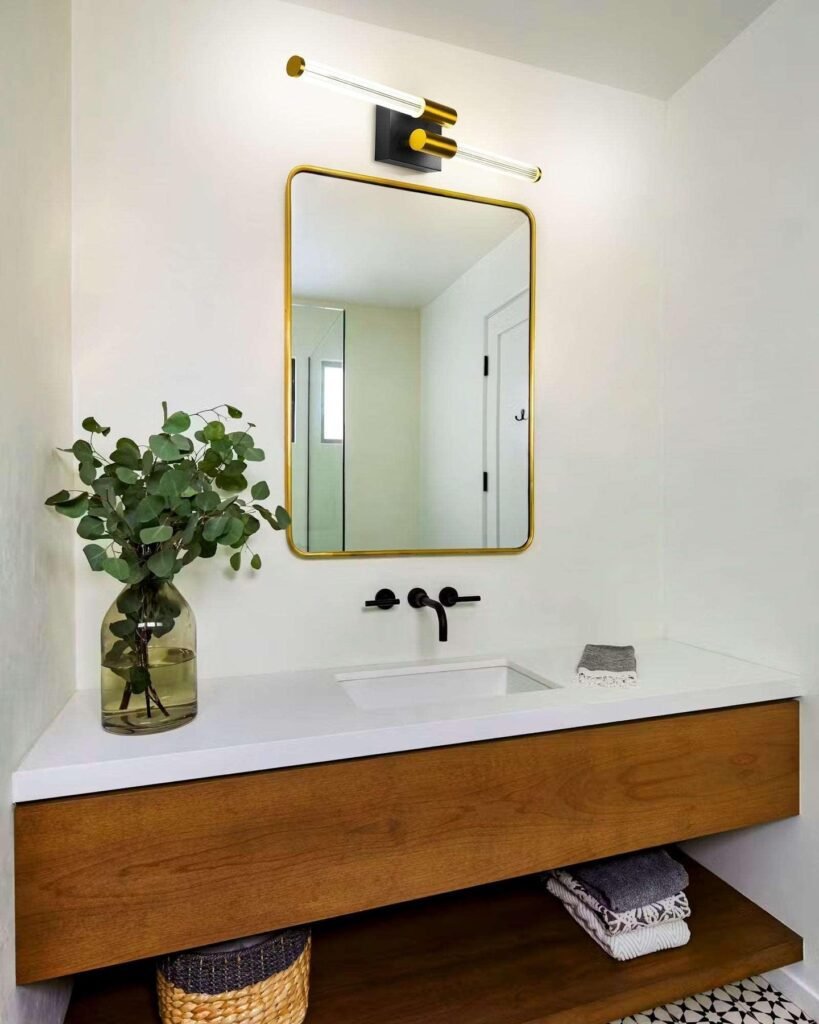
Bathroom lighting is criminally underestimated. That Hollywood strip light or basic builder bar above your mirror isn’t just ugly — it’s aging your entire bathroom. And replacing a light fixture is one of the easiest, most affordable updates you can make (most people can do it themselves in under an hour with a screwdriver and basic caution around the breaker).
What actually works is choosing a fixture that matches the mood you want. Going for a spa-like feel? A single warm-toned globe sconce or a linen-shade pendant creates that immediately. Want something modern and clean? Integrated LED vanity bars with a 3000K color temperature give you crisp, flattering light without the harsh bluish tone of 4000K+ bulbs.
The technical part matters: Color temperature in bathrooms should sit between 2700K–3000K for most spaces. Anything cooler makes the room feel clinical and, ironically, makes your tiles look worse because cool light picks up every imperfection and grout stain.
One more thing — if you can add a dimmer switch, do it. A bathroom that dims at night feels like a completely different, more luxurious space. The tiles didn’t change. The light did.
4. Introduce New Textiles, Storage, and Décor With Intention
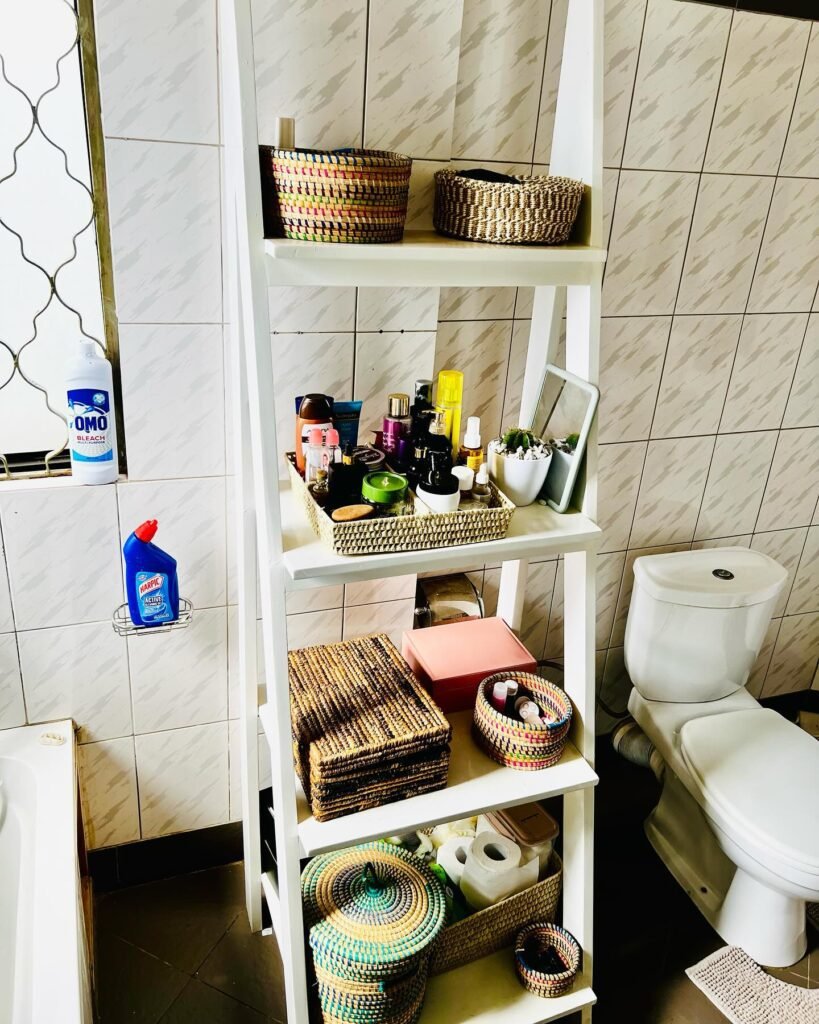
This is where a lot of people go wrong. They buy a cute new bath mat and some matching towels and wonder why the bathroom still feels dated. The issue is randomness. Individual accessories don’t transform a bathroom — a cohesive layer of textiles and objects does.
Think about it as building a color story that works with your existing tiles, not against them. If you have classic white subway tiles, you have an amazing neutral canvas — almost any palette works. If you have beige or almond tile (the ones from the ’80s and ’90s that everyone’s cursing), lean into warm earthy tones: terracotta, rust, warm cream, olive. Don’t fight the warmth of those tiles — complement it.
Practical breakdown of what to layer:
- A thick, textured bath mat (waffle-weave or Turkish cotton) instantly elevates the floor area
- Two or three oversized, high-quality towels folded neatly on a ladder shelf or hook rail
- One or two plants (a pothos, a small snake plant, or a trailing string of pearls in a ceramic pot)
- A small tray on the counter with curated items — a candle, a hand soap dispenser, one decorative object
- A woven or rattan basket for storage that adds organic texture
The reason this works is layering. Your eye moves through the room and encounters warmth, texture, and intentionality at multiple points. The tiles become the backdrop, not the star.
Storage matters more than aesthetics here too. A cluttered bathroom counter with random bottles and product packaging makes any bathroom feel chaotic. Decanting products into matching dispensers and using baskets or a small floating shelf to organize visually calms the room and makes it look designed, not just functional.
5. Paint the Walls (Even the Ceiling) and Add Architectural Detail
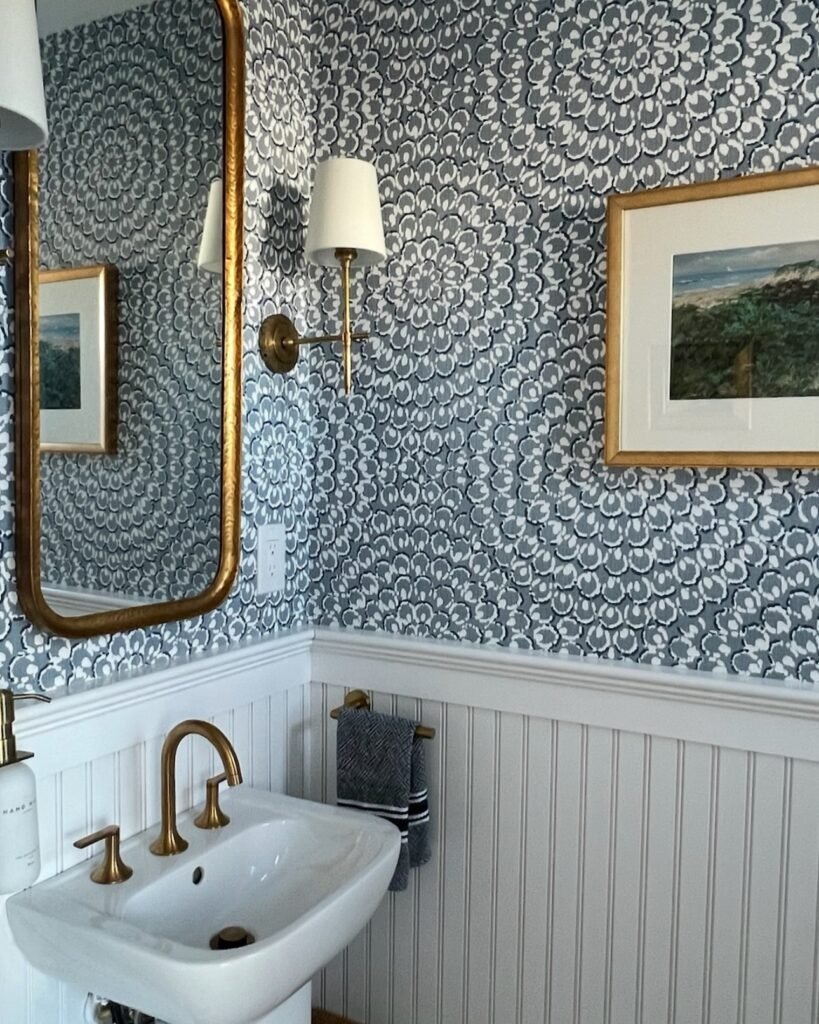
If your bathroom has any wall space that isn’t tiled — above the tile line, the ceiling, the back of the door — paint is your best friend. And I don’t mean just slapping on a fresh coat of the same color. I mean being deliberate and slightly bold.
Painting the ceiling a soft, moody color (think a very light dusty blue, warm greige, or even a deeper tone if the bathroom is small) creates what designers call an “enveloping” feel. It makes the room feel more intentional and finished. Pair that with a wall color that complements your tile rather than fighting it, and suddenly those tiles feel like they belong.
For small bathrooms specifically: Deep, saturated colors actually work better than pale ones in tight spaces. A small bathroom painted in a deep sage green or navy blue feels cozy and intentional. The same bathroom in off-white just looks small and forgotten.
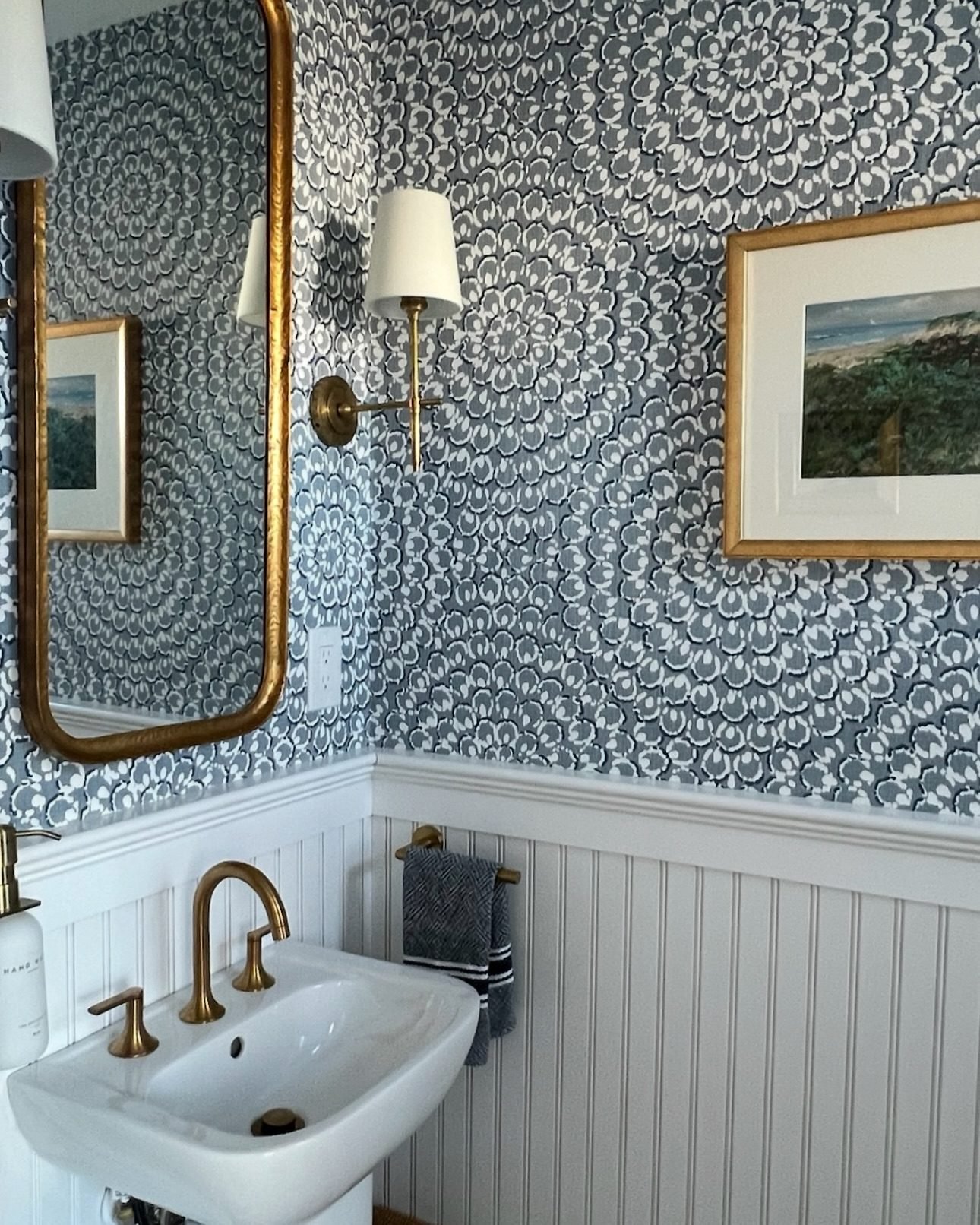
Beyond paint, consider adding simple architectural detail. Peel-and-stick beadboard panels (Lowe’s carries good ones) along the lower half of a wall add serious character. Simple chair rail molding framing the tile creates a custom, built-in look for minimal cost. These small structural additions change how the room reads — it goes from “standard bathroom” to “this person clearly put thought into this.”
What actually works here is contrast. If your tile is light, go slightly deeper with wall paint. If your tile is patterned, keep walls simple. Let one thing lead and everything else support it.
You Don’t Need New Tiles — You Need a Better Eye
The biggest takeaway here is that your tiles are rarely the actual problem. They’re usually just the most obvious thing because they cover the most surface area. But surfaces aren’t what make a bathroom feel beautiful or dated cohesion, light, and detail do.
Pick two or three of these updates and do them well. Don’t do all five halfheartedly. A freshly grouted bathroom with a new light fixture and intentional textiles will outperform a bathroom where everything got a shallow update. Start with the grout (seriously, do this first), then the lighting, then build the layers from there. You’ll be surprised how little “bathroom renovation” you actually needed.