
Small apartments, compact homes, tiny bedrooms, and crowded living spaces all come with the same challenge: figuring out where to put everything without making your home feel like a storage unit.
If you’ve ever opened a closet only to have something fall out, spent ten minutes looking for your keys, or wondered why your home feels messy even after cleaning, you’re definitely not alone.
The frustrating part is that most organization advice isn’t designed for real people living in small spaces. You’ll often see perfectly styled homes with built-in storage, giant closets, and almost no belongings. That’s not exactly helpful when you’re trying to fit your life into a one-bedroom apartment or a modest-sized home.
Here’s the thing: organizing a small space isn’t about buying dozens of storage bins. It’s about making every inch work harder. The best small space organization hacks focus on maximizing overlooked areas, reducing visual clutter, and creating systems that are easy to maintain.
If you’re tired of constantly battling clutter, these practical solutions can make a noticeable difference without requiring a complete home makeover.
Why Most Small Space Organization Attempts Fail
Before jumping into specific hacks, it’s worth talking about why organization systems often fall apart after a few weeks.
Buying Storage Before Solving the Problem
Most people get this wrong.
They see clutter, head to the store, buy a bunch of baskets, and hope everything magically gets organized.
The problem? Storage containers don’t eliminate clutter. They simply hide it.
If you’re storing things you rarely use, buying more containers just creates organized clutter instead of useful space.
What actually works is identifying what’s causing the mess first. Once you understand the problem, the right storage solution becomes obvious.
Ignoring Daily Habits
A beautiful organization system means nothing if it’s inconvenient.
For example, if putting away your shoes requires opening a closet, moving a basket, and stacking them perfectly, you’ll probably stop doing it after a few days.
The best organization systems are incredibly easy to maintain. If something takes more than a few seconds to put away, simplify the process.
The Golden Rule of Small Space Organization
Make Vertical Space Your Best Friend
When floor space is limited, your walls become valuable real estate.
Most homes use only a small portion of their vertical storage potential. Look around your space and notice how much empty wall area exists above furniture, doors, desks, and cabinets.
Adding storage upward instantly increases capacity without making rooms feel crowded.
Think about:
- Floating shelves above desks
- Wall-mounted hooks
- Tall bookcases
- Over-door organizers
- Hanging storage systems
This single principle forms the foundation of many successful small space organization hacks because it creates storage without consuming precious square footage.
1. Use the Back of Every Door
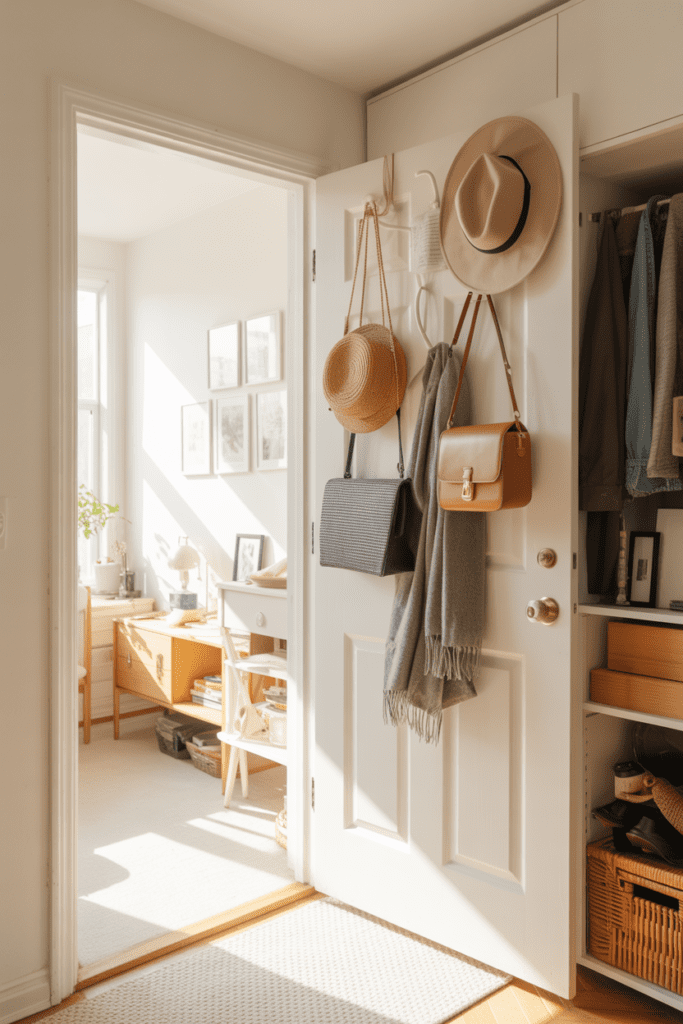
One of the most overlooked storage opportunities in any home is the back of a door.
Bathroom doors can hold towels, hair tools, and cleaning supplies.
Bedroom doors can store shoes, accessories, handbags, or folded clothing.
Pantry doors can hold spices, snacks, or kitchen essentials.
The reason this works so well is simple: you’re utilizing space that already exists but typically serves no purpose.
A quality over-the-door organizer can add an entire storage zone without taking up any floor space whatsoever.
2. Create Zones Instead of Storing by Category
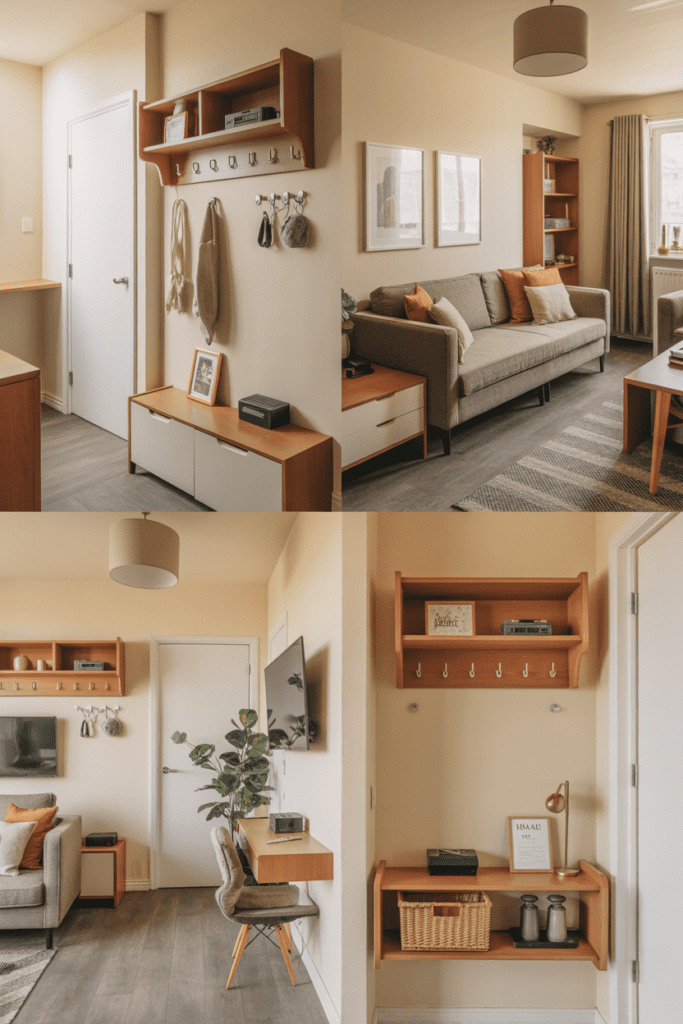
This organization trick completely changed how many people manage small spaces.
Instead of storing similar items together, store items based on where they’re used.
For example:
Keep phone chargers near your couch if that’s where you charge devices.
Store mail supplies near your entryway.
Keep cleaning wipes in the rooms where you actually use them.
This reduces movement throughout the house and makes maintaining organization much easier.
When everything has a logical home based on daily behavior, clutter naturally decreases.
3. Switch to Furniture That Works Double Duty
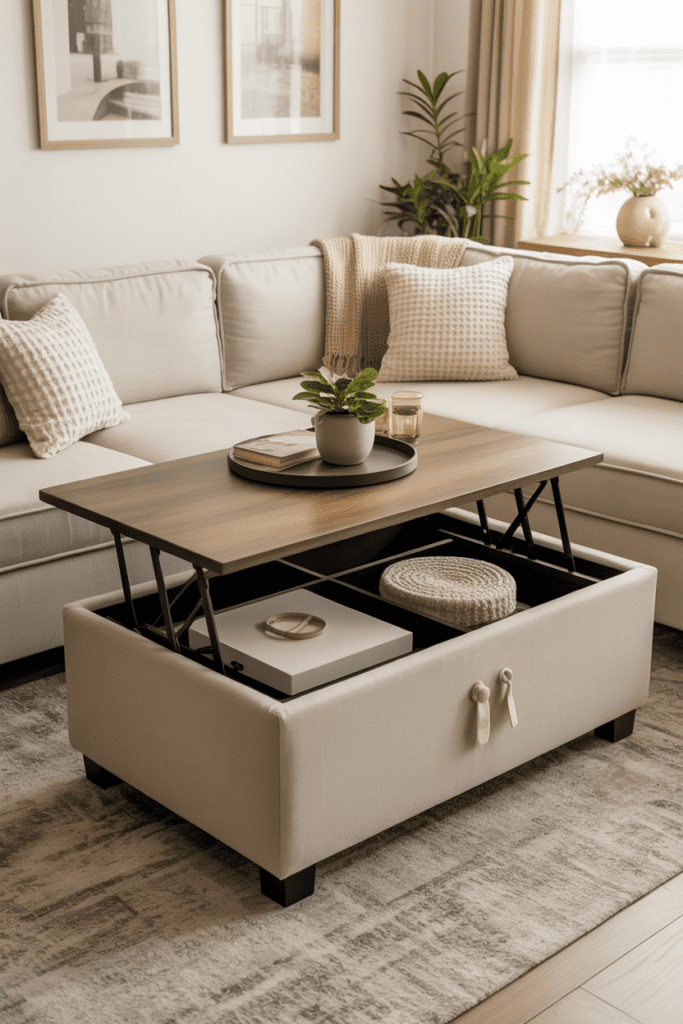
In small homes, every piece of furniture should earn its place.
What actually works is choosing furniture that serves multiple functions.
Consider:
Storage Ottomans
These provide seating, footrests, and hidden storage simultaneously.
Beds with Built-In Drawers
The area under a bed is often wasted space. Built-in storage turns that footprint into valuable organization space.
Lift-Top Coffee Tables
These can store blankets, electronics, books, and remote controls while still functioning as a regular coffee table.
Multi-functional furniture is one of the smartest small space organization hacks because it eliminates the need for additional storage furniture.
4. Stop Stacking and Start Filing
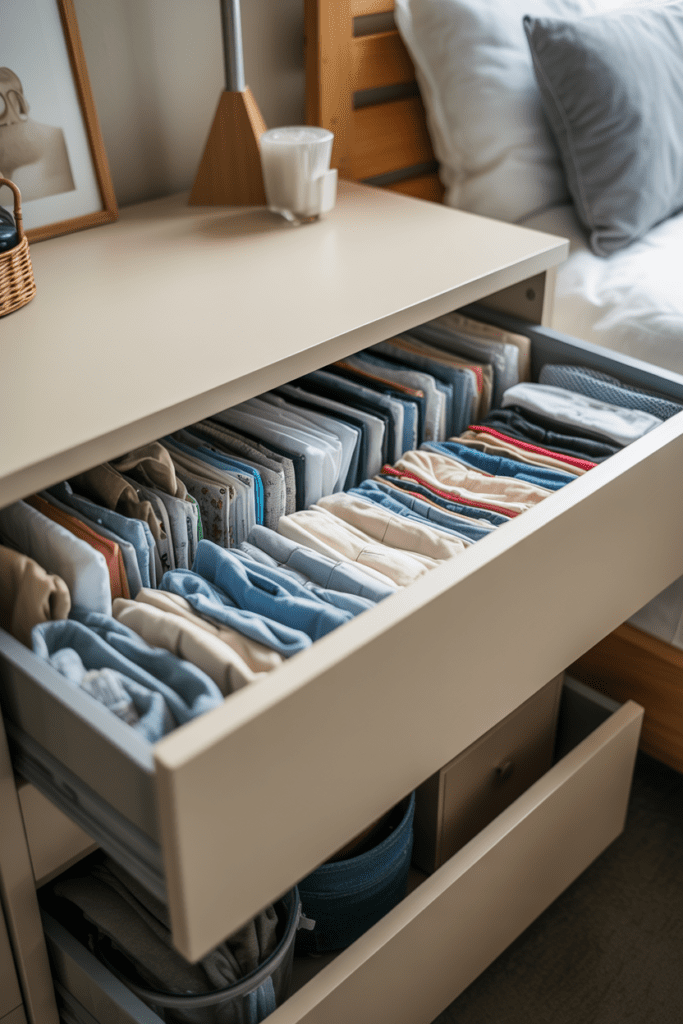
This trick works surprisingly well for clothing, paperwork, kitchen supplies, and even pantry items.
Most people stack items vertically.
The problem?
You can only see the top item.
Instead, store items upright like files in a filing cabinet.
For example:
- Fold shirts vertically
- Store baking sheets upright
- Organize cutting boards vertically
- File paperwork instead of stacking it
When everything is visible at once, items are easier to find and more likely to stay organized.
5. Add Floating Shelves in Unexpected Places
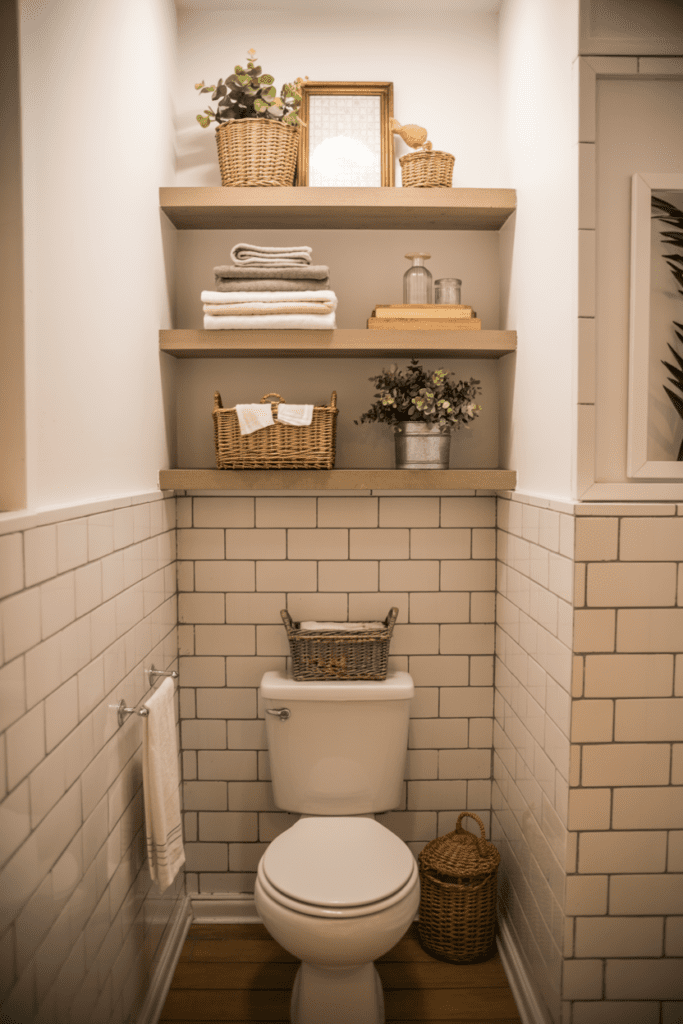
Most homeowners think of shelves only for living rooms or offices.
But some of the best shelf locations are places people overlook.
Consider adding shelves:
- Above doorways
- Above toilets
- Above laundry machines
- Over desks
- In kitchen corners
These areas often sit empty despite offering valuable storage potential.
A few floating shelves can dramatically increase storage while maintaining an open appearance.
6. Use Clear Containers for Frequently Used Items
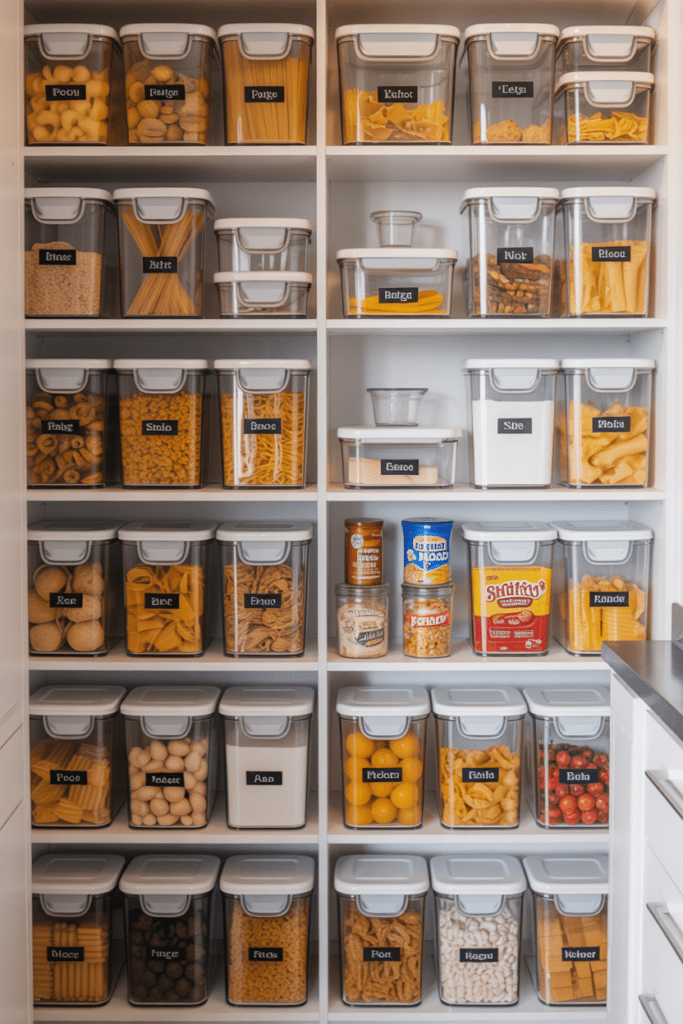
Opaque bins seem attractive because they hide clutter.
But they often create a different problem: out of sight, out of mind.
Clear containers make it easy to see what you have without digging through multiple boxes.
This works especially well for:
- Pantry staples
- Craft supplies
- Office supplies
- Children’s toys
- Bathroom essentials
When you can instantly identify contents, you spend less time searching and more time maintaining order.
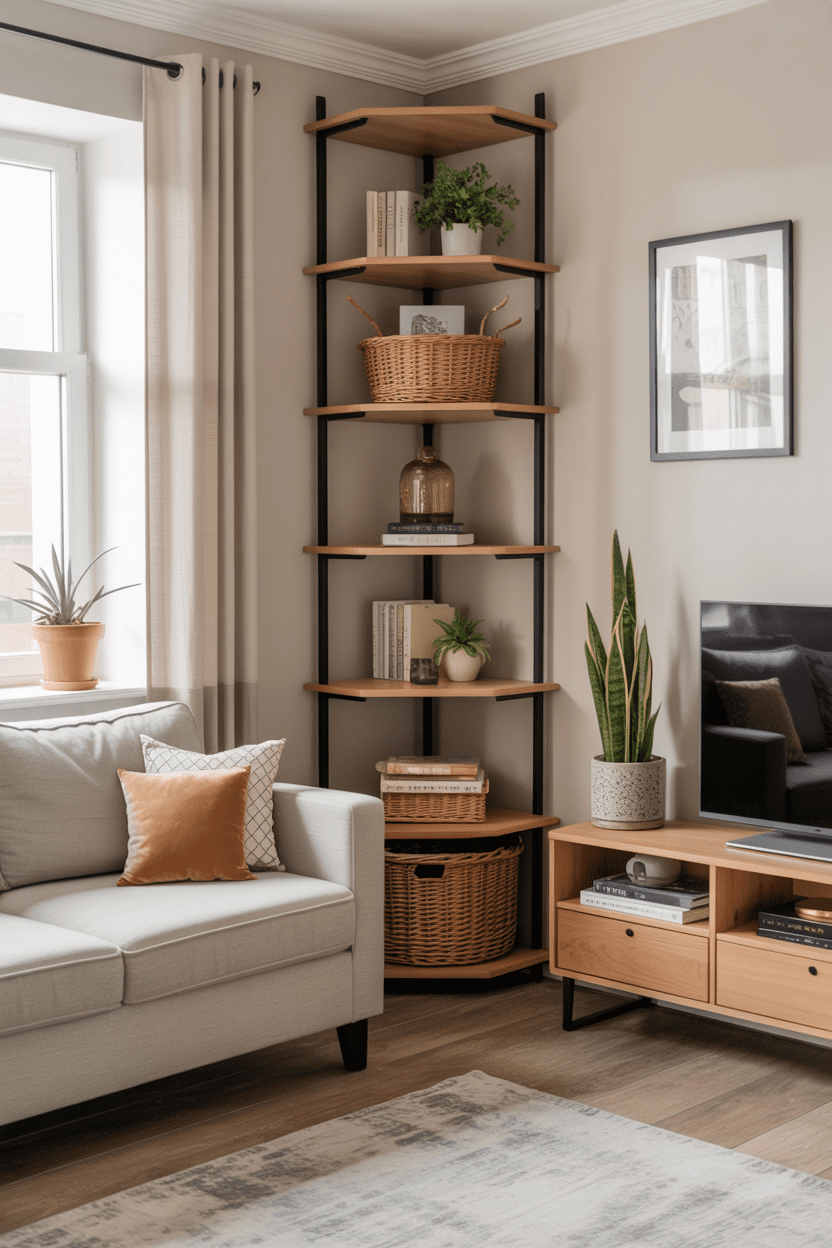
7. Turn Dead Corners Into Storage Areas
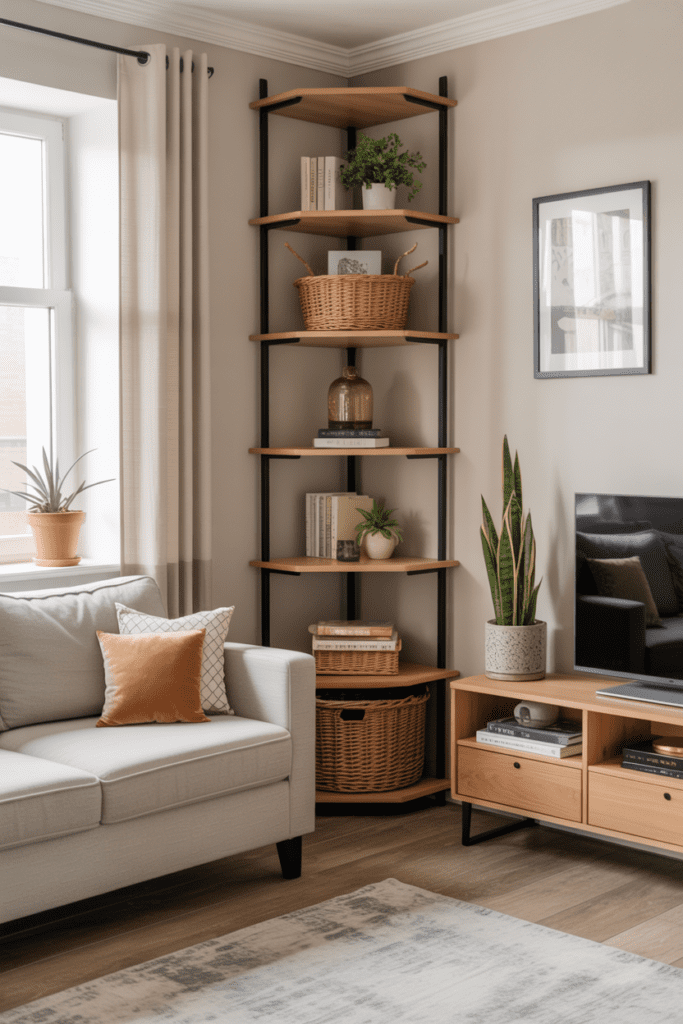
Corners are notorious space-wasters.
Many homes have awkward corners that collect random clutter because they don’t serve a clear purpose.
What actually works is intentionally assigning a function to these areas.
Examples include:
- Corner shelving units
- Slim storage carts
- Corner desks
- Decorative baskets
- Tall plants with hidden storage bases
Even a small corner can provide surprisingly useful storage when utilized properly.
8. Create a Landing Zone Near the Entrance
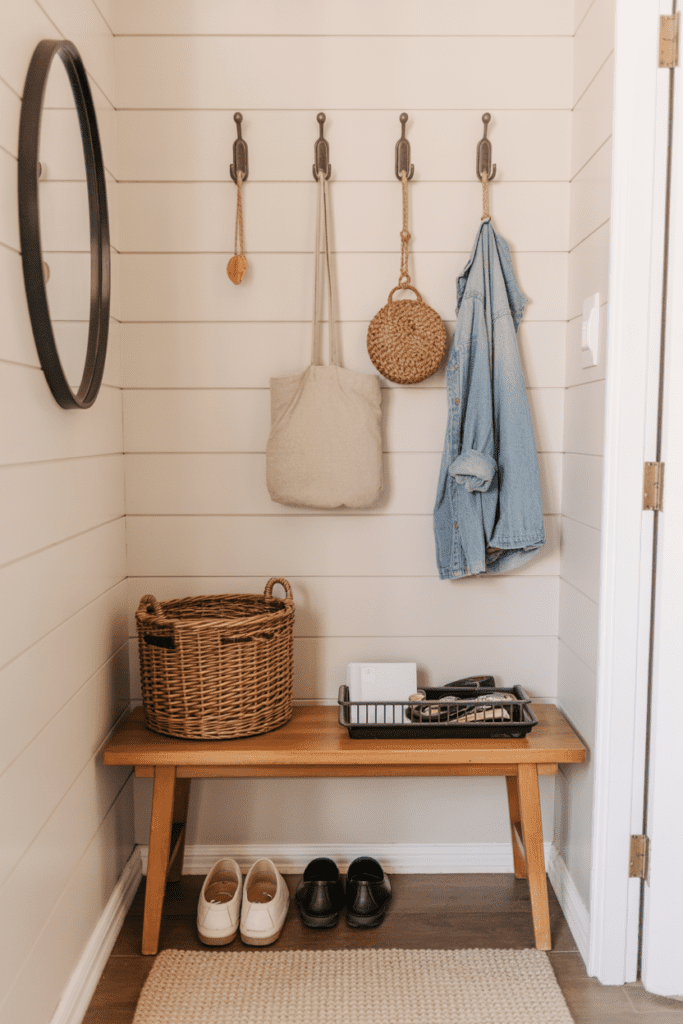
One of the biggest sources of clutter is the stuff that enters your home every day.
Keys.
Mail.
Bags.
Shoes.
Jackets.
Without a designated place for these items, they quickly spread throughout the house.
Create a simple entryway station that includes:
Hooks
For coats, bags, and hats.
A Small Tray
For keys and wallets.
A Basket
For miscellaneous daily items.
This simple setup prevents clutter from multiplying before it starts.
9. Use Drawer Dividers Everywhere
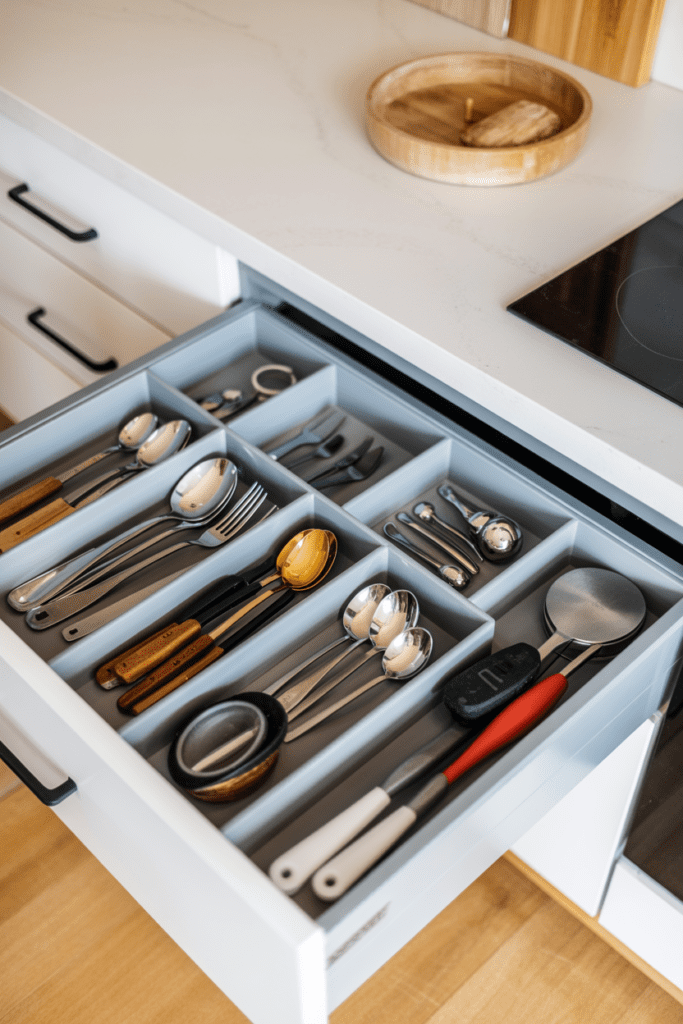
Drawers often become clutter magnets.
Without dividers, items shift around until everything becomes a chaotic pile.
Drawer dividers create boundaries that naturally encourage organization.
They work especially well in:
- Kitchen drawers
- Bathroom vanities
- Office desks
- Bedroom dressers
The goal isn’t perfection. It’s making it easier to find things quickly.
10. Maximize Under-Bed Storage
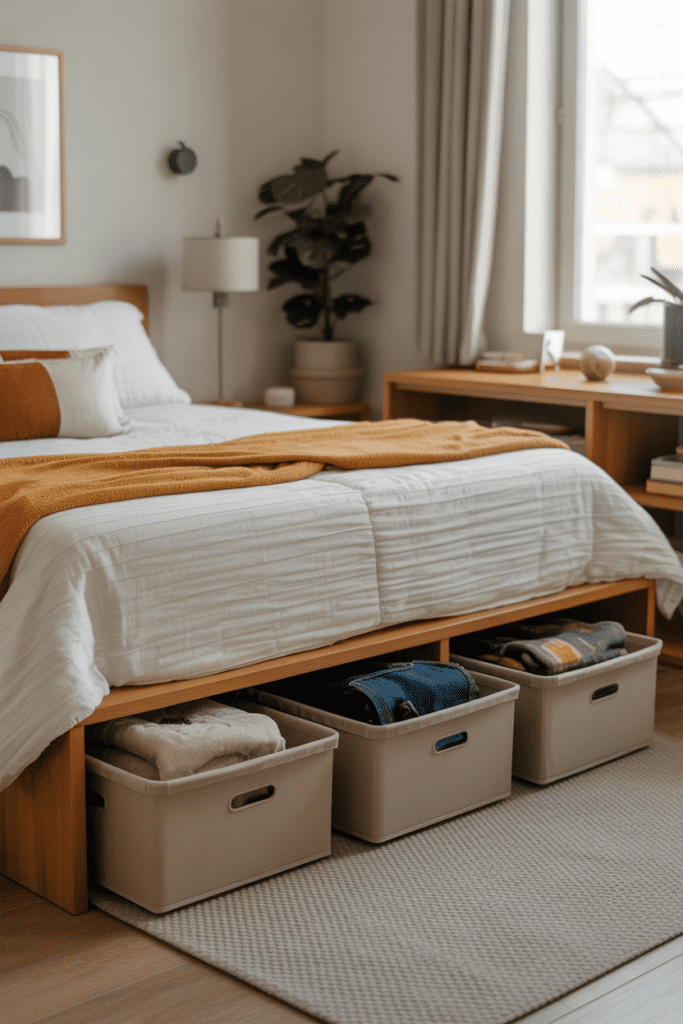
Under-bed space is some of the most valuable storage in a small home.
Yet many people either ignore it or use it inefficiently.
Store items you don’t need daily, such as:
- Seasonal clothing
- Extra bedding
- Holiday decorations
- Shoes
- Travel gear
Use low-profile containers that slide easily underneath.
This keeps belongings accessible while freeing up closet and cabinet space.
11. Use Pegboards Beyond the Garage
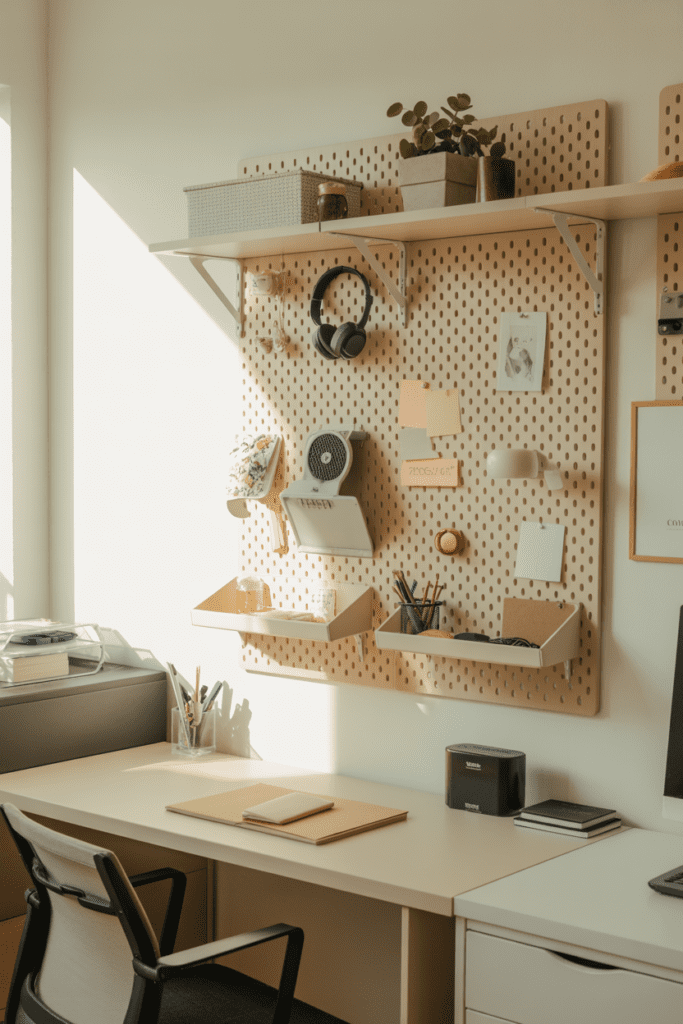
Pegboards aren’t just for tools anymore.
Modern pegboard systems can organize nearly anything.
Consider using them in:
Kitchens
Store utensils, pans, and measuring tools.
Home Offices
Organize supplies and accessories.
Craft Rooms
Keep materials visible and accessible.
Entryways
Hang bags, keys, and daily essentials.
Because pegboards are customizable, they adapt as your needs change.
12. Follow the One-In, One-Out Rule
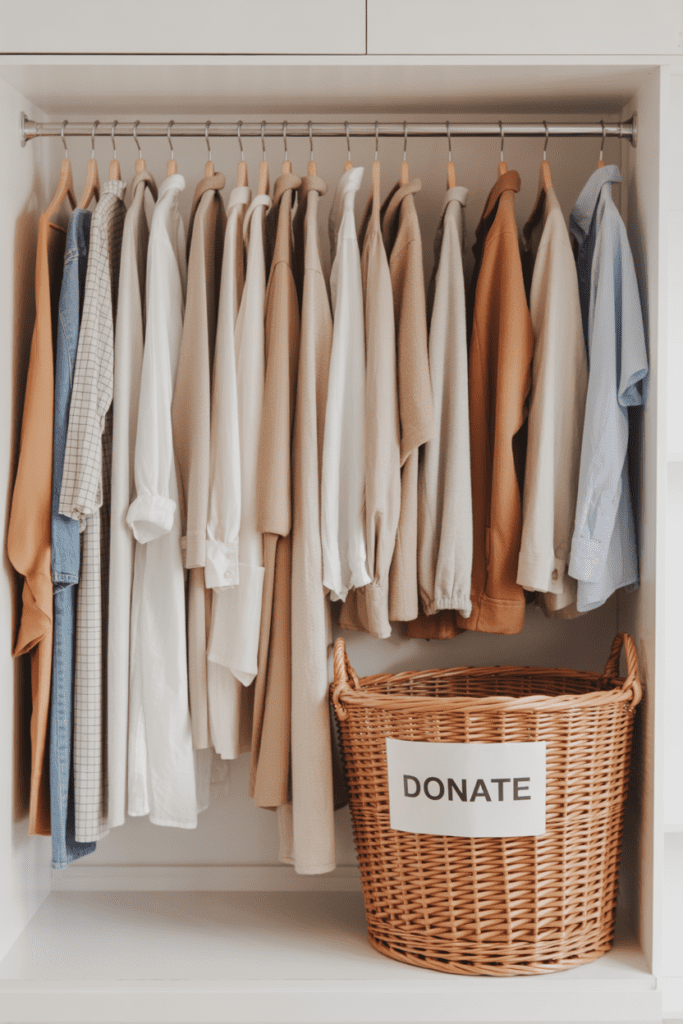
No organization system can survive endless accumulation.
This simple rule helps maintain balance.
Whenever a new item enters your home, remove a similar item.
Buy a new sweater?
Donate an old one.
Get new kitchen gadgets?
Remove something you never use.
The beauty of this approach is that it prevents clutter from growing over time.
It’s a habit rather than a storage solution, but it’s one of the most effective long-term organization strategies.
13. Store Less in Prime Real Estate
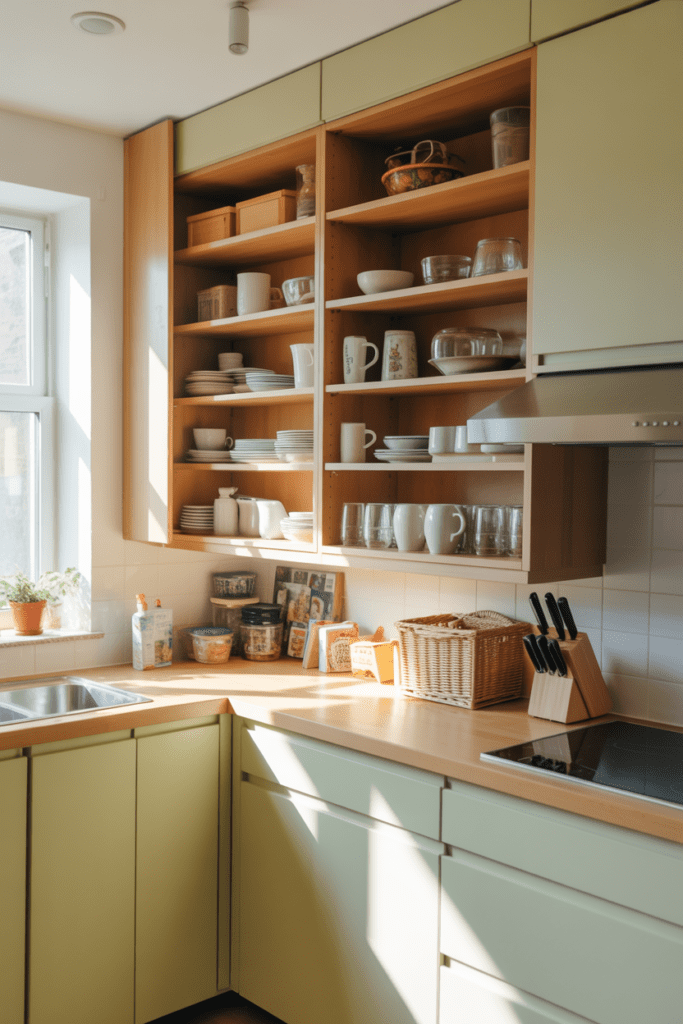
Not all storage locations are equally valuable.
The easiest-to-reach spaces should hold the items you use most often.
Many people do the opposite.
They store rarely used items in convenient locations and everyday essentials in hard-to-reach areas.
Take a look at:
- Eye-level shelves
- Frequently used drawers
- Countertop storage
- Main closet sections
Reserve these spaces for daily-use items.
Move occasional-use belongings to higher shelves, under-bed storage, or less accessible areas.
This small adjustment can make your home feel significantly more functional.
How to Keep a Small Space Organized Long-Term
The secret isn’t finding better storage products.
It’s creating systems that fit your lifestyle.
Here’s what tends to work best:
Organize in Small Projects
Trying to organize your entire home in one weekend usually leads to burnout.
Focus on one drawer, one shelf, or one closet at a time.
Prioritize Convenience
If an organization system feels annoying, you’ll stop using it.
Choose solutions that make daily life easier, not more complicated.
Review Every Few Months
Needs change.
Storage systems should change too.
Take a quick look every season and adjust as necessary.
Small tweaks are much easier than complete reorganizations.
let’s Conclude
The best small space organization hacks aren’t about squeezing more stuff into your home. They’re about making your space work smarter.
Start by using vertical space, creating designated zones, and choosing storage solutions that match your daily habits. Then focus on overlooked areas like doors, corners, and under-bed storage. These small changes add up quickly.
Most importantly, don’t try to implement all 13 hacks at once. Pick two or three that solve your biggest frustration right now and start there. Once you see how much easier daily life becomes, you’ll naturally find more opportunities to organize the rest of your space.