

If you’ve ever walked into your bedroom, looked around, and immediately wanted to walk back out, you’re definitely not alone. Clothes are draped over chairs, random chargers have somehow multiplied on the nightstand, and that pile in the corner? You keep telling yourself you’ll deal with it “this weekend.”
The frustrating part is that your bedroom is supposed to be the one place where you can relax. Instead, it quietly reminds you of everything you haven’t finished yet. And the more clutter builds up, the harder it feels to even know where to start.
Here’s the thing: learning how to declutter your bedroom without feeling overwhelmed isn’t about finding the perfect organizing system or buying expensive storage bins. It’s about changing your approach so the process feels manageable instead of exhausting.
Most people don’t struggle because they’re lazy. They struggle because they try to tackle everything at once. That almost always leads to burnout halfway through, leaving the room even messier than before.
If you’ve been putting off organizing your bedroom because it feels like too much work, this guide will show you a simpler way that actually works.
Why Bedroom Clutter Feels So Overwhelming
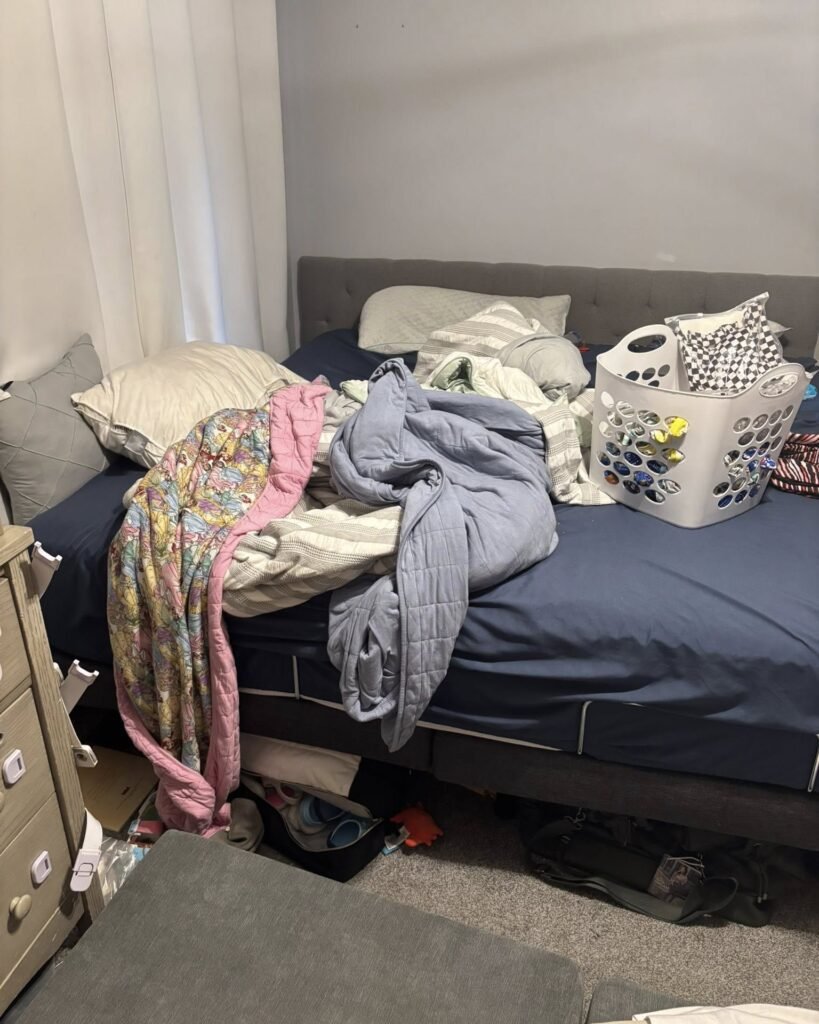
Your bedroom isn’t just another room in the house. It’s where your day starts and ends, so clutter has a bigger emotional impact than you might realize.
When every surface is covered, your brain constantly processes visual information. Even if you aren’t actively thinking about the mess, your mind notices it. That’s one reason why cluttered bedrooms often make people feel anxious or mentally drained.
Another problem is that bedroom clutter usually builds slowly.
One shirt on a chair doesn’t seem like a big deal.
Then it becomes three shirts.
A hoodie joins the pile.
Next week there’s a pair of jeans.
Eventually, the chair disappears under a mountain of clothes.
Because clutter happens gradually, we stop noticing how much has accumulated until cleaning feels impossible.
What actually works is recognizing that you don’t have to finish everything today. You just need to make tomorrow’s version of your bedroom a little better than today’s.
Common Mistakes That Make Decluttering Harder
Trying to Clean the Entire Room in One Day
This is probably the biggest mistake people make.
You wake up motivated, pull everything out of your closet, empty every drawer, dump storage bins onto the floor, and convince yourself you’ll finish before dinner.
Four hours later you’re surrounded by bigger piles than when you started.
Now you’re tired, frustrated, and tempted to shove everything back where it came from.
Decluttering isn’t a race.
Small wins are much more sustainable than marathon cleaning sessions.
Organizing Before Decluttering
Storage baskets are great.
Drawer dividers are helpful.
Matching bins look beautiful.
But none of those solve the real problem if you’re simply organizing things you don’t actually need.
Most people get this wrong.
Instead of asking, “Where should I store this?”
Ask, “Do I even need to keep this?”
You’ll often discover that removing items creates more space than buying another organizer ever could.
Keeping Things “Just in Case”
Almost everyone has these items.
Old phone chargers.
Shoeboxes.
Random cords.
Clothes that haven’t fit in years.
Broken decorations you plan to fix someday.
The “just in case” mindset fills bedrooms faster than anything else.
Realistically, if something has been sitting untouched for two years, chances are incredibly small that you’ll suddenly need it tomorrow.
Start Small Instead of Starting Everywhere
Here’s a simple mindset shift that changes everything.
Instead of thinking:
“I need to declutter my bedroom.”
Think:
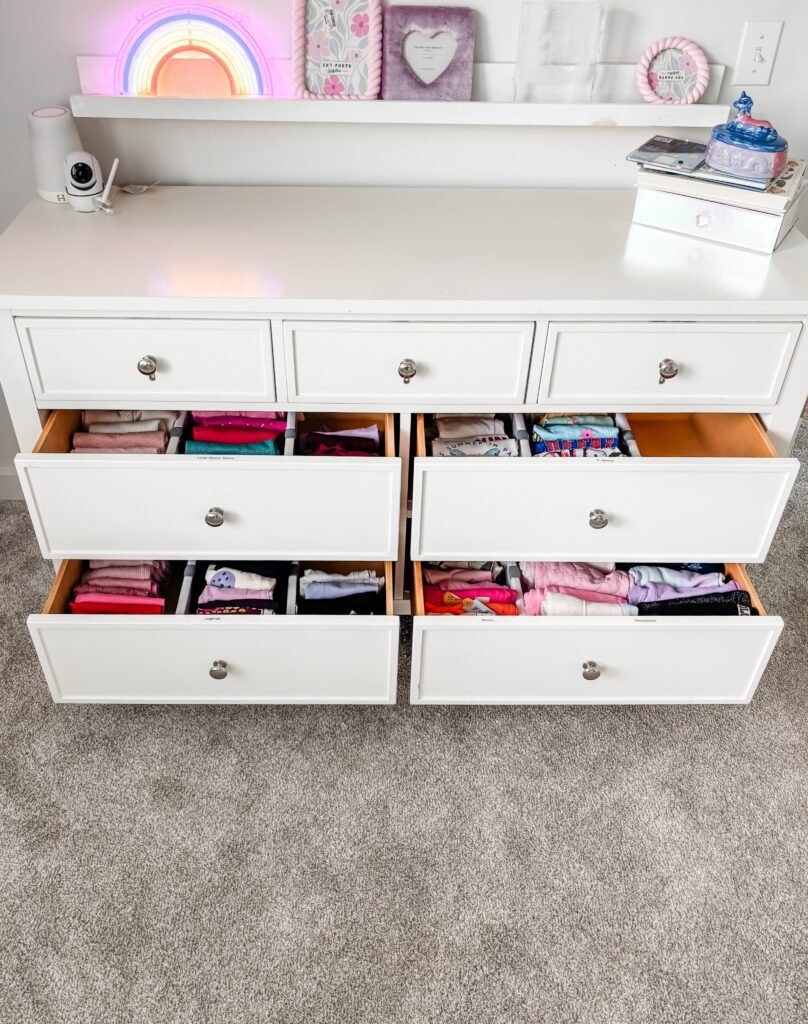
“I’m going to clear one drawer.”
That’s it.
One drawer.
Or one shelf.
Or one nightstand.
When your brain sees a small task, it doesn’t panic.
Once you finish that first area, you’ll often feel motivated to continue naturally.
Momentum beats motivation every single time.
Pick One Category at a Time
Another reason people feel overwhelmed is because every type of item gets mixed together.
Clothes.
Books.
Electronics.
Papers.
Decor.
Jewelry.
Shoes.
Trying to make decisions about all of them at once quickly becomes mentally exhausting.
Instead, focus on one category.
Today might be clothes.
Tomorrow could be your nightstand.
The next day, shoes.
Each completed category gives your room visible progress without draining your energy.
A Step-by-Step Method That Actually Feels Manageable
Step 1: Remove Obvious Trash First
Start with the easiest wins.
Empty water bottles.
Receipts.
Food wrappers.
Shipping boxes.
Old magazines.
Anything that’s clearly garbage.
This creates instant visual improvement without requiring difficult decisions.
Step 2: Put Everyday Items Back Where They Belong
Next, gather items that already have a home.
Books go on shelves.
Dirty clothes go in the laundry basket.
Jewelry goes in its tray.
Chargers go in a drawer.
You’d be surprised how much cleaner your bedroom looks after this simple step.
Step 3: Make Three Simple Piles
Forget complicated sorting systems.
Use just three piles.
- Keep
- Donate
- Toss
That’s enough.
Adding categories like “Maybe,” “Storage,” or “Deal with later” often creates more clutter instead of less.
If you’re unsure about an item, ask yourself one simple question.
“If I were shopping today, would I spend money to bring this home again?”
If the answer is no, it may be time to let it go.
Step 4: Finish One Area Before Moving On
This part matters more than people realize.
Don’t bounce between your closet, dresser, under-bed storage, and nightstand.
Finish one completely.
Seeing a finished space builds confidence.
Seeing five half-finished spaces creates stress.
Decluttering Clothes Without Regret
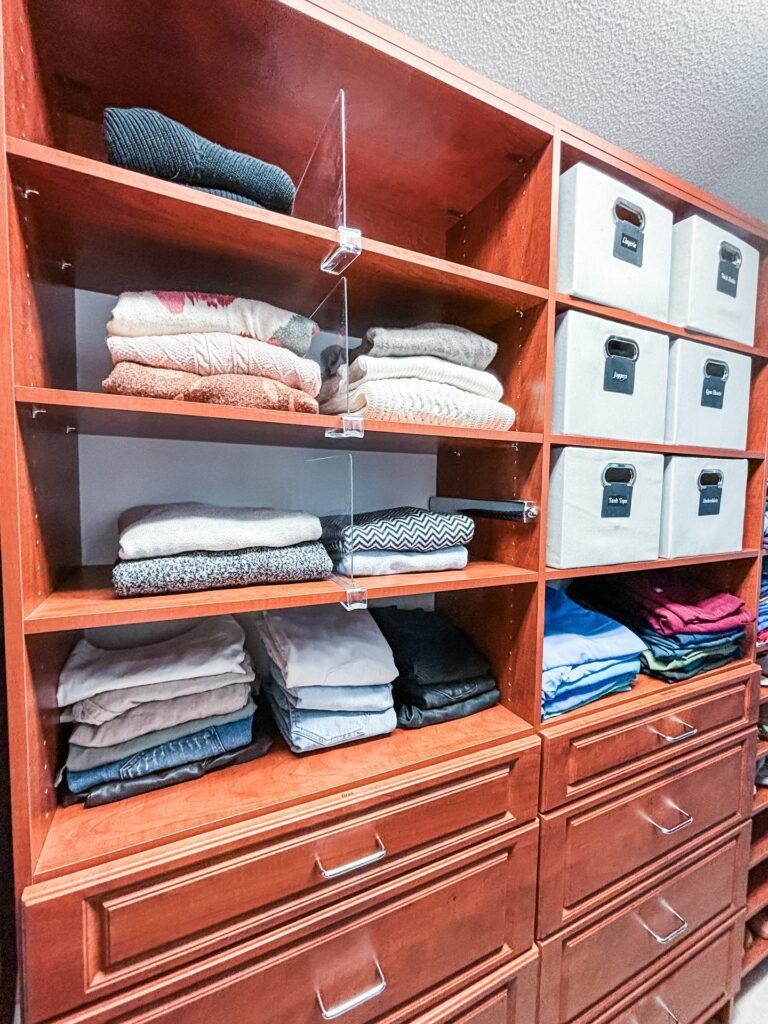
Clothing is usually the hardest category.
Every piece seems connected to a memory, a future event, or the version of ourselves we hope to become.
Here’s what actually works.
Separate your wardrobe into groups.
Daily favorites.
Occasional wear.
Seasonal clothing.
Everything else.
Most people wear the same small group of clothes repeatedly.
The rest simply takes up valuable space.
If you haven’t worn something in over a year, ask yourself why.
Is it uncomfortable?
Doesn’t fit?
Needs repairs?
No longer matches your style?
Being honest with these answers makes decisions much easier.
Stop Saving Clothes for an Imaginary Future
This can be surprisingly emotional.
Many closets contain clothes for a future version of ourselves.
“When I lose weight.”
“When this trend comes back.”
“When I finally have somewhere to wear it.”
Sometimes those reasons make sense.
Often they don’t.
Your closet should serve your life today—not a hypothetical future.
The Hidden Clutter Most People Forget
People naturally focus on visible mess.
But hidden clutter quietly fills bedrooms too.
Look inside:
- Bedside drawers
- Under the bed
- Closet shelves
- Storage ottomans
- Dresser drawers
- Decorative baskets
These spaces become dumping grounds because nobody sees them.
Ironically, hidden clutter often creates visible clutter because you can never find what you’re looking for.
Taking time to clear these forgotten areas makes daily routines much easier.
Create Simple Systems That Prevent Future Clutter

Decluttering once isn’t enough.
Without simple habits, clutter always comes back.
The goal isn’t perfection.
It’s making cleanup easier.
Give Everything a Home
When every item has a designated place, putting things away requires almost no thought.
Instead of wondering where your headphones belong every night, they always go in the same drawer.
The same goes for books, jewelry, skincare, chargers, and accessories.
Decision fatigue disappears.
Follow the One-Minute Rule
If something takes less than a minute to put away, do it immediately.
Hang the jacket.
Put the book back.
Throw away the receipt.
Place dirty clothes in the hamper.
Tiny actions prevent huge cleaning sessions later.
Reset Your Bedroom Every Evening
This habit takes about five minutes.
Fluff pillows.
Fold the throw blanket.
Return cups to the kitchen.
Put away clothes.
Clear your nightstand.
Waking up to a tidy bedroom feels completely different from waking up surrounded by yesterday’s mess.
Make Your Bedroom Feel More Peaceful After Decluttering
Decluttering isn’t only about removing things.
It’s also about making your bedroom feel calm.
Once you’ve cleared unnecessary items, you’ll notice the room naturally feels larger.
Now keep decorating simple.
Choose a few meaningful decorations instead of filling every shelf.
Leave some empty surfaces.
Negative space isn’t wasted space.
It gives your eyes somewhere to rest.
Soft lighting, clean bedding, and one or two personal touches often create a more relaxing bedroom than dozens of decorative objects ever could.
How to Stay Motivated When You Want to Quit
Every decluttering project reaches a point where you lose motivation.
That’s normal.
The trick isn’t avoiding that feeling.
It’s planning for it.
Set a timer for 20 minutes instead of promising yourself an all-day cleaning session.
Take before-and-after photos.
Visible progress keeps motivation alive.
Celebrate completed areas instead of focusing on what’s left.
And don’t compare your bedroom to perfectly staged photos online.
Real homes are lived in.
Your goal is a bedroom that supports your daily life—not one that looks like a furniture showroom.
Final Thoughts
Learning how to declutter your bedroom without feeling overwhelmed is really about making the process smaller, simpler, and more realistic. You don’t need a free weekend, dozens of storage products, or endless motivation. You just need a place to start.
Focus on one area, make thoughtful decisions, and build small habits that keep clutter from creeping back in. Progress might feel slow at first, but every drawer you clear and every unnecessary item you let go of makes your bedroom a little more peaceful.