
Your entryway is probably one of the smallest spaces in your home, but it also gets more daily traffic than almost any other room. It’s where shoes get kicked off after work, keys disappear, bags pile up, and packages seem to collect overnight. If your front door area constantly feels messy no matter how often you clean it, you’re definitely not the only one.
The frustrating part is that a cluttered entryway affects more than just appearances. Starting your morning by searching for your keys or stepping over shoes isn’t exactly the calm beginning most of us want. And after a long day, walking into a pile of clutter doesn’t make coming home feel very relaxing either.
Here’s the thing: learning how to organize a small entryway that works for everyday life isn’t about creating a picture-perfect space you’ll only see on social media. It’s about designing a system that fits the way you and your family actually live. When everything has a logical place, keeping the area tidy becomes much easier—and you spend a lot less time cleaning up the same mess over and over.
The best part is you don’t need a large mudroom or expensive custom storage to make it happen. Even the smallest entryway can become functional with a few smart changes. Let’s start with what usually goes wrong and how to fix it.
Why Small Entryways Become Clutter Magnets
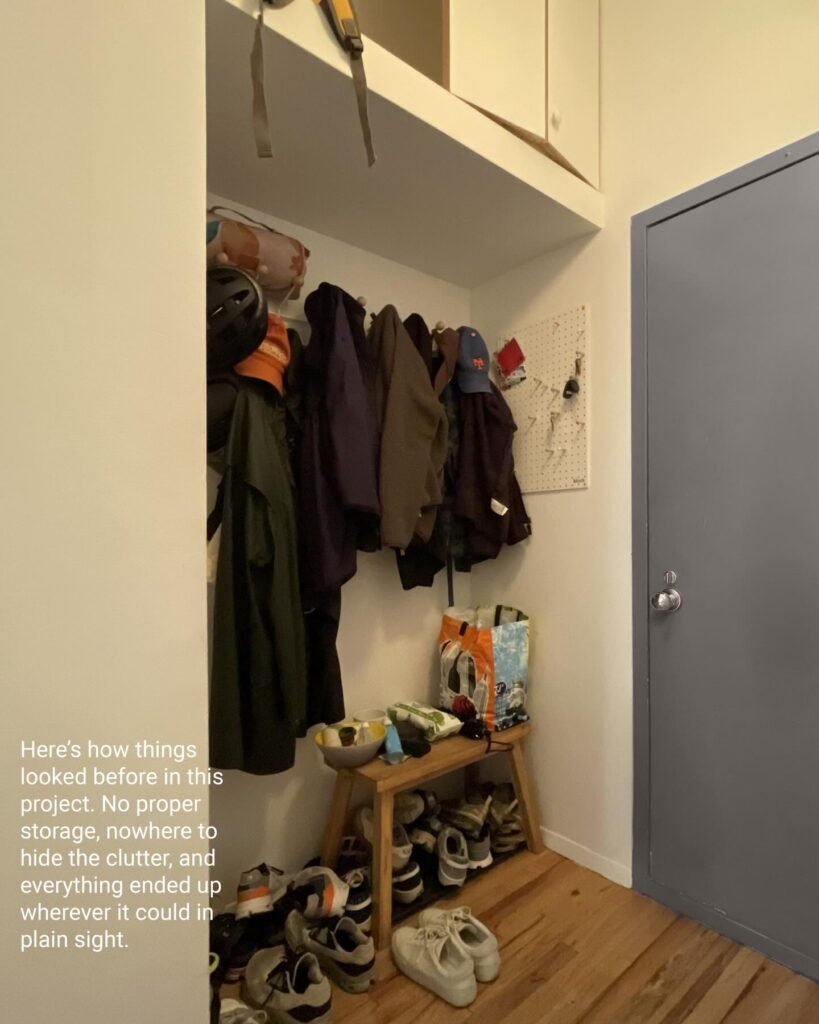
Most people blame the size of their entryway, but that’s usually only part of the problem.
A small entrance has to handle dozens of everyday items. Shoes, jackets, backpacks, umbrellas, dog leashes, shopping bags, mail, and keys all compete for the same limited space. Without a simple system, those things naturally end up wherever there’s an empty spot.
Another reason clutter builds up is because we treat the entryway like a temporary holding area.
You set your shoes down because you’ll put them away later.
The mail stays on the console table because you’ll sort it tomorrow.
Your jacket hangs over a chair instead of a hook because you’re in a hurry.
Individually, these decisions don’t seem like a big deal. But after a few days, that “temporary” clutter turns into the permanent mess you’re constantly trying to clean.
What actually works is accepting that the items you use every day deserve permanent homes right by the door. Once everything has a designated place, putting things away takes only a few seconds.
Common Mistakes That Make an Entryway Harder to Keep Organized
Trying to Store Too Much
One of the biggest mistakes is thinking every outdoor item belongs near the front door.
It doesn’t.
Only keep what you use regularly in the entryway.
For example, your everyday sneakers deserve a spot near the entrance because you wear them almost daily. The hiking boots you use once every few months don’t.
The same goes for heavy winter coats during summer or beach bags in the middle of winter.
The less you store in a small space, the easier it becomes to keep organized.
Buying Storage Before Decluttering
It’s tempting to shop for baskets, benches, and organizers first.
Most people do exactly that.
But adding storage before removing unnecessary items usually creates prettier clutter—not less clutter.
Instead, empty the entire entryway first.
Go through every pair of shoes, every reusable shopping bag, every umbrella, and every random item that’s accumulated near the door.
Only after you’ve decided what actually belongs there should you buy storage.
You’ll probably need less than you expected.
Ignoring Your Daily Habits
Here’s something people don’t talk about enough.
Organization should fit your routine—not someone else’s.
If your family always drops backpacks near the door after school, that’s not necessarily a bad habit.
The problem is that there’s no designated place for them.
Adding a few sturdy hooks may solve the issue far better than expecting everyone to carry bags to a bedroom closet every afternoon.
The easier a system is to use, the more likely everyone will stick with it.
Forgetting About Vertical Space
Small entryways often have plenty of unused wall space.
That’s valuable storage.
Installing hooks, floating shelves, or a narrow wall organizer gives you room to store essentials without taking up precious floor space.
Keeping more items off the ground also makes the entryway feel larger and easier to clean.
Even a single floating shelf above a bench can hold keys, sunglasses, wallets, or decorative baskets while leaving the floor clear.
Step 1: Start With a Completely Empty Entryway
If you’re serious about getting organized, don’t try to work around existing clutter.
Take everything out.
Yes—everything.
Move shoes, coats, bags, baskets, and decorative pieces into another room temporarily.
Starting with a blank space makes it much easier to decide what deserves to come back.
It also helps you notice areas you weren’t fully using before.
Maybe there’s enough wall space for extra hooks.
Maybe a bulky cabinet is making the area feel cramped.
Or maybe you realize half the clutter never belonged there in the first place.
Beginning with an empty slate helps you organize intentionally instead of simply rearranging the mess.
Step 2: Keep Only What Supports Your Daily Routine
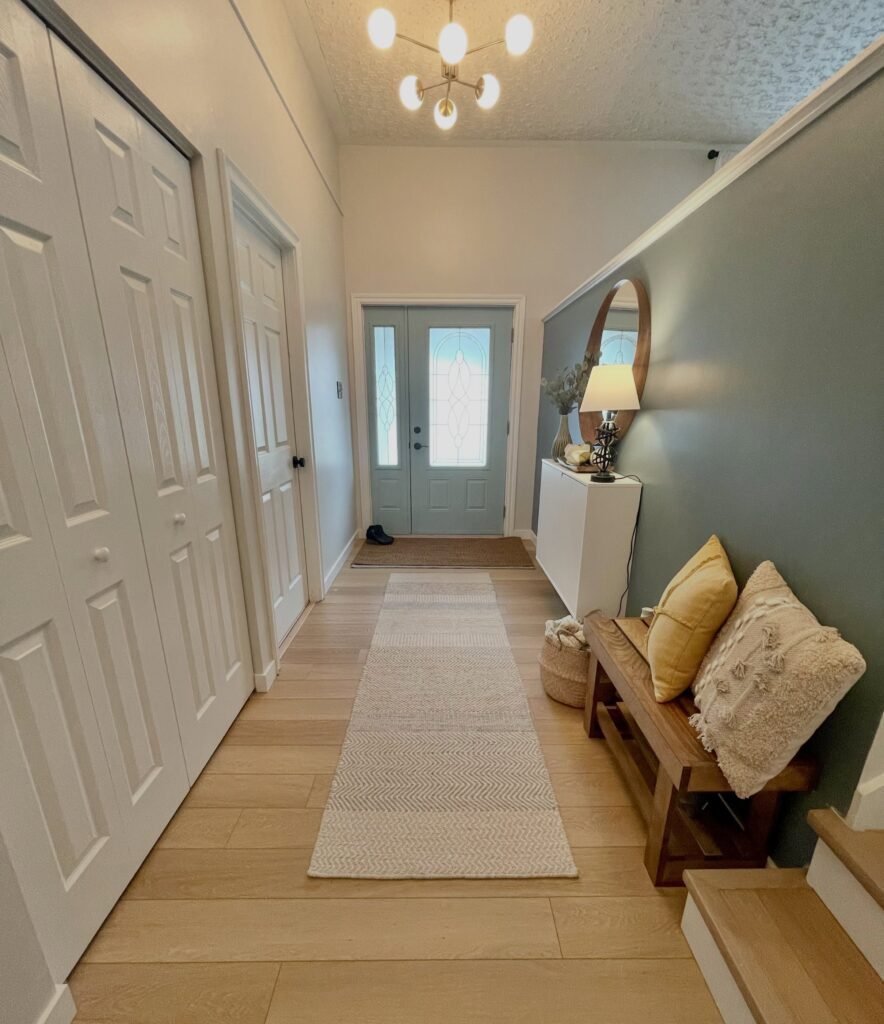
Now it’s time to sort your belongings.
Instead of organizing everything by category, think about how often you actually use each item.
Ask yourself a simple question:
Would I realistically need this tomorrow?
If the answer is yes, it probably belongs in your entryway.
Examples include:
- Everyday shoes
- Keys
- Wallet
- Purse or work bag
- Dog leash
- Frequently used jackets
Items used only occasionally can live somewhere else.
This one decision instantly frees up valuable storage space.
Remember, a small entryway doesn’t need to store everything you own.
It only needs to support your everyday routine.
Step 3: Create Small Zones Instead of One Big Drop Spot
One large catch-all area almost always turns into clutter.
A better approach is creating several smaller zones.
For example:
Key Zone
Keep a decorative tray or small bowl where everyone naturally drops their keys.
No more searching through pockets before leaving the house.
Shoe Zone
Use a slim shoe rack or tray that holds only the pairs currently being worn.
This keeps footwear contained instead of spreading across the floor.
Bag Zone
Install hooks at a comfortable height for backpacks, purses, and work bags.
Giving each family member their own hook makes mornings much more organized.
Mail Zone
A small basket or wall organizer works much better than letting letters pile up on every available surface.
The goal is simple.
Every item should have one obvious place where it belongs.
When people don’t have to think about where something goes, they’re much more likely to put it away.
Choose Storage That Fits Your Space, Not Just the Trend
It’s easy to get inspired by beautiful entryways online, but many of them have one thing your home might not—a lot more space.
Here’s the thing: the best storage isn’t the fanciest or the most expensive. It’s the storage you’ll actually use every single day.
If your entryway is narrow, bulky furniture can make the space feel even tighter. Instead, look for pieces that work harder without taking over the room.
A slim bench with hidden storage gives you a place to sit while putting on shoes and a spot to tuck away seasonal accessories. Floating shelves keep the floor open while adding storage for small essentials. Wall hooks take advantage of vertical space without making the entryway feel crowded.
Before buying anything, measure your space carefully. It’s surprising how many people purchase a beautiful storage bench only to realize it blocks the walkway or prevents the front door from opening comfortably.
A little planning goes a long way.
Keep Shoes Under Control Without Filling the Floor
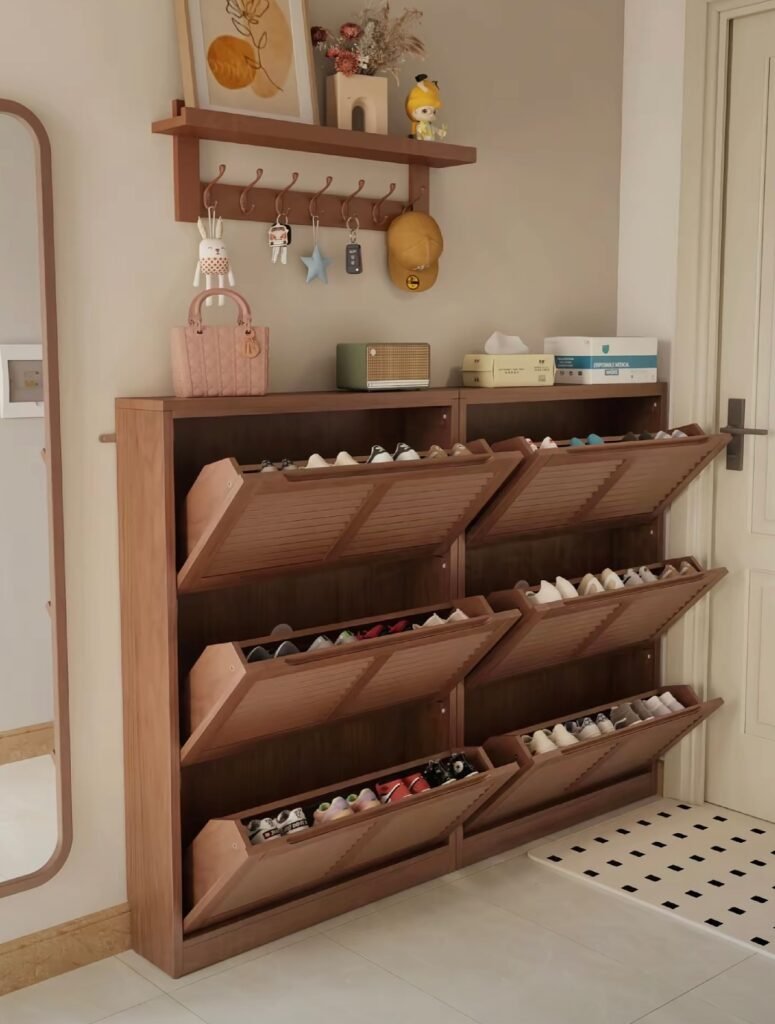
Shoes are usually the first thing people notice in a messy entryway.
One pair becomes three. Three become ten. Before long, everyone is stepping around piles just to get out the door.
What actually works is limiting how many shoes stay in the entryway.
Keep only the pairs currently being worn most often. Everything else should be stored in bedroom closets or another designated storage area.
A narrow shoe rack is a great option because it keeps shoes organized vertically instead of spreading them across the floor. If you don’t have room for a rack, even a simple boot tray can define where shoes belong and prevent them from ending up all over the entrance.
Another helpful habit is rotating footwear with the seasons. Heavy snow boots don’t need to stay by the door during summer, just like sandals don’t need to take up valuable space in winter.
The fewer shoes you keep near the entrance, the easier the area is to maintain.
Give Everyday Essentials a Permanent Home
Think about the items you use every single time you leave the house.
Your keys.
Wallet.
Sunglasses.
Work badge.
Purse or backpack.
These are the things that often disappear when your entryway lacks a system.
Instead of letting them land on whatever surface is closest, create a dedicated home for each one.
A small decorative tray is perfect for keys and loose change.
Hooks keep bags off the floor and ready to grab on your way out.
A narrow shelf can hold sunglasses, wallets, or headphones without taking up much room.
If you receive a lot of mail, avoid letting it pile up on a table. Use one basket for incoming mail and make it a habit to sort through it every few days.
These simple changes save time every morning because you always know exactly where your essentials are.
Rotate Items as the Seasons Change
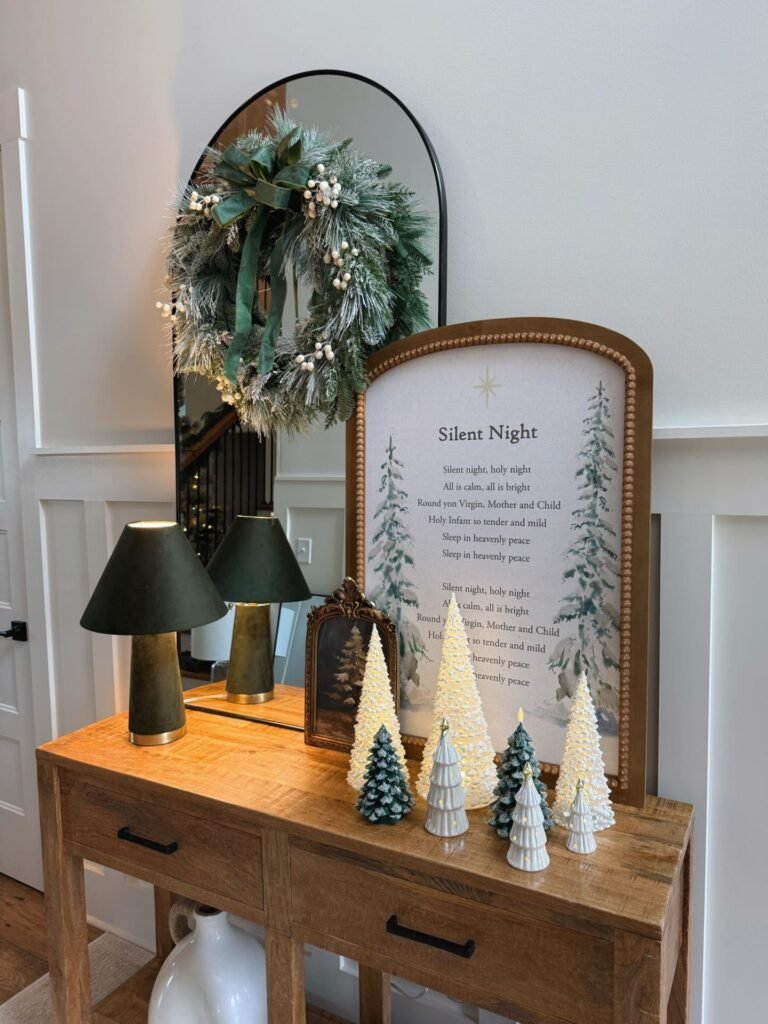
One mistake many people make is trying to fit every seasonal item into the entryway all year long.
That quickly leads to overcrowding.
Instead, treat your entryway like a space that changes with the seasons.
During winter, you might need room for thick coats, gloves, scarves, umbrellas, and boots.
Once warmer weather arrives, swap those items for baseball caps, lightweight jackets, sunglasses, or beach bags.
Seasonal rotation keeps storage from becoming overloaded and makes the entire space feel more organized.
It’s also a good reminder to clean out items you no longer use.
Every few months, take five or ten minutes to reassess what’s near your front door. If something hasn’t been touched in weeks, it probably doesn’t belong there.
Organizing a Small Entryway for Families and Pet Owners
If multiple people use the same entrance every day, your organization system needs to be simple enough for everyone to follow.
Otherwise, it won’t last.
For families, giving each person their own designated space works incredibly well.
Individual hooks for backpacks and coats prevent everything from ending up in one big pile.
Small baskets or bins can hold hats, gloves, or other personal items without mixing them together.
If you have younger children, place hooks low enough that they can reach them without help. The easier it is for kids to put things away themselves, the more likely they’ll actually do it.
Pet owners should also create a dedicated area for pet supplies.
Keep leashes, harnesses, waste bags, and towels together in one basket or on a hook near the door.
This saves time before walks and prevents pet gear from ending up scattered throughout the house.
The goal isn’t perfection.
It’s creating routines that are easy enough for everyone to maintain.
Make Your Entryway Feel Warm and Welcoming
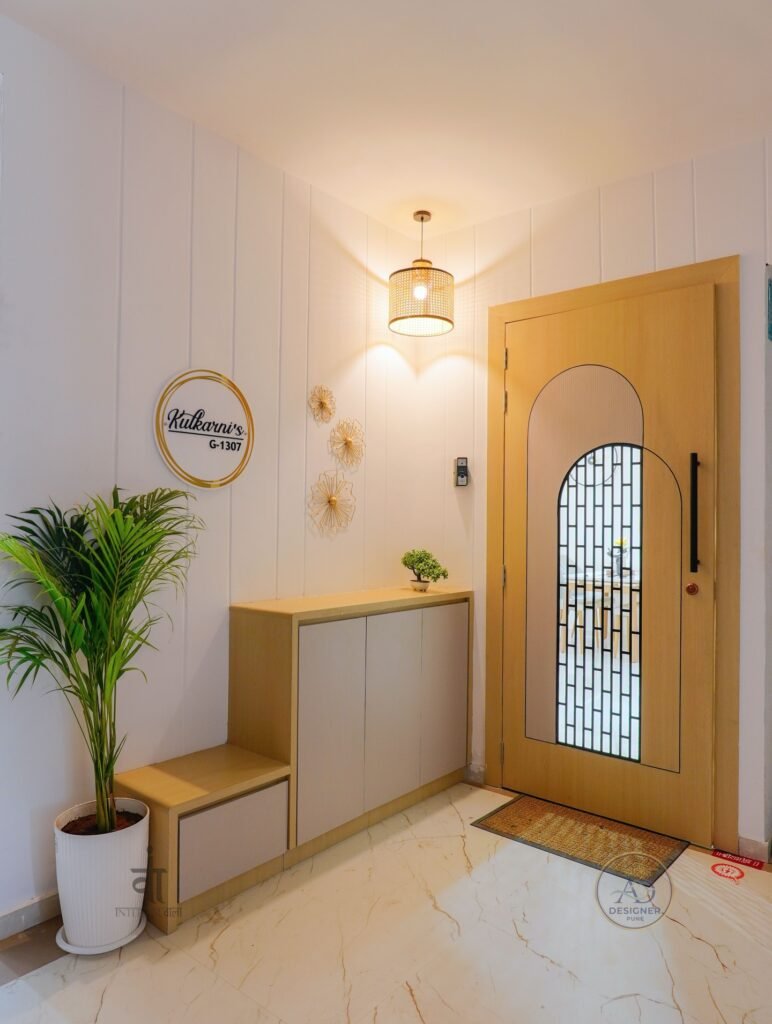
A functional entryway doesn’t have to feel boring.
A few carefully chosen decorative touches can make the space feel inviting without creating extra clutter.
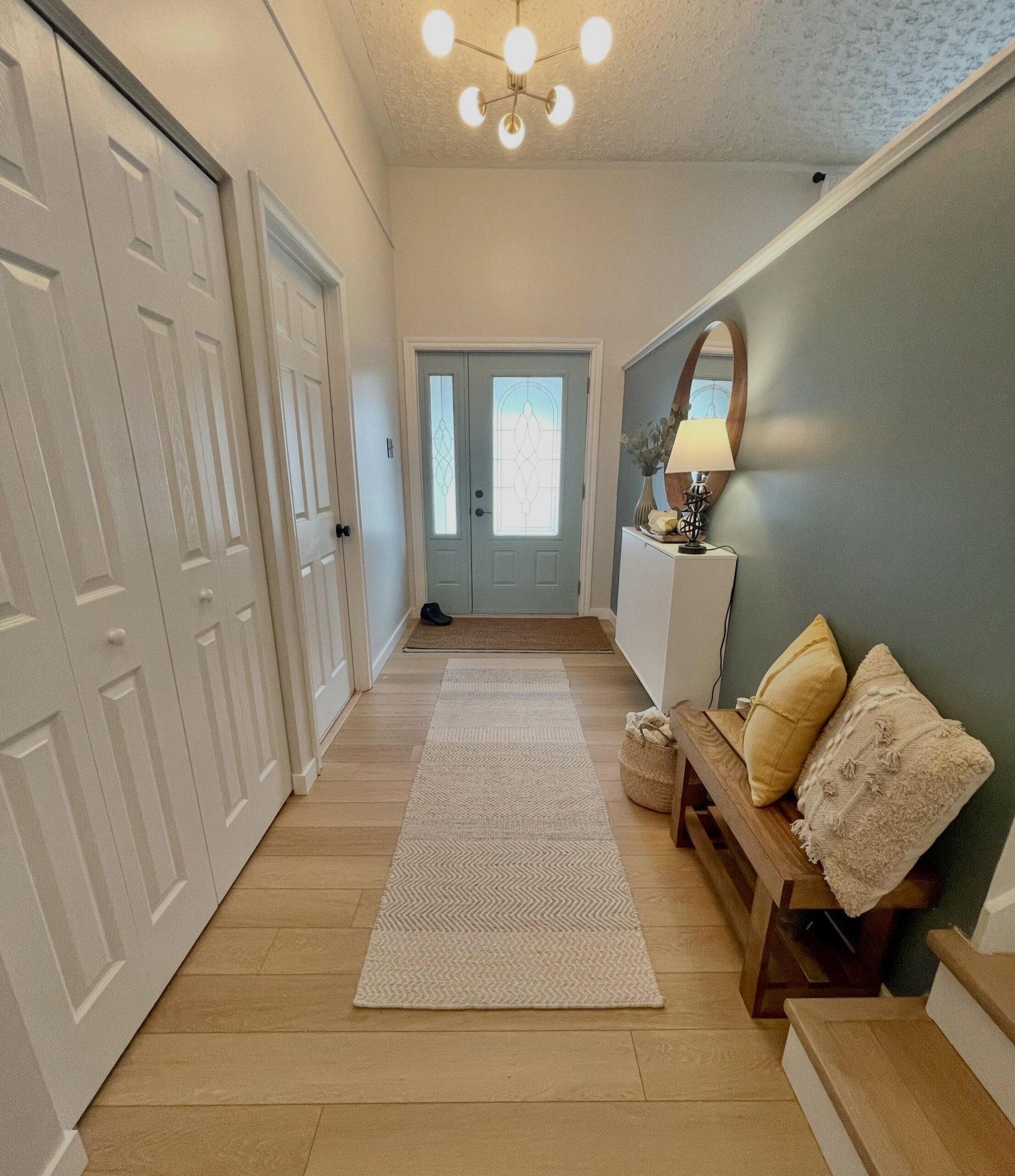
A mirror is one of the best additions to a small entryway because it reflects natural light and makes the area appear larger.
A small plant adds color and freshness without taking up much room.
A durable rug helps define the space while catching dirt before it’s tracked through the house.
If you enjoy decorating, keep it simple.
One piece of artwork or a framed family photo often has a bigger impact than filling every surface with decorations.
Remember, empty space isn’t wasted space.
In a small entryway, a little breathing room actually makes the entire area feel cleaner and more welcoming.
Final Thoughts
Learning how to organize a small entryway that works for everyday life isn’t about creating a perfectly styled space that looks untouched. It’s about building simple systems that make everyday routines easier. When shoes have a designated spot, keys are always easy to find, and coats don’t end up draped over chairs, your home instantly feels calmer and more organized. Start by keeping only the items you truly use every day, make the most of your vertical space, and choose storage that fits your habits rather than fighting them.