
If your bathroom feels like a closet with a showerhead, you’ve probably spent way too much time staring at tile samples trying to figure out what’s going to make it feel bigger. Maybe you’ve gone down the Pinterest rabbit hole at midnight, saved 47 pins, and still feel more confused than when you started. Been there.
Here’s the thing choosing the best tiles for small bathrooms isn’t just about picking something pretty. The wrong tile can make an already tight space feel downright suffocating. The right one? It can genuinely trick your eye into thinking the room is twice the size it actually is. It’s all about light, line, and proportion, and most people skip right past these principles because they’re busy obsessing over color swatches.
Let’s cut through the noise and talk about what actually works.
The Biggest Mistakes People Make With Small Bathroom Tile
Going Too Small With the Tile Size
This is the one that surprises almost everyone. The common instinct is to use tiny tiles in a tiny room — like mosaic tiles or 2×2 inch squares — because they feel proportional. But that’s actually the wrong move.
Small tiles create a lot of grout lines. And grout lines create visual noise. When your eye has to process dozens of little lines crammed into 40 square feet, the room feels busier and therefore smaller. It’s the same reason a busy wallpaper pattern makes a room feel boxed in.
The sweet spot for small bathrooms is usually a medium-to-large tile — think 12×24 inches or even 24×24 inches. Yes, even in a tiny bathroom. Fewer grout lines mean a cleaner, calmer visual field, and your eye reads the space as more open.
Ignoring the Ceiling
Most people tile the floor and maybe halfway up the walls, then paint the rest. Nothing wrong with that in theory, but in a small bathroom, stopping the tile abruptly creates a horizontal visual cut that chops the room in half. And shorter-looking walls = smaller-feeling room.
If budget allows, carrying your wall tile all the way to the ceiling is one of the most effective tricks for making a small bathroom feel tall and airy. You don’t have to do it on every wall — just the main feature wall or behind the vanity is enough to shift the whole feel of the space.
Choosing Grout That Contrasts Too Much
Dark grout on white tile looks amazing in design photos. In a small bathroom, though? All those dark lines become the most dominant thing in the room. Your eye can’t help but notice the grid pattern, which — again — reads as visual clutter.
For small spaces, matching your grout color closely to your tile color creates a seamless look that lets the space breathe. It’s a subtle change, but it makes a surprisingly big difference in how spacious the room feels.
The Tile Types That Actually Work Best
Large Format Tiles (The MVP)
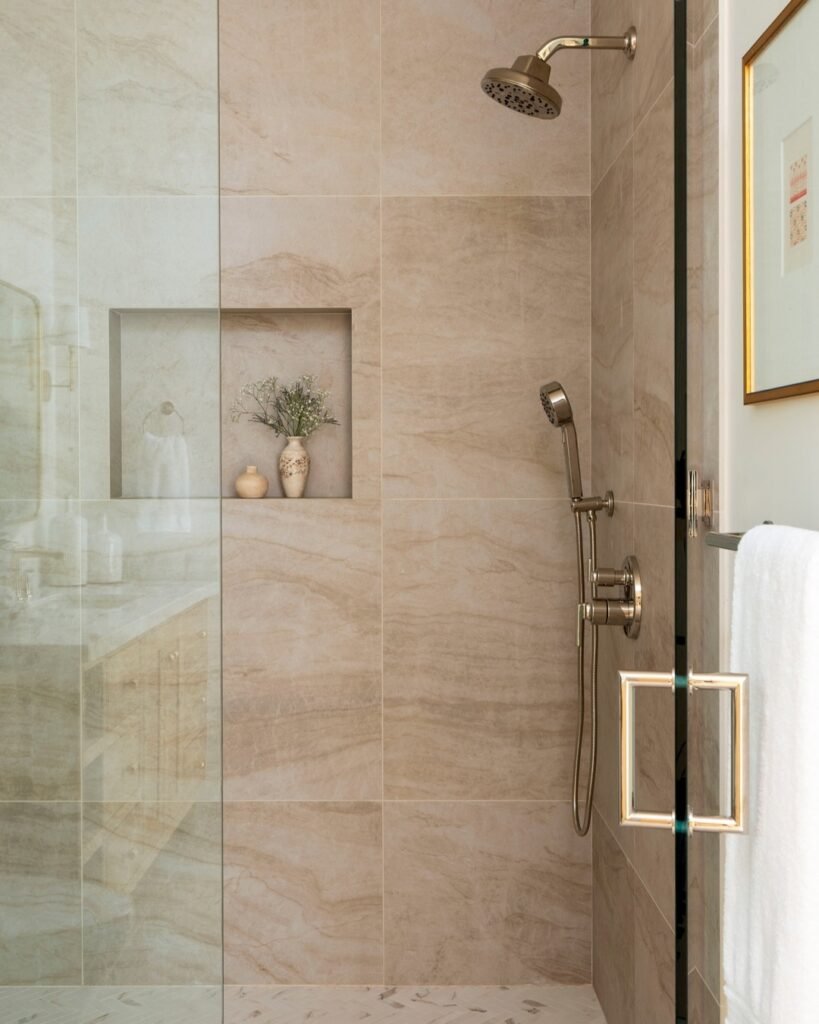
If I had to pick one tile type that works in almost every small bathroom, it’s large format tiles — specifically the 12×24 or 24×24 inch range. They’re versatile, widely available, and they do that “fewer grout lines = bigger room” thing we talked about.
For floors, a 12×24 tile laid in a running bond or brick pattern adds length to a narrow bathroom. For walls, the same tile installed vertically adds height. You can use the same tile on both surfaces and suddenly the room has this really cohesive, hotel-like feel that makes it seem way bigger than it is.
Subway Tiles (With a Twist)
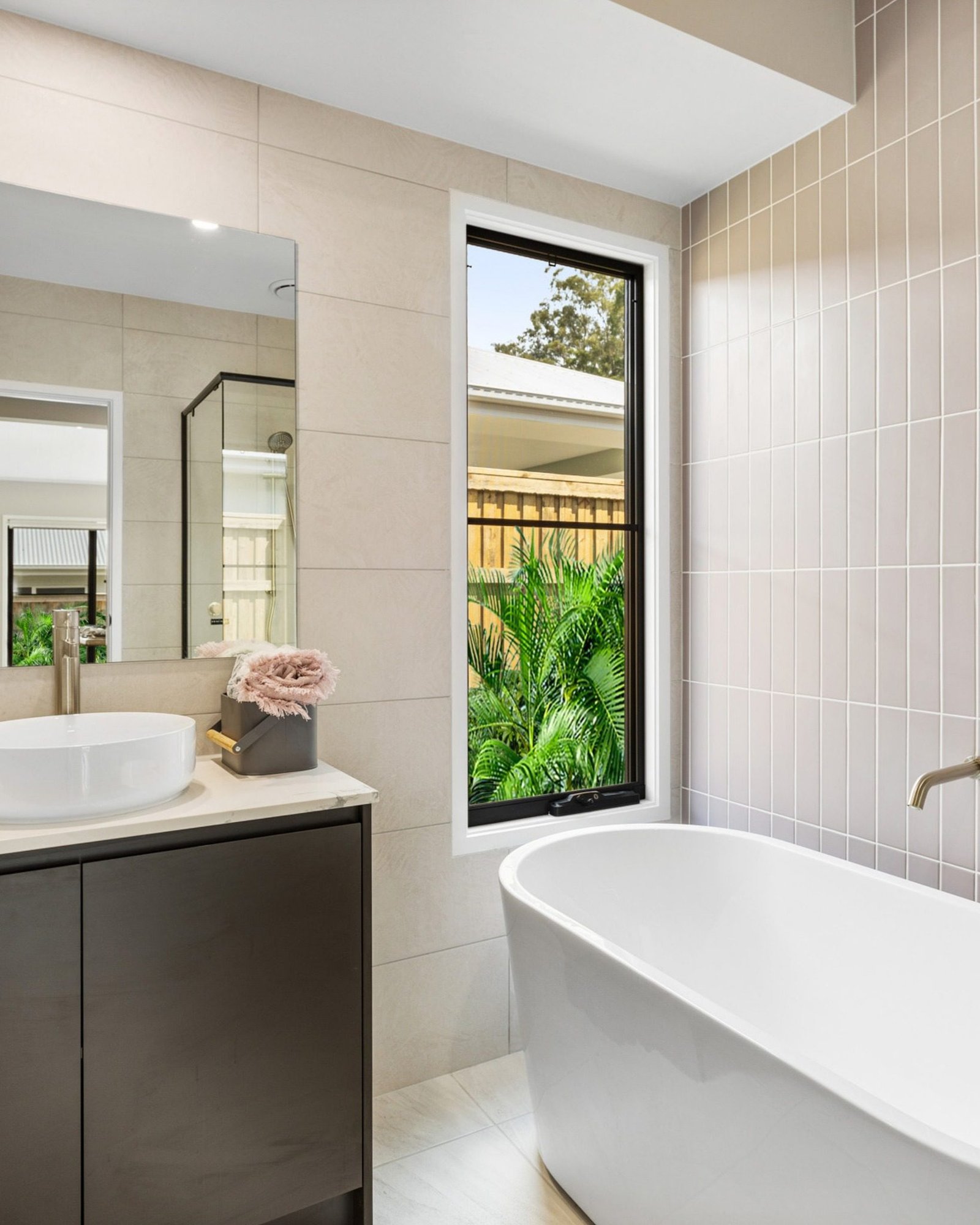
Classic 3×6 subway tiles are a safe choice, but here’s how to use them smarter in a small bathroom: install them vertically instead of horizontally. Most people do the standard horizontal brick pattern, which is fine, but vertical subway tile draws the eye upward and makes the ceiling feel higher. It’s a small tweak with a real visual payoff.
Also worth considering: the larger subway format. 4×8 or even 4×12 tiles give you that clean, timeless subway look while keeping grout lines to a minimum. They’re especially great on a shower accent wall.
Porcelain Over Ceramic — Here’s Why
Both look similar on the surface (pun intended), but porcelain wins for small bathrooms because of how it handles moisture and wear. Small bathrooms often have less ventilation, which means more humidity and more potential for mold in grout lines over time. Porcelain is denser and less porous than ceramic, so it absorbs less moisture and holds up better long-term.
It also tends to be available in larger formats and more realistic stone or concrete looks, which brings us to the next point.
Marble-Look Porcelain (The Cheat Code)
Real marble in a bathroom is gorgeous but expensive and high-maintenance. Marble-look porcelain gives you the same soft, veined aesthetic — the kind that instantly makes a bathroom feel luxurious — without the sealing requirements or price tag.
In a small bathroom, a light marble-look tile (cream, white, or soft gray with subtle veining) reflects light beautifully and adds that spa-like quality that makes the room feel like a treat rather than a cramped necessity. Pair it with matte black fixtures and you’ve got something that looks genuinely expensive.
How to Use Tile Layout to Maximize Space
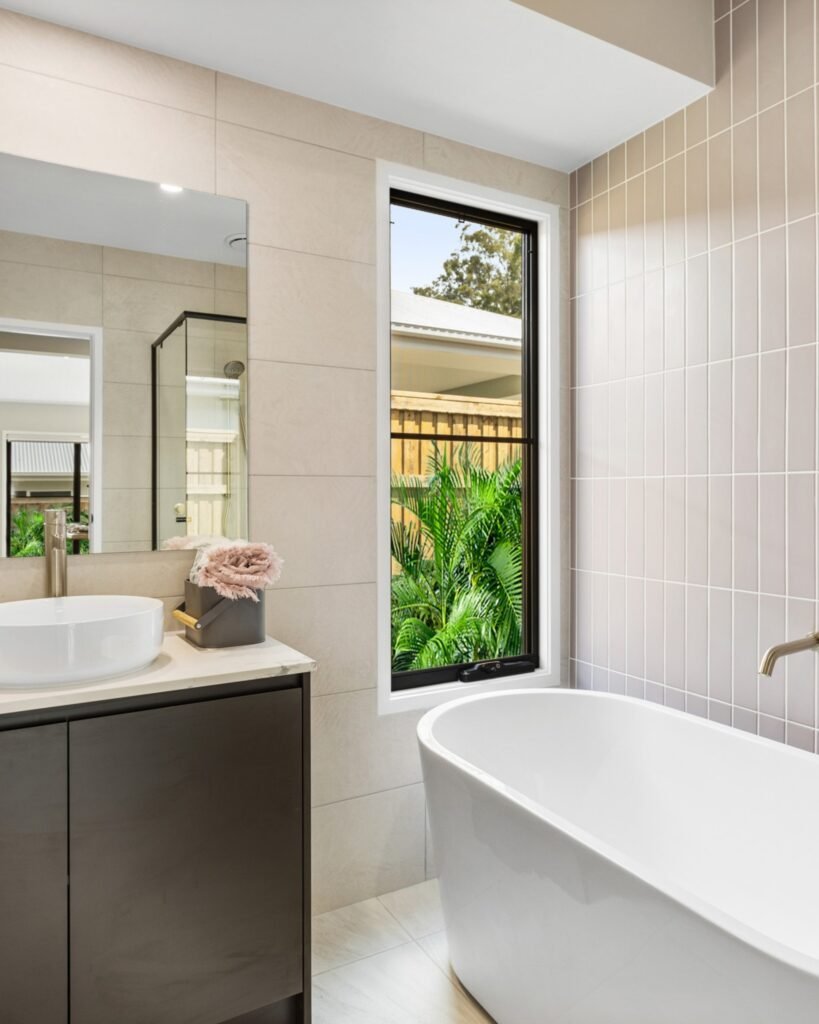
The Direction You Lay Your Tile Matters More Than You Think
Tile layout direction is one of the most underrated design decisions in a bathroom. Here’s a simple framework:
- Narrow bathroom? Lay rectangular tiles horizontally across the width to visually widen it.
- Low ceiling? Lay rectangular tiles vertically on the walls to push the eye upward.
- Square bathroom that feels boxy? A diagonal tile layout on the floor creates movement and makes the boundaries of the room feel less rigid.
Most contractors will default to whatever is easiest to install. It’s worth having a specific conversation about direction before work starts.
Consider a Continuous Floor-to-Wall Tile
This is a more design-forward move, but it’s incredibly effective. Using the same tile on both the floor and at least one wall creates a seamless, uninterrupted surface. Without the visual break between floor and wall, your brain can’t easily find where one surface ends and another begins — and that ambiguity reads as spaciousness.
You see this in high-end hotel bathrooms a lot. It works because it eliminates one more visual “seam” that the eye has to process.
Color and Finish: What to Prioritize
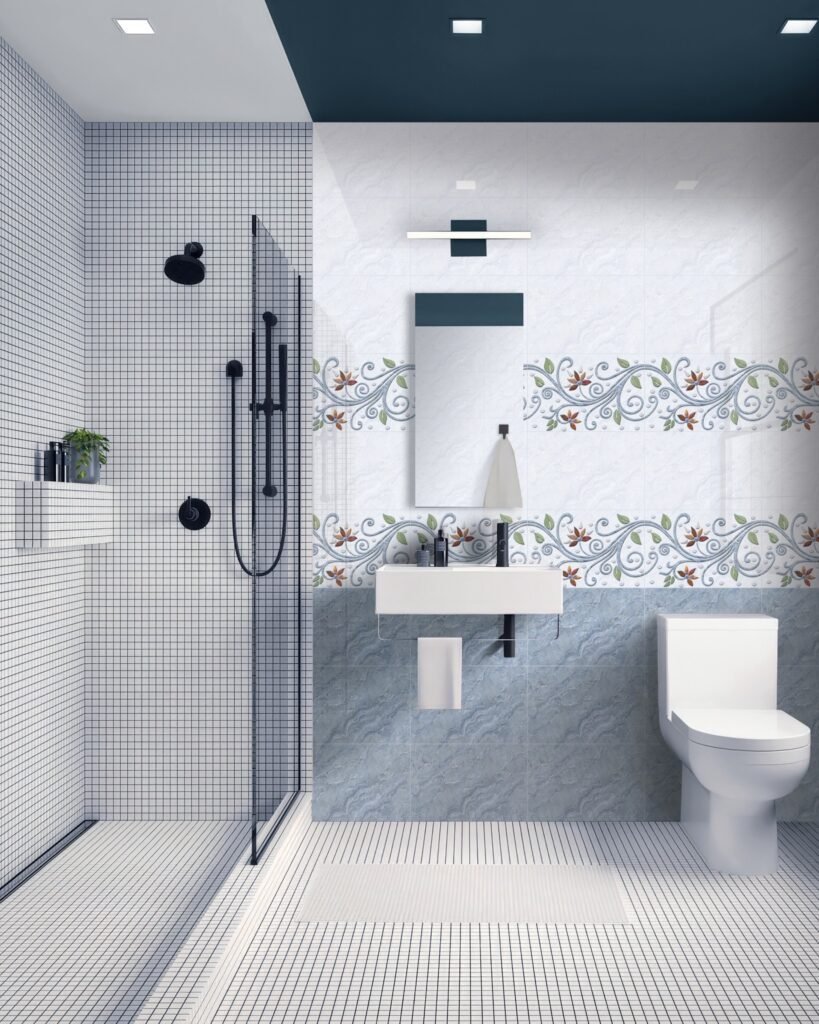
Light Colors, But Not Only White
Light tile colors are a go-to for small bathrooms because they reflect light, and reflected light = perceived space. But you don’t have to go stark white if that’s not your style. Soft greige, warm ivory, pale sage, and blush all do the same job while giving the room more personality.
What you want to avoid is going too dark on all surfaces. One dark accent wall? Fine, actually great. Dark tile on every surface in a 40-square-foot bathroom? It’s going to feel like a cave.
Matte vs. Glossy
Glossy tile reflects light, which is helpful in a small space. But it also shows every water spot and smudge, which in a bathroom, is constant. Matte finish tile is easier to maintain and has a more modern, sophisticated look — but it absorbs light rather than reflecting it.
The best approach is often a mix: glossy tile on the walls where light reflection matters most, matte tile on the floor where slip resistance and practicality come into play. This way you get the visual benefit of light-bouncing surfaces without sacrificing function underfoot.
A Few Practical Things Before You Buy
Don’t just look at tiles under store lighting. Lighting in tile showrooms is designed to make everything look great. Grab a sample (most stores will let you take one) and bring it home to see how it looks in your actual bathroom light. Artificial bathroom lighting, especially warmer bulbs, can shift the appearance of both color and finish significantly.
Also, buy at least 10–15% more tile than your square footage requires. Cuts, breakage, and future repairs mean you’ll almost certainly need extra. Running out mid-project and finding your tile has been discontinued is a special kind of renovation nightmare.
And if you’re working with a contractor, show them reference photos of the exact tile layout and direction you want. Don’t assume they’ll make the same design choices you would — they usually default to the fastest, most standard approach.
The Bottom Line
The best tiles for small bathrooms share a few common traits: they’re large enough to minimize grout lines, light enough to reflect and amplify whatever natural light you have, and installed in a direction that plays up your room’s best dimensions. Large format porcelain, vertical subway tile, and marble-look slabs are your most reliable options not because they’re trendy, but because they consistently work.
More than any single tile choice, though, it’s the combination of size, color, layout, and grout that determines how your bathroom actually feels. Get two or three of those variables right and you’ll be surprised how much space you can unlock.
So pick up a few samples, take them home, hold them up against your wall in your actual light, and trust your gut. Your bathroom is small but it doesn’t have to feel that way.