
So you’re redoing your bathroom. You’ve picked the tile, obsessed over faucets for three weeks, and finally landed on a vanity style you love. And then someone asks: “What height did you get?”
Blank stare.
Vanity height is one of those details nobody talks about until after installation — when you’re either hunching over the sink every morning or standing on your tiptoes. It’s a small decision that affects how your bathroom feels to use every single day. And yet most people just grab whatever their contractor suggests or whatever the showroom has in stock.
Here’s the thing: there’s no universal “right” answer, but there’s absolutely a right answer for your household. This guide is going to walk you through how to actually figure that out based on who’s using the bathroom, what your body needs, and what your space can realistically handle.
The Standard Heights (And What They Actually Mean)
Let’s start with the basics so we’re on the same page.
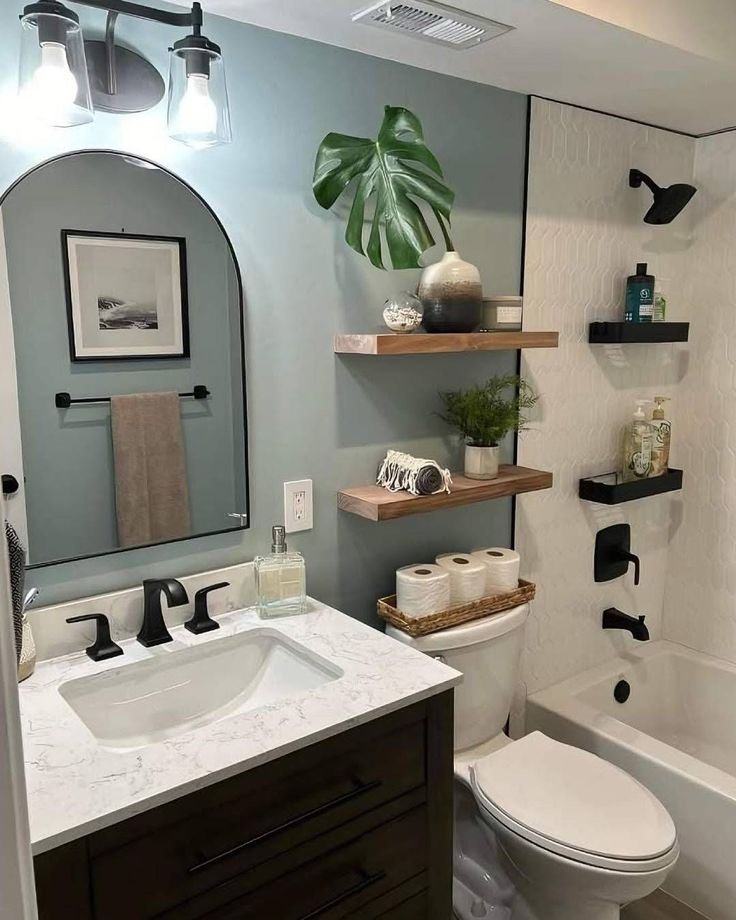
- Traditional vanity height: 30–32 inches
- Comfort height (also called “adult height”): 34–36 inches
- ADA-compliant height: 34 inches maximum (for accessibility)
The 30-inch standard has been around since the 1950s, designed for a time when people were shorter and bathroom design didn’t prioritize ergonomics. Comfort height became popular in the early 2000s as kitchen counters rose to 36 inches and people realized bathroom vanities felt uncomfortably low by comparison.
Neither one is automatically better. What matters is who’s using the sink and how tall they are.
Why the Industry Default Doesn’t Work for Everyone
Most prefab vanities ship at 32–34 inches. That sounds like a nice middle ground, but it’s actually a compromise that often works perfectly for no one. If you’re 5’2″, a 34-inch vanity has you working at roughly counter height, which is fine but not ideal for face washing or applying makeup. If you’re 6’1″, a 32-inch vanity means a noticeable forward lean every single morning.
That daily lean adds up — literally. Chiropractors will tell you that sustained forward bending at the waist, even minor, puts compressive load on the lower spine. This isn’t a scare tactic. It’s just physics.
How to Actually Measure for Your Household
Here’s the practical part most guides skip over.
Step 1: Measure the Primary Users
The “primary user” rule is simple — the person who uses that vanity most frequently should drive the height decision. For a master bath shared by two adults of different heights, you’ll need to make a judgment call or consider a split-height double vanity (more on that shortly).
A rough formula that works well: your ideal vanity height is approximately your elbow height minus 4–6 inches. This gives you enough clearance to wash your face and brush your teeth without hunching, while keeping the sink at a natural working height.
To find your elbow height: stand straight with your arms relaxed at your sides, then bend your elbows to 90 degrees. Measure from the floor to the bend in your elbow. Subtract 4–5 inches. That number is your sweet spot.
For most adults between 5’4″ and 5’10”, this lands between 33 and 36 inches — right in the comfort height range.
Step 2: Account for the Vessel Sink Trap
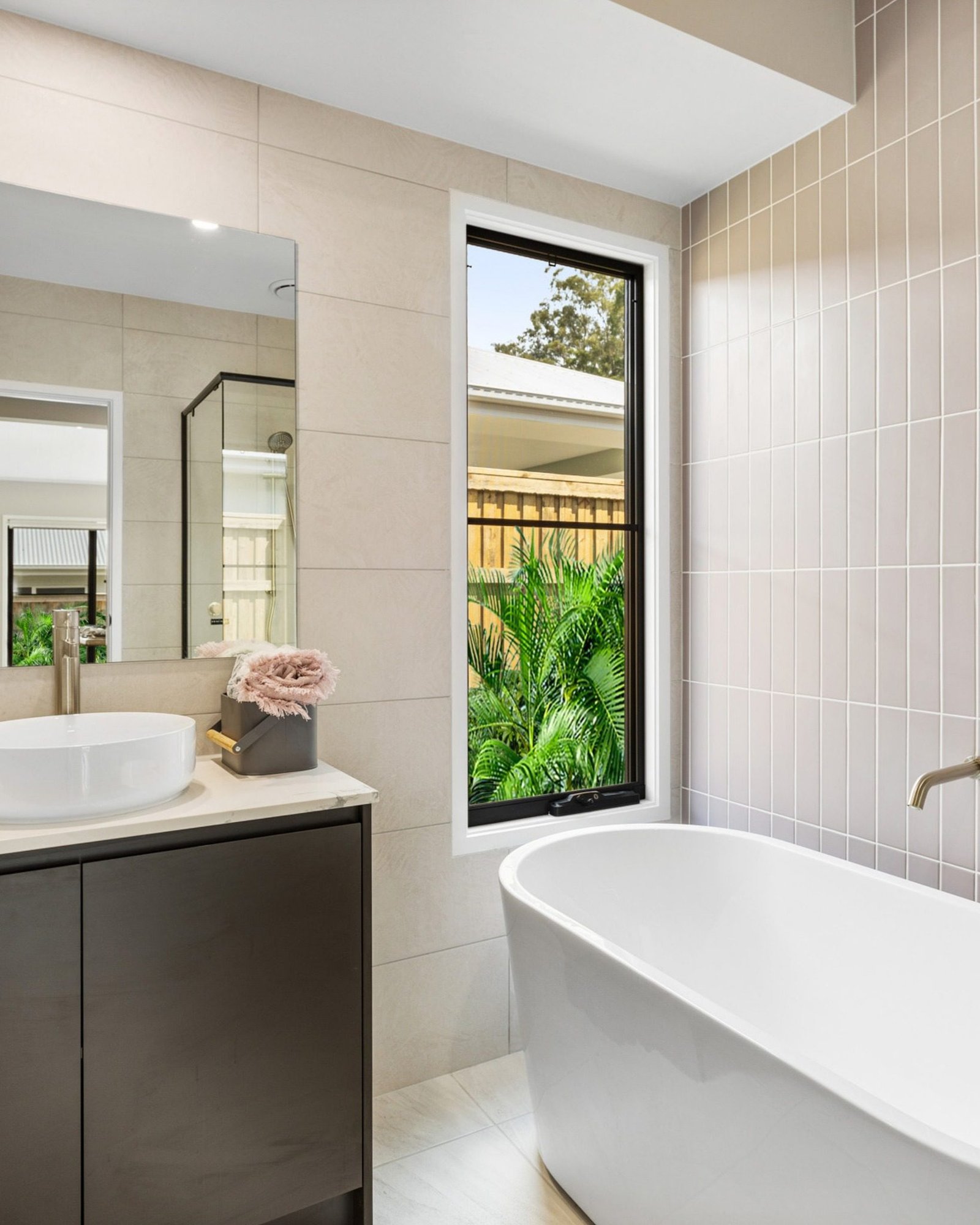
This is where a lot of people mess up badly. If you’re planning a vessel sink (the above-counter bowl style), you must lower your vanity cabinet height to compensate. Vessel sinks typically add 5–7 inches of height above the counter surface.
If you install a vessel sink on a standard 32-inch vanity, your effective working height becomes 37–39 inches, which is uncomfortably high for almost everyone. The standard recommendation for vessel sink vanities is 26–30 inches for the cabinet itself, bringing your total to a usable 32–36 inches depending on the sink bowl height.
Get this wrong and you’ll hate your bathroom. Get it right and it looks incredibly elevated while still being functional.
Step 3: Consider Who Else Uses the Space
Kids’ bathrooms are straightforward — go lower, around 30–32 inches, especially if children are the primary users. They’ll grow into it faster than you think.
Guest bathrooms are a different calculation. Since no single person “owns” that sink, the standard 32–34 inch range actually works well here because you’re averaging across a range of users rather than optimizing for one person.
For aging-in-place design, ADA guidelines recommend no higher than 34 inches, with knee clearance underneath if a wheelchair user needs access. If there’s any chance the bathroom will need to accommodate mobility aids in the future — for you or a family member — plan for this now. Retrofitting later is expensive and disruptive.
The Split-Height Double Vanity: Actually Worth Considering
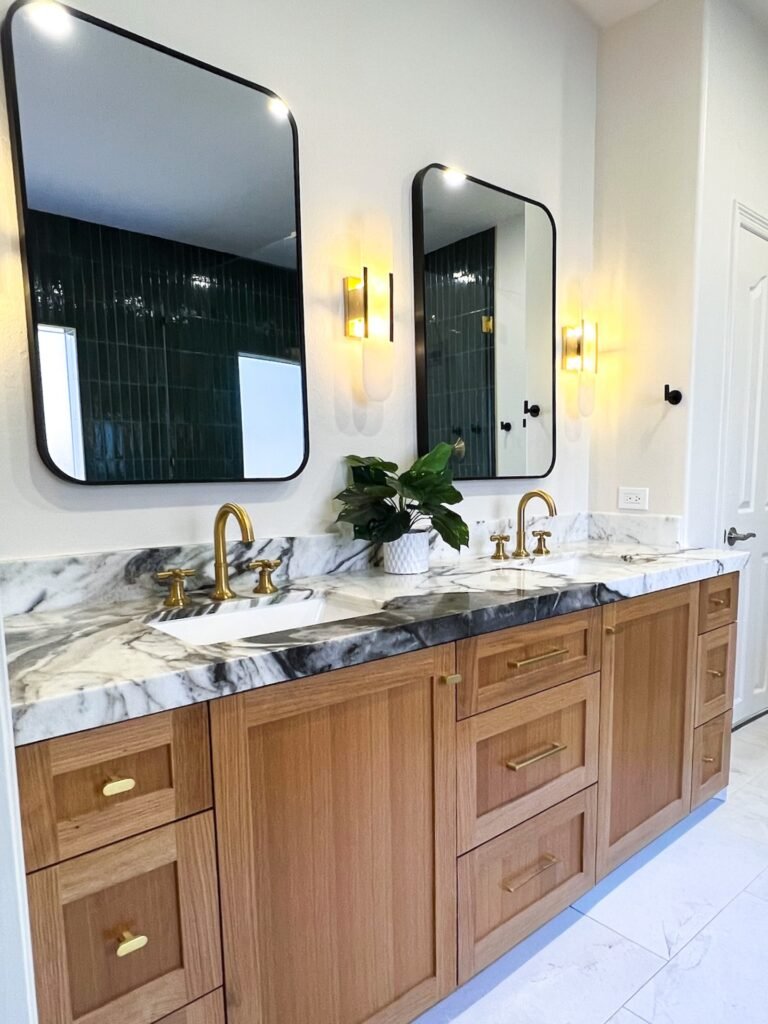
If you have a his-and-hers or shared double vanity, and there’s a significant height difference between the two people using it, a split-height design is worth the extra planning effort.
What actually works is designating one side at 34 inches and the other at 36 inches if the height difference between users is 4–6 inches or more. Most custom cabinetmakers can accommodate this easily. The visual difference in the finished bathroom is barely noticeable (especially with a waterfall countertop that bridges the two), but the ergonomic difference for daily use is significant.
Most people never consider this because showrooms don’t display it. That doesn’t mean it’s complicated or expensive — it just means you need to ask for it.
Floating Vanities: More Flexibility Than You Think
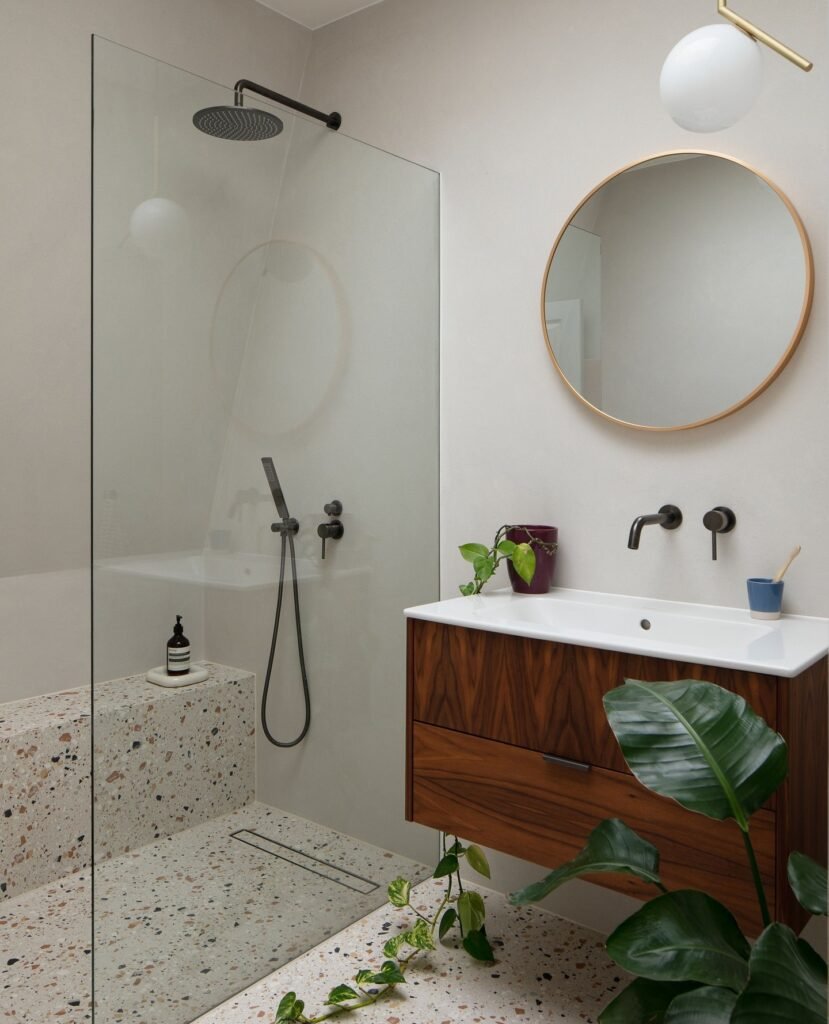
One underrated advantage of wall-mounted (floating) vanities is that you get to set the height during installation rather than being limited to what the manufacturer built. This is genuinely valuable.
If you’re going custom or semi-custom with a floating vanity, you can dial in the height to the exact inch. The trade-off is that you need blocking in the wall to support the weight, which needs to be planned during the framing or renovation phase. If you’re already opening walls, this is essentially free. If you’re doing a surface-level remodel, it requires more work.
The visual benefit is real too — floating vanities make small bathrooms read as larger because they reveal floor space. But don’t sacrifice function for aesthetics. A beautifully floating vanity installed at the wrong height is still the wrong height.
Common Mistakes That Are Easy to Avoid
Choosing Height Based on Photos Alone
Pinterest and Instagram are full of stunning bathrooms that were styled and photographed — not necessarily designed to live in. A vanity that looks incredible in a photo might be a nightmare to use if it’s a 30-inch cabinet paired with a vessel sink that puts the effective height at 37 inches. Always look past the aesthetic to the actual numbers.
Ignoring the Mirror and Lighting Relationship
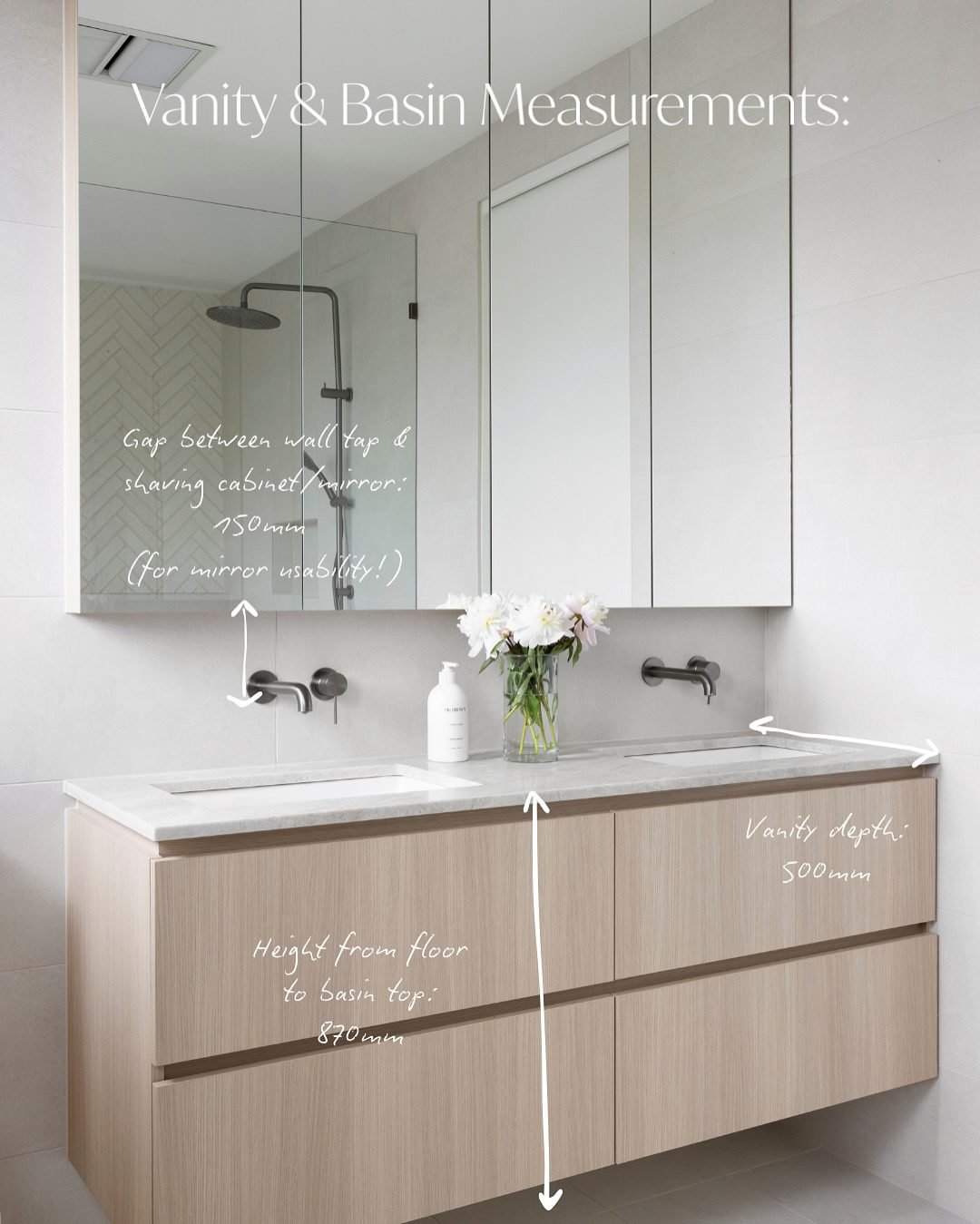
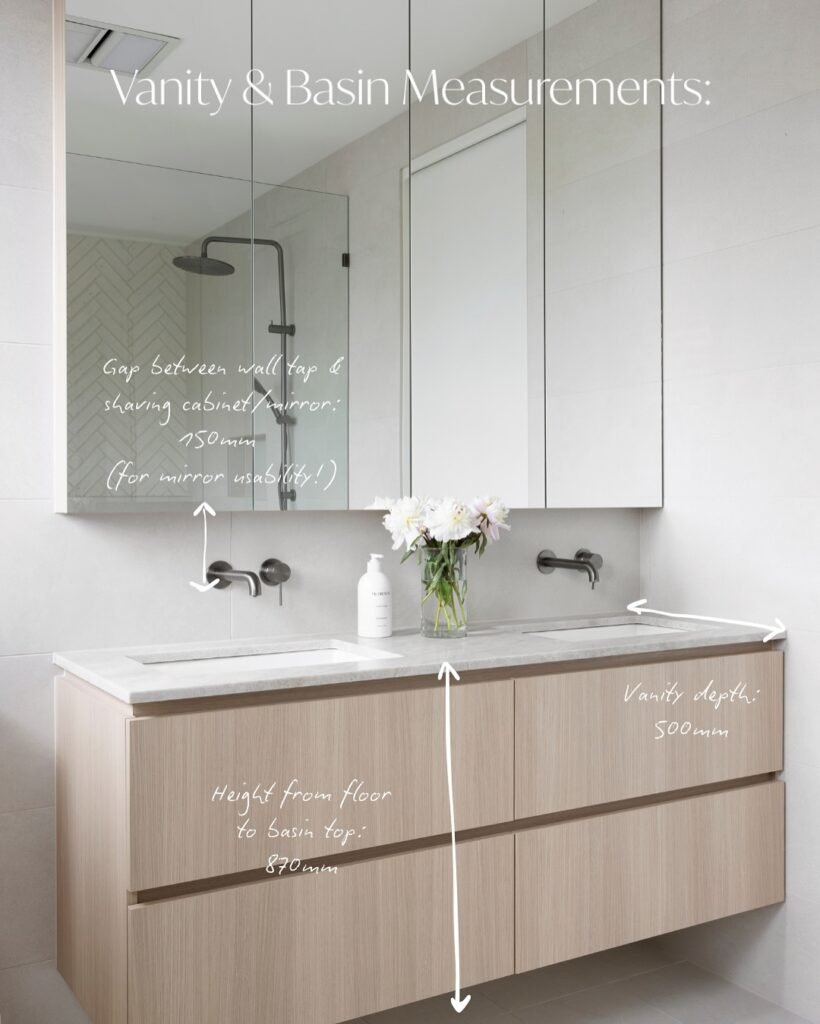
Your vanity height affects where your face lands in the mirror. If you raise your vanity from 32 to 36 inches and don’t adjust your mirror height, you might end up looking at your forehead. This sounds obvious but people frequently forget it during planning. Recalculate mirror placement any time you deviate from standard height.
Letting the Contractor Decide
Contractors are great at execution. They are not always thinking about your ergonomic needs or daily habits. “Whatever’s standard” is not the right answer for your body. Speak up, give them specific measurements, and put the height in writing in the contract or scope of work.
A Quick Note on Resale Value
Some people worry that a non-standard vanity height will hurt resale value. In reality, buyers rarely notice or care about vanity height the way they notice finishes, tile quality, and overall design. Prioritize the people who will live in the home every day. A slightly taller or shorter vanity is not going to kill a sale.
Final Thoughts
Choosing the right vanity height comes down to one thing: measure your people, not the industry standard. Use the elbow-minus-4-inches formula, account for your sink style (especially if you’re going vessel), and communicate clearly with whoever’s doing the installation.
The difference between a bathroom that feels effortless and one that quietly annoys you every morning is often just a couple of inches. Take 20 minutes to figure out the right number before anything gets ordered or installed because changing it afterward is a much bigger headache than getting it right the first time.