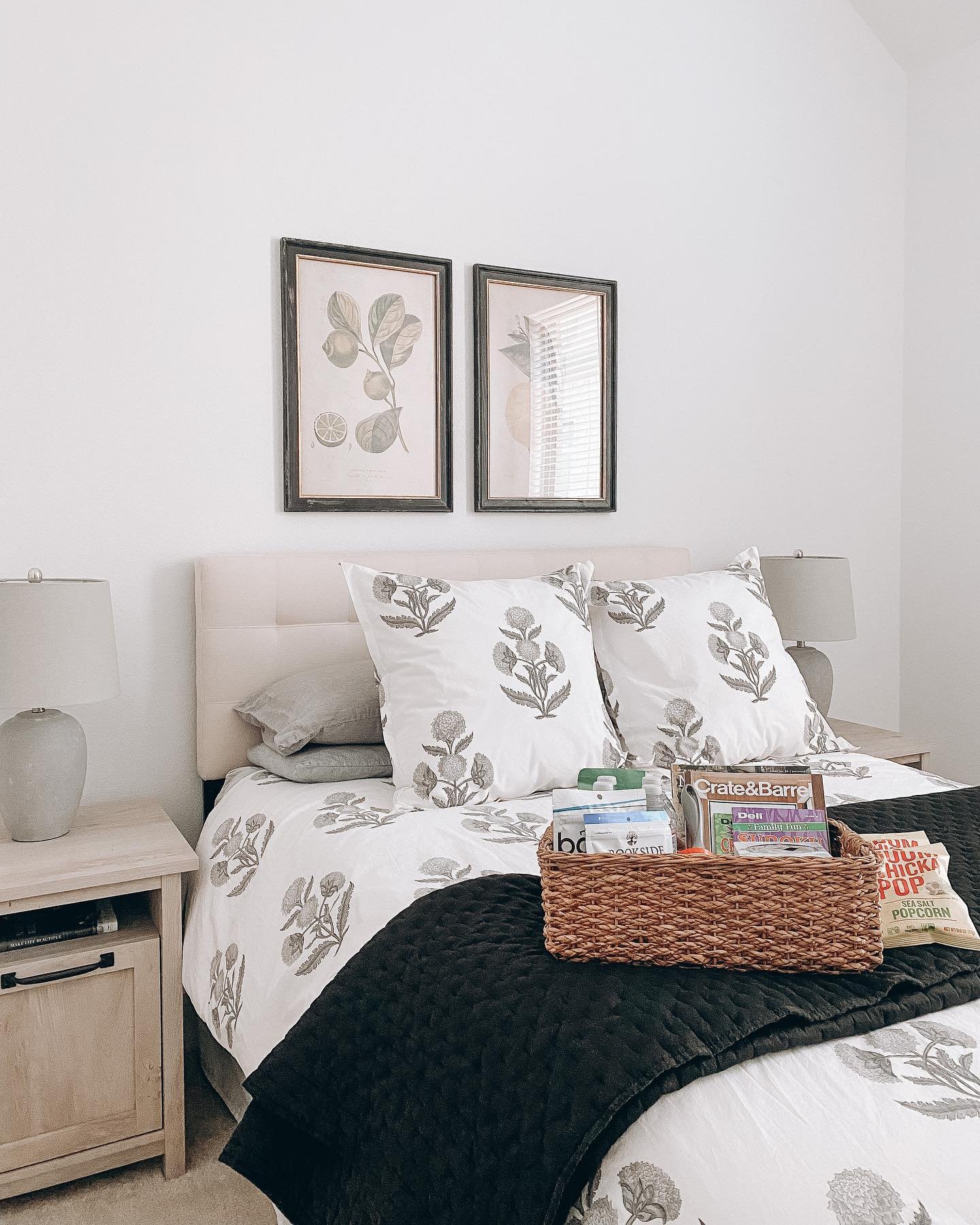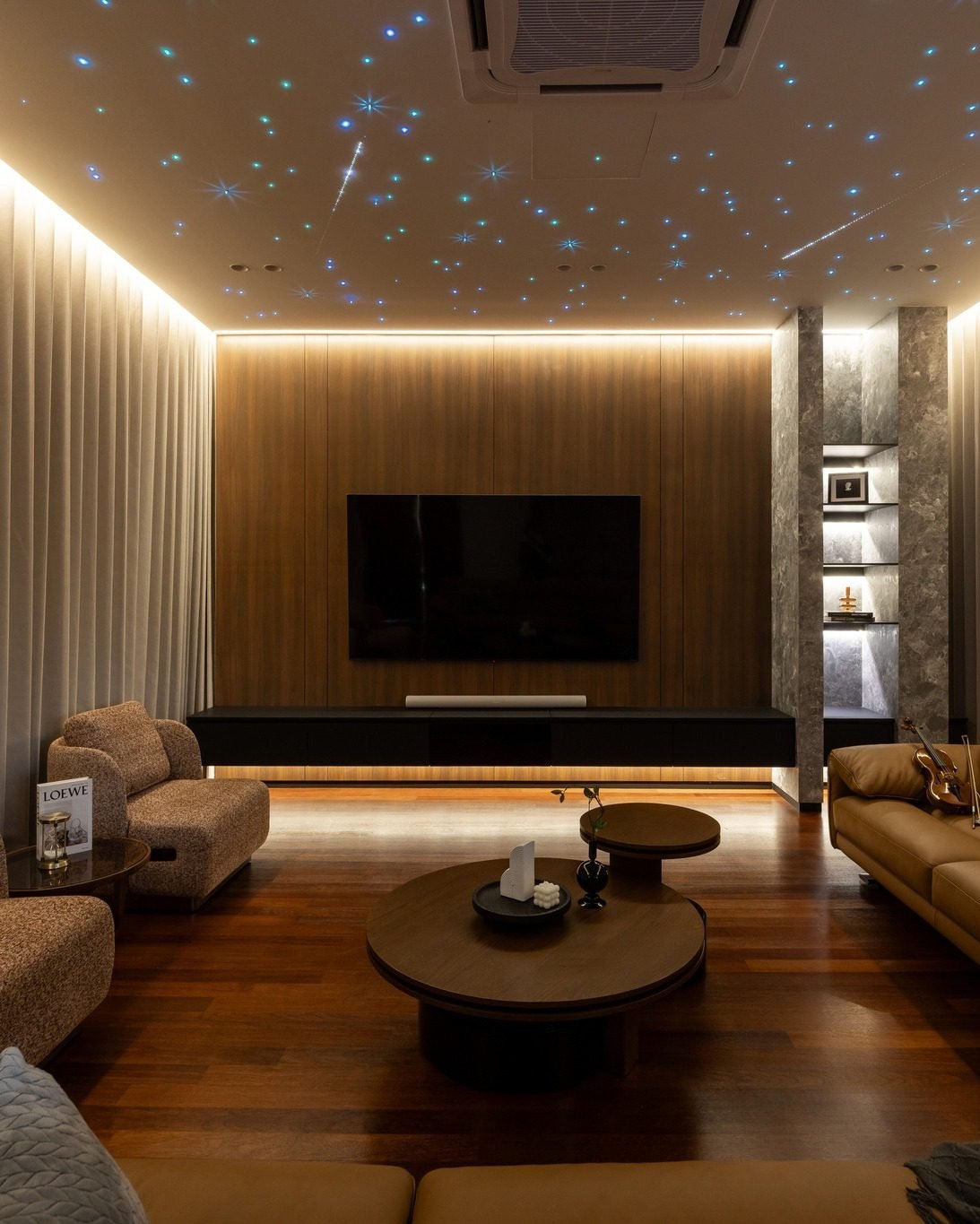

So you’ve got a studio apartment. One room, one life, no walls between your bed and your kitchen and your “office” (a.k.a. that corner of the couch where your laptop lives). If you’ve been staring at your space wondering why it always feels chaotic even after you clean it I get it. The problem usually isn’t the size. It’s that everything bleeds into everything else, and your brain never really gets to switch off because there’s no physical signal telling it to.
That’s exactly what zoning fixes. Creating a zoned studio apartment isn’t about cramming in more furniture or pretending you have walls you don’t. It’s about using smart, intentional design choices to give each area of your space a distinct identity so your bedroom feels like a bedroom, your living area feels like a living room, and your workspace doesn’t haunt you at 10 PM.
Here’s how to actually do it.
The Mistake Almost Everyone Makes First
Most people try to solve the studio apartment problem by buying more stuff — a room divider here, a bookshelf there — without thinking about flow first. You end up with a space that looks busier and somehow still feels like one big room.
Here’s the thing: zoning is a concept before it’s ever a product. Before you buy anything, you need to mentally (and physically) commit to which areas of your apartment serve which purpose. Once that’s clear, the furniture and decor choices almost make themselves.
The other big mistake? Trying to hide everything. People push beds into corners behind curtains or shove desks into closets because they’re embarrassed about the studio layout. Don’t. Own the layout. Work with it. A well-zoned studio can look more intentional and stylish than a poorly furnished one-bedroom.
Start With an Anchor: Define Each Zone Before You Decorate
Before you move a single piece of furniture, grab a piece of paper (or your phone notes — whatever) and write down every function your apartment needs to serve. Most studios need at least three:
- Sleep zone — your bedroom area
- Living/lounge zone — where you relax, watch TV, have guests
- Work zone — even a small desk counts
Some people also need a dining zone. If you cook often, a dedicated eating area makes a huge difference to how civilized your daily life feels.
Use Your Floor Plan as a Guide
The shape of your apartment will tell you where zones want to live. Long, narrow studios usually work well with zones arranged in a line — work near the window, living in the middle, sleeping toward the back. Square-ish studios have more flexibility, but that also means more decisions to make.
Pro tip: always put your sleep zone the furthest from the front door. Psychologically, it creates a sense of arrival — you enter your home before you reach your bedroom. It feels less like you’re sleeping in your hallway.
The Tools That Actually Create Zones (And How to Use Them Right)
Once you know where each zone lives, you use design elements to signal those boundaries. No drywall required.
Rugs Are the Single Most Powerful Zoning Tool
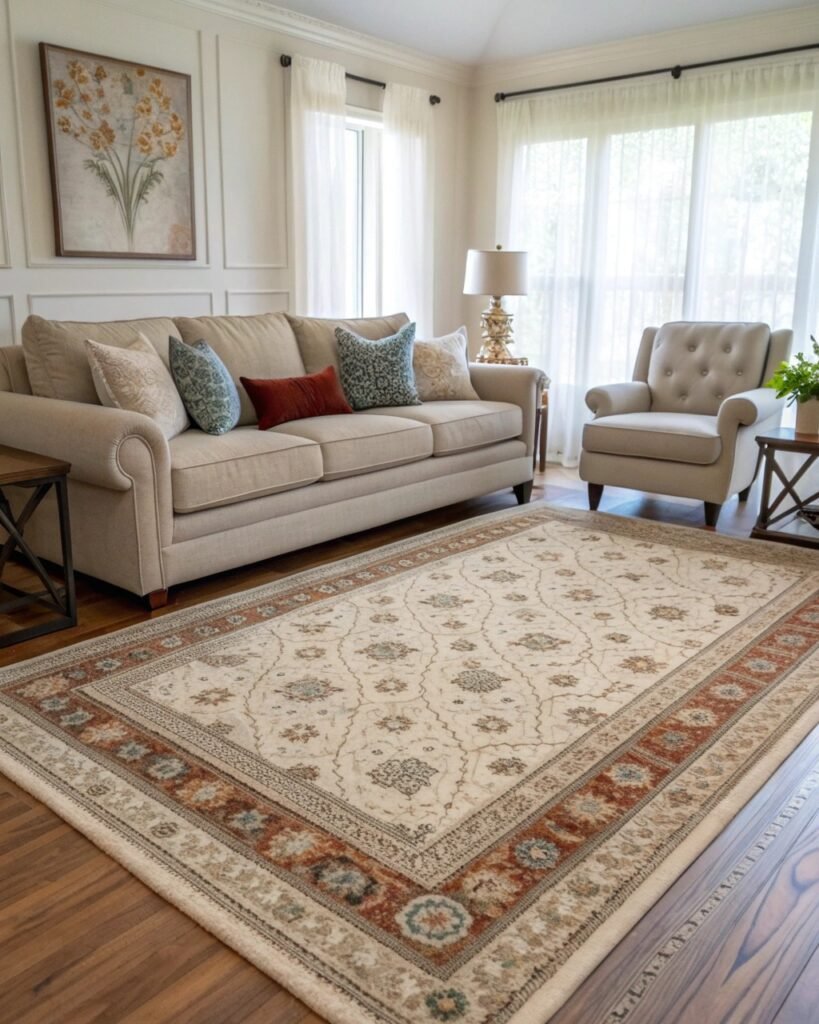
diy.aus
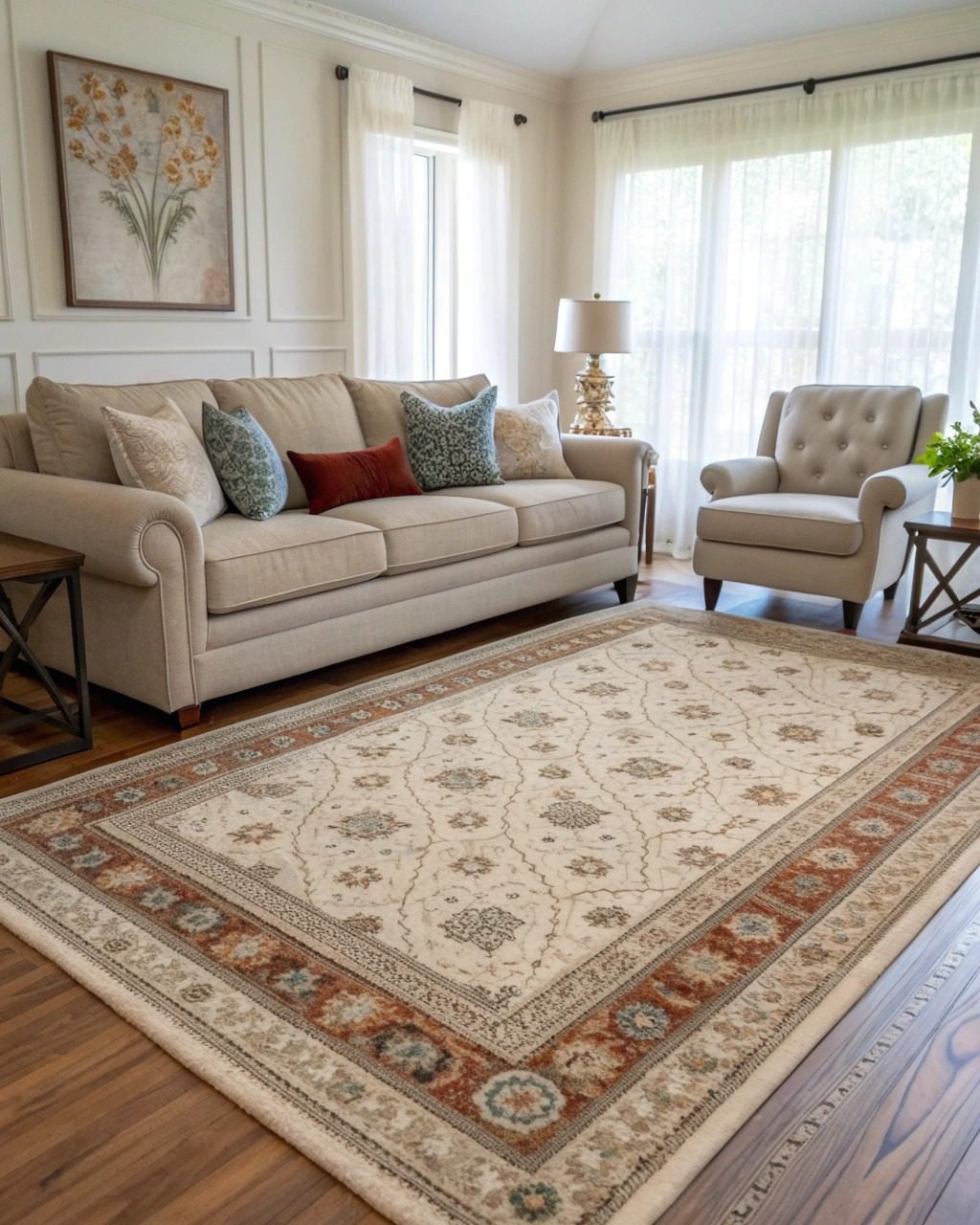
Seriously. A rug defines a zone faster and more affordably than almost anything else. Place a large area rug under your sofa and coffee table, and suddenly that corner is a living room. Put a smaller rug under or beside your bed, and it reads as a bedroom.
What actually works is sizing up — most people buy rugs that are too small. For a living area, all front legs of your sofa should sit on the rug at minimum. Ideally, all furniture legs do. A rug that’s too small makes the whole zone shrink and look awkward.
Don’t be afraid to layer rugs either. A flat-weave base with a smaller plush rug on top can add warmth and visual depth without overwhelming the space.
Lighting Does the Heavy Lifting for Mood
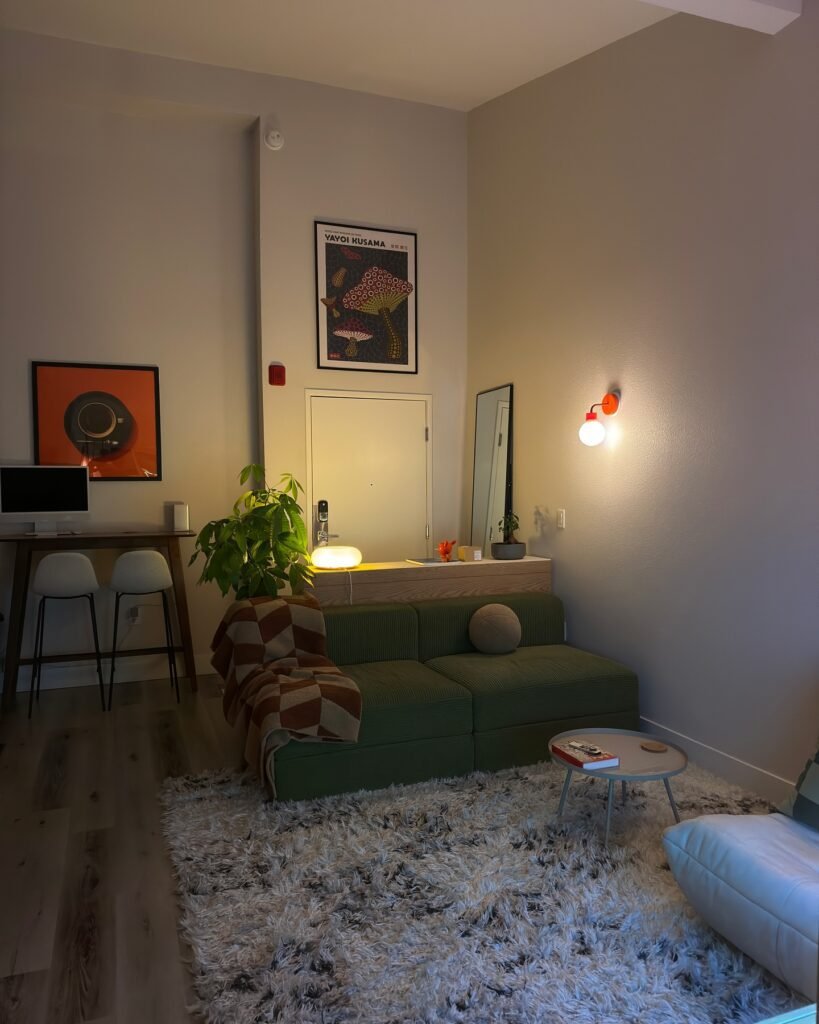
Overhead lighting treats your whole studio like one room. Zoned lighting is what changes that. Each zone should have its own light source — a floor lamp by the sofa, a bedside lamp, a task lamp at your desk. This way, you can light only the zone you’re using, which instantly makes the rest of the apartment feel like a separate space.
This is especially important for the sleep zone. If your bedroom area has its own warm, low lamp and you use it exclusively in the evenings, your brain starts to associate that corner with winding down. It’s not just aesthetic — it actually helps you sleep better.
Furniture Placement as Invisible Walls
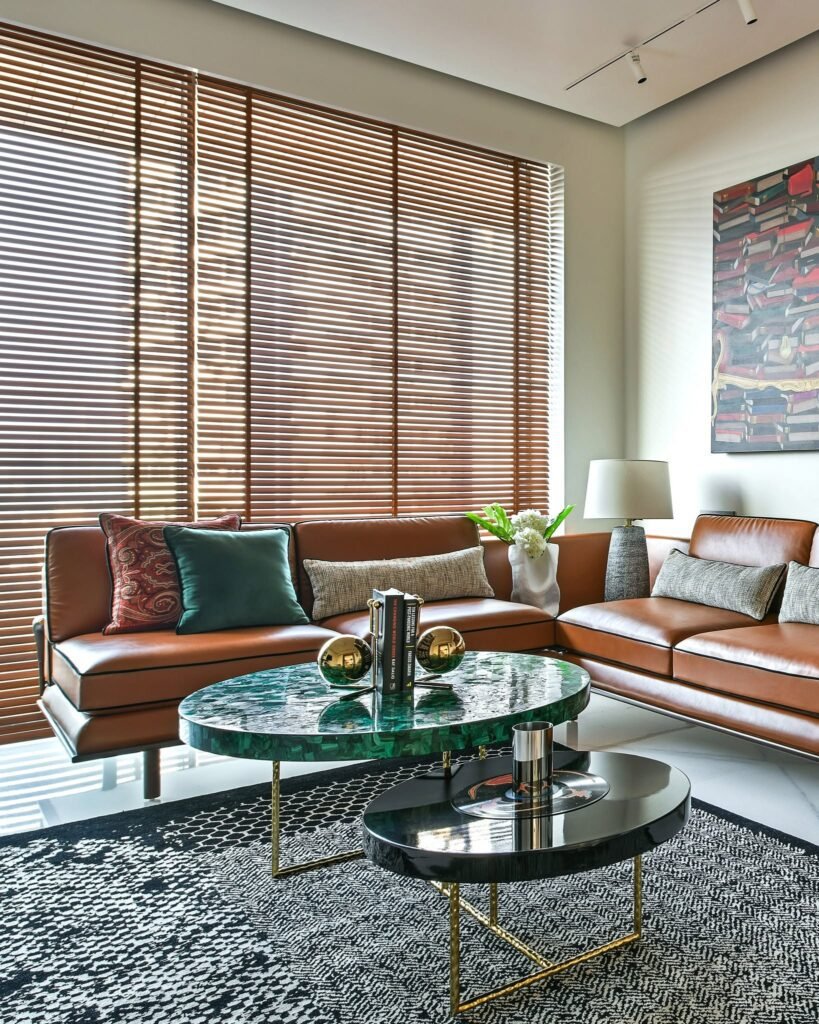
You don’t need a physical divider to create a boundary. The back of a sofa, turned away from the bed and toward the center of the room, creates a natural wall between the living zone and sleep zone. A console table behind the sofa reinforces that line and adds a surface for lamps or decor.
Bookshelves work beautifully as partial dividers too. A mid-height open bookshelf (around 48–60 inches) lets light pass through while still creating a sense of separation. It defines the space without boxing it in.
Color and Texture Signal Zone Changes
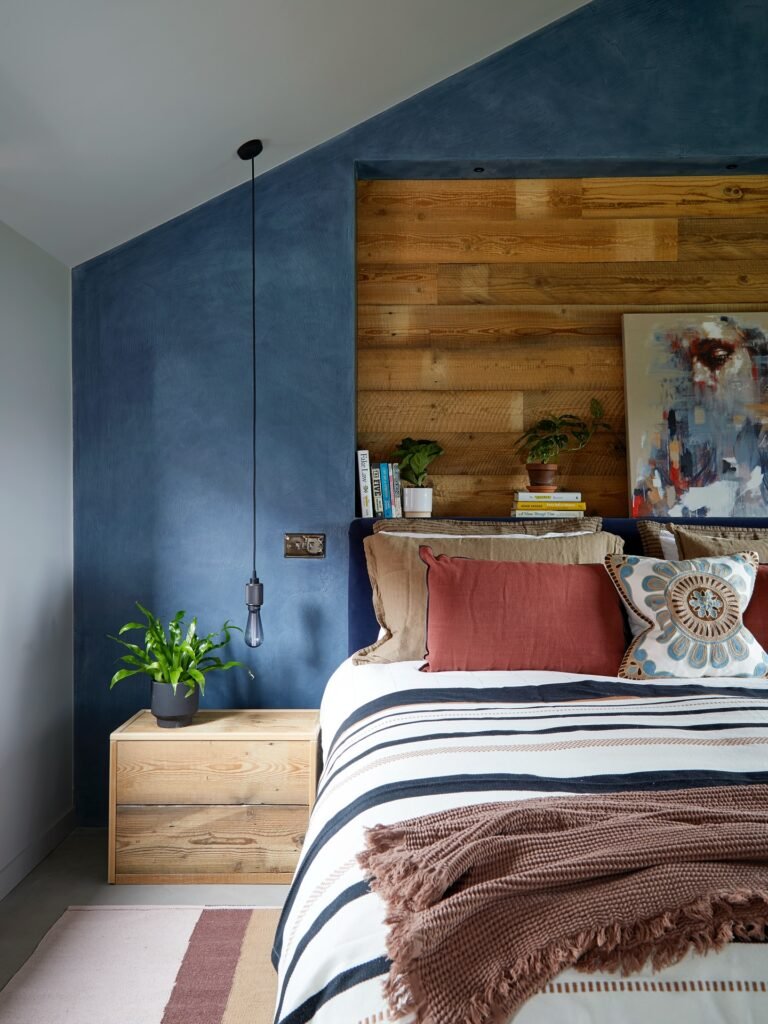
You don’t need to paint different walls different colors (though you can — an accent wall behind your bed is a classic move for a reason). Even swapping textures between zones creates a subtle shift. Linen curtains and soft bedding in the sleep zone versus leather or woven accents in the living zone, for example. Your eyes register the difference even when your conscious brain doesn’t.
The Work Zone: The Hardest One to Pull Off
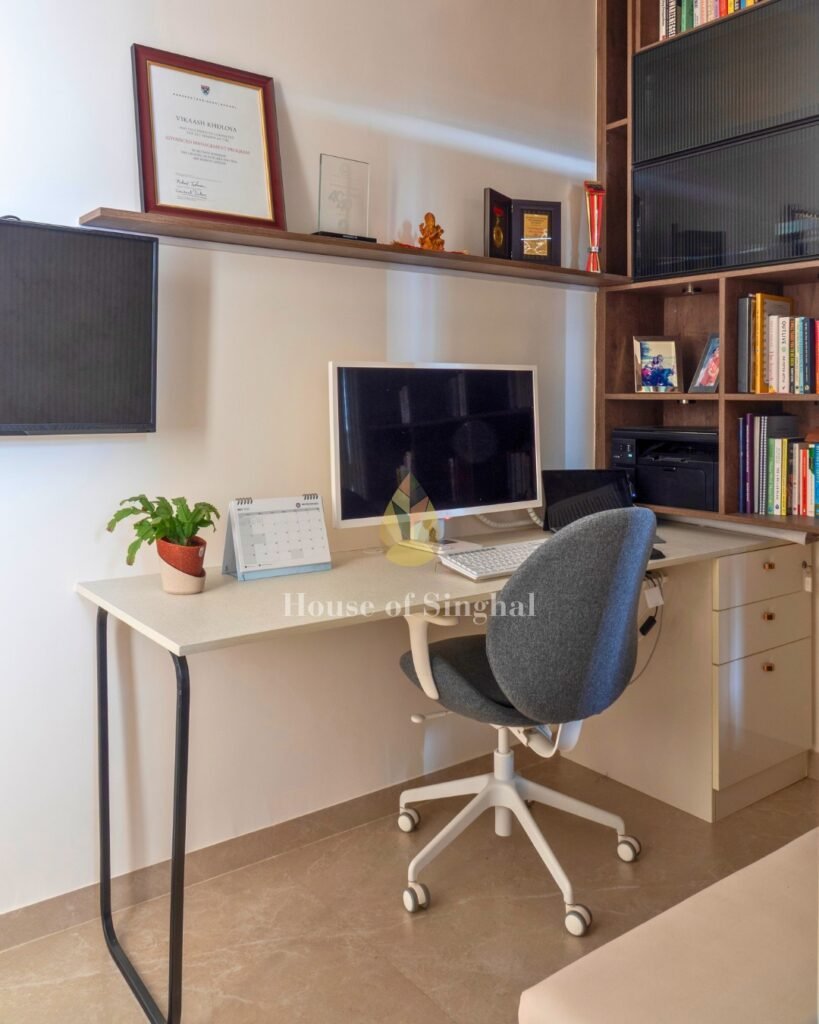
Most people struggle most with the workspace. Work bleeds into relaxation, and suddenly your whole apartment feels like a productivity trap.
A few things that genuinely help:
Give it a dedicated corner with its own back. Don’t put your desk floating in the middle of the room or facing into the living area. Tuck it against a wall or in an alcove. When you’re sitting at it, you should feel like you’re in the work zone, not just parked in the middle of your home.
Use a physical trigger to “close” the office. This sounds woo-woo but it’s actually practical — close a laptop, turn off a desk lamp, even drape a light throw over your chair. Some people use a small folding screen to visually cover the desk when they’re done for the day. The point is to create an off switch that isn’t just mental.
Keep work stuff out of other zones. No laptop on the couch. No notebooks on the nightstand. The second work items migrate, the zones collapse.
Small Details That Tie It All Together
Vertical Space Counts
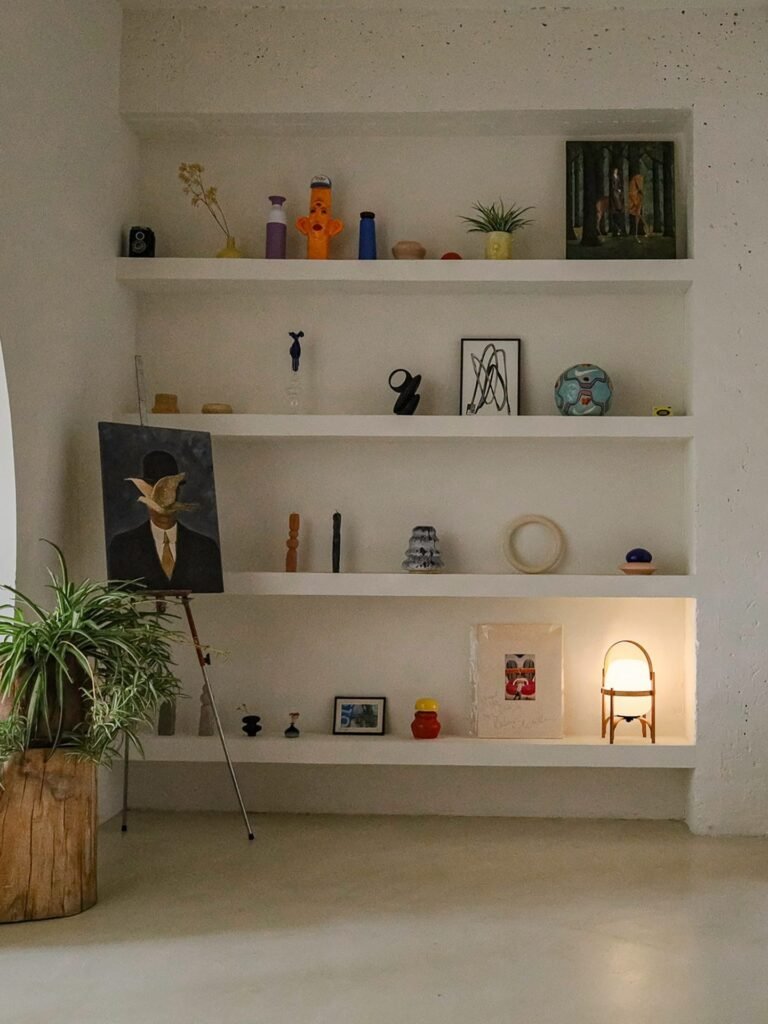
In a small studio, walls are underused real estate. Floating shelves, hanging plants, and wall art help define zones vertically. A gallery wall above a sofa signals “living room.” A single large piece of art above a bed signals “bedroom.” These cues work because we’re used to seeing them in homes with actual rooms — our brains read the signals.
Keep Pathways Clear
Zones need breathing room between them. A natural walking path (even just 18–24 inches) between zones does two things: it makes the space feel intentional rather than cluttered, and it reinforces the psychological separation. If you have to squeeze past your desk to get to your bed, the two zones feel merged — and they’ll function that way.
Scent Is Underrated
Hear me out: a candle or diffuser in a specific zone, used consistently, trains your brain to associate that scent with that activity. Lavender in the sleep zone, something energizing like eucalyptus near the desk. It’s a weird little hack, but it works over time.
A Quick Note on What Not to Do
Don’t over-zone. If you’re in a 400-square-foot studio and you’re trying to carve out five distinct areas, it’ll feel more chaotic than before. Pick the three or four functions that matter most to your daily life and design around those. Simplicity is the goal.
Also, don’t treat zones as permanent. The beauty of a studio is that it’s flexible. If your life changes — you start working from home more, or you get a roommate — your zones can shift. Don’t bolt everything down. Use moveable furniture where you can.
Make Your Studio Work For You
Creating a zoned studio apartment isn’t about making it look like a real multi-room home. It’s about making it function like one so you can sleep well, work without distraction, and actually relax without feeling like your whole life is piled on top of you.
Start with one zone. Just one. Define it clearly with a rug, a lamp, and intentional furniture placement, and see how it changes how you use the space. Once you nail one zone, the rest starts falling into place naturally.
Your studio can be your favorite room in any city you just have to stop fighting the layout and start designing with it.