
If your entryway feels a little underwhelming, you’re not imagining it. It’s one of those spaces that gets ignored because it’s “just the entrance,” but it quietly sets the tone for your whole home. You walk in, drop your keys, kick off your shoes, and move on. But if that area looks cluttered, poorly lit, or like it was decorated as an afterthought, the whole house can feel less polished than it actually is.
Here’s the thing: making your entryway look expensive usually has less to do with spending a ton of money and more to do with making better visual decisions. Most people get this wrong by trying to fill the space with random decor instead of focusing on a few details that create that clean, elevated look. What actually works is layering function with restraint, paying attention to scale, and making the space feel intentional.
If you’ve been wondering how to make your entryway look expensive without a full renovation, there are a few specific changes that make a big difference. And honestly, some of them are surprisingly simple.
Why Entryways Often Feel Cheap
A lot of entryways don’t look bad because the furniture is ugly or the finishes are outdated. They look cheap because the space feels incomplete or visually messy.
The “drop zone” problem
The entryway usually becomes the dumping ground for everyday life. Shoes pile up. Bags land on the floor. Mail stacks up on a console table. Then even a pretty space starts looking chaotic.
This matters because expensive-looking rooms almost always feel edited. Not empty, not cold, just controlled. When your eye lands on ten unrelated things at once, the space reads as cluttered rather than styled.
Everything is too small
This is one of the biggest mistakes people make. They use a tiny rug, a skinny little table, a small mirror, and one decorative object sitting awkwardly in the middle of it all. It makes the entryway feel hesitant.
A higher-end space usually has better scale. The rug has enough presence. The mirror or artwork actually fills the wall. The table doesn’t look like it was borrowed from a hallway in a rental apartment from 2012. Size creates confidence, and confidence reads as expensive.
Lighting gets ignored
Most people treat the entryway like a pass-through instead of a room. So they leave in the builder-grade flush mount and call it done.
But lighting has a huge effect on how expensive a space feels. A beautiful pendant, a sculptural lamp, or even warmer bulbs can completely change the mood. Harsh overhead light flattens everything. Soft, layered light adds depth and makes finishes look richer.
The Real Secrets Behind an Expensive-Looking Entryway
If you want to understand how to make your entryway look expensive, you need to focus less on “decorating” and more on visual signals.
It looks intentional
This is probably the biggest difference between a basic entryway and one that feels elevated. Expensive spaces don’t look accidental.
That means the furniture relates to the wall size. The decor isn’t random. The colors feel connected. There’s a reason each piece is there.
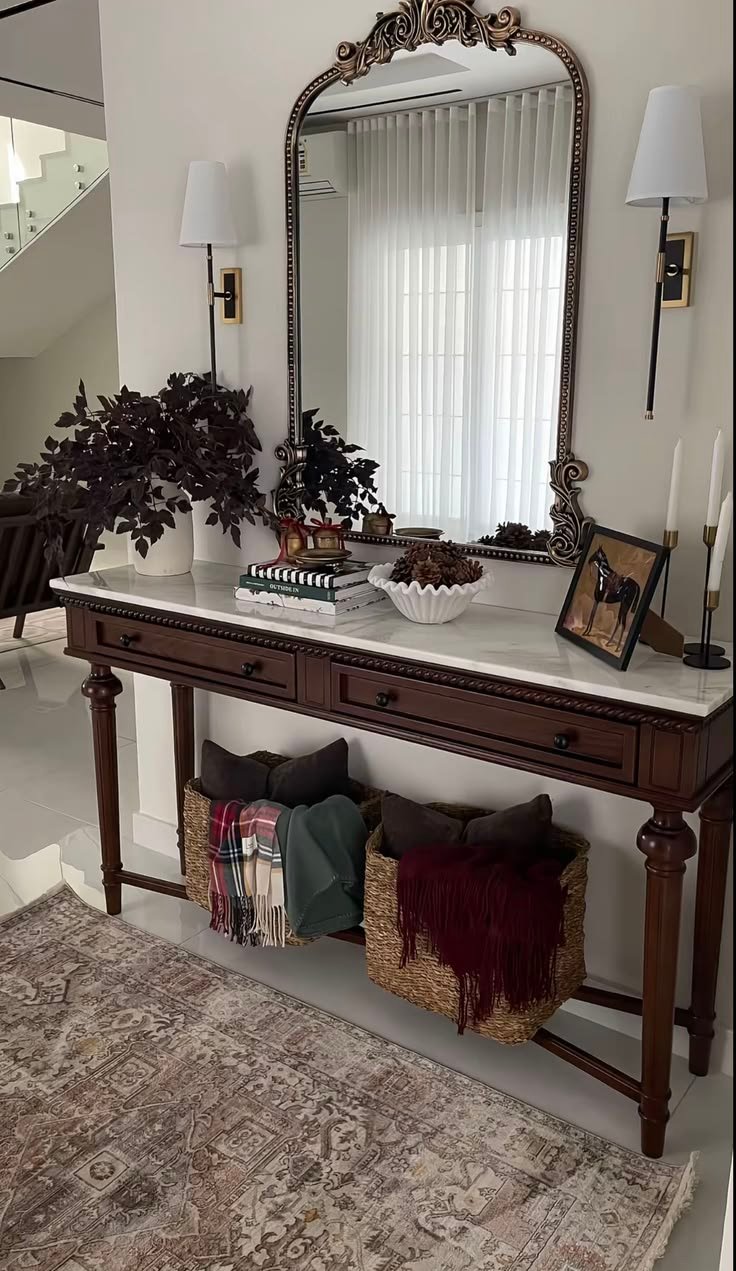
For example, a console table with a large mirror above it, a lamp on one side, and a bowl for keys can look far more expensive than a crowded table covered in small signs, candles, fake plants, and seasonal clutter. Fewer pieces, chosen better, almost always wins.
It balances beauty and function
A truly beautiful entryway still works for real life. That’s what makes it believable.
What actually works is building in function in a way that doesn’t scream storage. A woven basket for shoes looks better than visible shoe racks. A slim drawer for mail feels cleaner than paper piles. Wall hooks in a brass or matte black finish can look stylish if they’re spaced properly and not overloaded.
The expensive look comes from hidden practicality. Not from pretending nobody in the house owns sneakers.
It uses contrast
Flat spaces look forgettable. Expensive-looking spaces usually have some contrast built in.
That could mean:
- A dark console against a light wall.
- A vintage wood bench in a white entryway.
- A soft runner paired with a sleek metal light fixture.
- Smooth finishes mixed with texture, like linen, wood, ceramic, or woven materials.
Contrast gives the eye something to grab onto. It makes a space feel layered instead of one-note.
Common Mistakes That Instantly Bring the Look Down
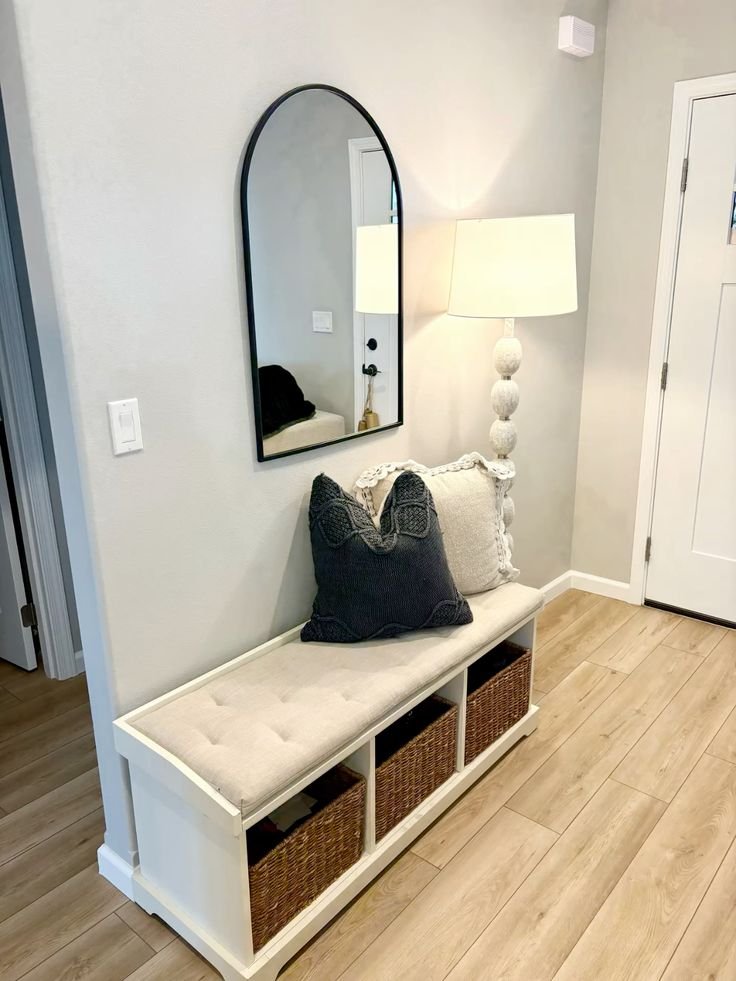
Before getting into what to add, it helps to know what tends to cheapen the space fast.
Too many tiny accessories
Most people get this wrong by buying lots of little decor pieces instead of one or two stronger ones. Small objects can work, but when every item is miniature, the whole space starts to feel fussy.
A large vase with branches, a substantial lamp, or one oversized piece of art will do more for the room than six small signs and three mini candles ever could.
A rug that’s too short
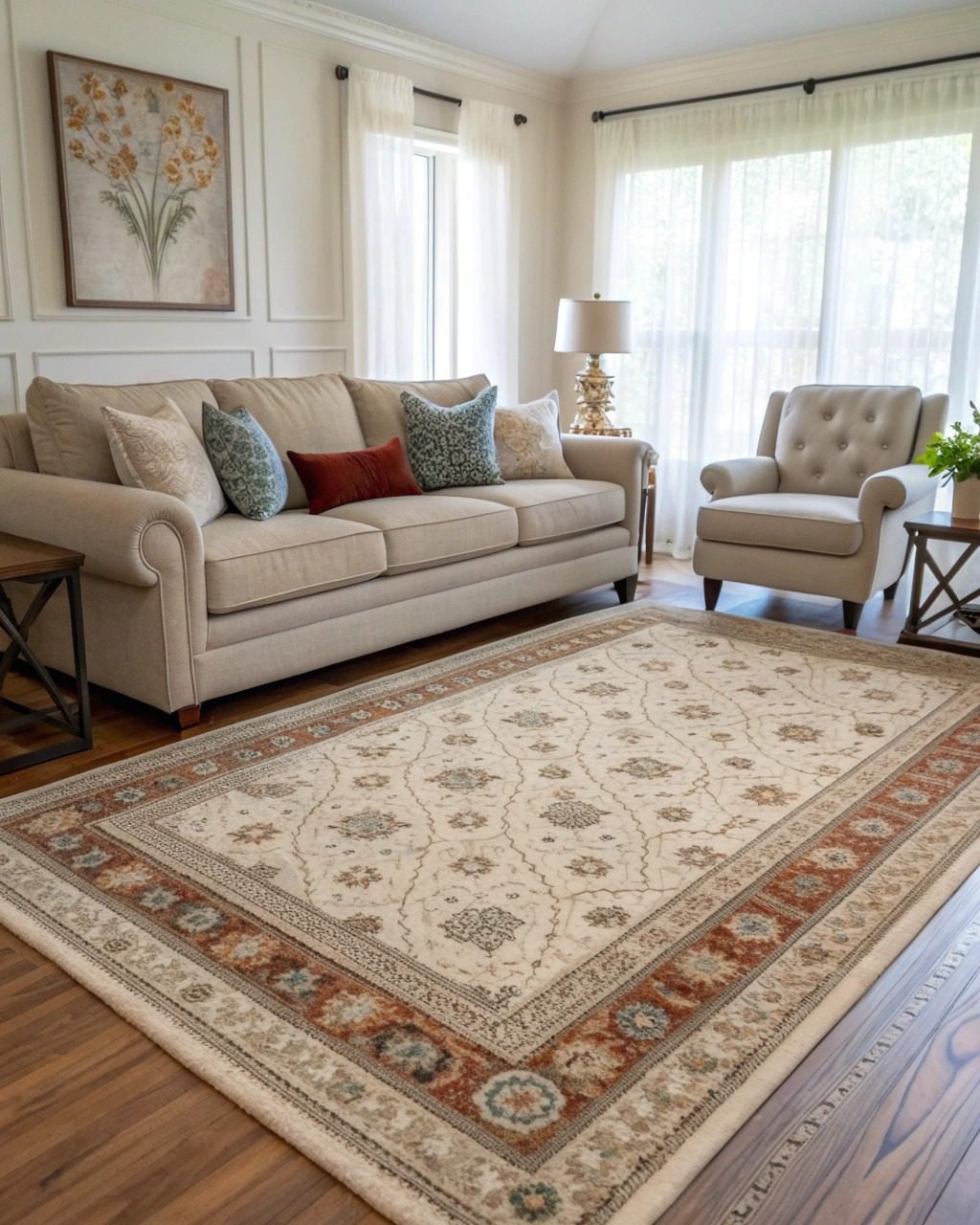
This one is so common. The rug barely covers the floor in front of the door, which makes the entryway feel visually cut off.
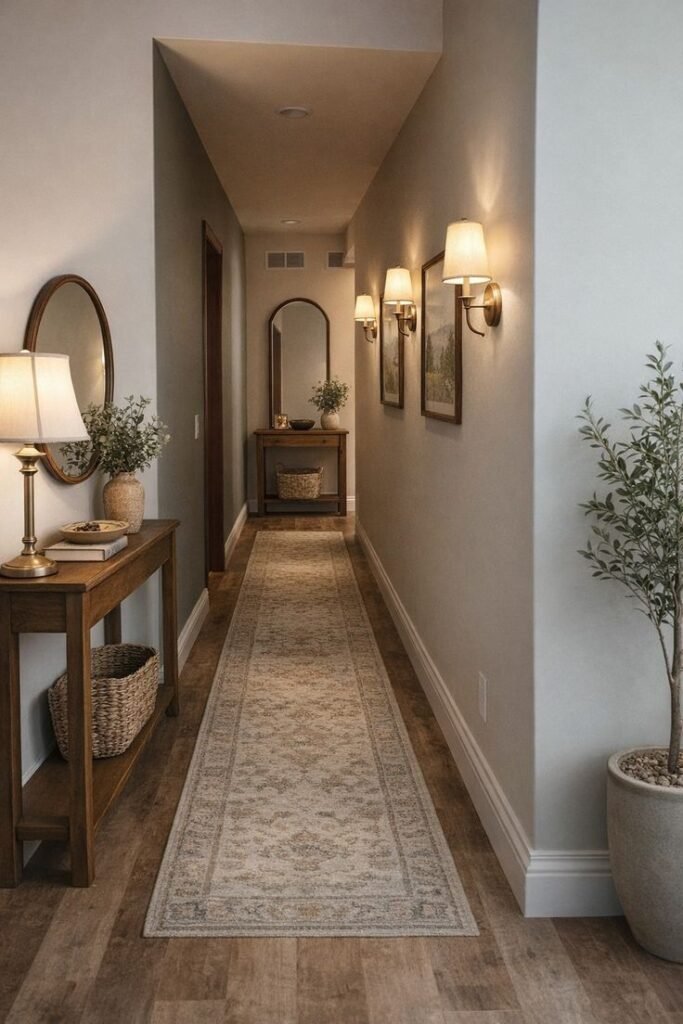
A runner should feel generous. It should anchor the path into the home, not look like an afterthought. If your entryway is narrow, a longer runner helps stretch the space and makes it feel more finished.
Cheap-looking materials in obvious places
Not everything has to be high-end, but the materials you use should at least look convincing. A peeling laminate table, a shiny plastic tray, or flimsy wall hooks can pull the whole space down.
If you’re saving money, do it strategically. A simple secondhand wood table will usually look more expensive than a brand-new cheap one with fake glam details.
No visual focal point
When you walk into an entryway, your eye should land somewhere. A mirror, art piece, light fixture, or beautiful table setup gives the space structure.
Without that focal point, the area can feel scattered. It’s just a wall, a floor, a door, and stuff.
How to Make Your Entryway Look Expensive Step by Step
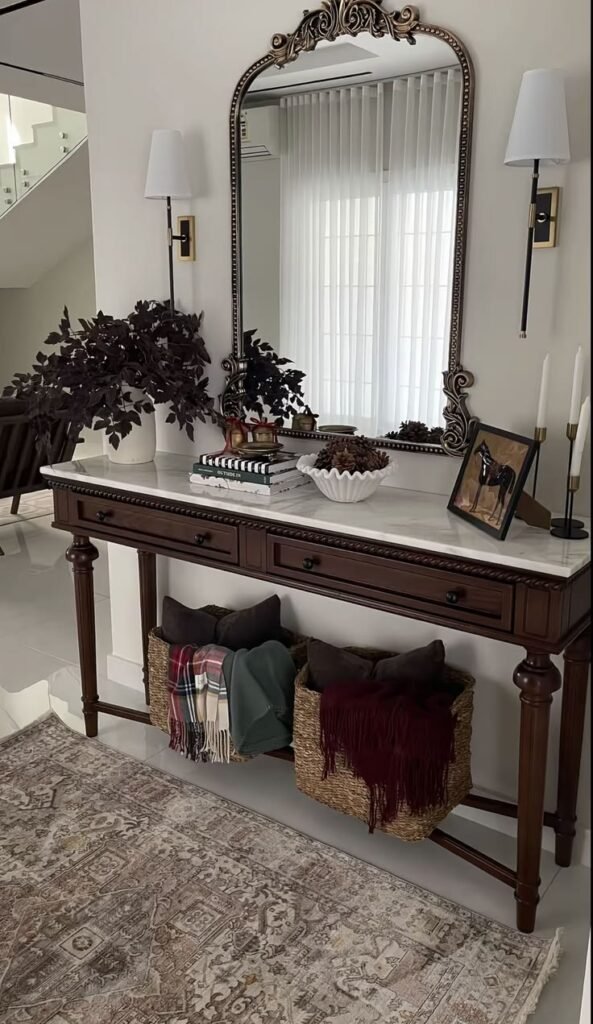
You do not need a full makeover. You just need to build the space in the right order.
Start with one anchoring piece
Pick the main element first. Usually this is one of these:
- A console table.
- A bench.
- A chest or cabinet.
- A large runner.
If you have room for furniture, a console table is usually the easiest place to start. Go for something with decent visual weight. Wood, painted finishes, metal frames with stone tops, and antique-style pieces often work well.
If your entryway is tiny, a wall-mounted shelf or narrow ledge can still create that styled look without taking up much floor space.
Add height with a mirror or art
Once the lower half of the space is grounded, the wall above it needs presence. This is where people often go too small.
A mirror is usually the easiest win because it reflects light and makes the space feel bigger. Round mirrors soften a lot of straight lines, while rectangular mirrors can feel more classic and structured.
Artwork can also work beautifully, especially if you want a warmer or more personal feel. The key is size. If the piece looks lost above the furniture, it won’t create that expensive look you’re after.
Upgrade the lighting
If there’s one thing worth changing, it’s the light fixture. Seriously. Builder-grade lighting is one of the fastest ways to make a home feel generic.
Swap it for something with more character:
- A small chandelier.
- A lantern-style pendant.
- A semi-flush mount with a sculptural shape.
- A fixture with mixed materials like metal and glass.
Then check the bulb temperature. Warm white light usually feels more inviting than cool white. That one change can make wall color, wood tones, and decor all look better.
Bring in one strong decorative moment
This is where the space starts looking styled instead of just functional.
Try one of these:
- A tall vase with branches.
- A table lamp with a textured base.
- A stack of two or three large coffee table books.
- A decorative bowl or tray for keys.
- A framed photo or small sculpture.
The trick is not to overdo it. You want one composed vignette, not a store display. Leave some breathing room so the eye can rest.
Hide the everyday mess
Nothing kills the expensive look faster than visible clutter.
Use:
- A basket for shoes.
- A tray for keys and sunglasses.
- A drawer for mail.
- A closed cabinet for dog leashes, umbrellas, or reusable bags.
This part matters more than people think. A beautiful entryway that’s constantly covered in life-stuff won’t stay beautiful for long. The setup needs to be easy enough that you’ll actually maintain it.
Design Choices That Make a Big Difference
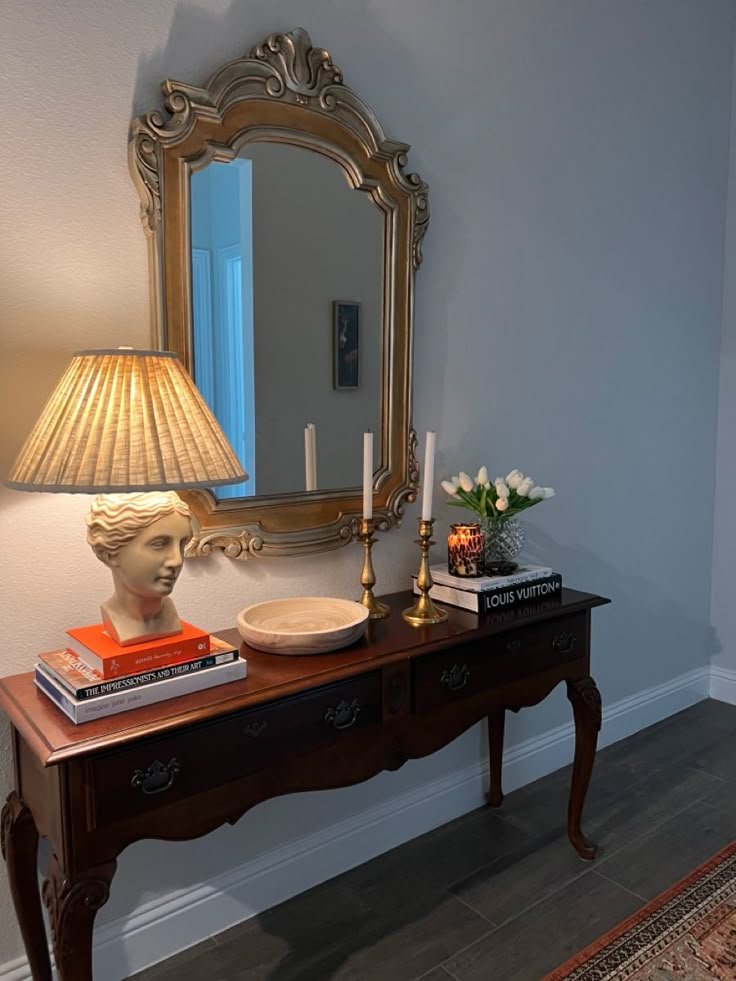
Once the basics are in place, a few styling decisions can push the whole look further.
Use a tighter color palette
Expensive-looking spaces tend to feel visually calm. One easy way to do that is to narrow the palette.
That doesn’t mean everything has to be beige. It just means your colors should relate to each other. Think warm whites, black accents, natural wood, muted greens, soft grays, or deep charcoal. When every item belongs to the same general mood, the space feels more refined.
If your entryway currently has random colors competing with each other, editing that down can instantly make it feel more pulled together.
Mix old and new
This is one of my favorite ways to make a space feel expensive without spending a fortune. A room made entirely of new budget pieces can look flat. But one vintage or thrifted item adds character fast.
Maybe it’s:
- An antique mirror.
- A weathered wood bench.
- A ceramic vase with some age to it.
- An old brass tray.
Those pieces create depth because they don’t feel mass-produced in the same way. Even one can change the entire energy of the space.
Pay attention to hardware and finishes
Small details matter more in a small space. If your entryway has visible hardware, hooks, or furniture legs, those finishes should feel cohesive.
You don’t need everything to match exactly, but they should make sense together. Matte black, aged brass, polished nickel, and warm wood can all look great if the mix feels intentional.
What usually looks cheaper is when every finish is fighting for attention. Chrome door hardware, gold hooks, black lighting, silver frames, and random wood tones can make the space feel confused.
Practical Ideas for Different Entryway Sizes
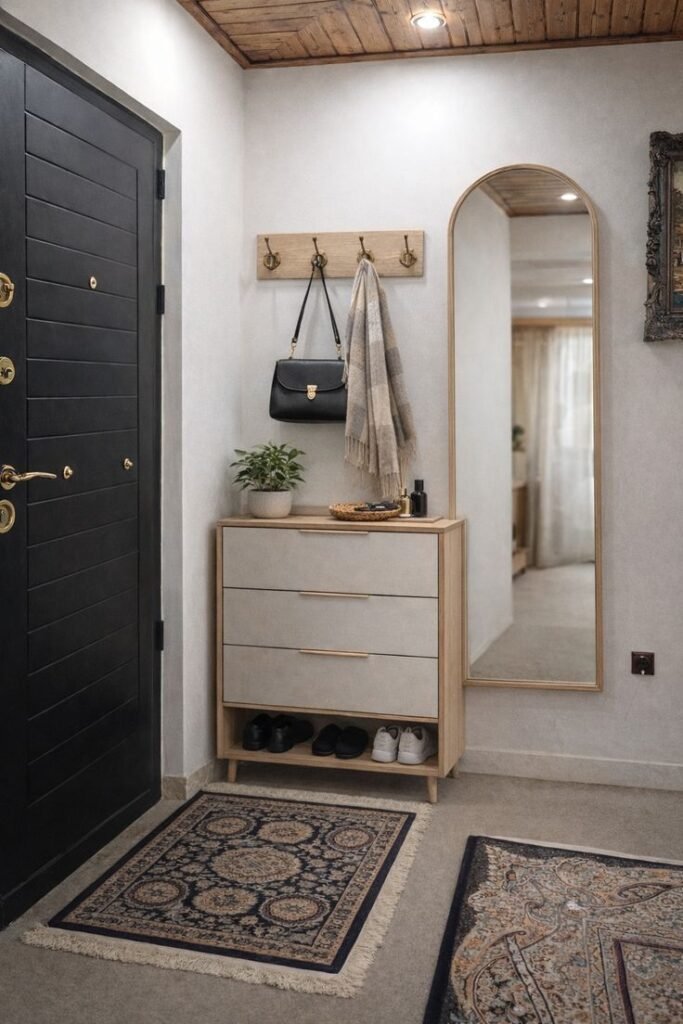
Not every home has a grand foyer, and honestly, most people are working with a pretty modest setup.
Small apartment entryway
If your front door opens basically into your living room, keep it simple but defined.
Use:
- A narrow wall shelf or tiny console.
- A mirror to bounce light.
- One basket underneath.
- A slim runner if the layout allows.
- A wall hook or two, but not ten.
What actually works is creating a mini-zone that feels intentional without overcrowding the area.
Narrow hallway entryway
In a tight hallway, depth matters more than width. Go for pieces that stay close to the wall.
Try:
- A shallow console table.
- Vertical artwork.
- Sconces or a compact light fixture.
- A longer runner to draw the eye forward.
This setup helps the space feel elegant instead of cramped.
Family home entryway
If you have kids, pets, backpacks, and actual daily traffic, your entryway needs to be durable.
That doesn’t mean it can’t look expensive. It just means your version of luxury is order.
Use:
- Closed storage where possible.
- A washable runner.
- Attractive baskets.
- Hooks that can handle real use.
- One or two elevated pieces, like a beautiful mirror or a great light fixture, to keep the space from feeling purely utilitarian.
What’s Worth Spending On
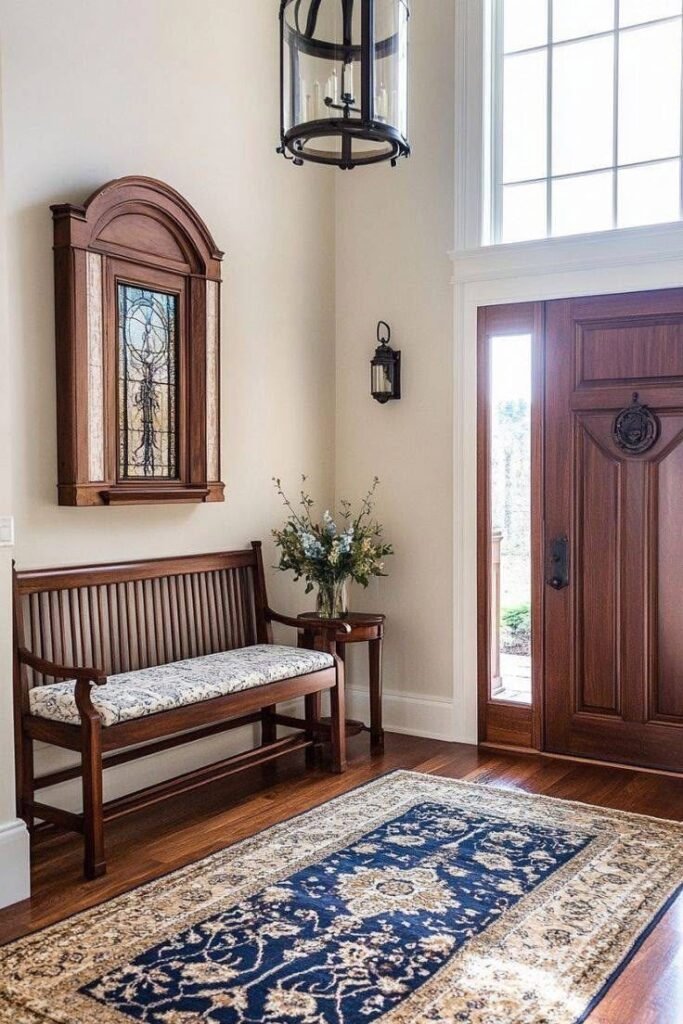
If you’re deciding where to put your money, don’t spread the budget too thin.
The pieces most worth investing in are:
- Lighting.
- A good mirror.
- A quality rug or runner.
- One solid furniture piece.
These are the items that have the biggest visual impact. Decor accessories can be affordable as long as they’re edited well.
I’d personally save on trend-driven extras and spend more on anything that grounds the room. A cheap seasonal wreath isn’t going to make your entryway look expensive. A great runner and better lighting absolutely can.
The Bottom Line
If you’ve been trying to figure out how to make your entryway look expensive, the answer is usually not more stuff. It’s better choices. Better scale, better lighting, better storage, and a more intentional mix of pieces. That’s what makes the space feel elevated.
Start with the basics: anchor the area, add one strong focal point, hide the clutter, and make sure the lighting is doing you favors instead of working against you. You do not need a huge foyer or a designer budget to pull this off. You just need the space to feel finished.
If your entryway has been the ignored corner of your home, this is your sign to fix it first. It’s a small area, which makes it one of the easiest places to upgrade, and the payoff is way bigger than people expect.