
A neutral living room sounds easy in theory. You pick white, beige, gray, maybe a little taupe, and you assume the space will instantly feel calm, polished, and expensive. But here’s the thing: neutral rooms can go wrong fast. Instead of looking warm and layered, they end up looking flat, cold, or like you gave up halfway through decorating.
If you’re staring at your living room and thinking, Why does this feel so boring even though nothing is technically wrong? — you’re not imagining it. A lot of neutral spaces are missing one thing: contrast with intention. Not clutter. Not random trendy decor. Just the right amount of color in the right places.
If you want to add a pop of color to a neutral living room without ruining the calm look you already like, the goal isn’t to throw in a bunch of bright accessories and hope for the best. What actually works is using color strategically so the room still feels cohesive, just more alive. That’s where most people get this wrong. They either play it too safe or go too hard.
Let’s get into how to do it in a way that actually looks good in a real home.
Why Neutral Living Rooms Need Color
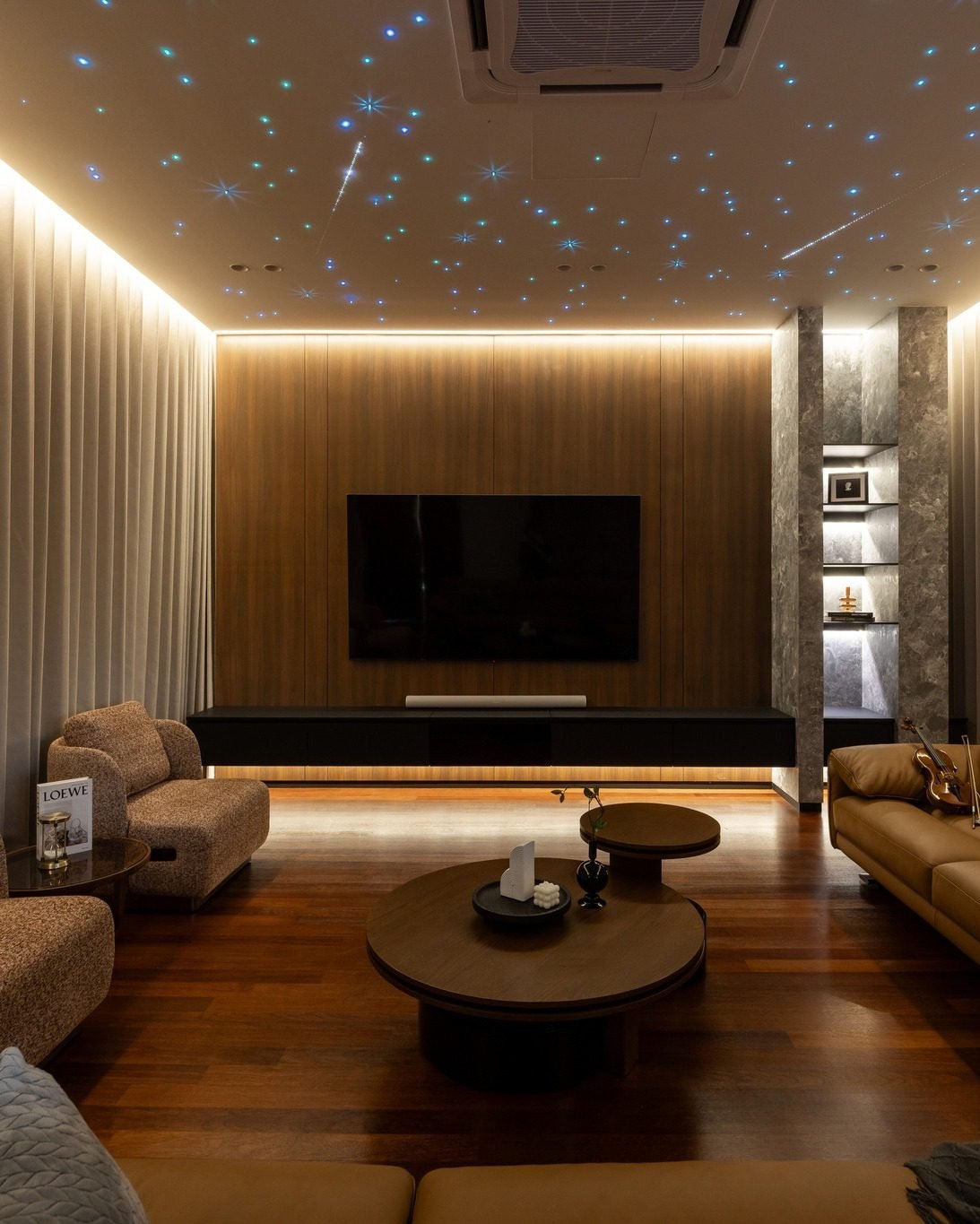
Neutral rooms work because they create visual breathing room. They feel restful. They let texture, shape, and light stand out. But when everything in the room sits in the same tonal range, your eye has nowhere to land.
That’s why even a beautiful neutral room can feel unfinished.
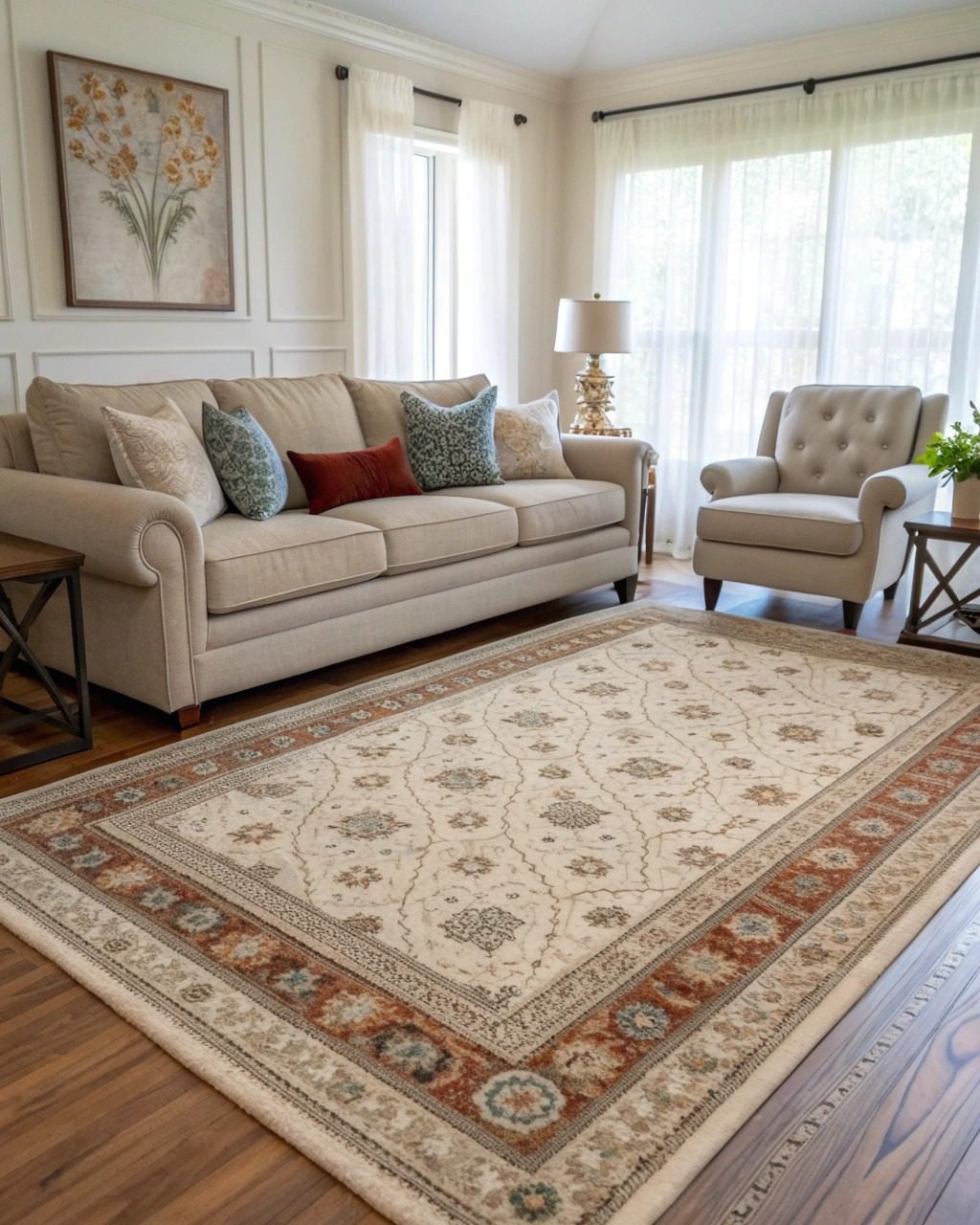
A pop of color gives the room a focal point. It creates energy without overwhelming the space. It also helps define your style. A beige sofa with rust pillows feels warm and earthy. The same sofa with deep blue accents feels classic. Add olive green, and suddenly the room leans organic and relaxed.
Color changes the personality of the room more than people realize.
And no, you do not need a bright red couch or a gallery wall of neon prints to make it happen. In most cases, one or two well-placed colors will do way more than ten random colorful objects ever could.
The Biggest Mistakes People Make
Before you add a pop of color to a neutral living room, it helps to know what usually makes the room feel off.
Using Too Many Accent Colors
This is probably the most common mistake. People get bored with a neutral palette, so they start adding mustard, then blue, then blush, then green, and suddenly the room looks confused.
Most people get this wrong because they think color automatically equals personality. But too many accent shades fight each other and make the room feel busy. If your base is neutral, your color story should still feel edited.
What actually works is picking one main accent color and, if you want, one supporting tone. That’s enough to make the room feel layered without becoming chaotic.
Choosing Color That Ignores the Undertones
Not all neutrals are the same. A warm beige room and a cool gray room need different kinds of color.
If your sofa, rug, walls, and wood tones all lean warm, adding a super icy blue can feel disconnected. Not impossible, just harder to pull off. The same goes for cool gray spaces with overly orange or yellow accents that feel dropped in from another room.
You do not need to match everything perfectly, but the undertones should make sense together.
Spreading Color Evenly Everywhere
This sounds balanced, but visually it can flatten the room. If every corner has a little bit of the same color, nothing stands out.
A better approach is to create small moments of color with different visual weight. Maybe your biggest color hit comes from artwork, while the pillows and accessories quietly repeat it. That gives the room rhythm.
Relying Only on Tiny Decor Items
A vase. A candle. A little stack of books. These are nice, but they usually are not enough by themselves.
If your room feels bland, the answer is rarely “buy three more decorative objects.” Tiny accessories can support the look, but they cannot carry it. You need at least one medium or large-scale color element so the change actually registers when you walk into the room.
How to Choose the Right Accent Color
This is where people overcomplicate things. You do not need to memorize color theory, but you do need to choose a color that fits the mood you want.
Start With the Feeling, Not the Shade
Ask yourself how you want the room to feel.
Do you want it to feel cozy and grounded? Go for rust, terracotta, olive, camel, or deep ochre.
Do you want it to feel fresh and airy? Try soft blue, sage, muted teal, or dusty green.
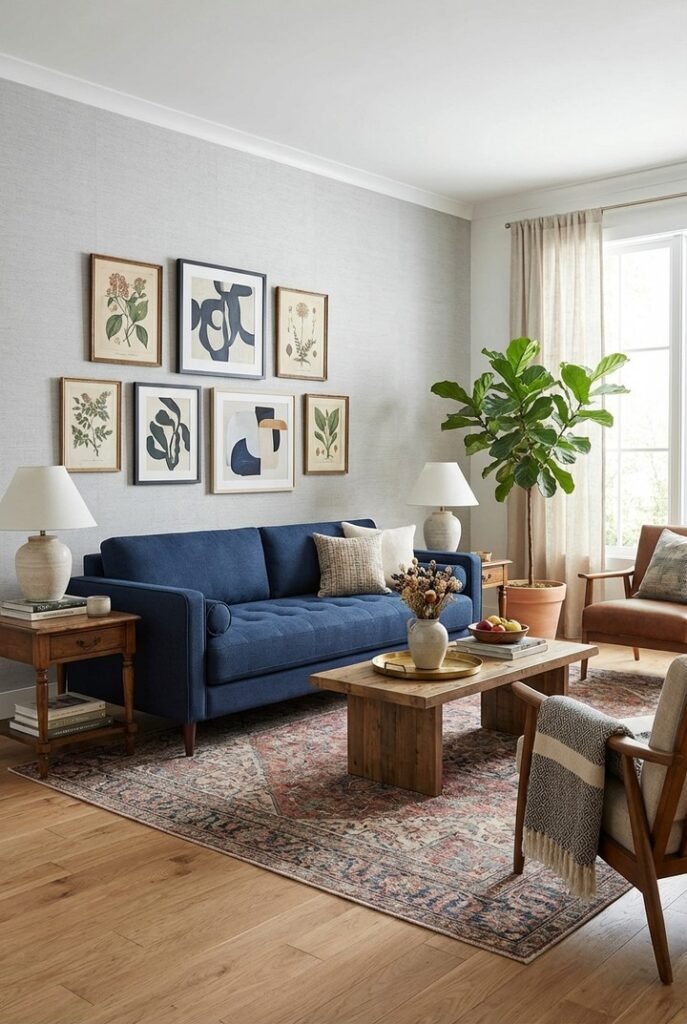
Do you want it to feel a little moodier or more polished? Navy, charcoal blue, forest green, or burgundy can work beautifully in a neutral space.
This matters because when people pick color based only on trend, they often end up with a room that looks current but does not actually feel right to live in.
Work With What’s Already in the Room
Look at the finishes you already have:
- Wall color
- Flooring tone
- Wood furniture
- Metal finishes
- Existing textiles
If your room has warm oak, cream upholstery, and beige curtains, warm accent colors usually feel more natural. If you have black metal, white walls, and cooler grays, richer jewel tones or cooler greens may fit better.
Here’s the thing: the easiest way to make color feel intentional is to make it look like it belongs there already.
Use Nature as a Shortcut
If you’re stuck, borrow combinations that already work in nature:
- Sand and olive
- Cream and terracotta
- Stone and dusty blue
- Taupe and deep green
These pairings feel easy because they are naturally balanced. They add color without feeling forced.
Where to Add a Pop of Color to a Neutral Living Room
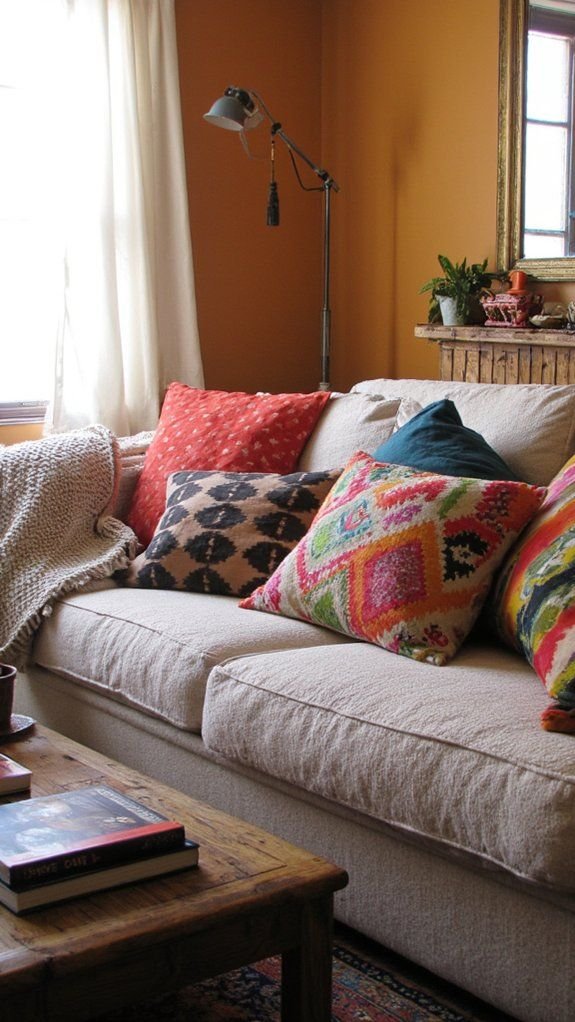
Not every decor piece matters equally. Some items have way more visual impact than others.
Pillows and Throws
Yes, this is the obvious answer, but it still works — if you do it right.
The problem is when people buy a matching pillow set in one exact color and call it done. That usually looks flat and a little staged.
Instead, mix a few related tones and textures. For example, if your accent color is rust, pair a printed rust pillow with a faded clay velvet pillow and a cream lumbar pillow with subtle warm detailing. Add a throw that connects to the palette without matching exactly.
This creates depth, which is what makes the room feel designed instead of decorated in a rush.
Artwork
If I had to choose one of the best ways to add a pop of color to a neutral living room, it would be artwork. It brings color at eye level, which matters more than people think.
A large abstract piece with even a little muted blue, green, or terracotta can completely shift the energy of the room. It also gives you a reference point for the rest of the palette.
What actually works is choosing art first, then pulling one or two colors from it into pillows, books, or a vase. That feels cohesive without being too matchy.
Accent Chairs or Ottomans
If your living room needs more than a small update, upholstered furniture can make a huge difference.
A camel leather chair, olive accent chair, blue patterned ottoman, or rust bench adds color in a substantial way without changing the entire room. This works especially well when your sofa is a neutral anchor and your larger pieces stay simple.
Most people are scared to use color in furniture because it feels permanent. But one chair is a lot less risky than repainting the room, and it often gives you more impact.
Curtains
Curtains are underrated. They take up a lot of vertical space, so even a subtle color can shift the whole room.
This does not mean you need bold printed drapes. Even soft flax, muted green, dusty blue, or warm clay curtains can add enough contrast to wake up a neutral room. If your walls and sofa are similar in tone, colored curtains can help frame the space and break up the sameness.
Rugs
A rug can either quietly support your palette or become the main source of color.
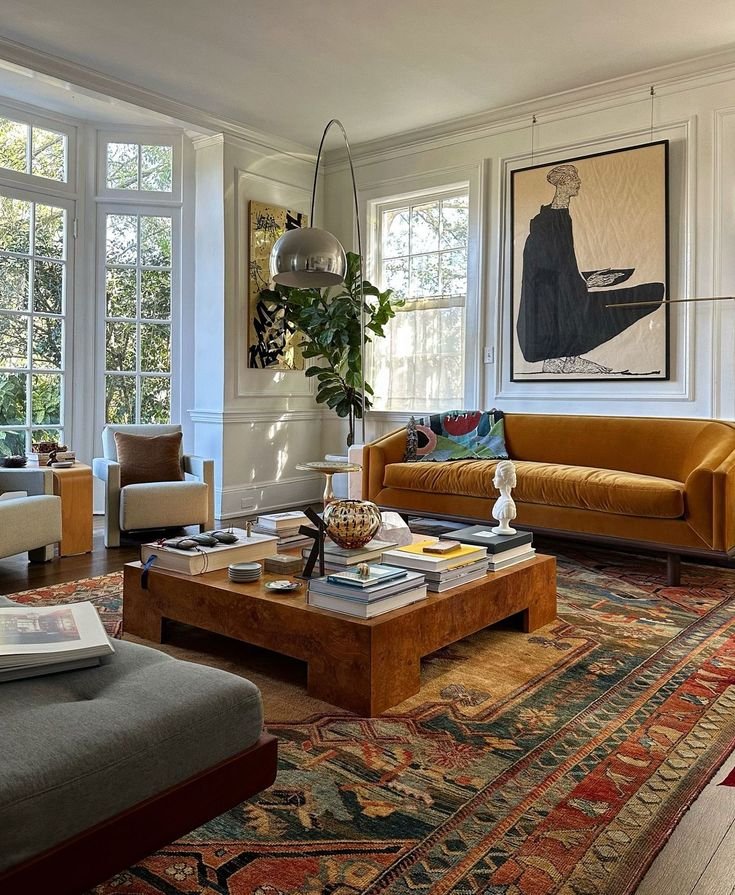
If everything else in the room is calm, a vintage-style rug with faded terracotta, blue, olive, or gold can bring in multiple tones at once without feeling loud. This is one of the smartest ways to add a pop of color to a neutral living room because it grounds the entire space.
It also helps repeat color in a less obvious way. Instead of adding five separate colorful objects, the rug does a lot of the heavy lifting.
A Simple Step-by-Step Approach
If you’re overwhelmed, do this in order.
Step 1: Keep Your Neutral Base
Do not start by replacing all your big furniture. If your sofa, walls, coffee table, and rug are already neutral and working well enough, keep them.
A neutral base is actually an advantage because it gives color room to stand out.
Step 2: Choose One Lead Color
Pick one accent shade based on the mood you want and the undertones already in the room. Not three. One.
If you want a safe starting point, olive, terracotta, muted blue, and deep green are some of the easiest colors to work into neutral spaces.
Step 3: Add One Large or Medium Color Element
This could be:
- A large artwork piece
- An accent chair
- A rug
- Curtains
Start here because this is what makes the room feel intentionally updated. Small accessories alone usually are not enough.
Step 4: Repeat the Color Two or Three Times
Now echo that same color in smaller ways:
- Pillows
- A throw blanket
- Coffee table books
- Ceramic decor
- Florals or branches
The key is repetition without overdoing it. When a color shows up a few times across the room, it looks planned.
Step 5: Add Texture So the Room Still Feels Warm
Color helps, but texture is what keeps a neutral room from feeling flat.
Mix materials like linen, boucle, leather, velvet, wood, glass, and stone. A room with neutral walls, a rust pillow, a woven basket, and a wood side table feels much richer than a room with the same color palette but no material contrast.
This is especially important if you prefer subtle color. Texture can do half the work.
Best Color Ideas for Neutral Living Rooms
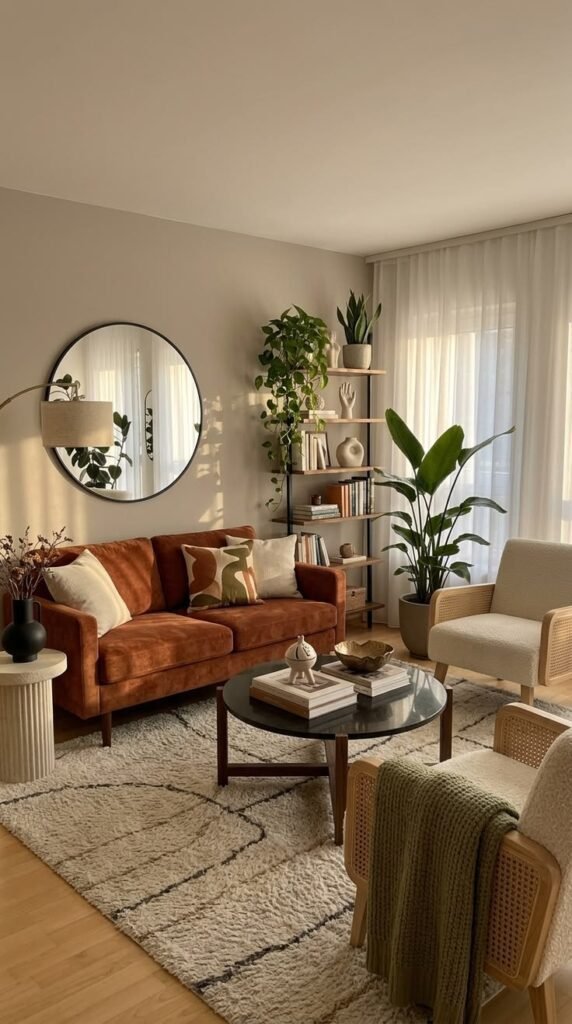
If you want specific ideas, these combinations tend to work well in real homes.
Warm Neutrals + Terracotta
This combo feels earthy, relaxed, and welcoming. It works especially well with cream, tan, beige, and warm wood tones.
Use it in:
- Clay-toned pillows
- Rust artwork
- A vintage-inspired rug
- Ceramic vases
Beige + Olive Green
This is one of the most forgiving combinations out there. Olive adds color without screaming for attention.
It works beautifully with:
- Linen curtains
- Botanical artwork
- Green velvet pillows
- Indoor plants with darker leaves
Gray + Dusty Blue
If your space leans cooler, dusty blue adds softness without feeling sterile. It gives the room a calm, classic feel.
Try it through:
- Blue-toned abstract art
- A faded patterned rug
- Textured throw blankets
- Upholstered seating
Cream + Black + One Muted Color
If you like modern spaces, use cream and black as your structure, then add one muted color like sage, rust, or slate blue.
This works because the black adds definition while the muted color keeps the room from feeling too stark.
What Actually Makes It Look Expensive
Let’s be honest. Most people are not just trying to add color. They want the room to feel more finished, more elevated, maybe even a little designer without spending a fortune.
Here’s what actually helps:
Keep the Palette Tight
Rooms look more expensive when the palette feels controlled. That usually means neutrals plus one main color, maybe two if they are closely related.
Use Muted or Dusty Versions of Color
Super saturated colors can work, but they are harder to integrate. Muted shades tend to blend more naturally into neutral rooms and feel more timeless.
Mix Old and New
A neutral sofa with a vintage-style rug, modern lamp, old wood table, and colored accessories has way more character than buying everything new in one shopping trip.
Leave Some Space Empty
Not every shelf and corner needs something. Color stands out more when it has room to breathe.
That’s a big one. People often add too much when what the room really needs is one strong move and less filler.
Final Thoughts
If you want to add a pop of color to a neutral living room, the goal is not to make the space louder. It’s to make it feel more alive. That usually comes down to one well-chosen color, repeated a few times, in pieces that actually have visual impact.
Start with the room you already have. Pay attention to undertones. Choose color based on mood, not just trend. And please do not try to fix a flat room with a pile of tiny accessories.
A neutral living room does not have to be boring. It just needs a little contrast and a little intention. Once you get that part right, the whole space starts to feel warmer, more personal, and a lot more finished.