
If you have a small kitchen, you already know the problem isn’t just lack of space. It’s that every cabinet somehow becomes a black hole. You put away one pan, and suddenly the lid you actually need is gone. Your coffee mugs are stacked in a way that feels mildly dangerous. And somehow there’s always one shelf packed with random containers, spices, and things you forgot you even bought.
Here’s the thing: organizing a small kitchen isn’t really about buying a bunch of bins and hoping for the best. It’s about making your cabinets work for the way you actually cook, clean, and live. That’s where most people get this wrong. They focus on making cabinets look tidy for a day instead of setting them up so they stay functional long term.
If you’re trying to organize kitchen cabinets in a small kitchen, you need a system that fits real life. One that makes everyday items easy to grab, keeps awkward spaces from going to waste, and helps you stop cramming too much into cabinets that are already doing a lot. What actually works is a mix of editing, grouping, and smarter placement. Once you do that, even a tiny kitchen can feel a whole lot easier to use.
Why Small Kitchen Cabinets Get Messy So Fast
Small kitchen cabinets usually don’t get messy because you’re disorganized. They get messy because they’re being asked to do too much.
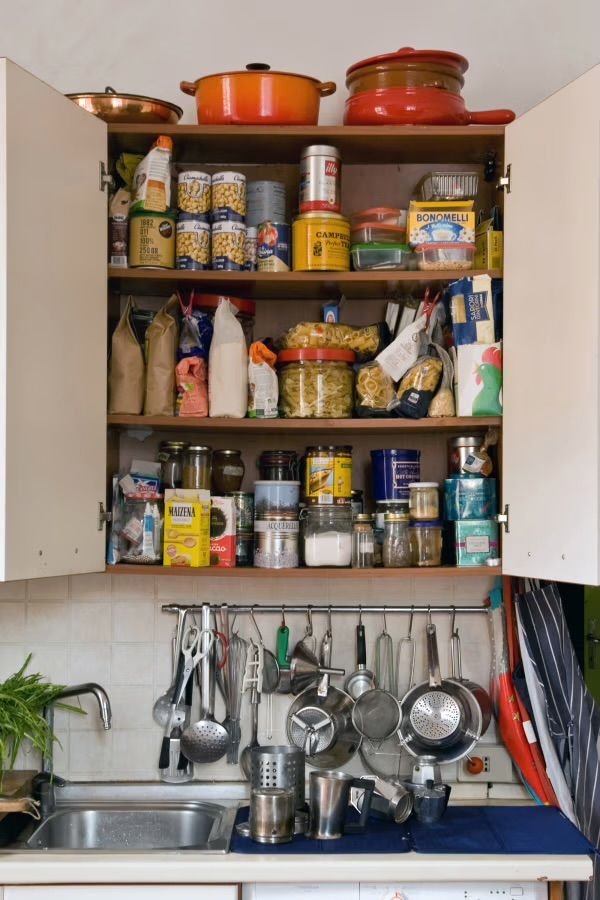
In a larger kitchen, you can get away with inefficient storage because there’s room to spread things out. In a small kitchen, every inch has to earn its place. If one shelf is poorly planned, the whole system starts to feel frustrating. That’s why it’s so common to see overstuffed upper cabinets, hard-to-reach corners, and piles of mismatched food containers shoved wherever they fit.
Another issue is that a lot of people organize by category in a way that sounds right but doesn’t actually help. For example, putting all baking items together makes sense in theory. But if you only bake once a month and use olive oil and spices every day, the better setup is based on frequency, not just type. What matters most is access.
Small kitchens also tend to collect “just in case” items faster than they can hold them. Extra mugs, duplicate utensils, novelty serving dishes, bulk snacks, random water bottles — they all take up valuable cabinet space. And once your cabinets are full, even good storage habits fall apart because putting one thing away means moving three others.
Common Mistakes That Make Small Kitchen Cabinets Harder to Use
Before you start organizing, it helps to know what usually goes wrong.
Keeping Too Much “Useful” Stuff
This is probably the biggest one. People hold onto kitchen items because they technically use them, even if it’s only twice a year. That giant stockpot, the extra set of glasses, the specialty cake stand — all of it may be useful, but not useful enough to live in prime cabinet space.
What actually works is being more selective about what gets easy access. Daily-use items should get the best spots. Occasional-use items can go higher up, farther back, or outside the kitchen if needed.
Stacking Items Without a System
Stacking looks efficient, but it often creates more problems than it solves. If your bowls are nested too deeply or your pans are piled on top of each other, you’re creating friction. And friction is what causes people to stop putting things back properly.
The easier something is to put away and pull out, the more likely your kitchen stays organized. That’s why vertical storage, dividers, and shelf risers tend to work better than deep stacks.
Ignoring Cabinet Depth
Deep cabinets can be surprisingly inefficient in a small kitchen. The back half often turns into a storage graveyard where food expires and tools disappear.
Most people get this wrong because they think filling every inch means they’re maximizing space. But if you can’t see or reach something easily, that space isn’t really helping you.
Organizing for Looks Instead of Routine
There’s nothing wrong with wanting neat cabinets, but pretty organization alone doesn’t solve the daily annoyance of using a cramped kitchen. If your setup looks nice but makes cooking harder, it’s not a good system.
You want your cabinets to support your routine, not just look good when the doors are open.
The Best Principles to Follow in a Small Kitchen
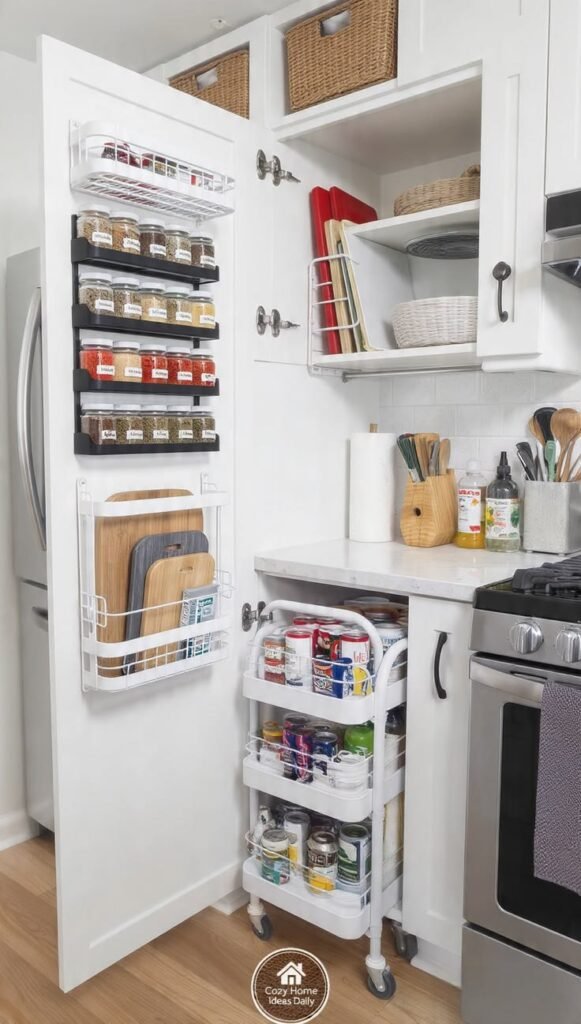
If you want to organize kitchen cabinets in a small kitchen in a way that actually lasts, these are the principles worth following.
Store by Frequency, Not Just Category
This is the shift that changes everything.
Put the things you use most where your hand naturally reaches first. Plates, everyday glasses, coffee supplies, lunch containers, cooking oils, your favorite skillet — those deserve the most accessible spots. Less-used appliances and specialty pieces can go in less convenient areas.
Why this works: it cuts down on cabinet shuffling. You stop moving five things just to get one item, which instantly makes the kitchen feel more efficient.
Give Each Cabinet One Job
A cabinet that holds snacks, baking dishes, paper towels, vitamins, and measuring cups is much harder to maintain than one with a clear purpose.
Try assigning broad zones:
- Everyday dishes
- Food storage containers
- Cooking tools
- Pantry items
- Cleaning supplies
- Serveware or seasonal pieces
This doesn’t have to be rigid, but each cabinet should make intuitive sense. When you open it, the items inside should belong together.
Use Vertical Space Aggressively
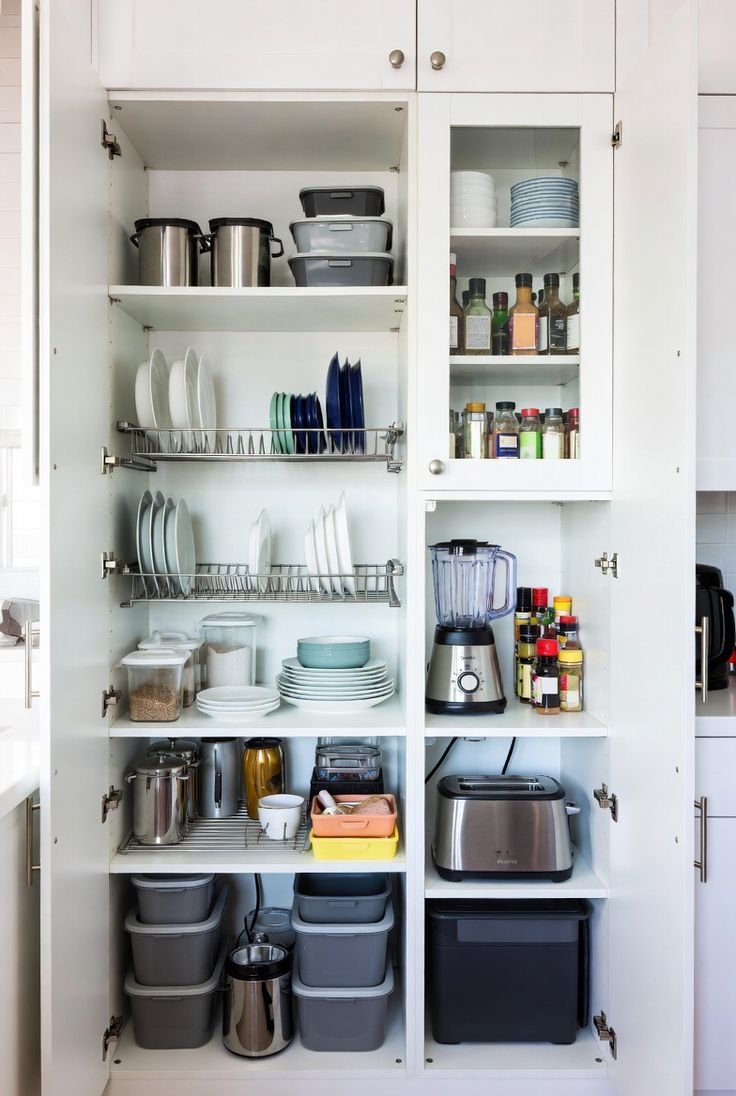
In a small kitchen, unused vertical space is wasted space. A lot of cabinets have dead air above shorter items like mugs, bowls, cans, or plates.
What actually works is adding structure inside the cabinet. Shelf risers, stackable bins, under-shelf baskets, and vertical dividers can double how usable a shelf feels without making it chaotic.
Keep Retrieval Easy
This matters more than people think. The best organization system is the one that doesn’t annoy you.
If something is heavy, awkward, slippery, or buried, it probably won’t stay organized. That’s why lazy Susans, pull-out bins, and upright file-style dividers are so helpful. They reduce effort, which makes maintenance easier.
Step-by-Step: How To Organize Kitchen Cabinets in a Small Kitchen
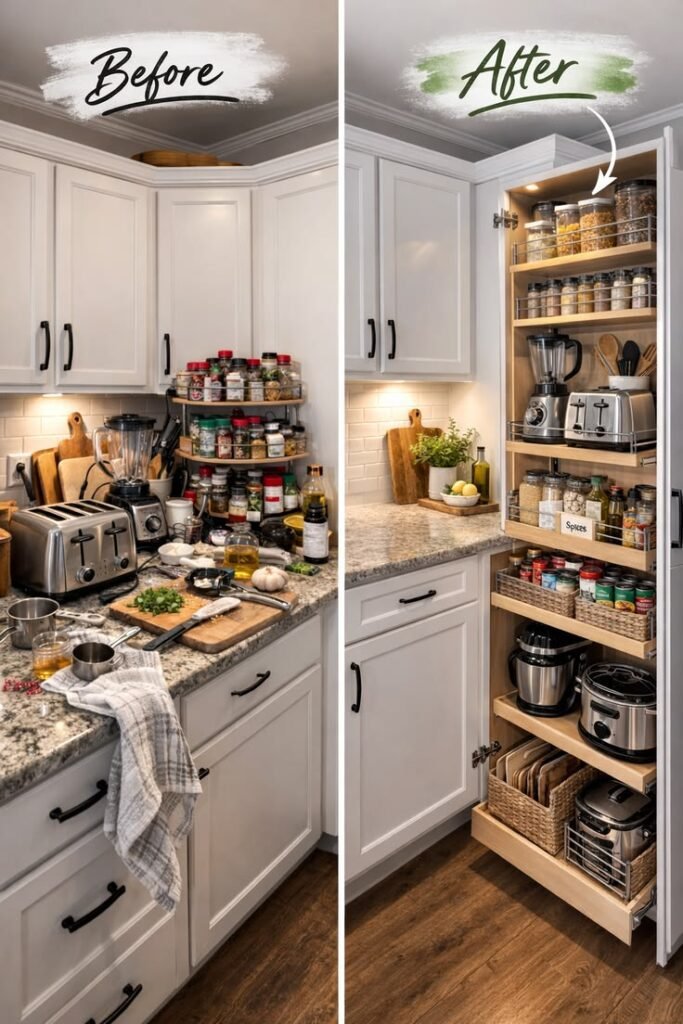
Let’s get into the practical part.
Step 1: Empty Cabinets in Sections, Not All at Once
Do not pull everything out of every cabinet unless you enjoy creating stress for yourself.
Work one cabinet at a time. Empty it completely, wipe it down, and sort the contents before moving on. This keeps the process manageable and helps you make better decisions because you’re looking at one problem clearly instead of your entire kitchen exploding onto the counters.
Step 2: Edit Harder Than You Think You Need To
Here’s the part most people avoid: you probably need to keep less in your kitchen cabinets.
Ask yourself:
- Do I use this at least monthly?
- Would I buy this again today?
- Is this the best version of this item I own?
- Is this worth the space it takes up?
Be honest. In a small kitchen, duplicates are expensive. Every extra mug or random plastic container costs you convenience somewhere else.
A good example: if you have twelve travel cups but only use two, keep your favorites in the kitchen and relocate or donate the rest. Same goes for chipped bowls, mismatched lids, duplicate spatulas, and bulky serving platters you never reach for.
Step 3: Group Items by Real-Life Use
Once you’ve pared things down, group items based on what you actually do in the kitchen.
For example:
- Coffee and tea items together: mugs, filters, sweetener, tea bags
- Daily cooking zone: oils, salt, pepper, favorite spices, mixing bowls, utensils
- Lunch-packing zone: containers, water bottles, wraps, snack bags
- Breakfast zone: cereal bowls, oatmeal packets, toaster supplies
This works better than broad categories because it supports routines. Instead of opening three cabinets to make coffee, you open one.
Step 4: Put Your Most-Used Items at Eye Level or Waist Level
The best cabinet real estate should go to the things you use constantly.
Eye-level and waist-level shelves are your prime zones. Use them for:
- Everyday dishes
- Glasses and mugs
- Food containers
- Frequently used pantry goods
- Cooking essentials
Higher shelves should hold lighter, less-used items. Lower cabinets can hold heavier cookware, small appliances, or bulkier pieces.
This sounds simple, but it makes a huge difference in how your kitchen feels day to day. You want the kitchen to work with your body, not against it.
Step 5: Stop Letting Containers and Lids Take Over
Food storage containers are notorious cabinet wreckers.
Most people keep too many, and they store them in a way that creates instant mess. What actually works is limiting the collection, nesting containers by shape, and storing lids vertically rather than in a pile. A simple lid organizer or even a narrow file sorter can make this cabinet dramatically easier to use.
If you open the container cabinet and feel irritated every time, that’s a sign the system is wrong — not that you’re bad at organizing.
Step 6: Use Tools That Solve Specific Problems
You do not need twenty organizers. You need a few smart ones.
The best tools for small kitchen cabinets are:
- Shelf risers for plates, mugs, or pantry items
- Lazy Susans for oils, spices, sauces, or baking supplies
- Clear pull-out bins for snacks or packets
- Vertical dividers for cutting boards, baking sheets, and pan lids
- Small bins for corraling odd items like measuring spoons or drink mixes
Buy organizers after you declutter, not before. Otherwise you end up designing storage around clutter instead of solving it.
Smart Cabinet Strategies That Make a Small Kitchen Feel Bigger
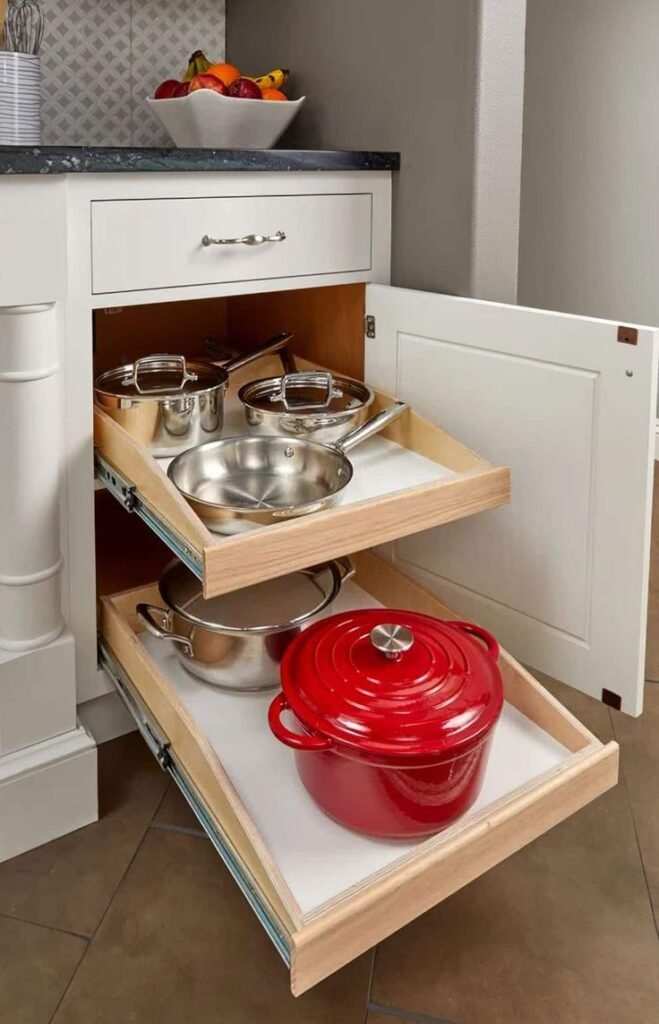
These are the little shifts that help a cramped kitchen function better.
Decant Selectively, Not Excessively
Decanting can help, but only when it solves a real problem. If you’re constantly dealing with half-open bags of rice, pasta, or flour, clear stackable containers can make shelves neater and easier to use.
But decanting everything just creates extra work. You do not need your pretzels in a labeled canister unless that genuinely helps your routine.
Use the Cabinet Doors
The inside of cabinet doors is often overlooked, especially in a small kitchen.
Depending on the cabinet, you can use door-mounted storage for:
- Measuring spoons and cups
- Pot holders
- Cleaning gloves
- Wraps and foil boxes
- Small spice racks
This works best for lightweight items. Just make sure the door still closes easily and nothing bangs into the shelves.
Separate Backstock From Daily Use
If you shop in bulk, don’t force all your extras into active kitchen cabinets. That’s how cabinets get clogged.
Keep a small working amount in the kitchen and store backup items elsewhere if possible — a pantry shelf, laundry room cabinet, utility closet, or even a labeled bin in another area. Small kitchens function better when they aren’t trying to hold your entire stockpile.
Create “Grab Zones”
This is especially helpful for busy households.
A grab zone is a cabinet or section designed around a repeat task:
- School lunch setup
- Coffee station
- Weeknight cooking essentials
- Kids’ snack access
Why this works: it reduces traffic and decision fatigue. Instead of hunting around the kitchen, you know where the needed items live.
What to Put Where in a Small Kitchen
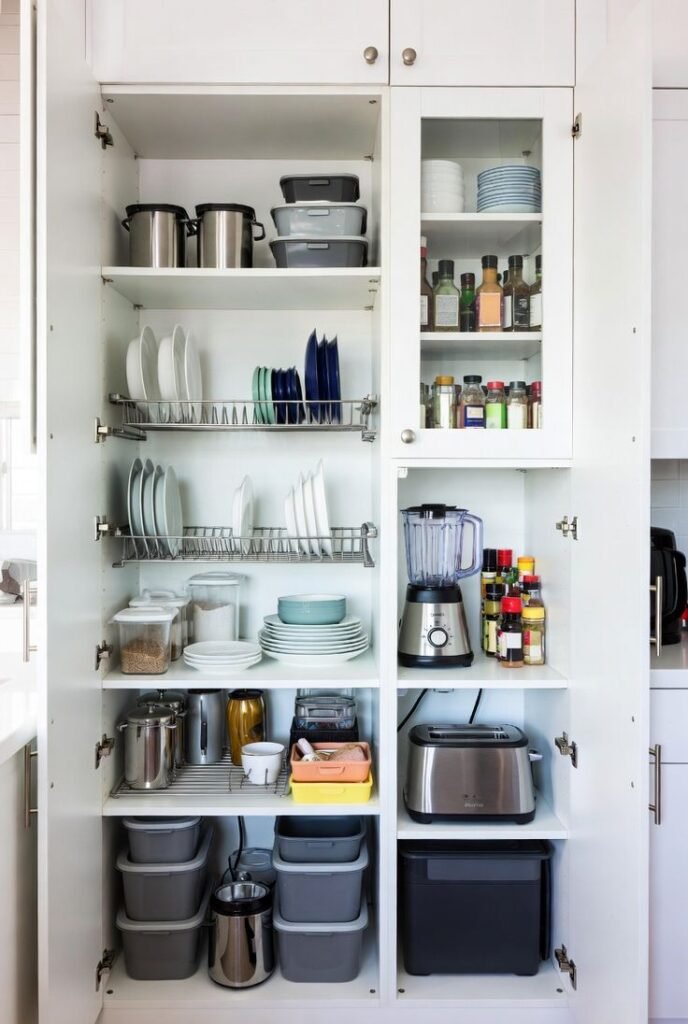
If you’re not sure how to assign cabinet space, here’s a practical approach.
Upper Cabinets
Best for:
- Everyday plates and bowls
- Glasses and mugs
- Frequently used pantry staples
- Lightweight serving pieces
Avoid putting rarely used clutter here just because it fits. Upper cabinets should support daily kitchen flow.
Lower Cabinets
Best for:
- Pots and pans
- Mixing bowls
- Small appliances
- Food storage containers
- Heavier pantry goods
Use vertical dividers and pull-out bins whenever possible. Lower cabinets become frustrating fast when items are stacked too deep.
Awkward Corner Cabinets
Best for:
- Bulkier but occasional-use cookware
- Small appliances you don’t need every day
- Extra paper goods
- Backup pantry items
A lazy Susan or pull-out corner solution can help, but honestly, the biggest improvement usually comes from storing the right things there — not trying to make it your most functional cabinet.
How to Keep Kitchen Cabinets Organized Long Term
Getting organized is one thing. Keeping it that way is the real challenge.
The key is making the system easy enough that you can maintain it without thinking too hard. That means not overfilling shelves, not creating complicated categories, and leaving a little breathing room in each cabinet.
A few habits help a lot:
- Do a quick reset once a week.
- Toss expired food regularly.
- Rehome random items that drift into kitchen cabinets.
- Limit new purchases unless they replace something.
- Adjust zones if your routine changes.
This is where being slightly ruthless pays off. Small kitchens don’t have room for indecision. If something consistently makes your cabinets harder to use, it probably doesn’t deserve that space.
A well-organized small kitchen doesn’t mean everything fits perfectly all the time. It means your cabinets are functional, easy to maintain, and set up around your real life instead of some ideal version of it.
If you want to organize kitchen cabinets in a small kitchen, start with less stuff, better zones, and easier access. That’s the formula. Not perfection, not fancy containers, and definitely not cramming more into every shelf.