
Have you ever stepped back, looked at your living room, and felt like something was missing? The couch looks nice. The rug is in place. Maybe you’ve even added a few throw pillows. But the wall behind your sofa? It just sits there looking empty, making the whole room feel unfinished.
You’re definitely not alone. That large blank wall is one of the trickiest spots to decorate because it’s usually the first thing people notice when they walk into the room. The good news is that you don’t need a complete makeover or an expensive designer to fix it. Sometimes one well-chosen piece—or a thoughtful arrangement—can completely change how your living room feels.
These above-the-couch decoration ideas range from timeless gallery walls to creative shelving and oversized statement pieces. Whether your style leans modern, farmhouse, cozy, minimalist, or somewhere in between, you’ll find inspiration that actually works in real homes and real budgets.
1. Make a Statement with One Oversized Piece of Art
Sometimes less really is more. If you want something that actually works without overthinking every little detail, hanging one oversized artwork above your couch is hard to beat.
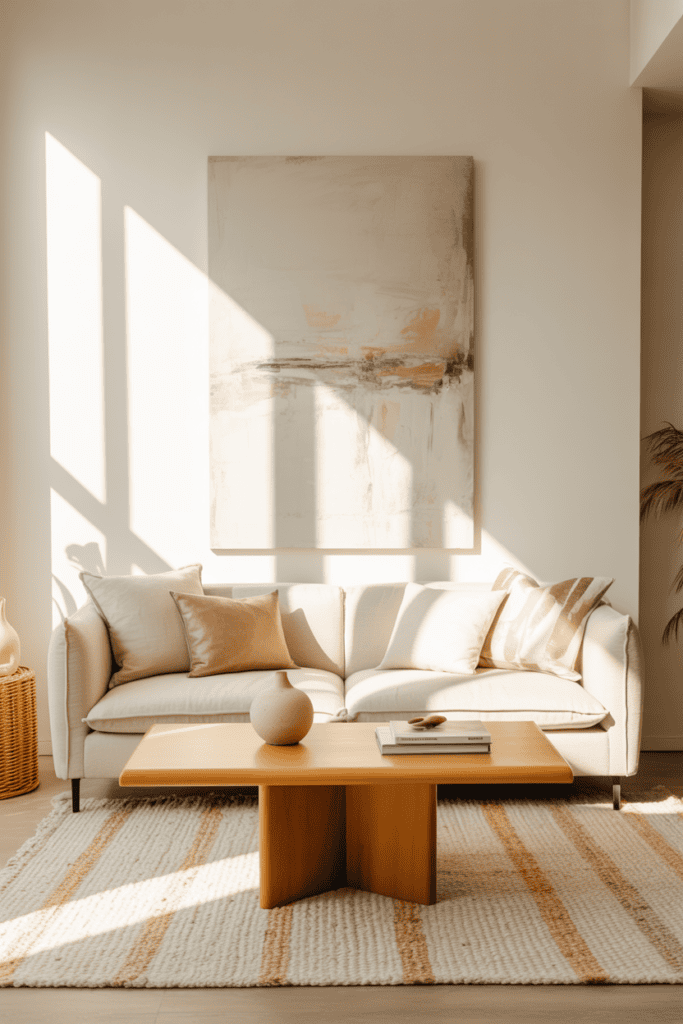
A large canvas instantly fills the wall, creates a focal point, and makes the room feel intentional rather than empty. It also keeps things visually calm compared to arranging lots of smaller pieces. This works especially well in modern, Scandinavian, and minimalist living rooms where clean lines matter.
The trick is getting the size right. Your artwork should be roughly two-thirds to three-quarters the width of your sofa. Hang it so the bottom sits about 8 to 10 inches above the back of the couch. That spacing helps everything feel connected instead of floating awkwardly on the wall.
You don’t have to spend hundreds on original artwork either. Large printable art, canvas reproductions, vintage landscape prints, or even framed fabric panels can give you the same designer-inspired look for much less.
2. Create a Gallery Wall That Tells Your Story
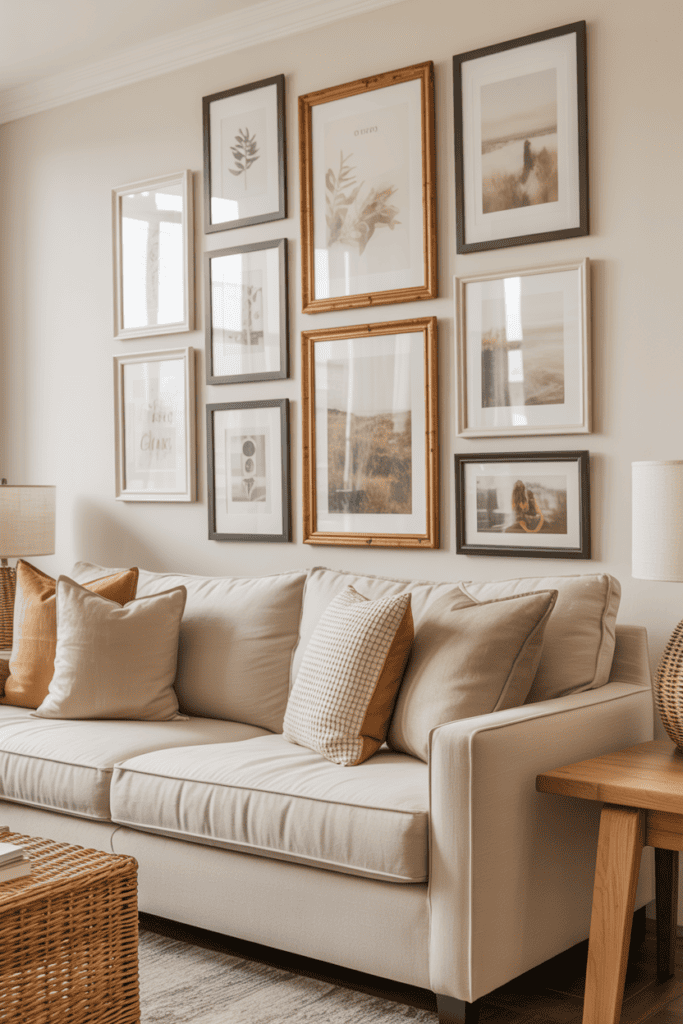
Gallery walls never seem to go out of style because they make a room feel personal. Instead of filling the wall with random decor, you’re creating something that’s uniquely yours.
Mix family photos, travel prints, abstract artwork, botanical illustrations, vintage sketches, or meaningful quotes. Combining different subjects keeps the arrangement interesting while still feeling cohesive if you stick to a similar frame color.
Before hanging anything, lay your arrangement out on the floor or tape paper templates to the wall. Honestly, this extra step saves a lot of unnecessary nail holes later. Start with the largest frame in the middle and build outward, leaving about two to three inches between each piece.
If your style is more modern, choose identical black or oak frames for a cleaner appearance. For a collected, cozy look, mixing frame finishes can add plenty of character without feeling messy.
3. Install Floating Shelves for Flexible Styling
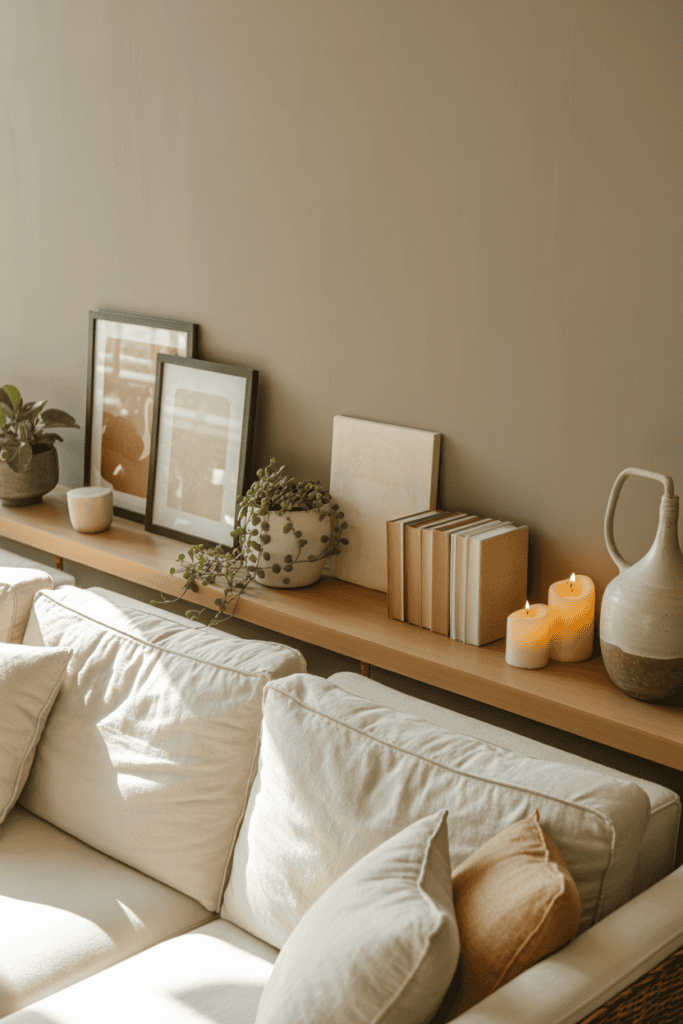
If you like changing your decor throughout the year, floating shelves are one of the smartest above-the-couch decoration ideas you can choose.
Instead of committing to one permanent arrangement, shelves let you swap artwork, candles, books, framed photos, pottery, or seasonal accents whenever you feel like refreshing the room. It’s basically decorating without starting over every few months.
Two long floating shelves often look better than several short ones because they create a cleaner horizontal line that mirrors the shape of the sofa. Layer artwork behind decorative objects instead of placing everything in a straight row. That overlapping look gives shelves the relaxed styling you often see in professionally designed homes.
Don’t overload them, though. Leave some breathing room between objects so each piece has space to stand out.
4. Add Warmth with a Collection of Woven Baskets
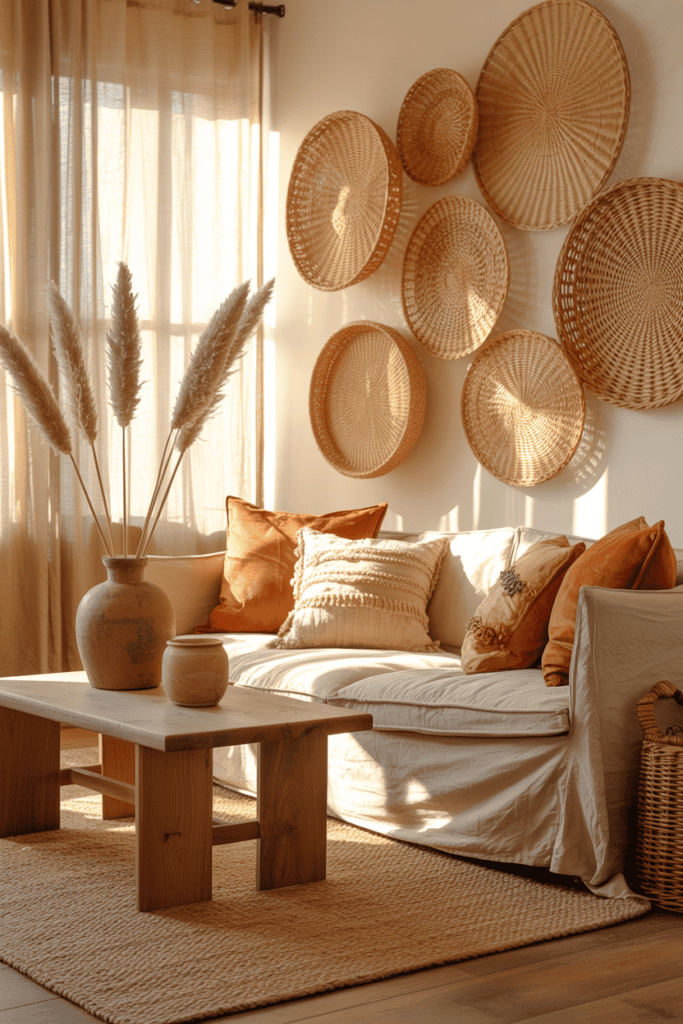
Wall baskets are one of those ideas that somehow manage to feel both relaxed and sophisticated at the same time.
They’re perfect if your home leans toward boho, coastal, organic modern, or farmhouse style. The natural texture instantly softens large walls that might otherwise feel cold or flat, especially if your living room has lots of painted drywall and hard furniture surfaces.
Choose baskets in different diameters but keep the color palette fairly consistent—natural rattan, seagrass, wicker, or light cane all work beautifully together. Arrange them organically instead of forcing them into perfect rows. The slightly imperfect layout is what gives them so much charm.
Best of all, woven baskets are often surprisingly affordable. You can even find beautiful options at thrift stores or flea markets that look far more expensive than they actually are.
5. Lean a Large Mirror to Brighten the Room
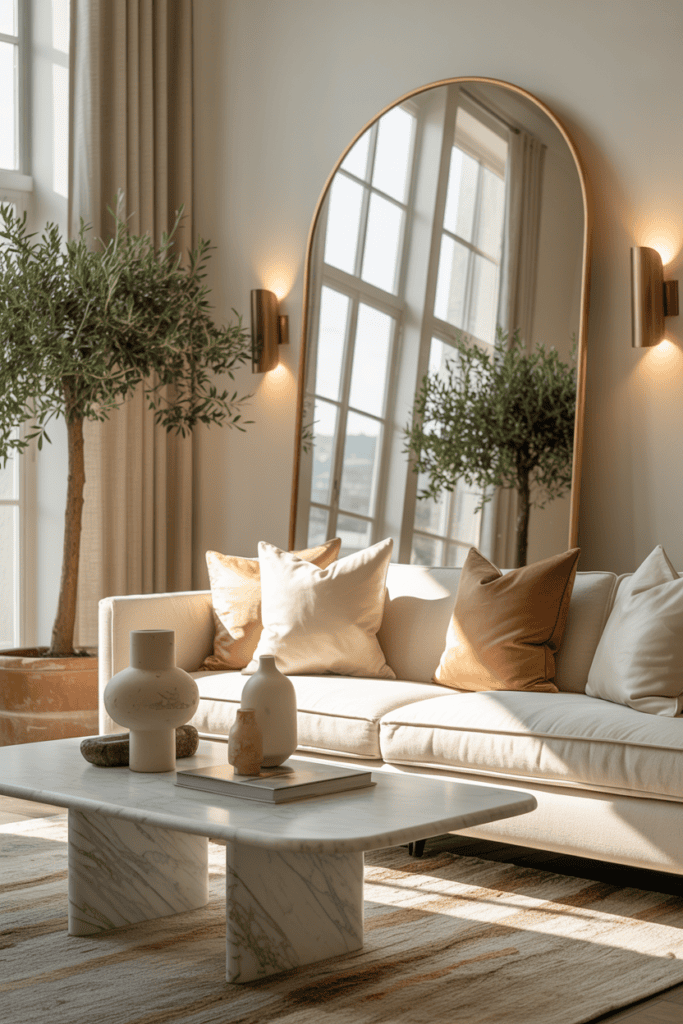
Not every mirror has to hang flat against the wall. Leaning an oversized mirror just above the sofa creates a relaxed, designer-inspired look that feels less formal.
Mirrors naturally reflect light, making smaller living rooms appear brighter and more spacious. If your couch faces a window, even better. The reflection helps bounce natural light throughout the room, giving the entire space a more open feeling.
Choose a frame that complements your decorating style. Thin black metal works beautifully in modern homes, warm wood suits rustic and organic interiors, while antique gold frames add a touch of classic elegance.
For extra personality, place a pair of sconces on either side of the mirror or add a couple of tall plants nearby. Together, they create a balanced arrangement without making the wall feel overcrowded.
6. Style Picture Ledges for an Effortlessly Layered Look
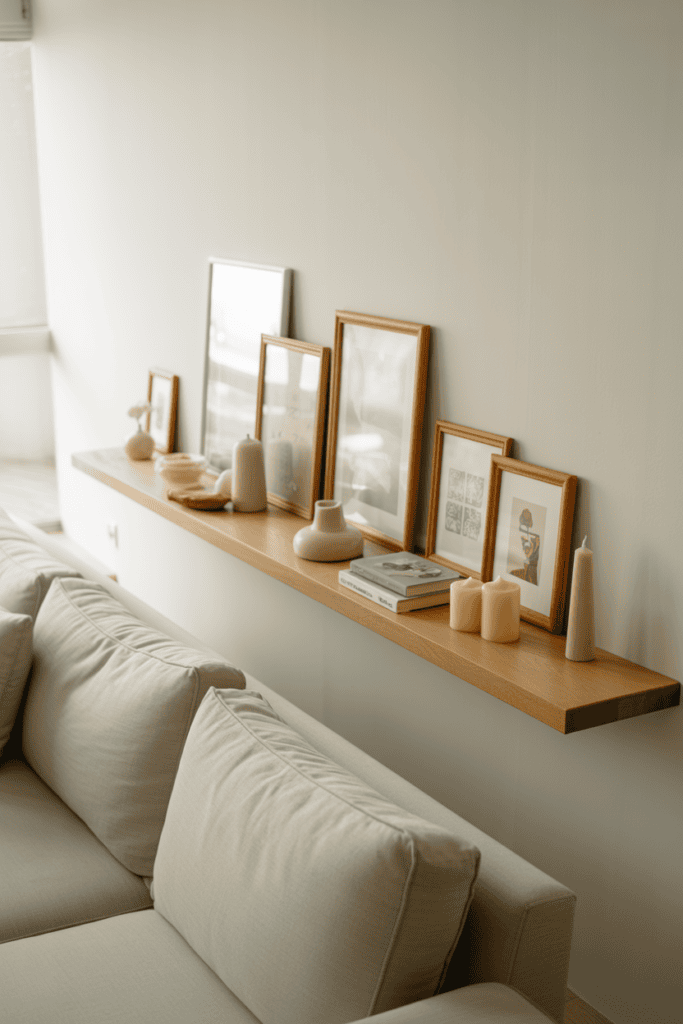
If you love the idea of a gallery wall but don’t love measuring, leveling, and committing to dozens of nail holes, picture ledges are a fantastic alternative.
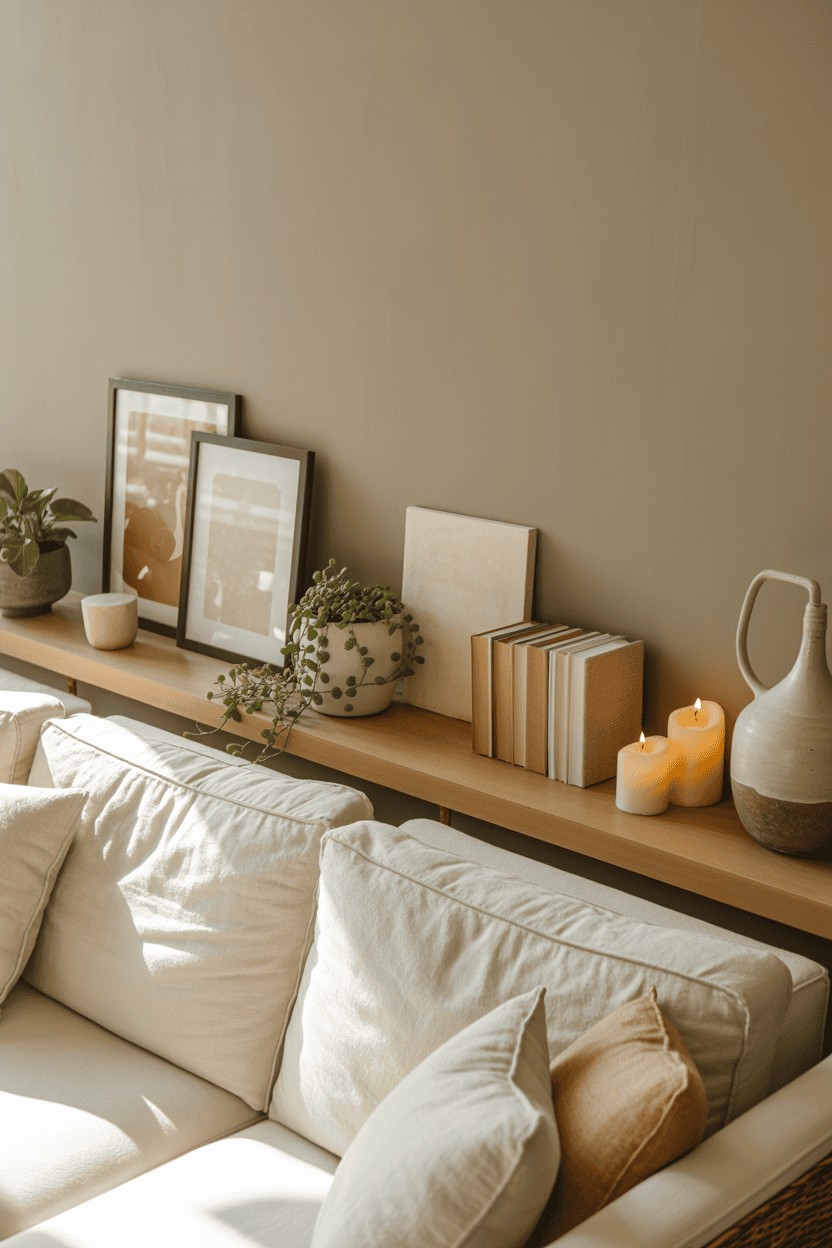
Instead of hanging every frame individually, install one or two long ledges above your couch and lean your artwork against the wall. The layered effect feels casual, lived-in, and a little more modern than a traditional gallery wall. Plus, you can swap out prints whenever you want without pulling out the toolbox.
To recreate the look, start with one or two larger frames toward the back, then overlap smaller pieces in front. Mix in a small vase, a sculptural object, or a candle holder to keep the display from feeling too flat. The key is varying the heights while keeping everything within a similar color palette.
This is also one of the most renter-friendly above-the-couch decoration ideas because once the ledges are installed, changing your decor is incredibly easy.
7. Add Dimension with Sculptural Wall Decor
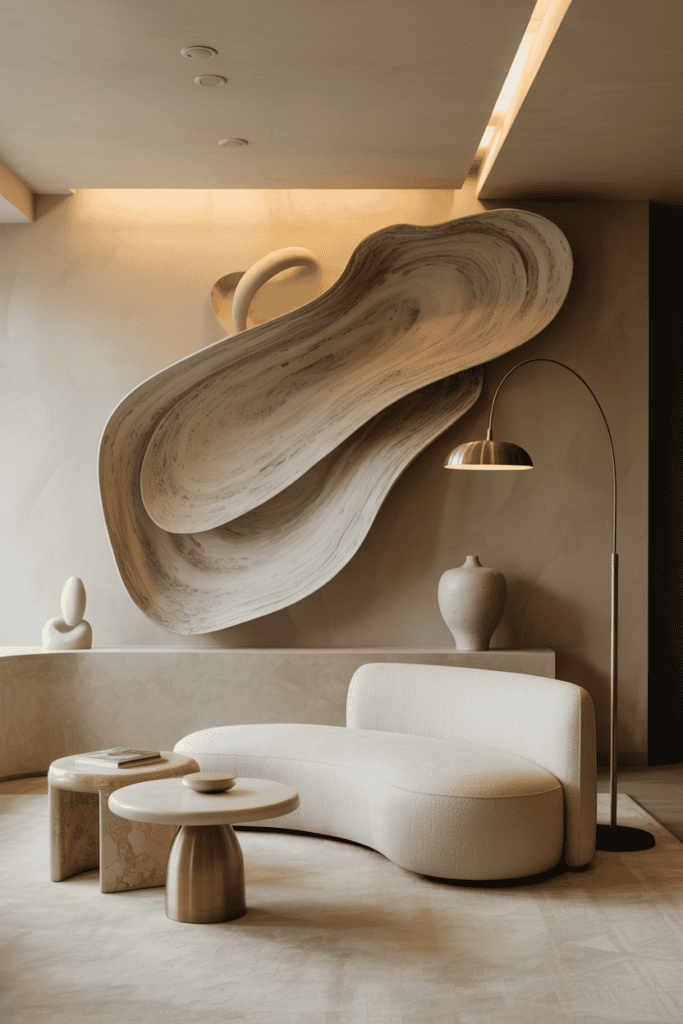
Artwork isn’t the only thing that belongs above a sofa. Three-dimensional wall decor can add texture and movement that framed prints simply can’t.
Think carved wood panels, metal wall sculptures, ceramic pieces, or abstract geometric designs. These decorative elements catch light differently throughout the day, making the wall feel more dynamic even if the color palette stays neutral.
The reason this works so well is because it introduces visual interest without relying on bold colors. In a room filled with soft fabrics and smooth surfaces, adding texture to the wall helps balance the entire space.
Choose one large sculptural piece or create a grouping of three coordinating designs. Just avoid combining too many different materials at once. If you already have lots of wood furniture, a metal sculpture can provide a nice contrast, while ceramic pieces pair beautifully with softer, organic interiors.
8. Hang Vintage Window Frames for Rustic Charm
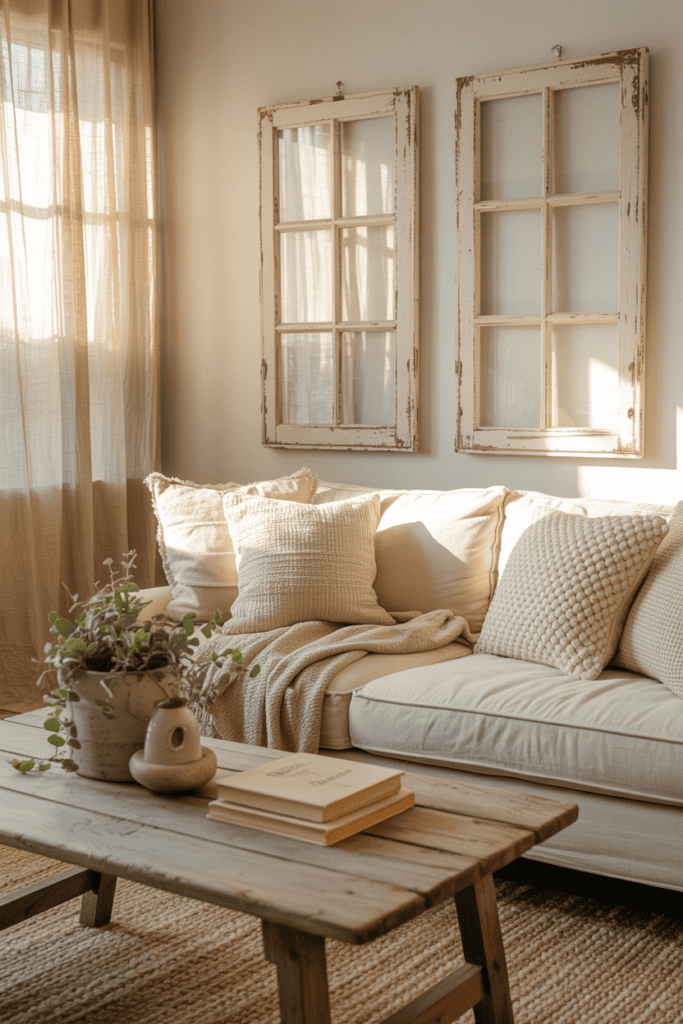
There’s something about old architectural pieces that gives a room instant character. Vintage window frames are a perfect example.
Whether they’re painted white with a distressed finish or left in their natural weathered wood, these pieces add history and texture without making the room feel cluttered. They’re especially beautiful in farmhouse, cottage, French country, and rustic-inspired homes.
You can hang two matching window frames side by side for a symmetrical look or use one oversized frame as a statement piece. Some people like adding a wreath in the center or placing a simple botanical print behind the glass for a subtle decorative touch.
Check antique stores, flea markets, architectural salvage shops, or even Facebook Marketplace. You can often find authentic pieces for much less than you’d expect, and the imperfections are part of what makes them so charming.
9. Make a Statement with a Large Decorative Clock
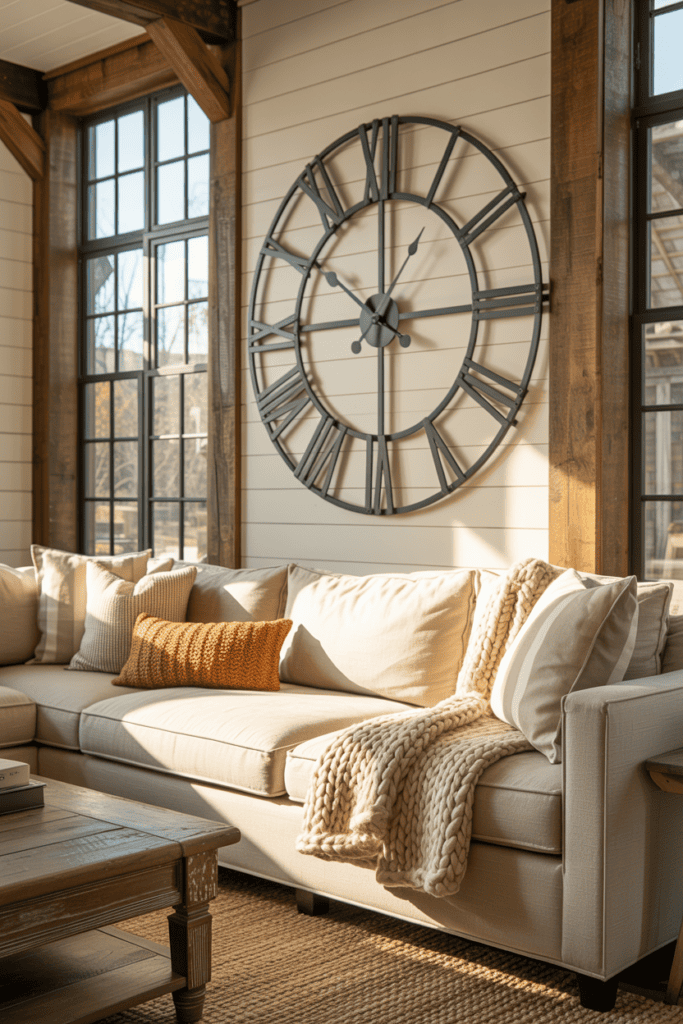
A beautiful oversized wall clock is one of those pieces that manages to be both decorative and functional.
Unlike smaller clocks that tend to disappear into the background, a large one becomes the focal point of the room. Whether your style is industrial, farmhouse, traditional, or modern, there’s a clock design that can fit naturally into your space.
The size is what really matters here. Choose a clock that’s substantial enough to fill the wall above your couch without overwhelming it. As a general rule, bigger usually looks more intentional than something that’s just slightly too small.
If the clock has an open metal design, it will keep the room feeling airy. A solid wood clock creates a warmer, cozier atmosphere. Either option works well—it simply depends on the mood you’re trying to create.
10. Layer Architectural Panels for a Designer Look
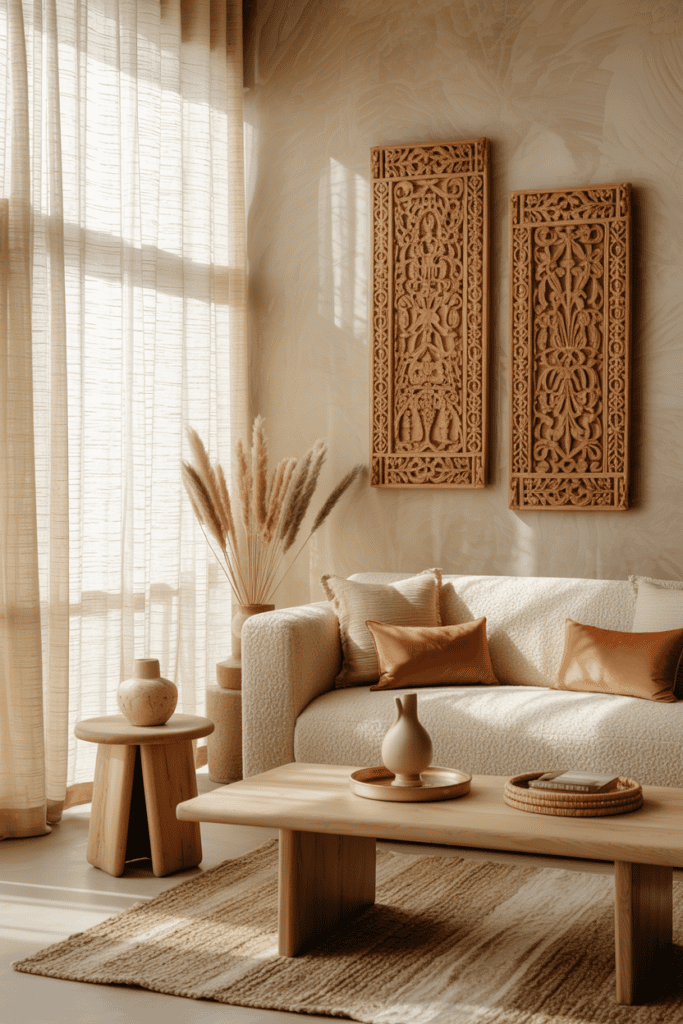
If you’ve ever admired magazine-worthy living rooms, you’ve probably noticed decorative wall panels or carved architectural pieces sitting above the sofa.
These panels add depth and texture in a way that flat artwork can’t. They create subtle shadows throughout the day, giving the wall a rich, layered appearance without relying on bright colors or busy patterns.
You don’t need authentic antique panels to achieve this look. Many home decor stores sell beautiful carved wood panels, MDF decorative wall art, or laser-cut designs that mimic vintage architectural details for a fraction of the cost.
Hang two matching panels for a balanced look, or choose one oversized carved piece as the focal point. Pair them with neutral furniture and soft textiles so the wall remains the star of the room rather than competing with everything else.
One tip worth remembering: keep the surrounding decor fairly simple. Architectural pieces already have plenty of detail, so they look best when they have a little breathing room around them.
11. Bring the Wall to Life with Mounted Planters
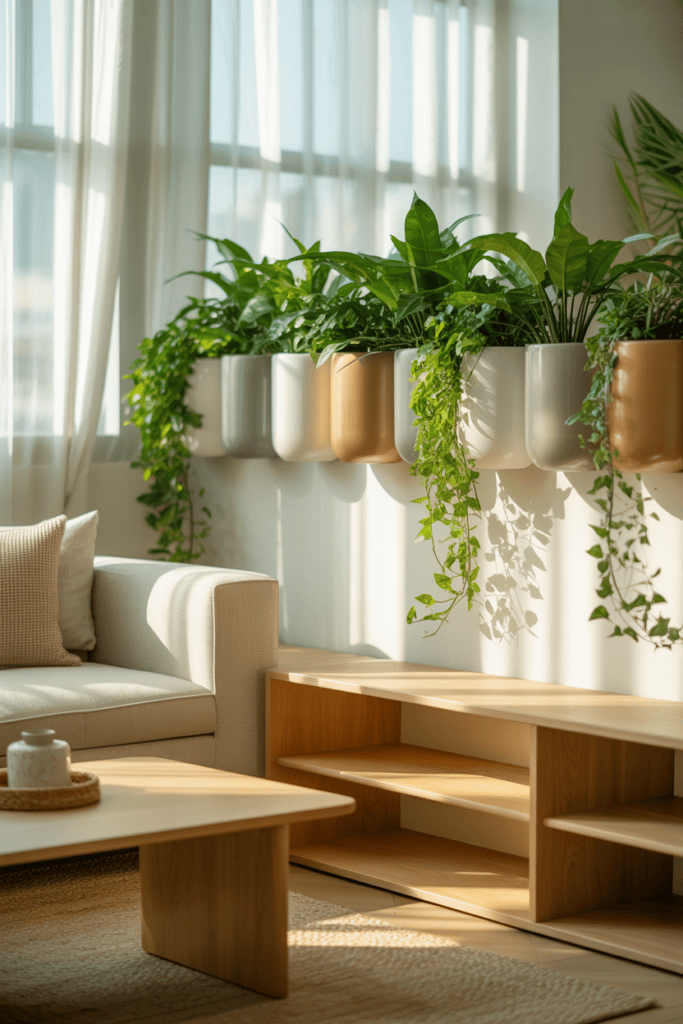
If your living room feels a little flat, adding greenery above the couch can make a surprising difference. Plants naturally soften a space, and when they’re displayed on the wall instead of the floor, they become part of the overall design instead of just another accessory.
Wall-mounted planters work especially well in modern organic, boho, and Scandinavian-inspired homes. Whether you choose ceramic pots, sleek metal holders, or wooden wall planters, they introduce texture and color without taking up valuable floor space.
Don’t worry if you don’t have the greenest thumb. Faux plants have come a long way and can look incredibly realistic, especially from a distance. Cascading greenery like pothos, ivy, or string of pearls creates movement, while upright plants offer a cleaner, more structured look.
For the best results, group planters in odd numbers and vary the heights slightly. It feels more natural than lining everything up perfectly, and that’s often what makes a room feel thoughtfully styled.
12. Add Soft Texture with a Large Woven Wall Hanging
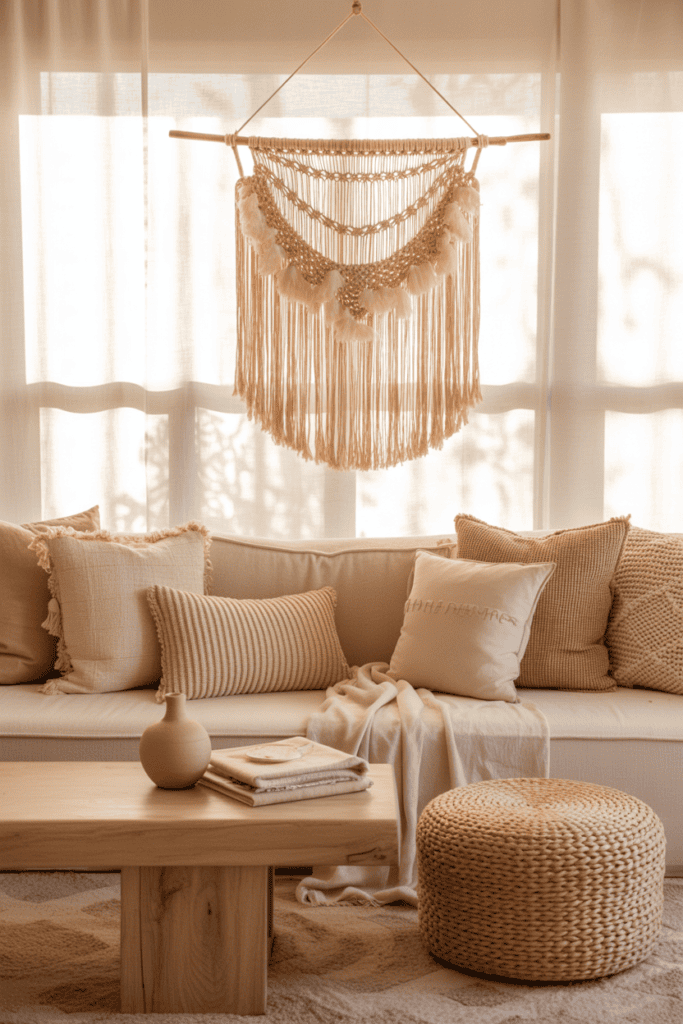
Not every wall needs framed artwork. Sometimes fabric is exactly what a room is missing.
A large woven wall hanging or macramé piece instantly adds warmth and softness, making the seating area feel cozier. If your living room has leather furniture, glass tables, or lots of clean lines, introducing textiles on the wall helps balance those harder surfaces.
This is one of those above-the-couch decoration ideas that creates impact without feeling loud. The neutral colors common in woven art blend beautifully with almost any decorating style while still adding plenty of visual interest.
Choose a piece that’s wide enough to fill the wall but leaves a little breathing room on each side. If you love DIY projects, this is also a fun weekend project. Handmade wall hangings often have more personality than mass-produced decor and can become a real conversation piece.
13. Frame the Wall with Decorative Molding
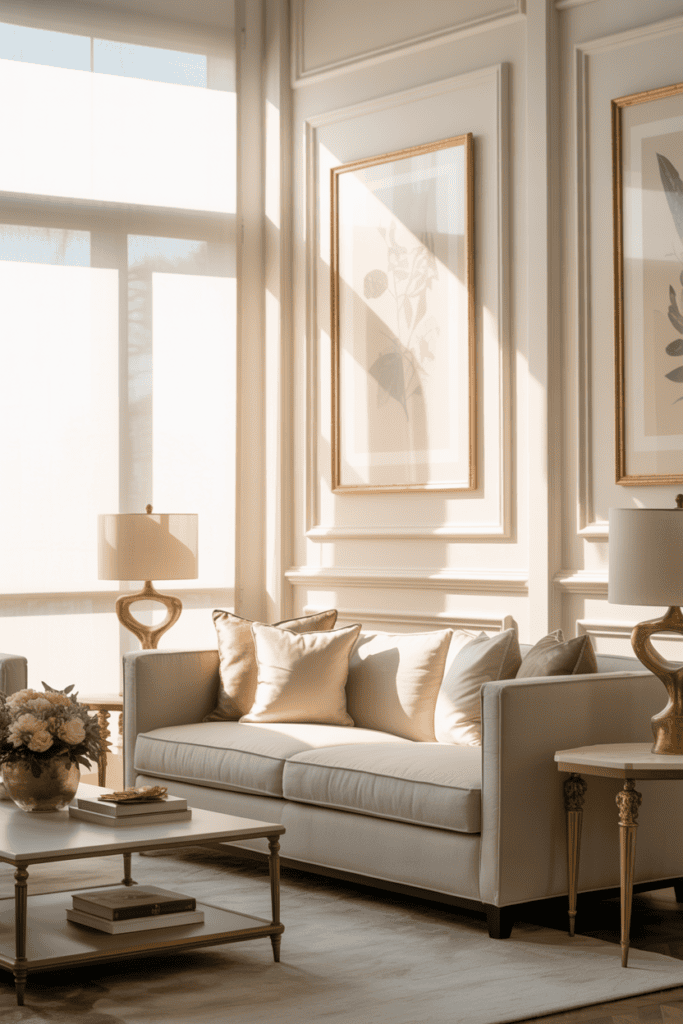
Sometimes the wall itself can become the decoration.
Adding picture-frame molding, board and batten, or simple trim behind your couch creates architectural interest before you even hang a single piece of art. It’s one of the reasons newer custom homes often feel more polished—the walls have depth instead of being completely flat.
The beauty of this idea is that it works with almost every decorating style. Paint the molding the same color as the wall for a subtle, high-end look, or use a contrasting shade if you want to make more of a statement.
Once the molding is installed, you can leave it completely empty for a minimalist approach or add one large artwork inside the framed section. Either way, the wall feels finished without needing dozens of decorative accessories.
If you’re decorating on a budget, lightweight MDF trim is surprisingly affordable and can often be installed over a weekend with a little patience.
14. Frame Your Artwork with Matching Wall Sconces
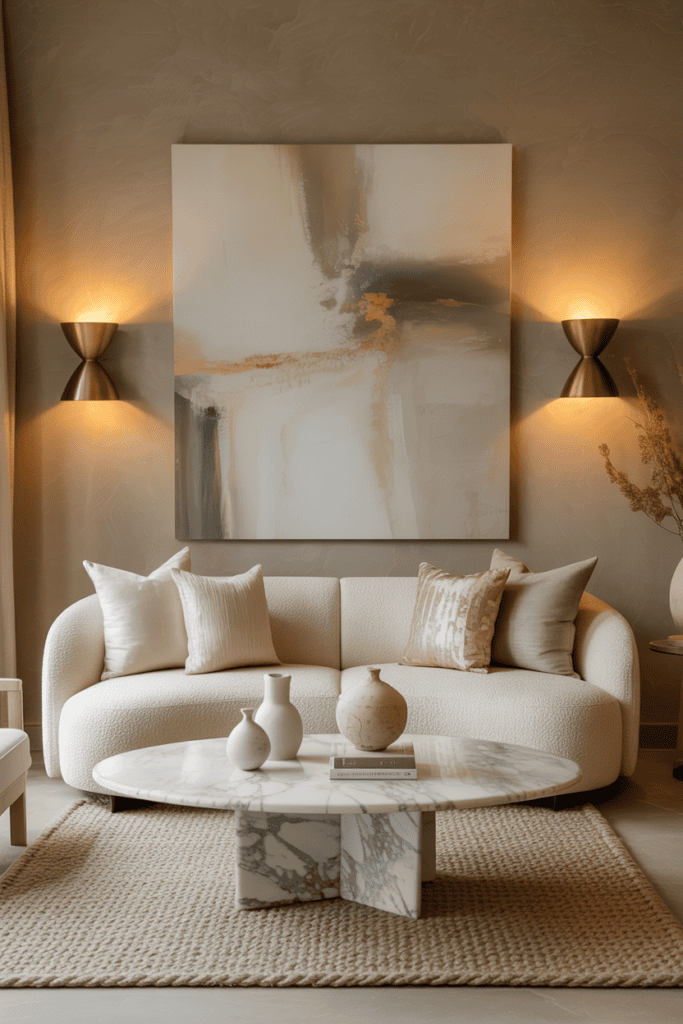
If you’ve ever wondered why professionally designed living rooms feel so balanced, lighting is usually part of the answer.
Installing two wall sconces on either side of artwork or a mirror creates symmetry while adding a warm glow in the evenings. During the day, the sconces act as decorative accents. At night, they make the entire seating area feel cozy and inviting.
This setup works particularly well if your sofa sits on a large empty wall. Instead of relying on one piece of decor, you’re creating a complete composition that feels intentional from every angle.
Hardwired sconces are beautiful, but don’t let wiring stop you. Battery-operated and rechargeable wall sconces have become incredibly popular and are much easier to install. Many even come with remote controls, making them a practical choice for renters or anyone avoiding electrical work.
Choose warm bulbs rather than cool white lighting. The softer glow is far more relaxing in a living room and highlights your wall decor beautifully.
15. Create a Built-In Look with Shelving Around the Sofa
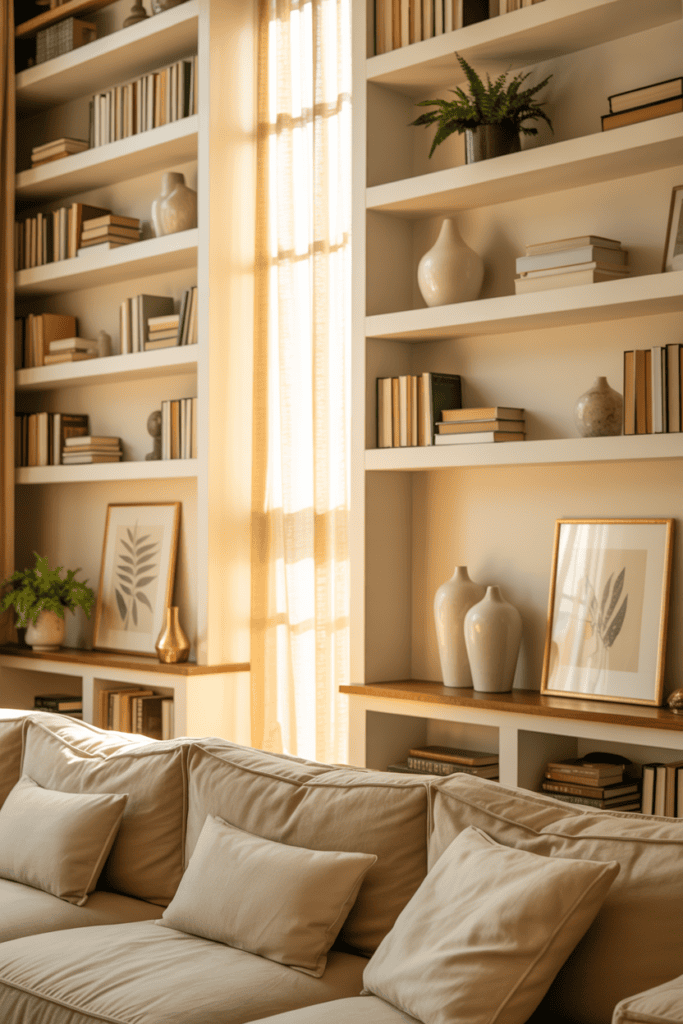
If you really want your living room to look custom-designed, consider extending the decorating beyond the wall directly above the couch.
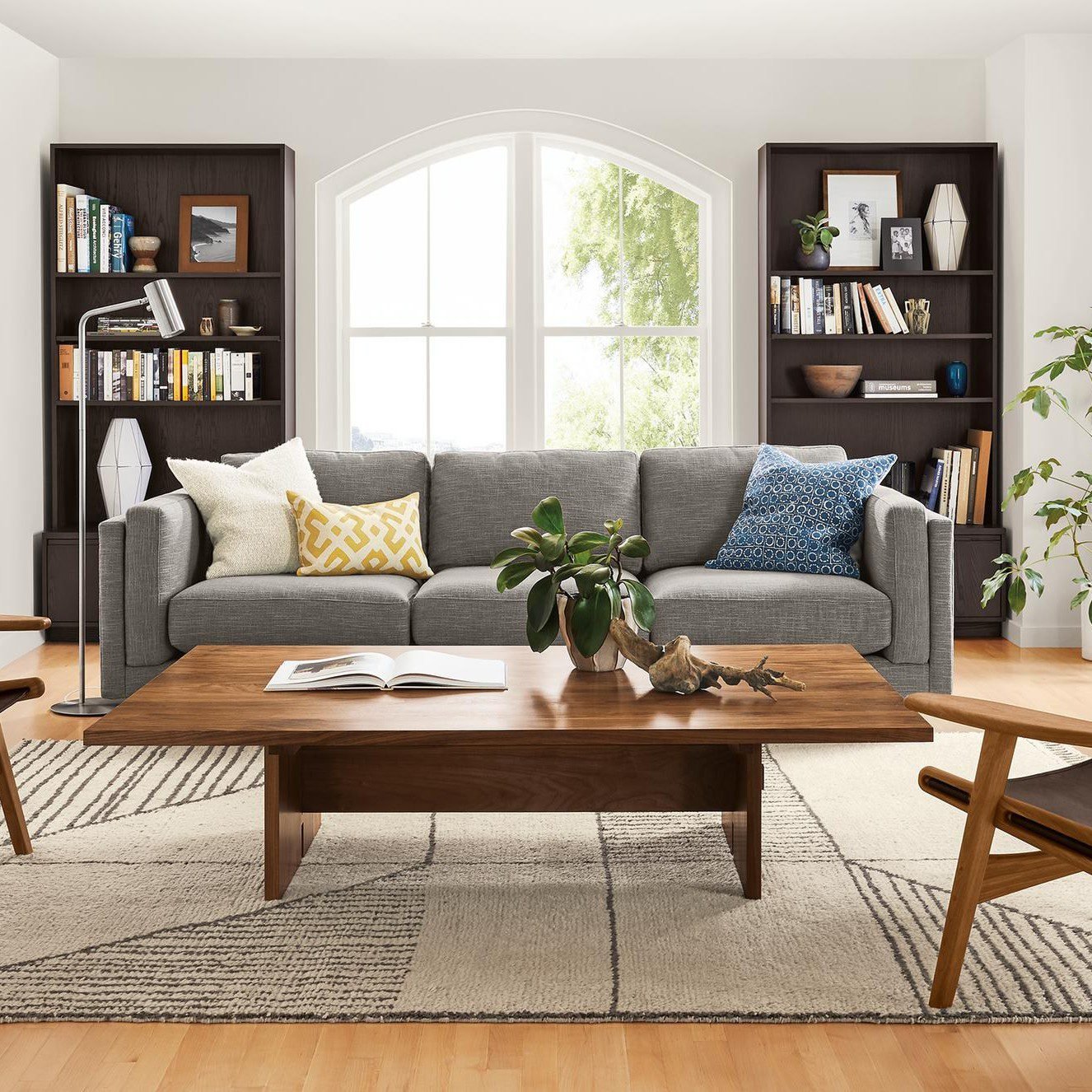
Built-in shelving—or even the appearance of built-ins—creates a dramatic focal point that makes the entire seating area feel thoughtfully planned. Shelves on both sides of the sofa naturally frame the space while giving you room to display books, pottery, artwork, baskets, and meaningful decor.
You don’t necessarily need expensive custom cabinetry to achieve this look. Tall bookcases placed on each side of the couch can create a similar effect, especially if they’re painted the same color as the wall. The result feels cohesive and much more expensive than it actually is.
Keep the styling simple by mixing decorative objects with practical storage. Stack books horizontally, add small plants for freshness, and leave some shelves intentionally open. Those empty spaces are just as important as the decorated ones because they prevent everything from feeling crowded.
This idea takes a little more effort than hanging artwork, but if you have the room, it’s one of the most timeless ways to decorate around a sofa.
Conclusion
Decorating the wall above your sofa doesn’t have to be complicated. In fact, the best spaces usually come together by choosing one idea that fits your home’s style instead of trying to combine every trend at once.
Whether you love the simplicity of oversized artwork, the personality of a gallery wall, the warmth of woven textures, or the practicality of floating shelves, the right choice can completely change how your living room feels. Small details like proper sizing, thoughtful spacing, and layered textures often make a bigger impact than spending more money.