
Let’s be honest, a small bedroom can feel like a closet with a bed in it. You walk in, and instead of feeling cozy, you feel cramped. Like the walls are slowly closing in. If you’ve been Googling “how to arrange furniture in a small bedroom” at midnight and coming up empty with the same recycled tips, I get it. I’ve been there.
The good news? You don’t need a renovation, extra square footage, or a designer budget to make a small bedroom feel bigger with decor. What you actually need is a solid understanding of how your eyes perceive space and then use that against the room. Once you know the tricks, everything clicks. So let’s get into the stuff that actually works, and I’ll be upfront about what doesn’t.
The Mistakes That Are Making Your Room Feel Smaller
Before we talk fixes, let’s talk about what’s probably working against you right now.
Too Much Furniture, Placed Wrong
Most people instinct is to push everything against the walls — like that’s going to “free up” the center. Here’s the thing, it actually does the opposite. When furniture hugs every single wall, your eye traces the entire perimeter and registers the room as small. Floating your bed even a few inches away from the wall, or pulling a nightstand slightly forward, creates subtle breathing room that reads as more space.
Also, oversized furniture is a real culprit. A California King bed in a 10×10 room isn’t cozy — it’s suffocating. Choosing furniture that’s scaled to the room sounds obvious, but most people underestimate how much even a slightly smaller bed frame changes the feel.
Dark, Heavy Colors on Every Surface
I’m not saying you can’t use dark colors in a small room — you absolutely can, and we’ll talk about how. But painting all four walls a deep charcoal and throwing on blackout curtains and a heavy dark rug? That’s basically building a cave. Color absorbs light, and light is what makes a room feel open.
Clutter Disguised as “Decor”
Styling a shelf with 14 different objects isn’t decor — it’s visual noise. Every extra thing your eye lands on makes the room feel more crowded. Small bedrooms need intentional, edited styling. Less stuff, but better stuff.
The Real Principles Behind Making a Small Bedroom Feel Bigger
Light Is Your Most Powerful Tool
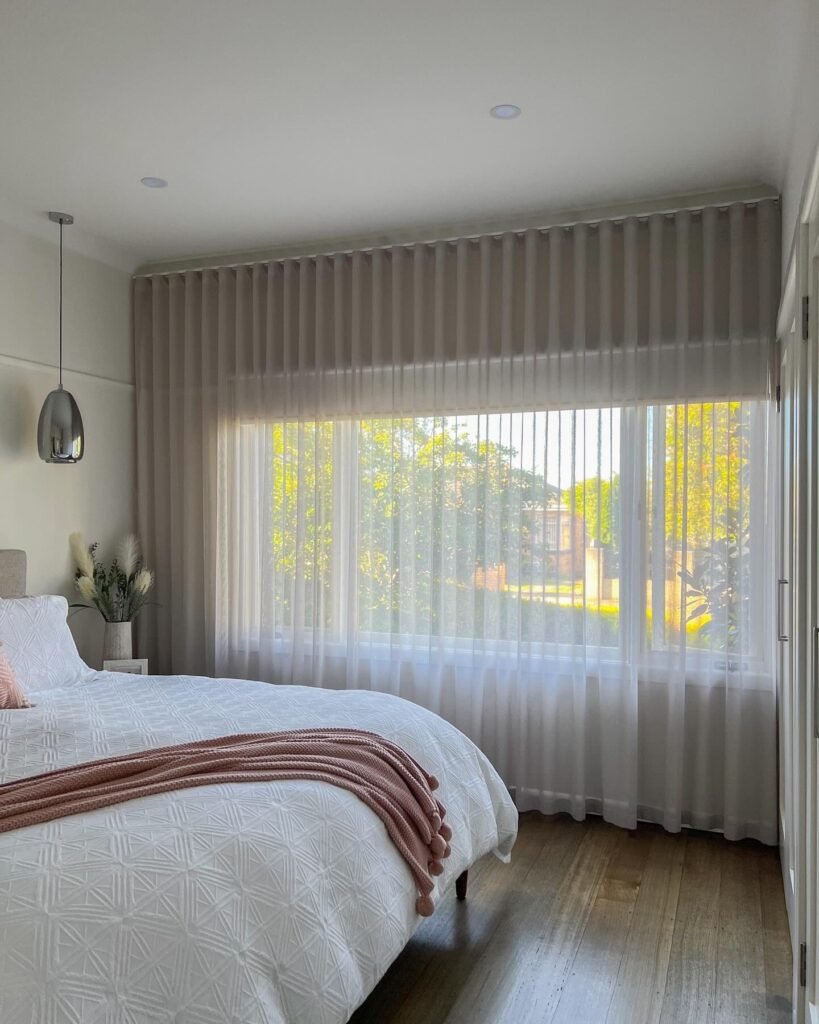
Natural light is everything in a small space. If your bedroom has a window, it should be working overtime. Ditch the heavy drapes and switch to sheer curtains hung close to the ceiling — this does two things. First, it lets more light into the room. Second, hanging curtains higher than the window frame tricks the eye into thinking the ceiling is taller. It’s a classic designer move that costs maybe $30.
Mirrors are the other piece of this. A large mirror on the wall opposite a window literally bounces light around the room and creates the illusion of a second window or doorway. Don’t go small here — a little mirror doesn’t do much. Go with something floor-to-ceiling or at least 36 inches wide. Leaning it casually against the wall looks intentional and modern.
Vertical Lines Make Ceilings Feel Higher
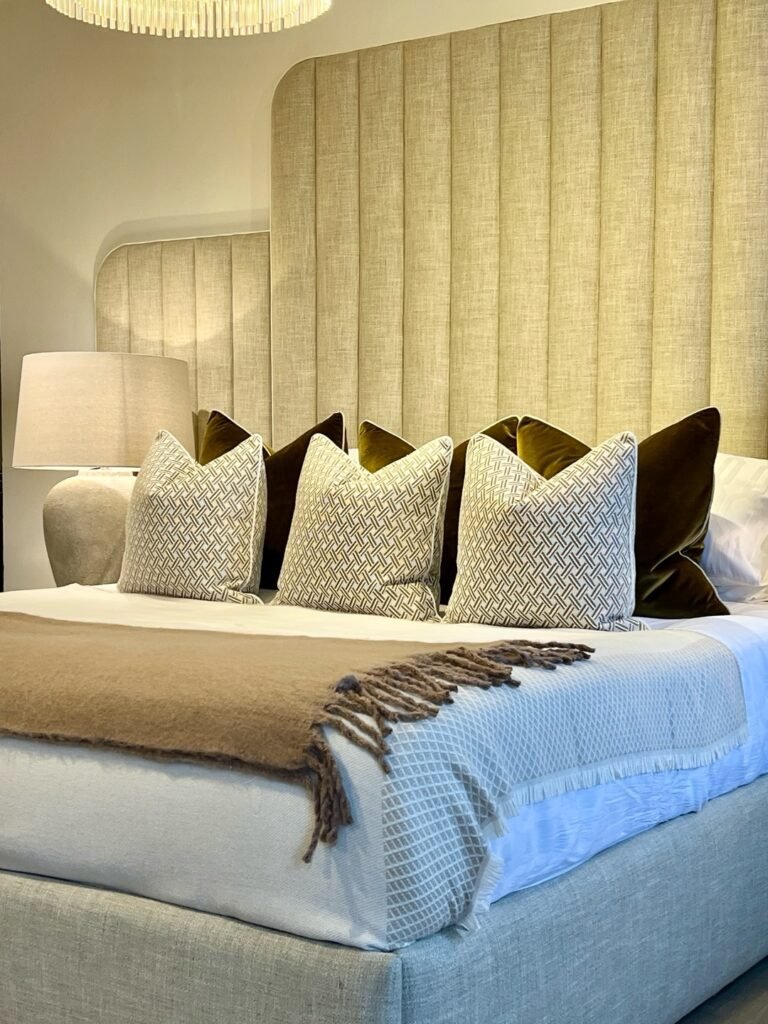
Your eye naturally follows lines. When you add vertical elements — tall bookshelves, floor-to-ceiling curtains, vertical stripes on an accent wall, a tall headboard — your gaze moves up instead of across. That upward movement makes the room feel taller, and a taller room always feels less cramped.
A practical example: swap a low, wide dresser for a taller, narrower one. You’re using the vertical space instead of the floor space, and the room breathes better.
Color Zoning Without Chaos
What actually works is using a light, neutral base — whites, soft creams, warm beiges, pale greiges — for your walls and large surfaces, and then adding personality through smaller elements like pillows, throws, and art. This keeps the room feeling open while still having character.
One exception: painting one wall (usually the wall behind your headboard) a slightly deeper tone can actually make a room feel larger by creating depth. It draws the eye to one focal point rather than letting it wander all over.
How to Decorate a Small Bedroom Step by Step
Step 1: Edit Ruthlessly Before Adding Anything
I know this isn’t the fun part, but it matters more than any new purchase. Walk into your bedroom with fresh eyes and ask: does every single thing in here serve a purpose or genuinely make me happy? If the answer is no, it goes. Small rooms cannot absorb excess. Even one unnecessary piece of furniture or an overstuffed shelf makes the whole room feel heavy.
Step 2: Prioritize Multi-Functional Furniture
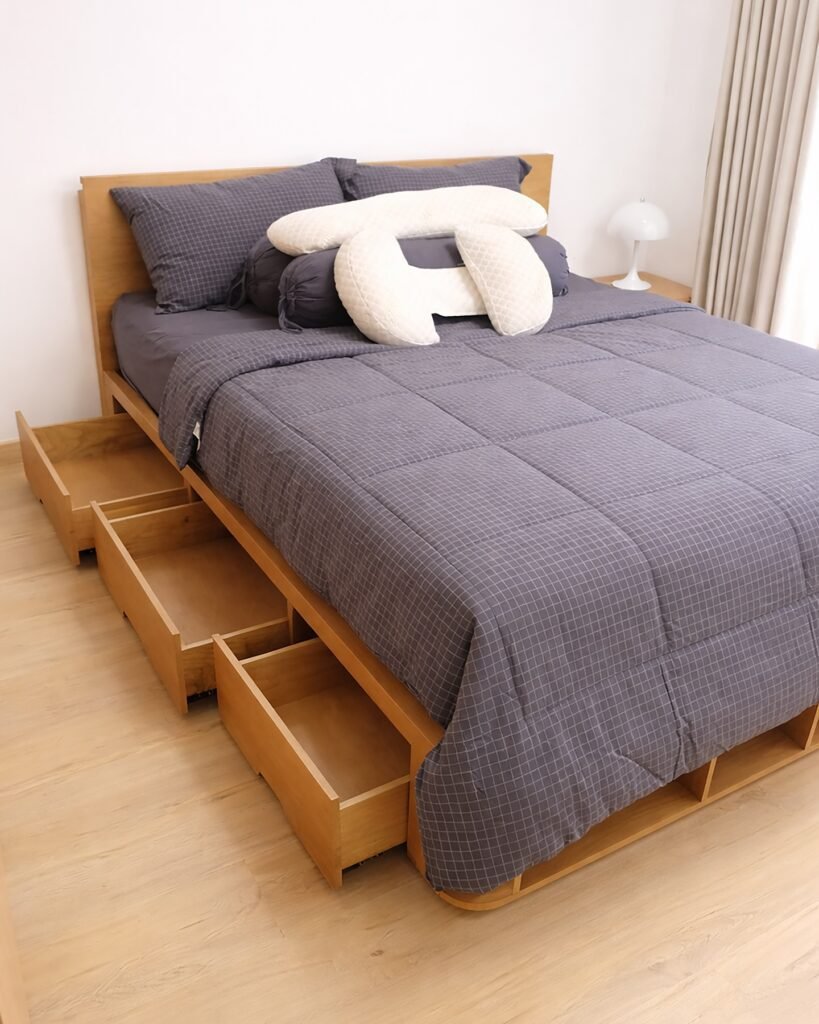
A storage ottoman at the foot of the bed. A nightstand with drawers. A bed frame with built-in storage underneath. In a small bedroom, every piece of furniture should be pulling double duty. This reduces the number of pieces you need, which immediately opens up the room.
Under-bed storage is one of the most underused solutions. Clear bins or shallow drawers under the bed can hold extra bedding, off-season clothes, anything — and suddenly you don’t need that second dresser crowding the corner.
Step 3: Work With Your Ceiling
Most people completely ignore the ceiling. In a small bedroom, it’s prime real estate. Paint it a slightly lighter shade than your walls to visually “lift” it. Add a simple flush-mount light fixture instead of a bulky ceiling fan with a giant canopy — that clunky look visually lowers your ceiling by a foot. If your room has higher ceilings (even 9 feet), a simple pendant light draws the eye up and adds elegance without eating floor space.
Step 4: Choose a Cohesive, Limited Color Palette
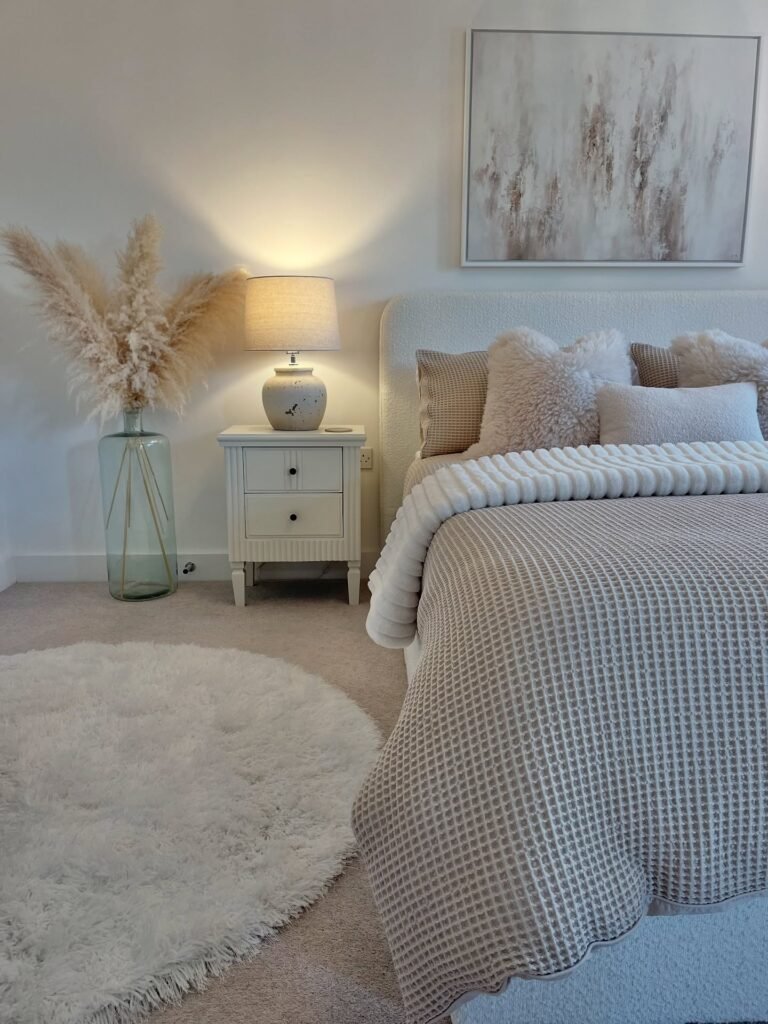
More than three main colors and your small bedroom starts to feel chaotic. Pick a base (usually neutral walls), a secondary color for bedding and larger textiles, and one accent color for pillows, a throw, or art. That’s it. Cohesion makes the eye move smoothly around the room instead of stopping and starting, which creates a sense of calm and spaciousness.
Step 5: Use Rugs Strategically
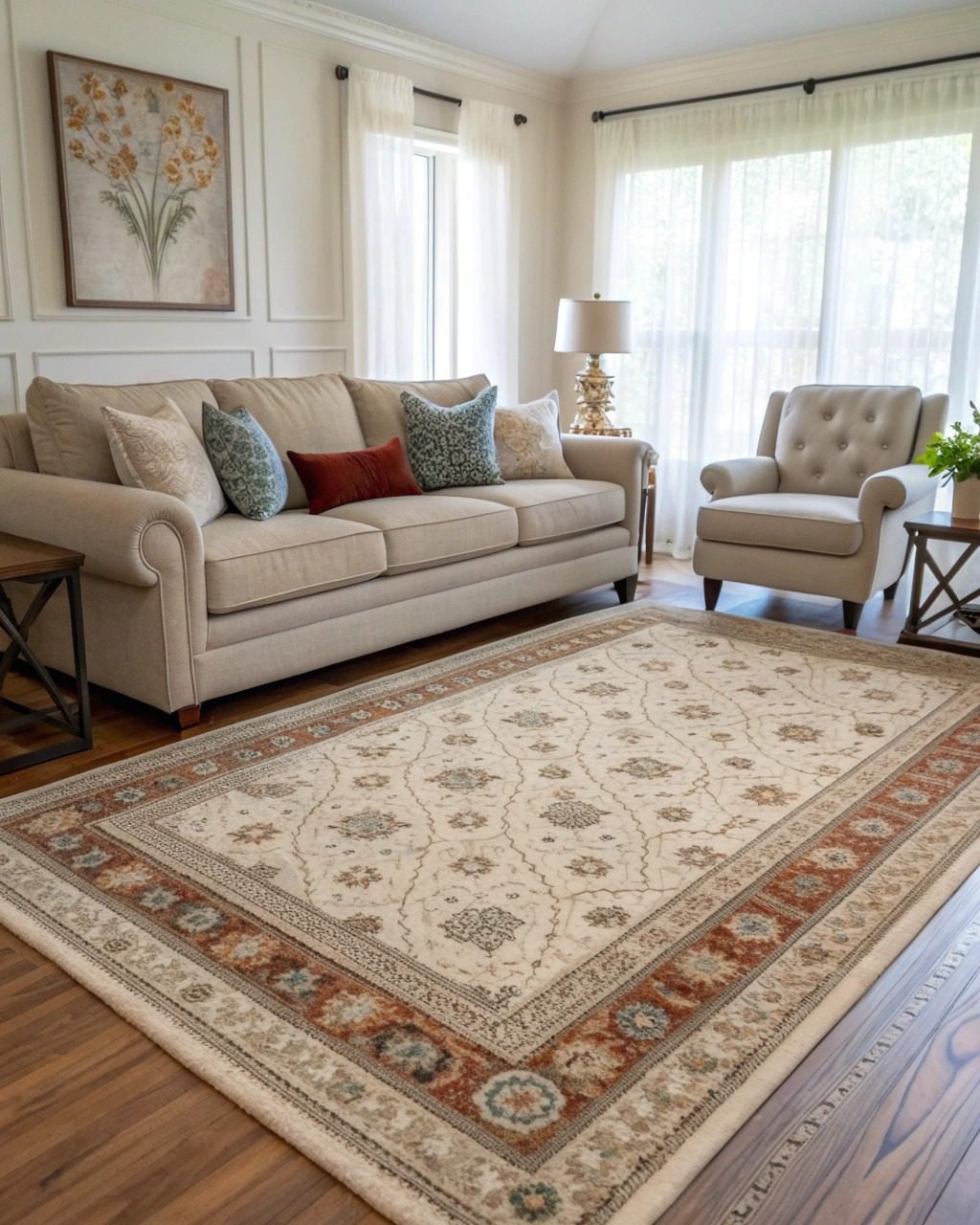
Most people get this wrong — they buy a rug that’s too small, thinking it’ll “fit” better in a small room. A tiny rug actually makes the room feel more chopped up. Go with the largest rug that fits the space, even if it slides under part of the bed. That unbroken visual plane on the floor actually makes the room look bigger, not smaller.
Specific Decor Tricks Worth Trying
Transparent and lucite furniture. A clear acrylic nightstand or a ghost chair in the corner literally takes up visual zero space. Your eye passes right through it. This is one of my favorite small-room tricks.
Low-profile bed frames. A bed that sits close to the ground makes the ceiling look higher by comparison. Platform beds are perfect for this.
Sconces instead of table lamps. Wall-mounted bedside sconces free up your nightstand surface and remove visual clutter at eye level. It’s a small swap with a surprisingly big impact.
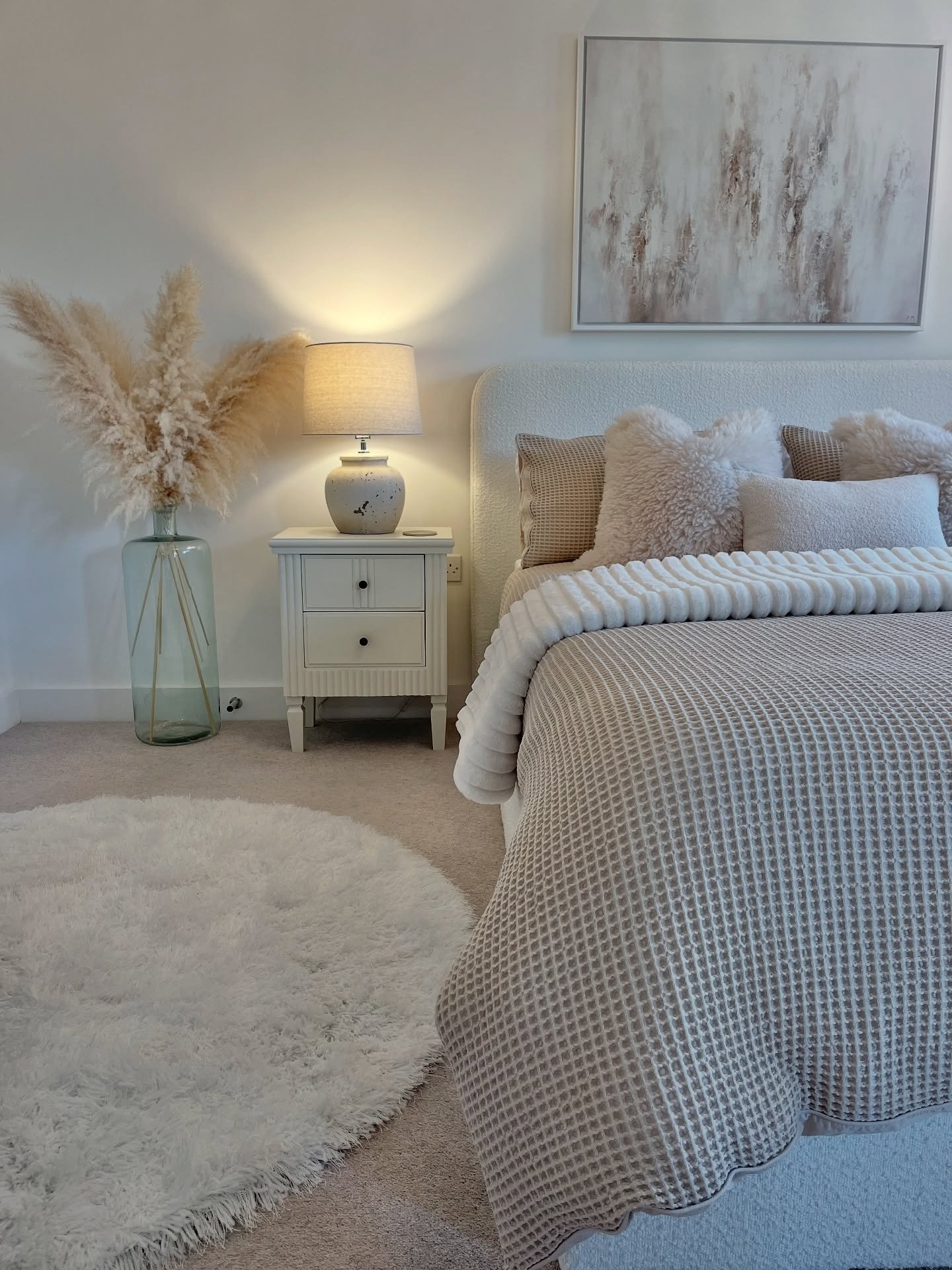
Monochromatic layering. Dressing your bed in various shades of the same color — say, soft whites, creams, and ivory — looks sophisticated and doesn’t break up the visual space the way a loud pattern does.
Fewer, larger art pieces. One big print looks more intentional and takes up less visual “noise” than a gallery wall of fifteen tiny frames. A single oversized piece above the headboard anchors the room beautifully.
What About Small Bedrooms With No Natural Light?
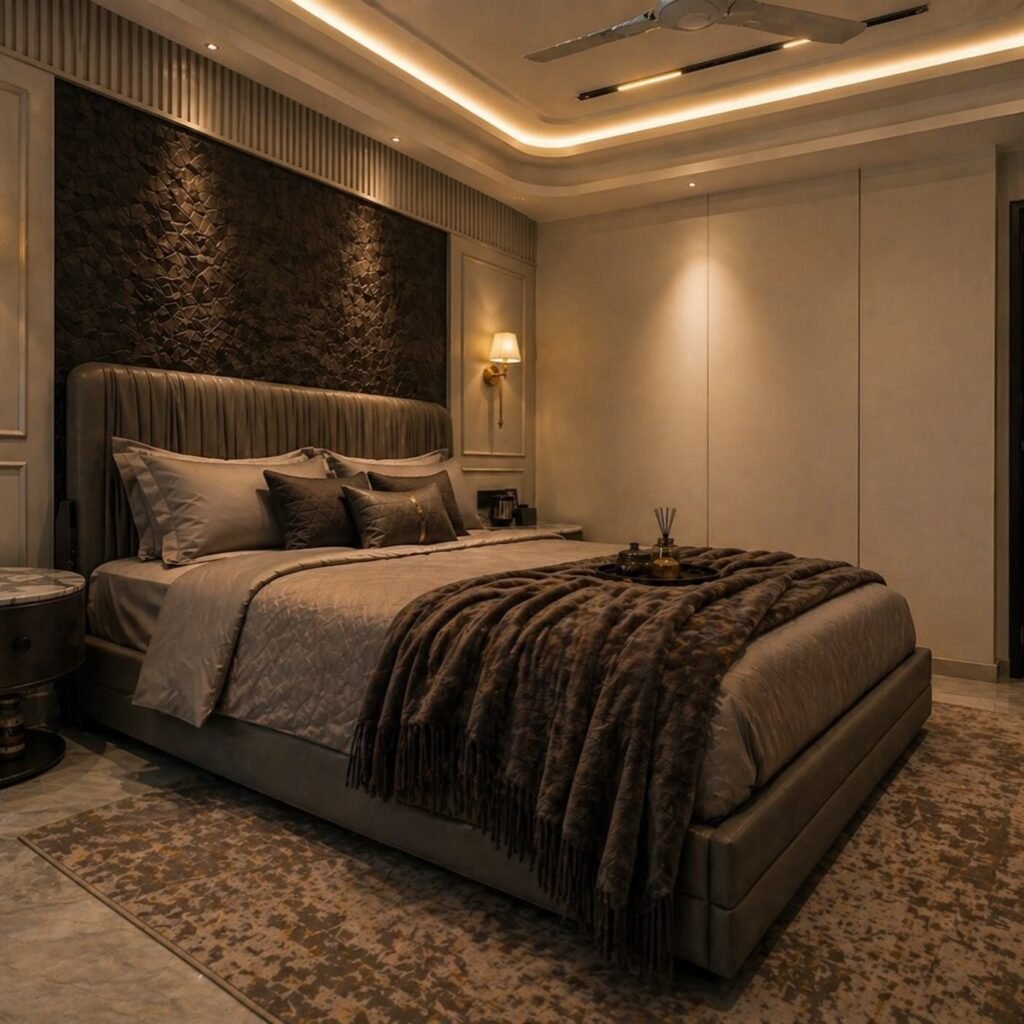
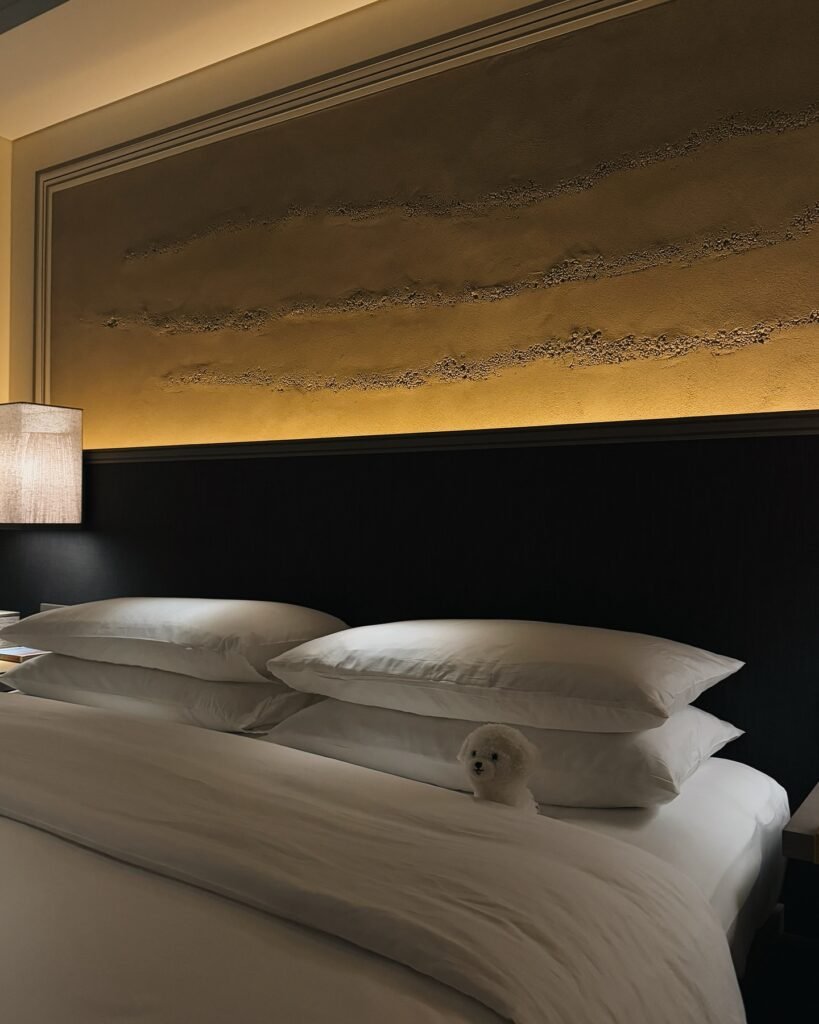
This is a real challenge, and layered artificial lighting is your answer. A single overhead light creates flat, unflattering light that makes a small room feel like a box. Instead, layer three types: ambient (overhead), task (a reading lamp or sconce), and accent (string lights, an LED strip behind the headboard, a table lamp on a dresser). The variety of light sources creates depth and warmth that mimics the feeling of a naturally lit space.
Warm-toned bulbs (2700K–3000K) help enormously here. Cool, bright white light is harsh in a bedroom and actually accentuates tight corners.
The Takeaway
Making a small bedroom feel bigger with decor really comes down to a few things done well: maximize light, keep furniture scaled and intentional, work vertically, and edit constantly. None of this requires a big budget or a gut renovation most of the best small bedroom transformations I’ve seen were done with a can of paint, new curtains, and some ruthless decluttering.
Pick two or three things from this list and start there. You don’t have to overhaul everything at once. Even one good mirror, a lighter curtain swap, or clearing off that cluttered dresser can shift how a room feels overnight. Small changes add up fast in a small space that’s actually one of the few advantages of having less square footage to work with.