
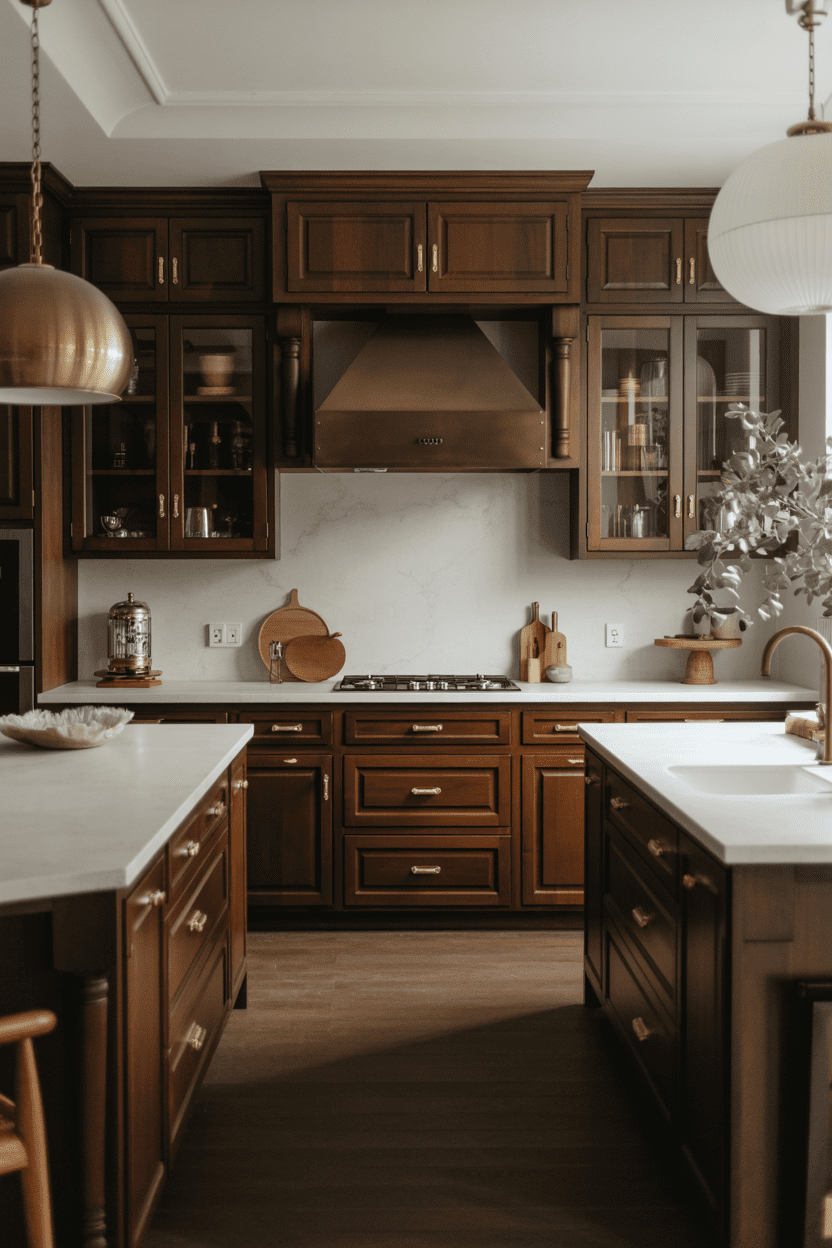
There’s something about a kitchen with dark wood cabinets that instantly feels expensive, cozy, and lived-in—in the best possible way. While bright white kitchens have dominated design trends for years, many homeowners are starting to crave spaces with a little more depth, warmth, and personality.
Maybe your kitchen feels too sterile. Maybe it lacks character. Or maybe you’re simply tired of seeing the same all-white cabinets everywhere you look. If that sounds familiar, dark wood kitchen cabinet designs might be exactly what your space needs.
The great thing about dark wood cabinetry is that it works with almost every style. Whether you love modern interiors, rustic farmhouse charm, traditional elegance, or something in between, there’s a way to make dark wood cabinets feel fresh and current.
In this roundup, you’ll find 15 beautiful dark wood kitchen cabinet ideas that prove darker finishes can be just as bright, welcoming, and stylish as lighter alternatives. From dramatic modern spaces to warm family kitchens, these ideas will help you create a kitchen that feels timeless instead of trendy.
1. Pair Dark Wood Cabinets With Crisp White Countertops
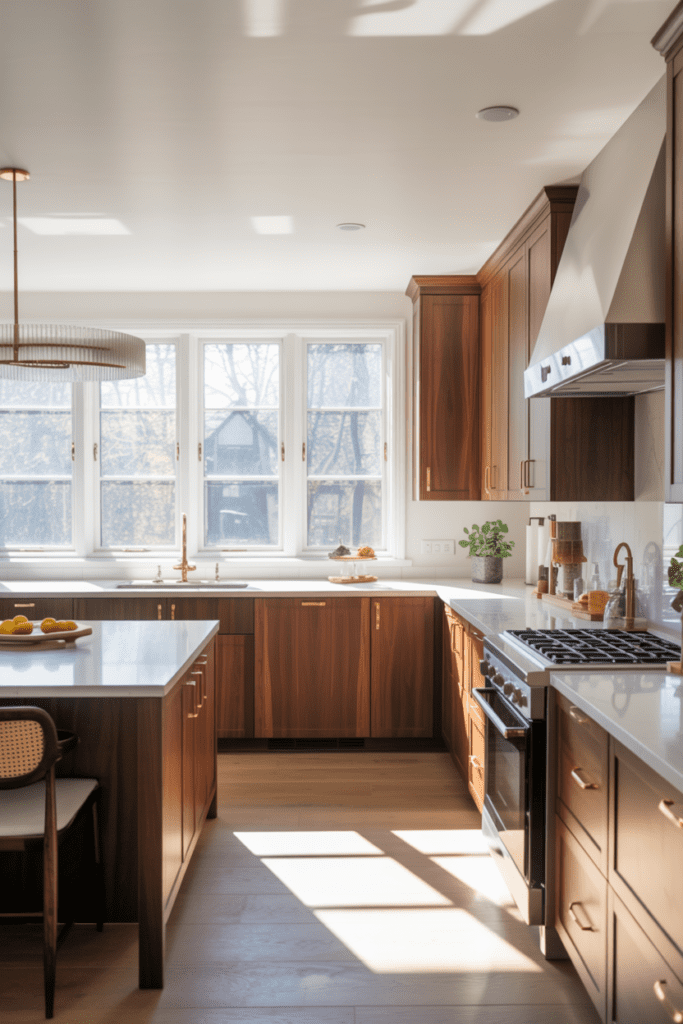
One of the easiest ways to keep dark cabinetry from feeling heavy is by balancing it with bright white surfaces.
White quartz or marble countertops create contrast that immediately lightens the room. The dark wood adds richness while the countertop reflects light, creating a clean and polished look.
If you want something that actually works in almost any home, this combination is hard to beat. It feels classic without looking dated and works equally well in traditional and modern kitchens.
For an affordable version, look for quartz alternatives that mimic marble. You’ll get the same bright contrast without the high maintenance.
2. Go Floor-to-Ceiling for a Luxe Custom Look
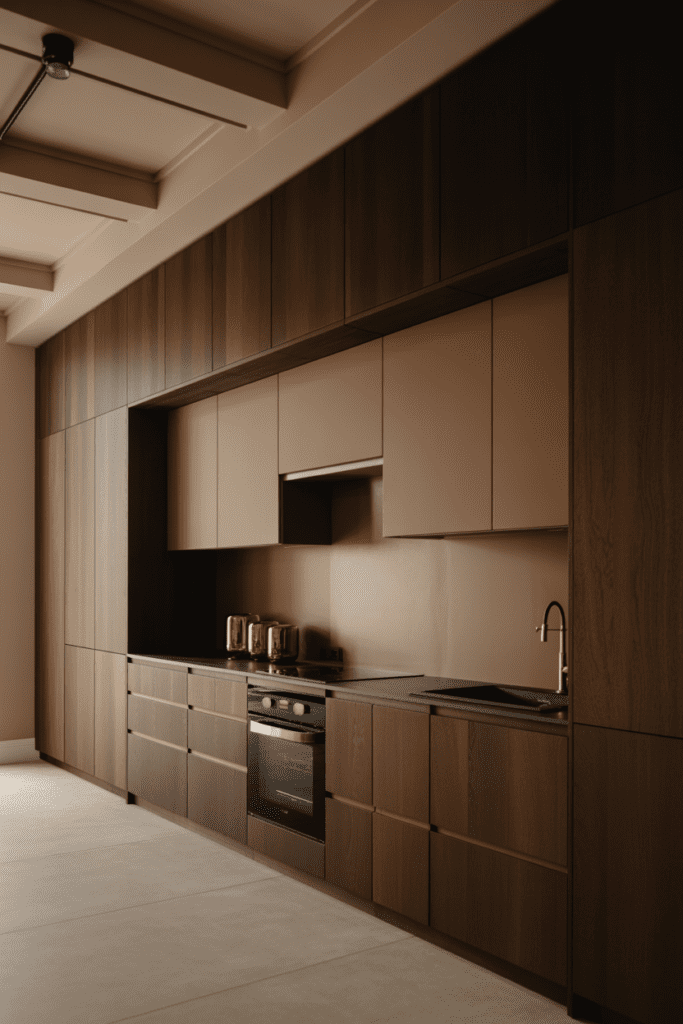
Dark wood kitchen cabinet designs look incredibly sophisticated when they extend all the way to the ceiling.
This approach eliminates awkward empty space above cabinets and makes the entire kitchen feel more intentional. It also creates extra storage, which is always a win.
The secret is keeping the upper cabinet doors simple and streamlined. Too much detailing can make tall cabinetry feel overwhelming.
If your ceilings are particularly high, consider adding glass-front sections near the top to break up the visual weight while maintaining storage.
3. Mix Dark Wood Cabinets With Warm Brass Hardware
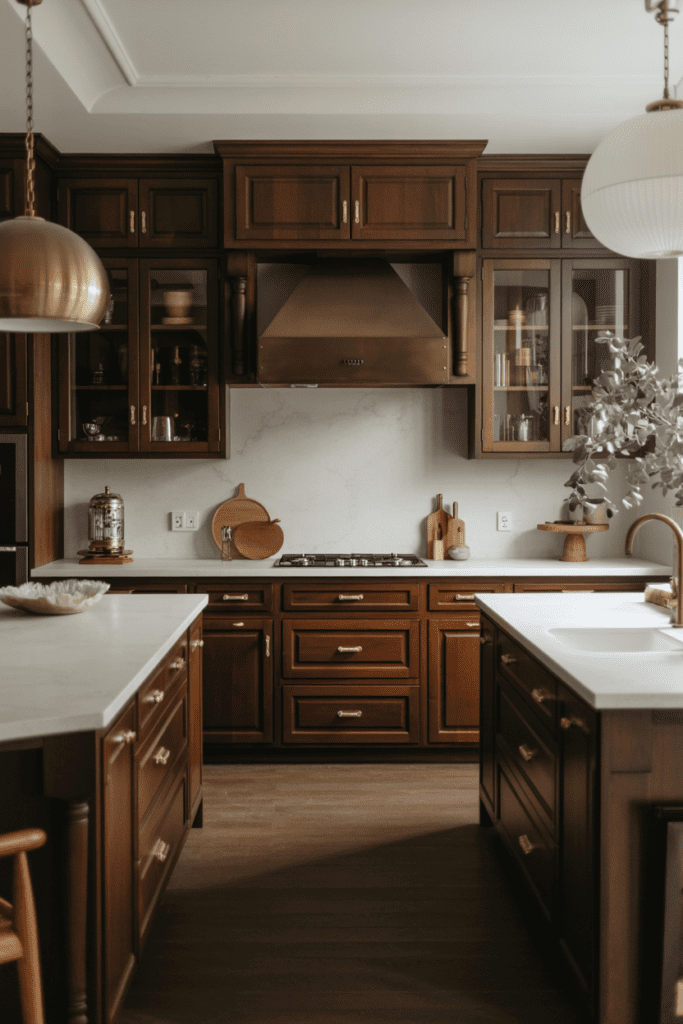
Sometimes the smallest details make the biggest difference.
Dark walnut or espresso cabinets paired with brass pulls and handles create a warm, designer-inspired look that feels both modern and timeless.
The reason this combination works so well is contrast. The rich wood tones ground the space while brass introduces warmth and a subtle touch of luxury.
You don’t need expensive custom hardware either. Many affordable brass-finish options look surprisingly high-end once installed.
4. Create Contrast With Light Wood Floors
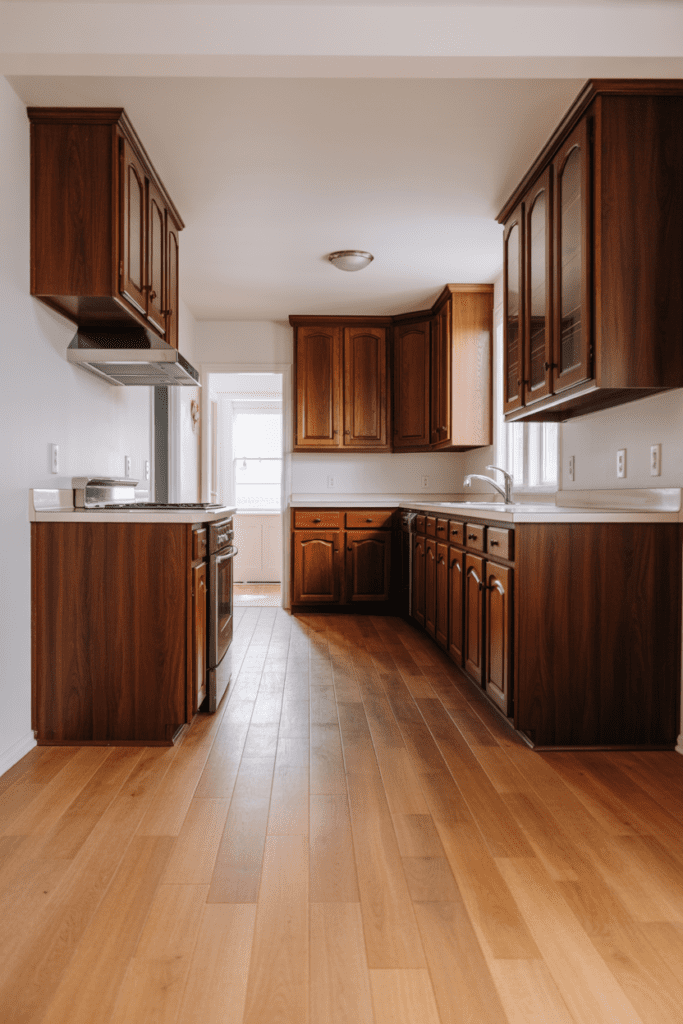
A common mistake homeowners make is choosing dark cabinets and dark flooring together.
While it can work in certain spaces, many kitchens benefit from a lighter floor that creates separation between surfaces.
White oak flooring, natural oak planks, or light wood-look tile help dark cabinets stand out without making the room feel too heavy.
This is one of those ideas that instantly makes a kitchen feel larger and more balanced, especially in homes with limited natural light.
5. Add Open Shelving to Break Up the Cabinetry
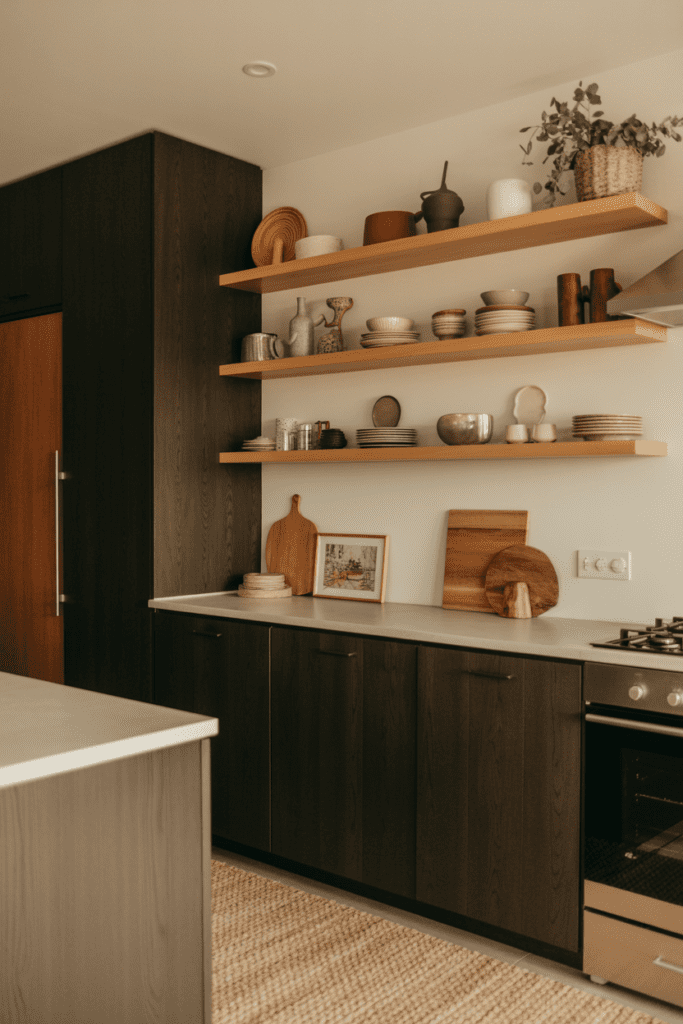
A kitchen filled entirely with dark upper cabinets can sometimes feel visually dense.
Open shelving provides breathing room.
Floating wood shelves, metal shelves, or even simple painted shelves can interrupt long stretches of cabinetry and create opportunities for styling.
Display everyday dishes, cookbooks, or pottery pieces rather than purely decorative items. The result feels practical and lived-in instead of staged.
6. Choose Walnut Cabinets for a Mid-Century Modern Feel
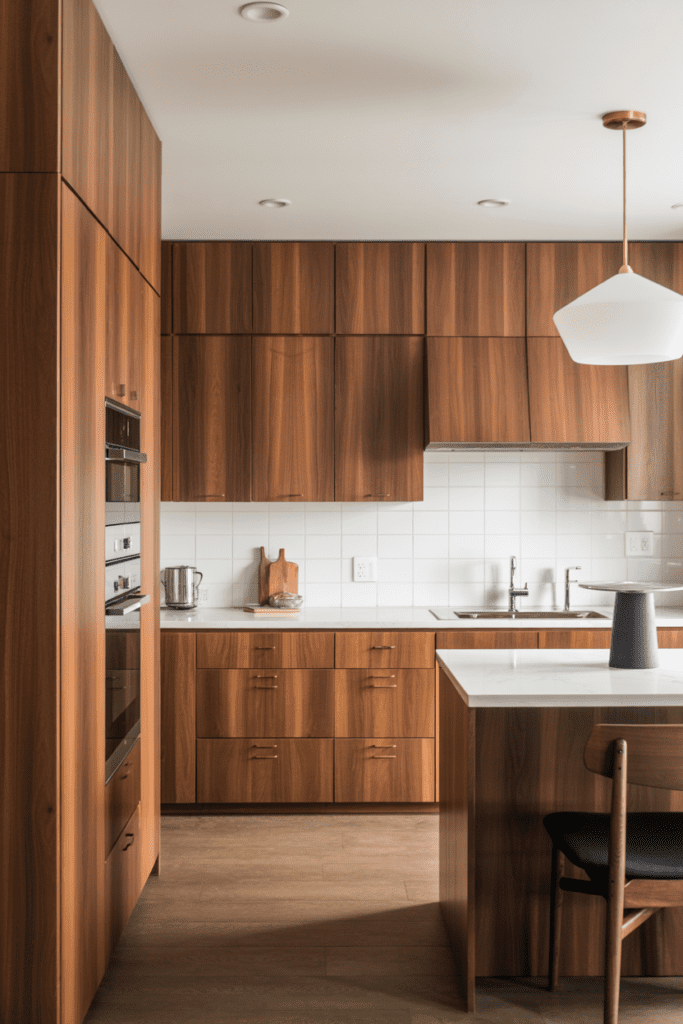
Walnut remains one of the most popular choices for dark wood kitchen cabinet projects—and for good reason.
Its rich grain patterns bring natural character and warmth that many painted cabinets simply can’t replicate.
Walnut cabinets pair beautifully with flat-panel doors, minimalist hardware, and sleek countertops, making them ideal for mid-century modern kitchens.
If real walnut exceeds your budget, walnut-look veneers can achieve a similar appearance at a fraction of the cost.
7. Combine Dark Cabinets With a Bright Backsplash
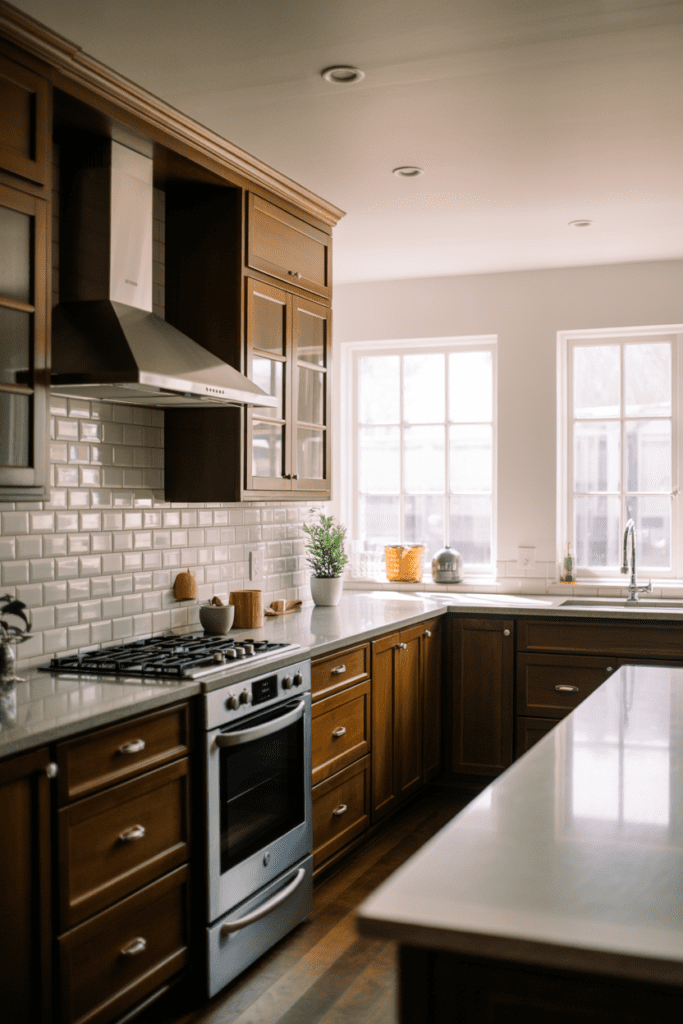
A bright backsplash can completely change the mood of a dark kitchen.
White subway tile, handmade ceramic tile, or light stone backsplashes create visual contrast while reflecting natural and artificial light around the room.
This pairing prevents dark cabinetry from feeling too dominant.
Honestly, if you’re nervous about committing to darker cabinets, adding a bright backsplash is one of the easiest ways to keep the space feeling fresh and inviting.
8. Embrace Matte Black Accents for a Modern Edge
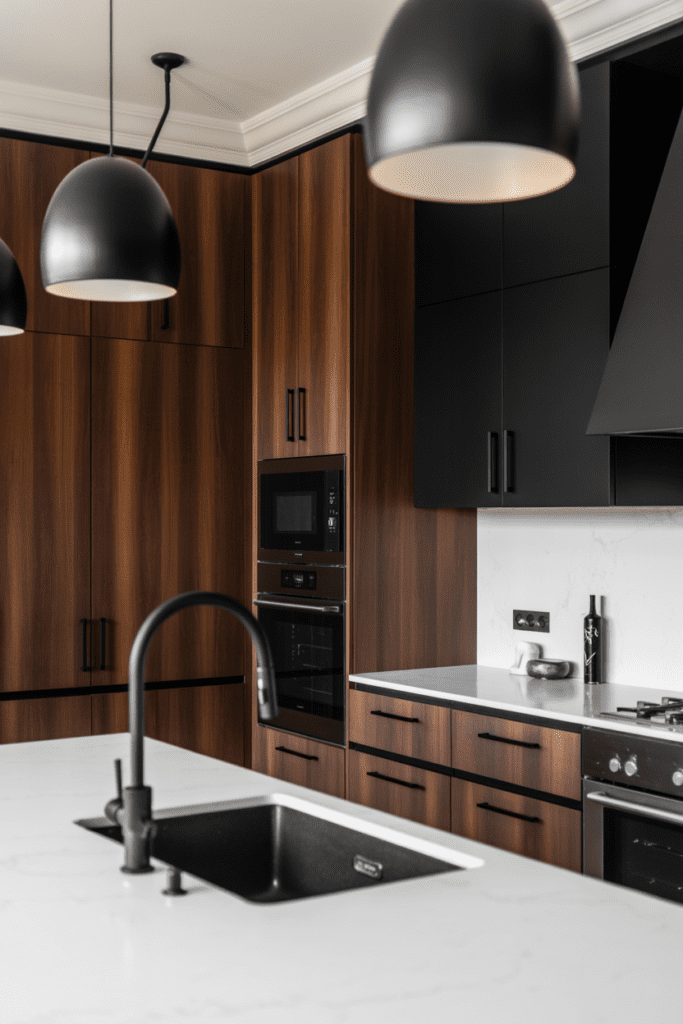
Dark wood and matte black are a surprisingly powerful combination.
The wood introduces warmth while black accents add a sleek contemporary feel.
Think matte black faucets, pendant lights, cabinet hardware, or even window frames.
The key is moderation. Too much black can make the kitchen feel overly dark, but strategic accents create a balanced, sophisticated look.
9. Use Glass Cabinet Doors for Visual Lightness
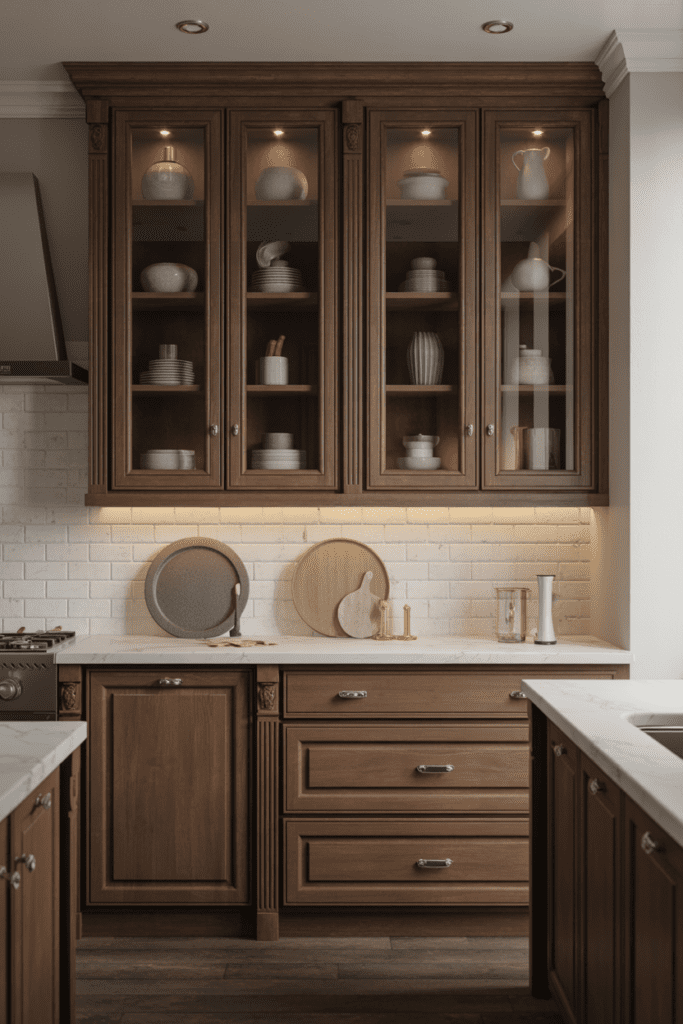
Glass-front cabinet doors can make a huge difference in kitchens with darker finishes.
Instead of seeing a wall of solid cabinetry, your eye catches glimpses of dishes, glassware, and decorative objects.
This visual break makes the room feel more open and airy.
Consider using glass doors on just a few upper cabinets rather than throughout the entire kitchen for a balanced effect.
10. Pair Dark Wood Cabinets With Natural Stone
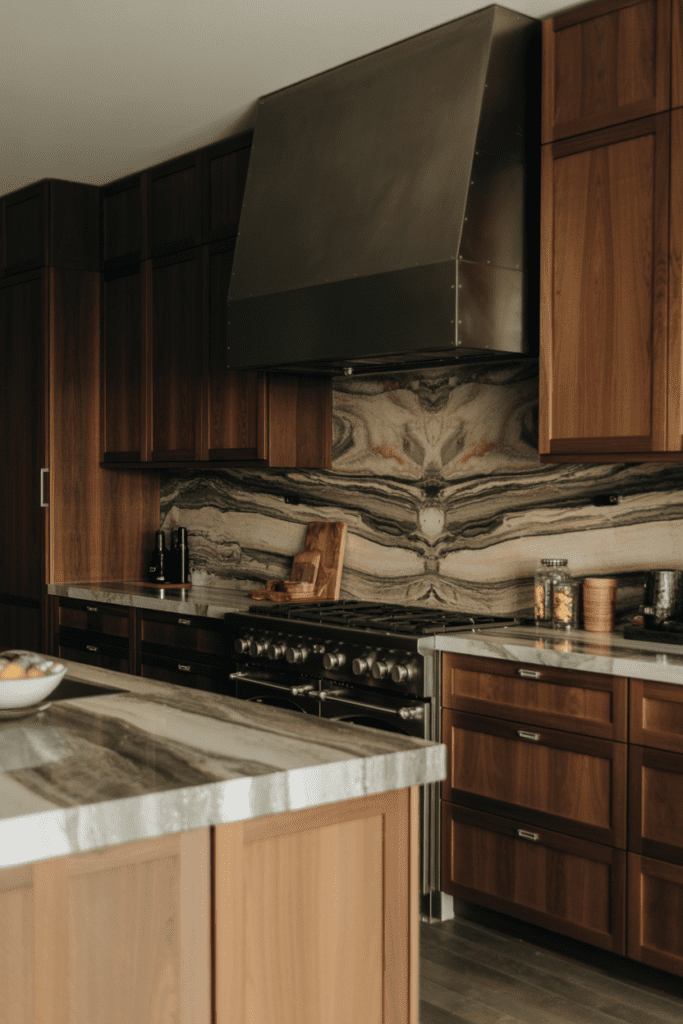
Few combinations feel more timeless than dark wood and natural stone.
Soapstone, marble, travertine, and quartzite all complement rich wood tones beautifully.
The organic textures work together to create depth and character without relying on trendy colors or finishes.
If you’re aiming for a kitchen that still looks good ten years from now, this pairing is worth considering.
11. Create a Two-Tone Kitchen With Dark Lower Cabinets
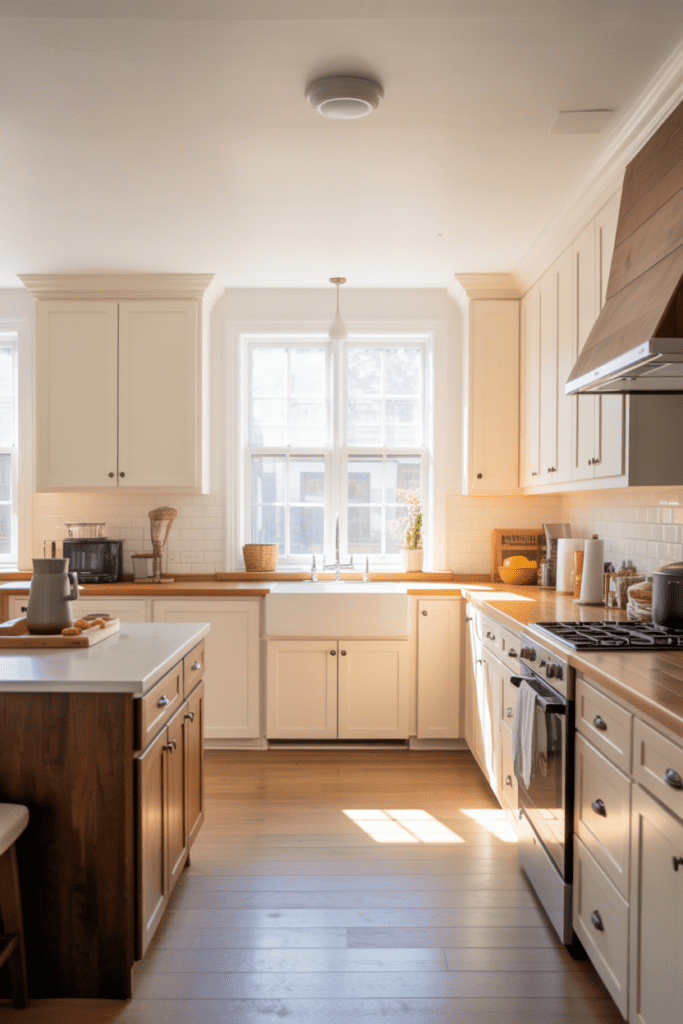
Not ready to commit to dark cabinetry everywhere?
Try dark wood lower cabinets paired with white or cream upper cabinets.
This two-tone approach keeps the room feeling bright while introducing warmth and visual interest.
It’s especially effective in smaller kitchens where fully dark cabinetry might feel overwhelming.
The contrast naturally draws the eye upward and helps create a more spacious appearance.
12. Add Under-Cabinet Lighting
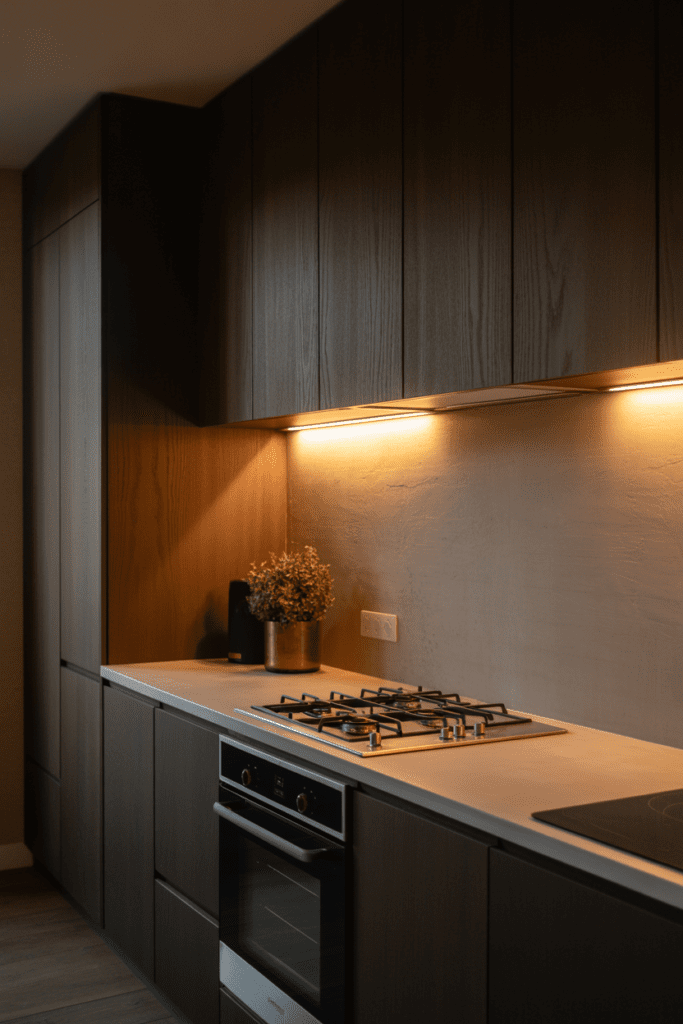
Lighting becomes even more important when working with darker finishes.
Under-cabinet LED strips brighten countertops, improve functionality, and prevent shadows from making the kitchen feel gloomy.
The added glow highlights the wood grain and creates beautiful evening ambiance.
This is one of those upgrades that costs relatively little but makes the entire kitchen feel more expensive.
13. Incorporate a Dark Wood Kitchen Island
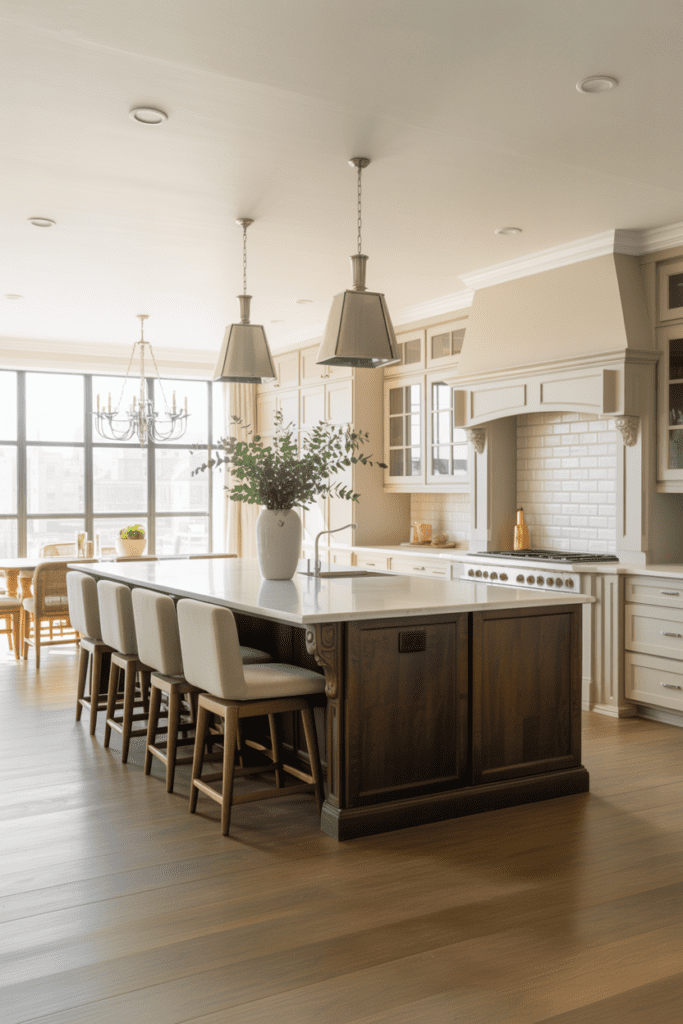
If replacing every cabinet isn’t in the budget, consider focusing on the island.
A dark wood island surrounded by lighter perimeter cabinets creates a striking focal point without overwhelming the room.
This design approach adds contrast and allows you to experiment with darker finishes in a manageable way.
It’s particularly effective in open-concept homes where the island naturally becomes the centerpiece of the space.
14. Lean Into Rustic Charm With Textured Wood
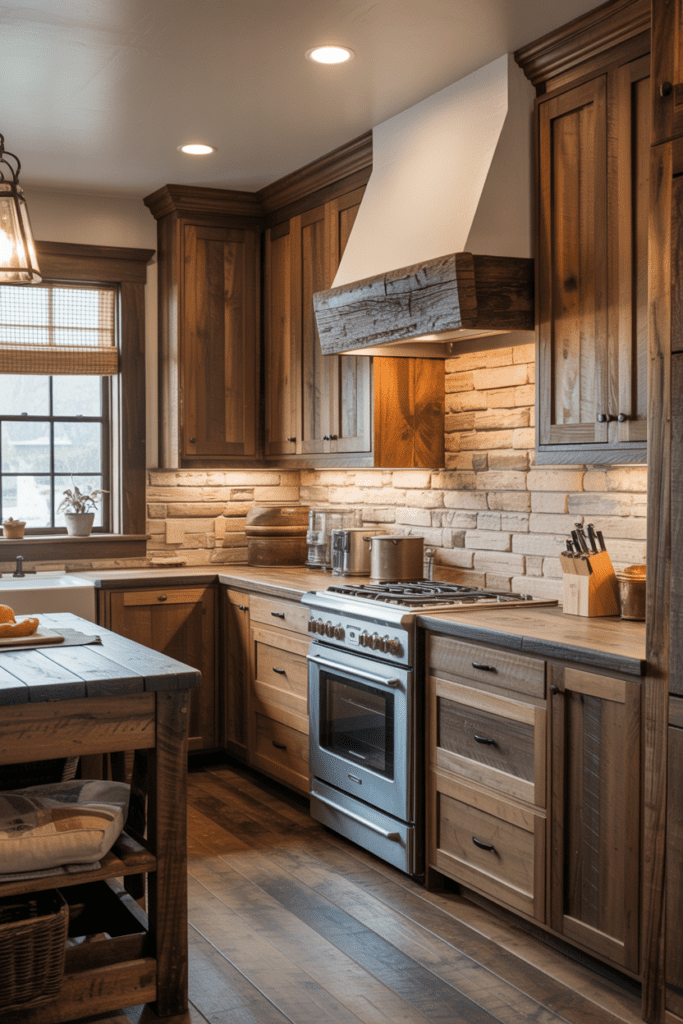
Not all dark wood cabinets need to be sleek and polished.
Reclaimed wood finishes, wire-brushed textures, and visible grain patterns add character and warmth that perfectly suit farmhouse, rustic, and cottage-style kitchens.
The imperfections are what make these cabinets special.
Pair them with stone countertops, vintage-inspired lighting, and warm metal finishes for a welcoming atmosphere that feels authentic rather than overly designed.
15. Keep the Palette Simple and Let the Cabinets Shine
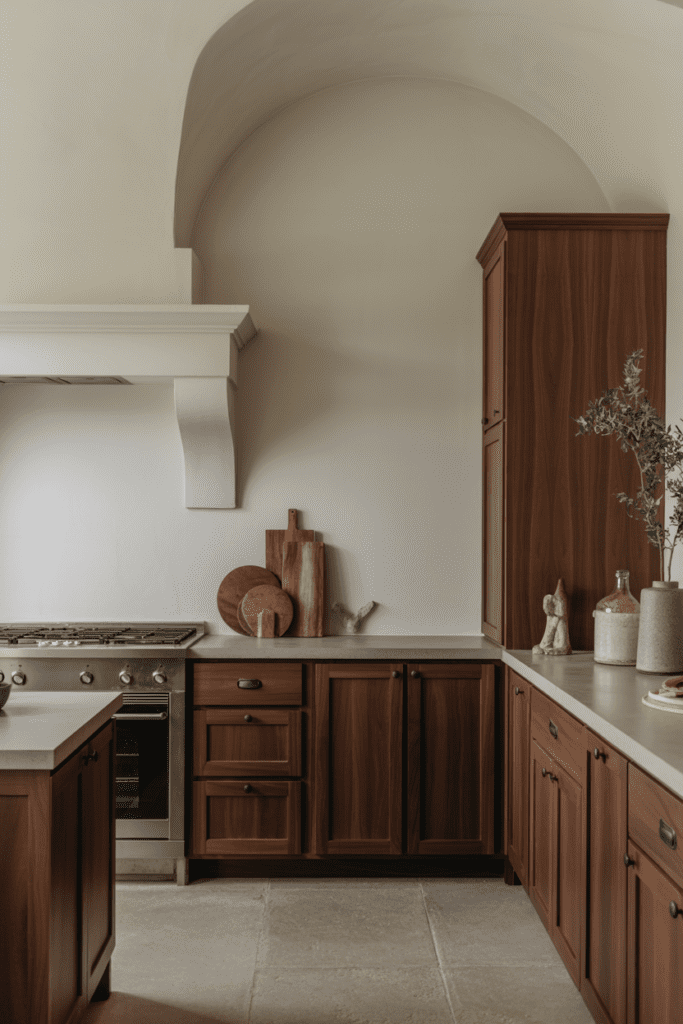
Sometimes the best design decision is knowing when to stop.
Dark wood kitchen cabinets already bring plenty of visual interest, so there’s often no need to introduce multiple bold colors or competing finishes.
Stick with a restrained palette of whites, creams, soft grays, warm metals, and natural textures.
This approach allows the cabinetry to become the star of the room while creating a timeless look that’s unlikely to feel dated a few years down the road.
Quick Tips for Decorating Around Dark Wood Kitchen Cabinets
Before you start planning your kitchen makeover, keep these simple guidelines in mind:
- Use layered lighting to brighten dark corners.
- Introduce lighter countertops or backsplashes for contrast.
- Incorporate natural textures like stone, linen, and wood.
- Avoid overcrowding countertops with decor.
- Mix metals carefully and consistently.
- Use reflective surfaces to bounce light around the room.
- Consider glass-front cabinets if the space feels too heavy.
- Balance dark cabinetry with lighter walls whenever possible.
Final Thoughts
Dark wood kitchen cabinet designs have a way of making a kitchen feel grounded, warm, and effortlessly stylish. They bring depth that lighter cabinets sometimes lack while offering a timeless quality that survives changing trends.
Whether you’re drawn to sleek walnut cabinetry, rustic textured wood, dramatic floor-to-ceiling storage, or a simple two-tone layout, there are plenty of ways to make darker finishes work beautifully in your home.
The best part? You don’t need a massive renovation budget to embrace the look. Even small updates like changing hardware, adding better lighting, or incorporating a dark wood island can create a noticeable impact.