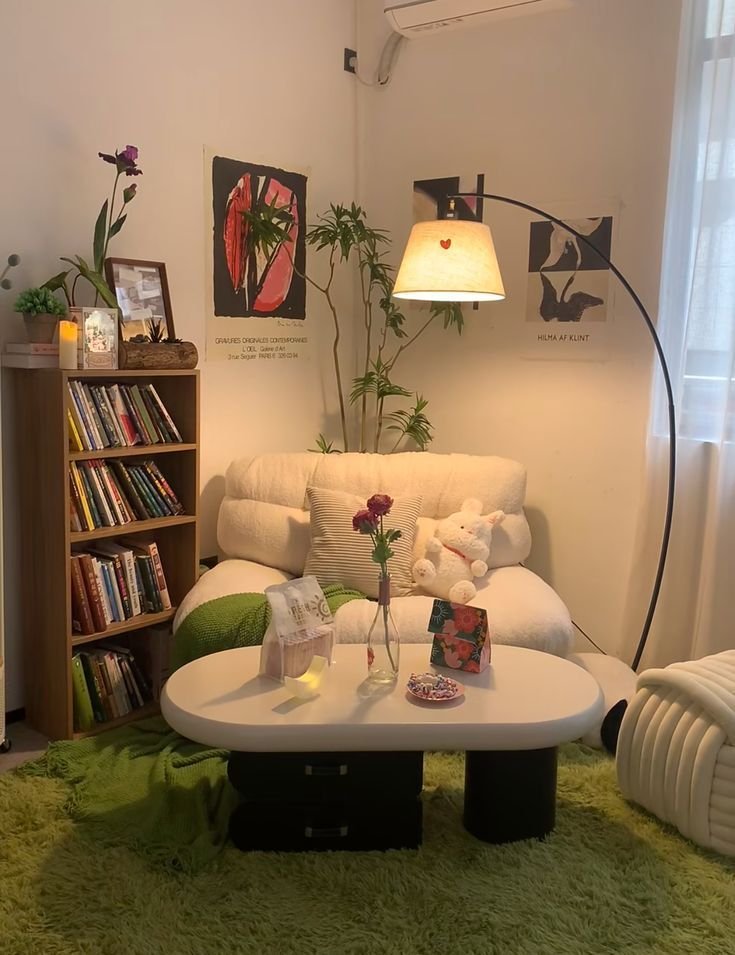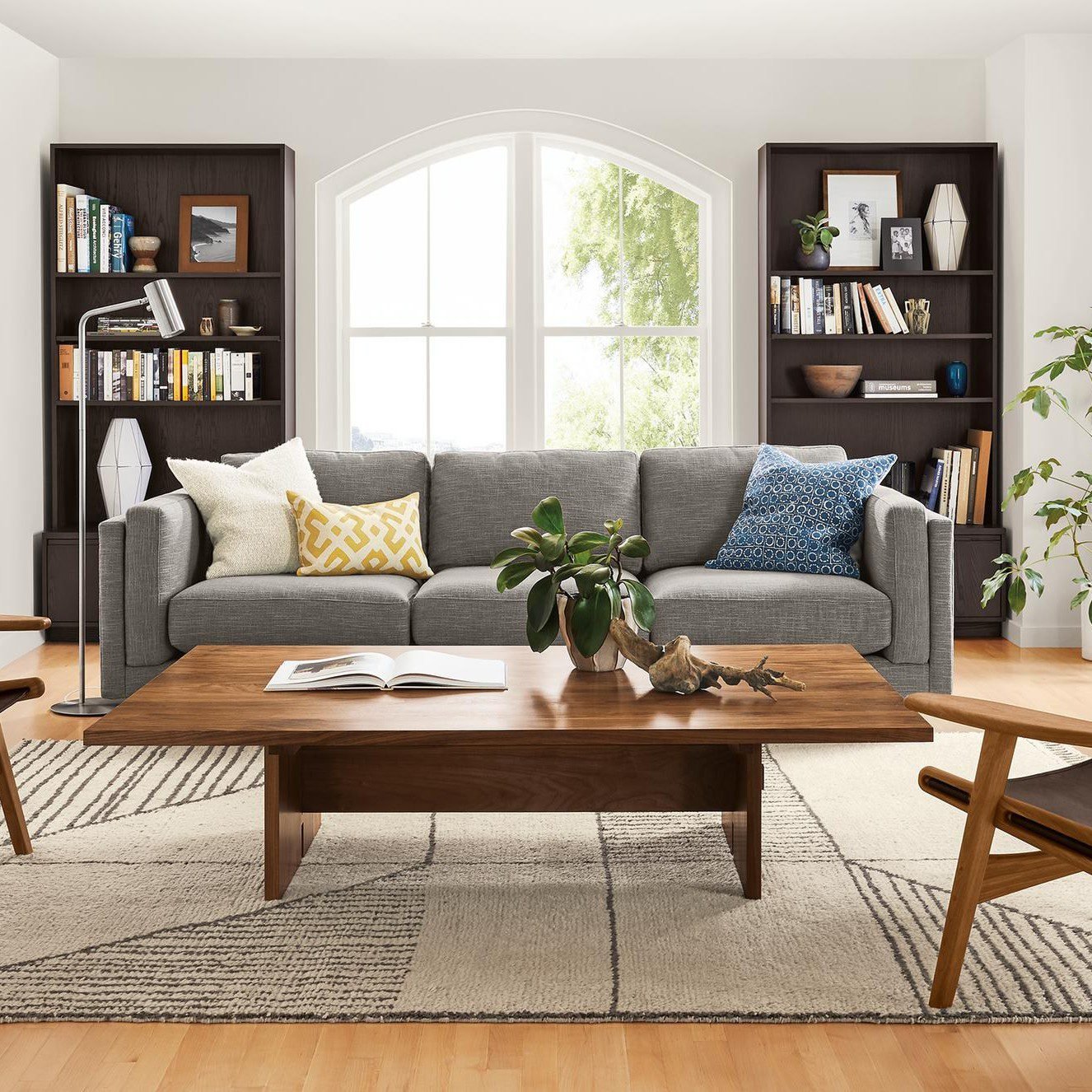

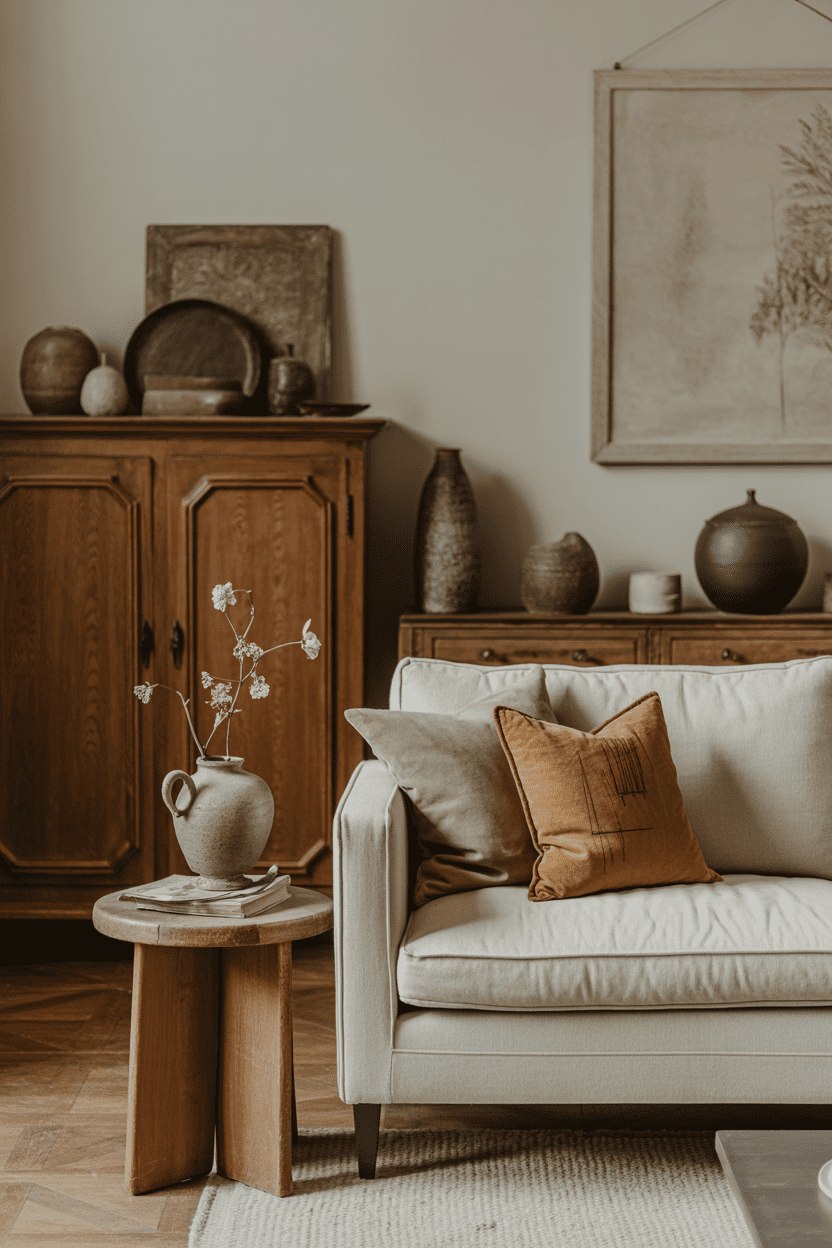
If you’ve ever looked around your living room and felt like it was trying a little too hard—or maybe not hard enough you’re definitely not alone. A lot of us spend hours scrolling through perfectly styled spaces online only to end up feeling frustrated when our own homes don’t look quite as polished.
But what if perfection isn’t actually the goal?
That’s exactly why the wabi-sabi philosophy has become so appealing. Instead of chasing flawless interiors, wabi-sabi celebrates natural beauty, authenticity, and the charm that comes with age and imperfection. Scratches tell stories. Handmade pieces feel meaningful. Uneven textures create warmth. Suddenly, your home feels less like a showroom and more like a place where real life happens.
The best part? You don’t need a huge budget or a complete renovation to embrace this style.
These Wabi-Sabi Living Room Ideas will help you create a space that feels calm, grounded, and effortlessly beautiful. Whether you’re starting from scratch or simply want to bring more warmth into your current space, these ideas can help you create a living room that feels genuinely lived in—and loved.
Let Natural Materials Take Center Stage
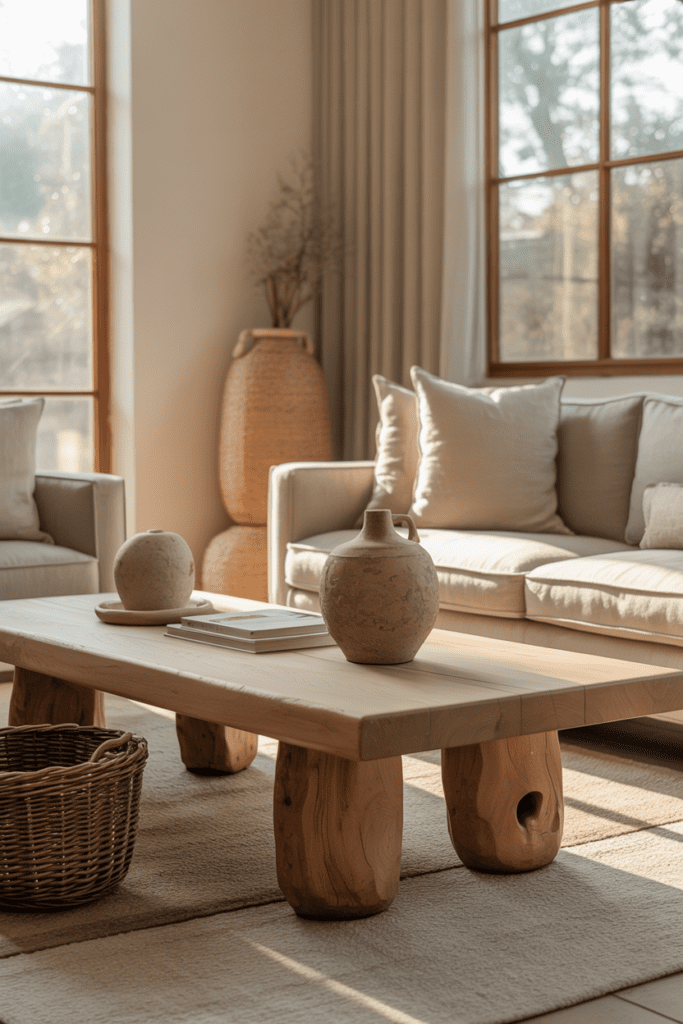
One of the easiest ways to create a wabi-sabi living room is by bringing in materials that feel raw and authentic. Think unfinished wood, stone, clay, linen, cotton, and rattan.
The beauty of natural materials lies in their imperfections. Wood grain varies from piece to piece. Handmade pottery often has slight inconsistencies. Stone surfaces develop character over time. These details make a room feel alive rather than overly designed.
To recreate this look, swap out synthetic decor for natural alternatives whenever possible. A wooden coffee table with visible knots, a linen slipcovered sofa, or a stone vase can instantly shift the mood of the room.
Embrace an Earthy Neutral Color Palette
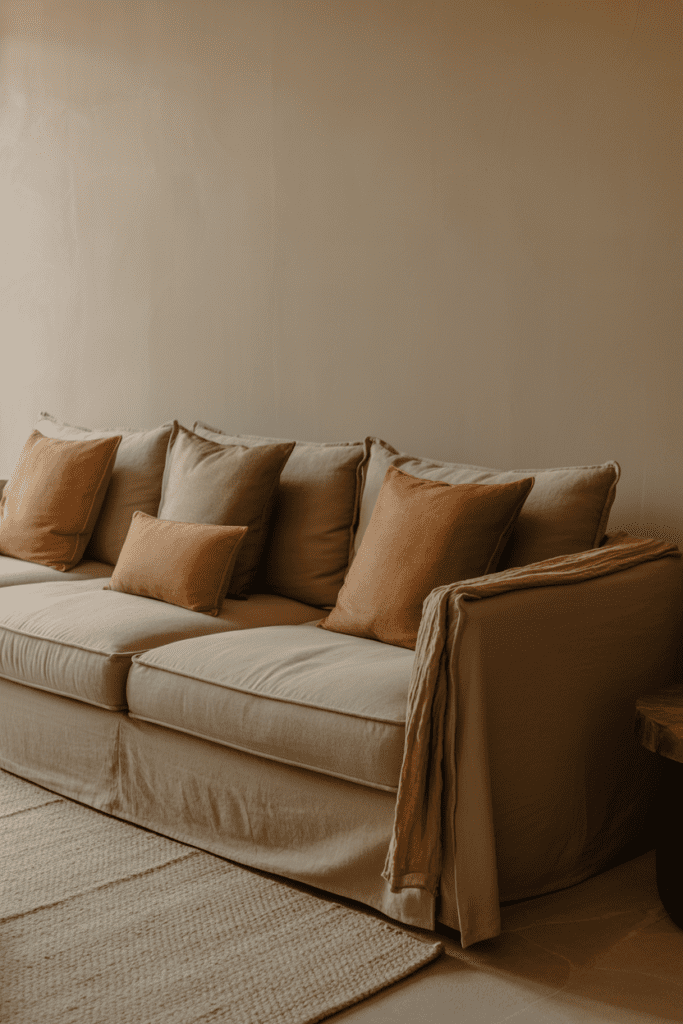
Wabi-sabi interiors rarely rely on bright colors or dramatic contrasts. Instead, they lean into shades inspired by nature.
Warm beige, soft taupe, sandy brown, clay, cream, muted gray, and earthy greens work beautifully together. These tones create a calming backdrop that allows textures and materials to become the focus.
If your current living room feels visually busy, start by simplifying the color palette. Paint walls in a soft neutral shade and layer in furnishings that stay within the same earthy family. The result feels peaceful rather than flat.
Choose Furniture with Character
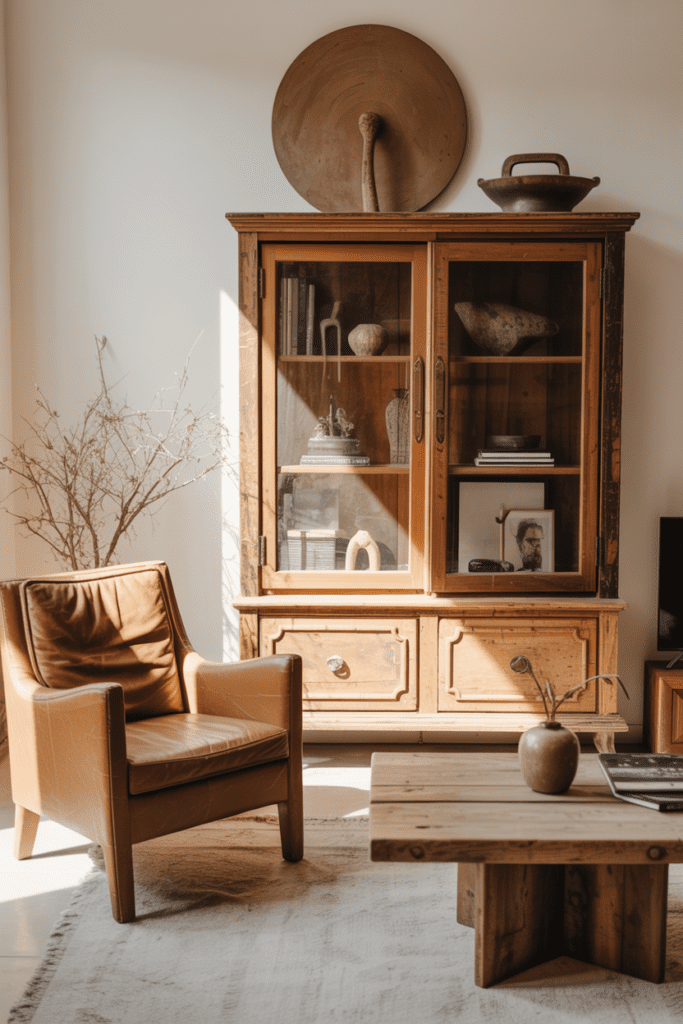
This is one of those ideas that completely changes how you shop for furniture.
Instead of looking for pieces that appear factory-perfect, seek out items that have unique details or signs of craftsmanship. Vintage furniture works especially well because it already carries a sense of history.
A weathered wooden cabinet, a hand-carved side table, or an older leather chair that has softened with age can become a beautiful focal point. Wabi-sabi reminds us that wear and tear isn’t something to hide—it’s something to appreciate.
Thrift stores, antique markets, and estate sales are often gold mines for finding these types of pieces without spending a fortune.
Layer Plenty of Organic Texture
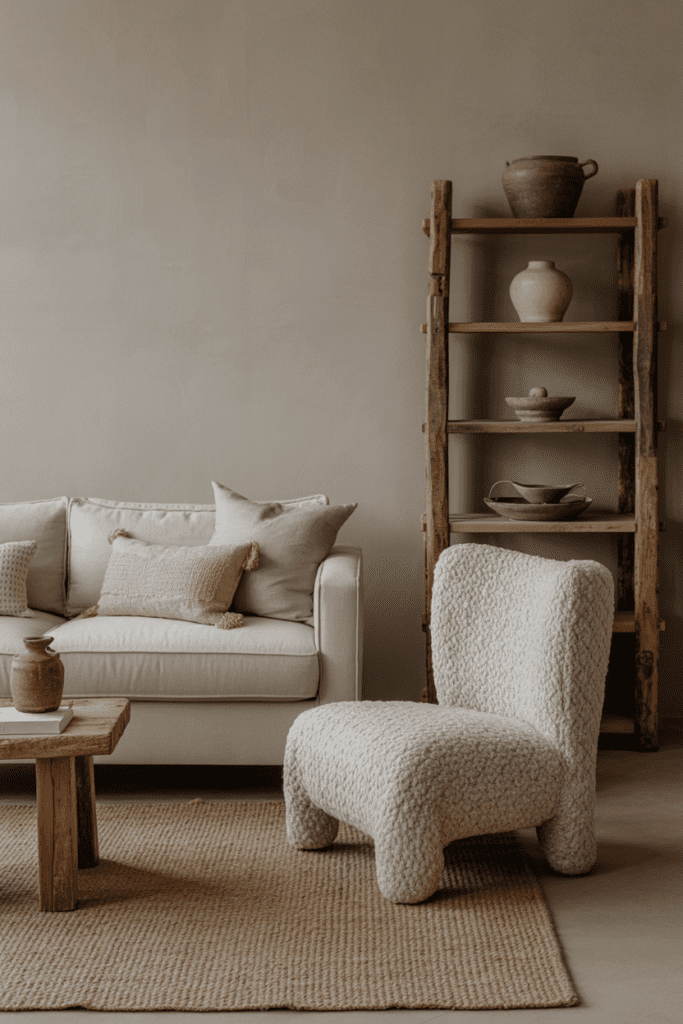
Without texture, a neutral room can quickly feel boring. With texture, it becomes inviting.
One of the defining features of successful Wabi-Sabi Living Room Ideas is the thoughtful layering of different materials. Linen throws, chunky woven baskets, wool rugs, handmade ceramics, and textured wall finishes all contribute to the look.
Try mixing rough and soft surfaces together. A rustic wooden coffee table paired with a cozy boucle chair creates visual interest without needing bold colors.
Honestly, texture does much of the heavy lifting in a wabi-sabi room.
Keep Decor Intentional and Minimal
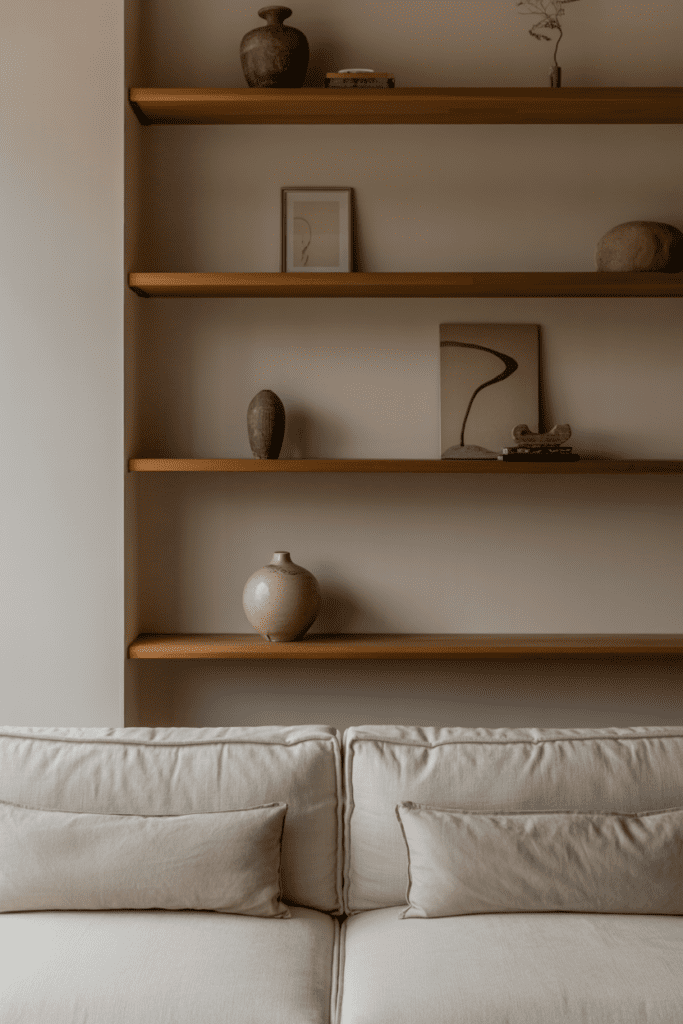
Minimalism and wabi-sabi often overlap, but they’re not exactly the same.
The goal isn’t to own as little as possible. Instead, it’s about surrounding yourself with things that have meaning or purpose.
Rather than filling every shelf with decorative objects, choose a few pieces that truly matter. A handmade bowl collected during travel, a family heirloom, or a favorite ceramic vase can make a stronger impact than dozens of trendy accessories.
When each item has room to breathe, the entire space feels calmer.
Celebrate Handmade Pieces
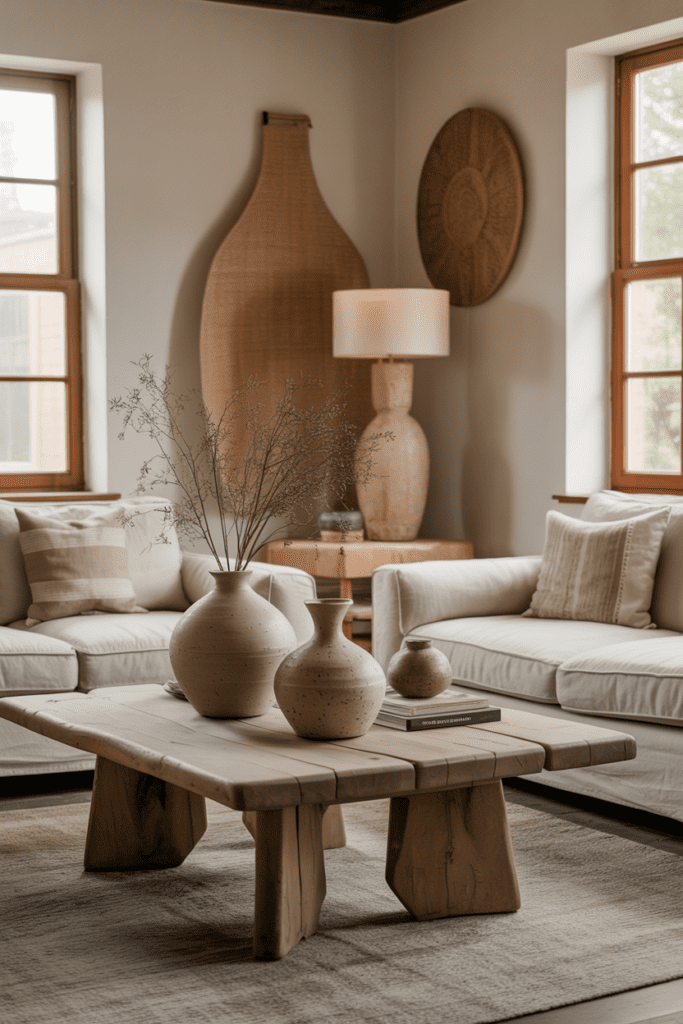
Mass-produced decor often lacks personality. Handmade items bring warmth and individuality into a space.
Ceramics with uneven glazing, handwoven textiles, carved wooden bowls, and artisan-made furniture all fit beautifully within the wabi-sabi aesthetic.
These pieces tell a story. You can often see the maker’s touch in the finished product, which adds depth and authenticity to the room.
If you’re decorating on a budget, local craft fairs, flea markets, and online artisan marketplaces can be excellent sources for one-of-a-kind finds.
Let Imperfections Stay Visible
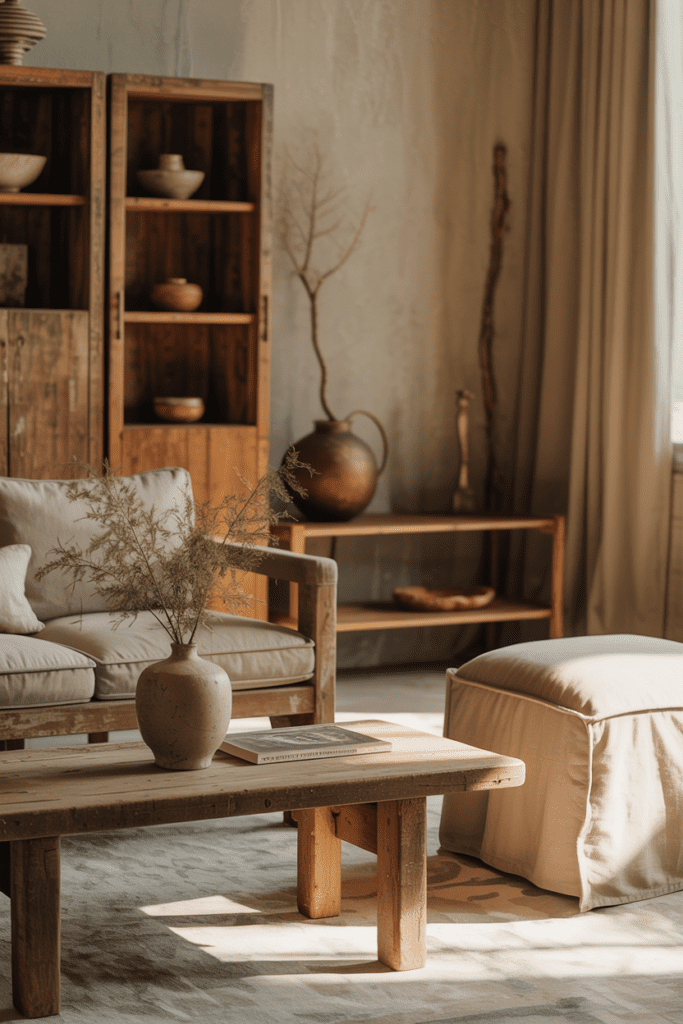
This might be the hardest concept for some people to embrace.
We’re conditioned to believe that scratches, dents, and signs of wear should be repaired or replaced immediately. Wabi-sabi takes the opposite approach.
A slightly worn tabletop, faded wood finish, or aged leather chair can add soul to a room. These imperfections become evidence of a life well lived rather than flaws that need fixing.
Of course, this doesn’t mean neglecting maintenance. It simply means learning to appreciate the beauty that develops naturally over time.
Use Soft, Layered Lighting
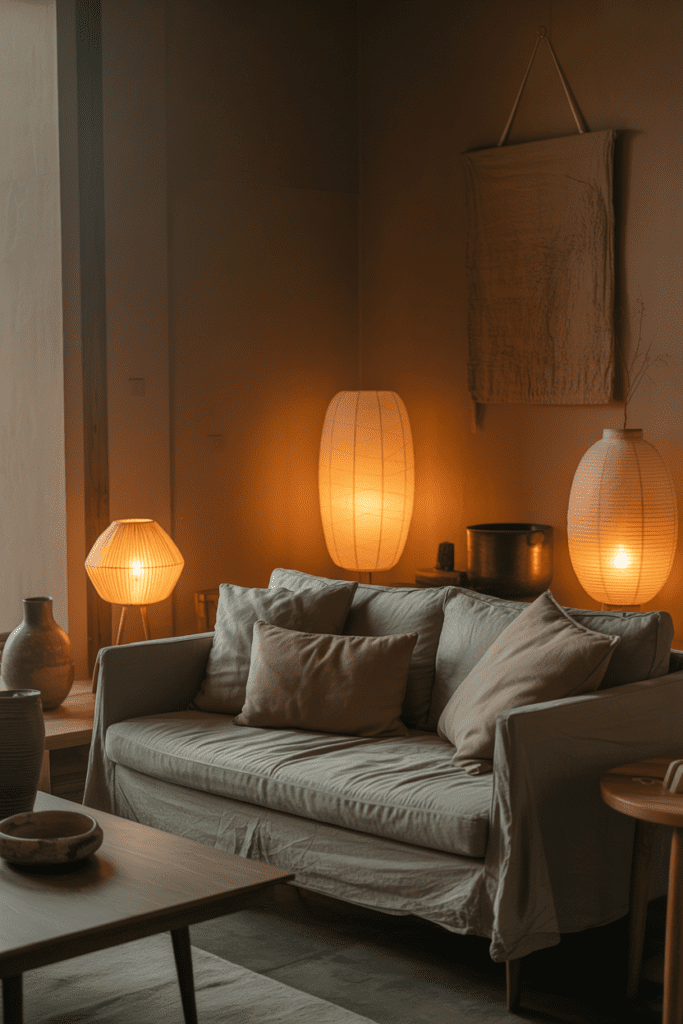
Lighting can completely change how a room feels.
Wabi-sabi spaces favor warm, gentle lighting over harsh overhead fixtures. The goal is to create an atmosphere that feels cozy and relaxed, especially during the evening.
Table lamps, paper lanterns, ceramic lamp bases, wall sconces, and candles work beautifully together. Instead of relying on one bright source, layer multiple smaller lights throughout the room.
The softer the glow, the more inviting the space feels.
Incorporate Nature in Simple Ways
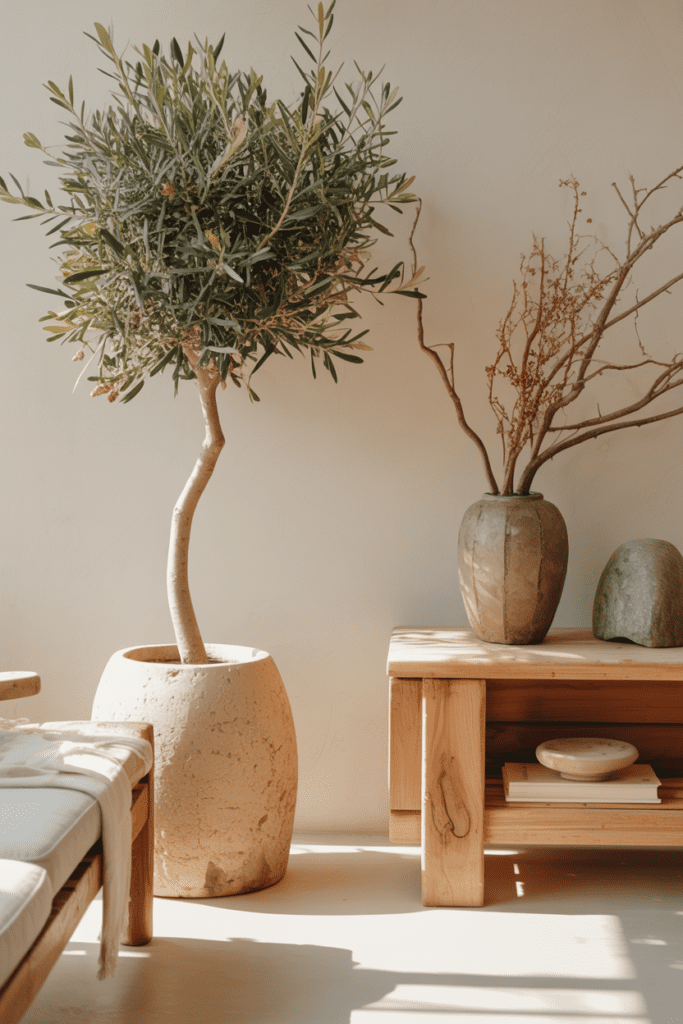
Nature is at the heart of wabi-sabi design.
The good news is you don’t need an indoor jungle to make it work. In fact, simpler arrangements often feel more authentic.
A branch displayed in a ceramic vase, a bowl of collected stones, dried grasses, or a single potted olive tree can bring a natural element into the room without overwhelming it.
This approach feels effortless while strengthening the connection between your home and the outdoors.
Leave Empty Space on Purpose
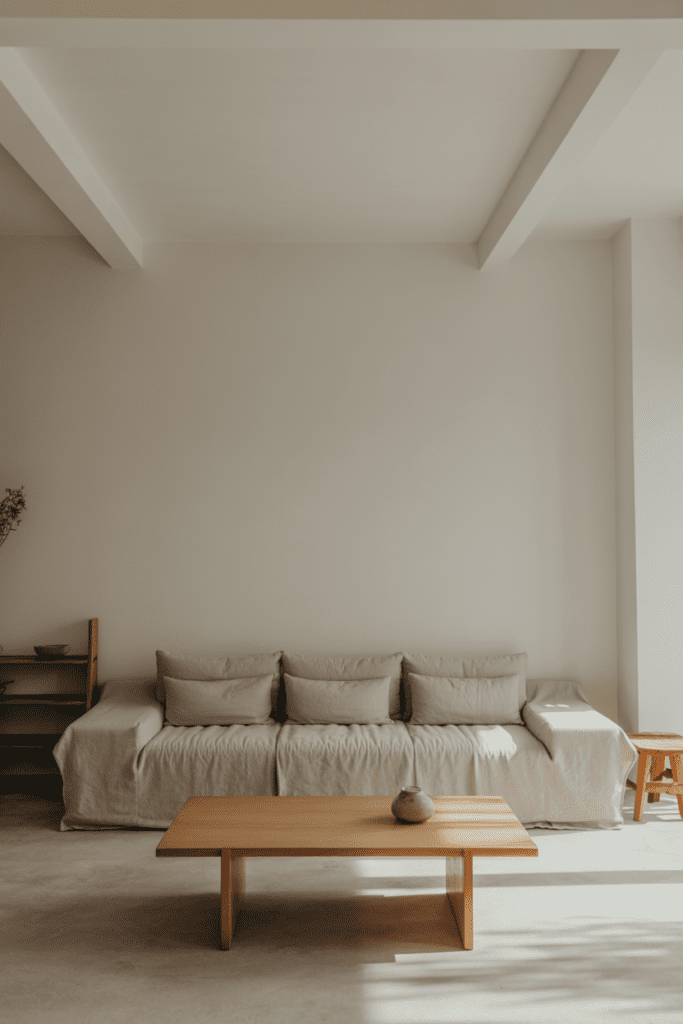
Many people feel the need to fill every corner, wall, and surface. Wabi-sabi encourages the opposite.
Empty space allows the eye to rest. It creates balance and helps important pieces stand out.
If you want something that actually works, try removing a few decorative items from your shelves and tables. You may be surprised by how much more sophisticated the room feels.
Negative space isn’t wasted space. It’s an intentional design tool.
Mix Old and New Pieces Together
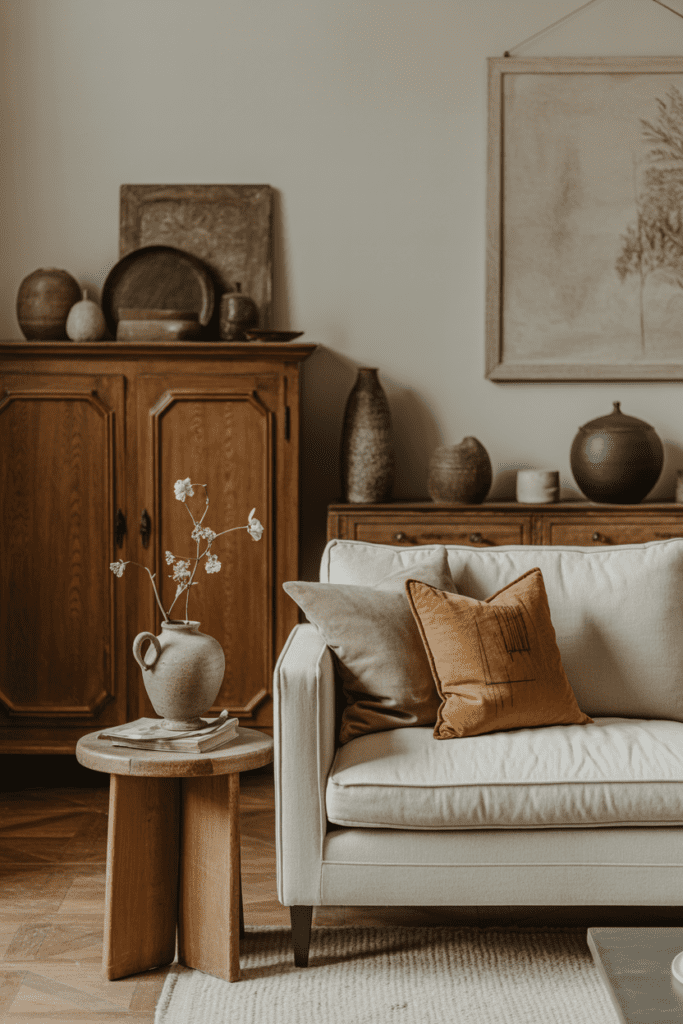
One of the reasons wabi-sabi interiors feel so personal is that they don’t look like they were purchased all at once from a single store.
Combining modern pieces with vintage finds creates depth and character. A contemporary sofa can sit comfortably beside an antique wooden side table. New linen curtains can complement a weathered cabinet.
The contrast keeps the room from feeling overly themed while making the design feel collected over time.
This layered approach often results in a more interesting and authentic living room.
Add Textured Wall Finishes
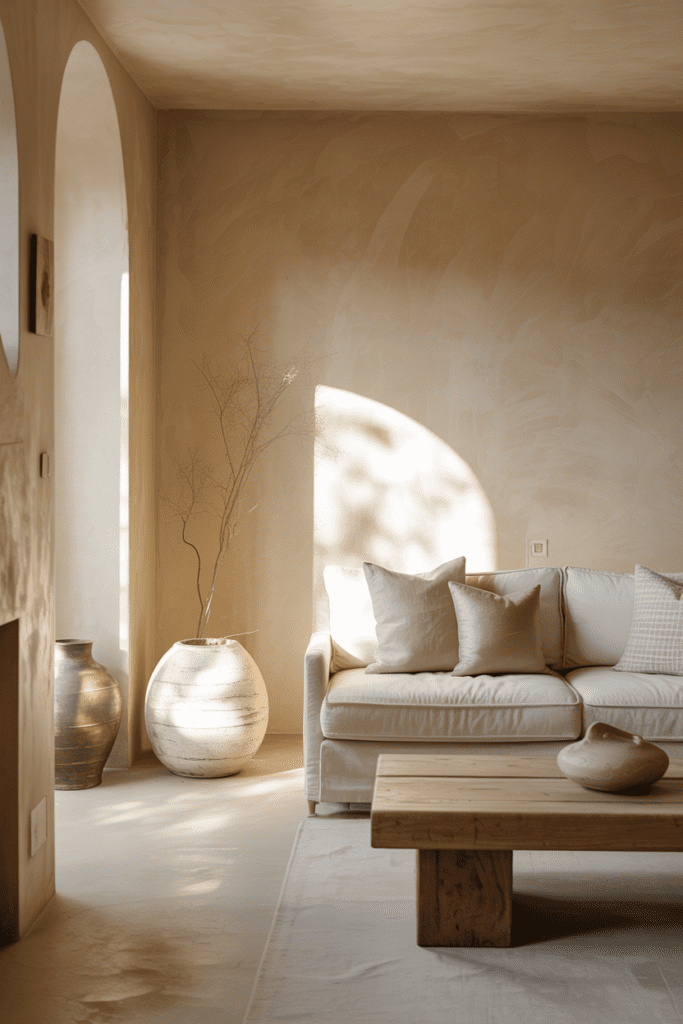
Walls provide a huge opportunity to bring wabi-sabi character into a room.
Instead of perfectly smooth drywall, consider finishes that add subtle texture. Limewash paint, plaster, Roman clay, and textured wall treatments can create beautiful movement across a surface.
These finishes often look slightly imperfect by design, which aligns perfectly with the philosophy behind wabi-sabi.
Even a single accent wall can dramatically change the atmosphere of the space.
Create a Cozy, Lived-In Seating Area
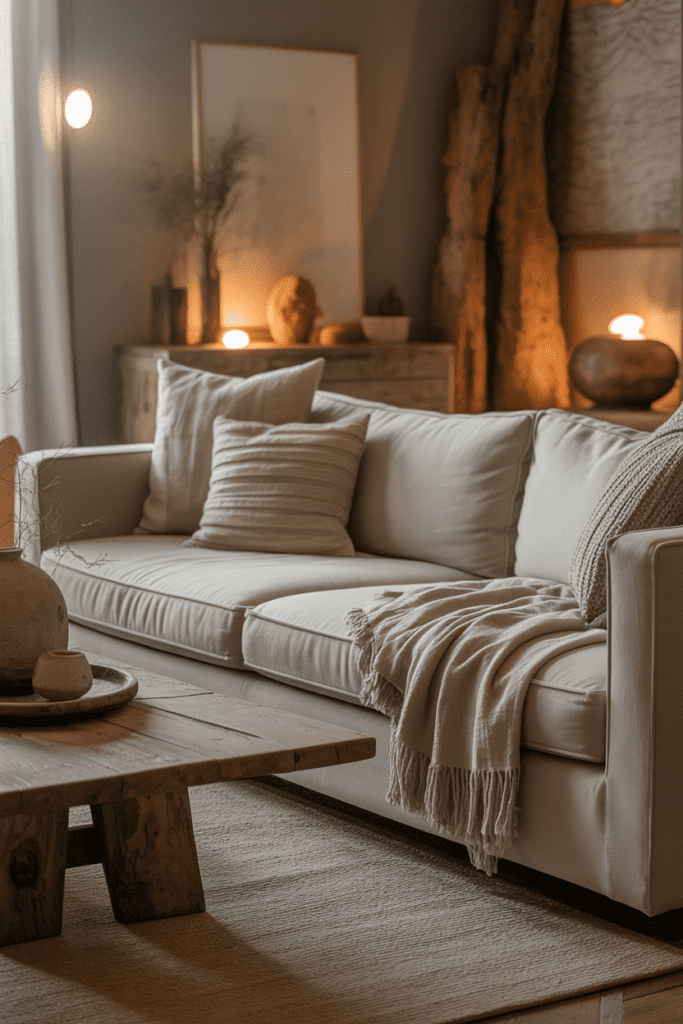
At its core, wabi-sabi is about comfort and authenticity.
Your living room shouldn’t feel like a museum where nobody is allowed to sit. It should invite people to relax, read, gather, and spend time together.
Arrange seating to encourage conversation. Add soft throw blankets, comfortable cushions, and natural textiles that make the room feel welcoming.
Sometimes the most beautiful rooms aren’t the most perfect ones. They’re the ones that feel genuinely lived in.
Things to Keep in Mind When Decorating a Wabi-Sabi Living Room
Before you start shopping or rearranging furniture, remember a few key principles:
- Focus on authenticity over perfection.
- Choose quality materials that age gracefully.
- Let natural textures do the work.
- Avoid clutter, but don’t strip away personality.
- Mix old and new for a collected feel.
- Prioritize comfort and functionality.
- Appreciate imperfections rather than hiding them.
The goal isn’t to create a picture-perfect room. It’s to create a space that feels honest, calming, and uniquely yours.
Final Thoughts
These Wabi-Sabi Living Room Ideas prove that beautiful design doesn’t have to be flawless. In fact, some of the most inviting rooms are the ones that embrace imperfections, celebrate craftsmanship, and reflect the people who live there.
Whether you start with natural materials, introduce more texture, or simply stop stressing about every tiny scratch and dent, small changes can make a surprisingly big difference.
The beauty of wabi-sabi is that it gives you permission to let your home evolve naturally over time. Instead of chasing perfection, focus on creating a living room that feels warm, meaningful, and comfortable.