
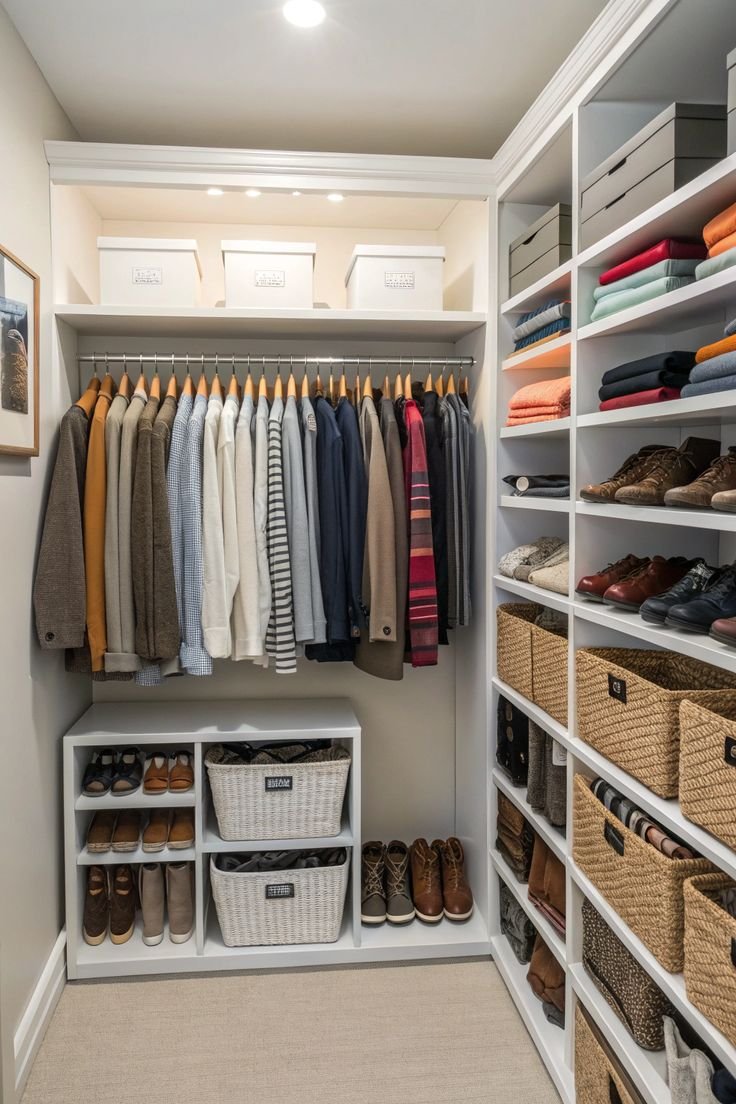
If you have a small walk-in closet, you already know the problem: it sounds like it should be plenty of space, but somehow it still turns into a cramped, messy black hole. Clothes get shoved into corners, shoes pile up on the floor, bags disappear, and suddenly getting dressed feels more annoying than it should.
Here’s the thing: a small walk-in closet can work really well, but only if you stop treating it like a tiny storage room and start treating it like a system. Most people get this wrong. They buy a few matching bins, hang everything they own, and hope the closet magically stays organized. It won’t.
What actually works is being a little more strategic about how the space functions day to day. You need to think about what you wear often, what takes up too much room, and where clutter starts building up first. Once you fix those pressure points, even a small closet can feel calm, usable, and honestly kind of satisfying.
If you’ve been looking for small walk-in closet organization ideas that are realistic, not overly complicated, and actually help you stay organized, this is where to start.
Why Small Walk-In Closets Get Messy So Fast
A lot of closet frustration has less to do with size and more to do with layout. A small walk-in closet usually has just enough room to hold a lot, but not enough room to hide bad organization habits.
You’re storing too many categories together
One of the biggest problems is mixing everything in the same zone. Shoes are under dresses, handbags are crammed beside folded jeans, and random seasonal items get shoved onto the top shelf. That kind of setup creates visual clutter fast.
Why this fails: your brain has to work harder every time you look for something. And when a closet is hard to “read,” you stop putting things back where they belong. That’s when the mess starts snowballing.
You’re using hanging space for everything
People love to assume more hanging equals better organization. Not always. In a small walk-in, hanging every single item can actually waste usable space, especially if you’re hanging bulky sweaters, workout clothes, or casual tees that could be folded more efficiently.
What actually works is balancing hanging, shelving, and contained storage. A closet should support the way you dress, not just display everything at once.
The floor becomes a dumping zone
If your closet floor is holding shoes, laundry, shipping boxes, or a basket of random things, the whole room instantly feels smaller. Floor clutter is sneaky because it makes even an organized closet feel chaotic.
This is why so many small walk-in closet organization ideas focus on vertical space. Once the floor is clear, the closet feels bigger, cleaner, and much easier to maintain.
Common Mistakes That Make a Small Closet Feel Smaller
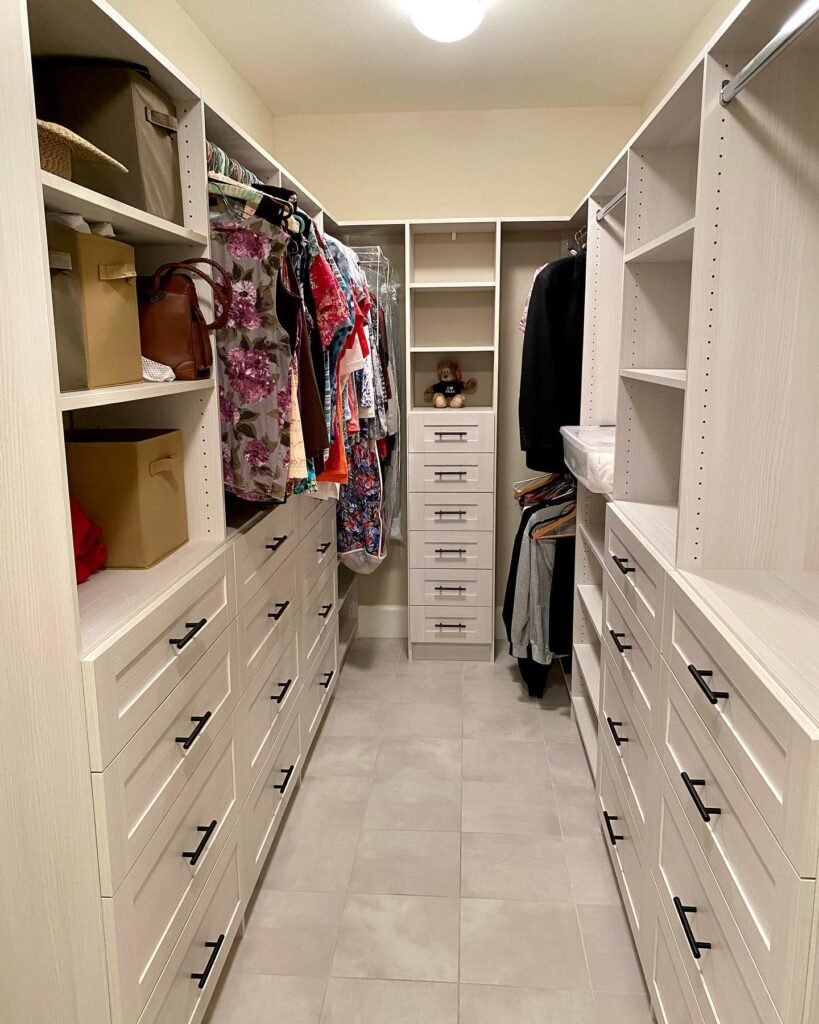
Before you start buying organizers, it helps to know what usually goes wrong.
Keeping storage products that don’t fit your habits
Most people buy organizers based on looks instead of function. Matching bins are great, but if you never label them or can’t see what’s inside, they quickly become junk collectors.
For example, a pretty fabric bin on a top shelf sounds smart until it ends up filled with tangled belts, old scarves, and things you forgot you owned. That’s not organization. That’s hidden clutter.
Folding clothes into tall, messy stacks
Tall stacks look neat for about one day. Then you pull one shirt from the middle and the whole thing collapses. If your shelves are overloaded, you’ll stop using them properly.
A better option is to create shorter categories with shelf dividers, small baskets, or drawer-style bins. The goal is not just to make the closet look good. The goal is to make it easy to keep good.
Ignoring the “prime real estate” areas
In any closet, the easiest-to-reach spots matter most. That eye-level and waist-level space should hold your most-used items, not formalwear you wear twice a year.
Most people waste the best storage zones on the wrong things. Then everyday items end up crammed into hard-to-reach corners, which makes the closet frustrating to use.
The Best Small Walk-In Closet Organization Ideas Start With Zones
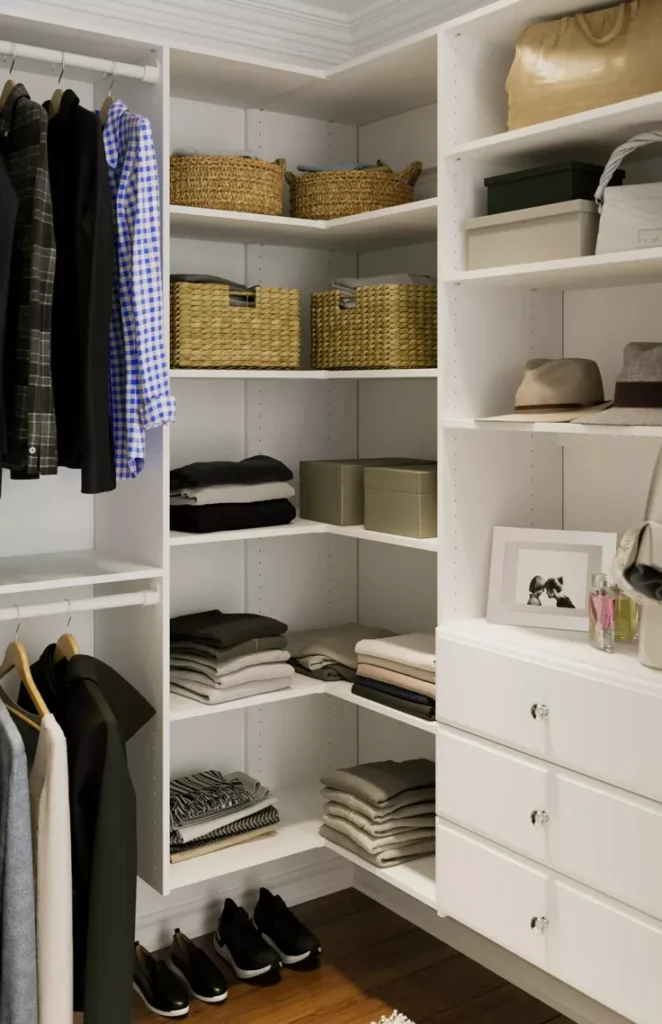
If you want your closet to stay organized, you need clear zones. This is where things start to click.
Create an everyday zone
Your everyday zone should hold the items you reach for constantly: daily shoes, favorite jeans, basic tops, workwear, or whatever you wear on repeat.
Why this works: when your most-used pieces are easiest to access, getting dressed is faster and the closet stays neater. You’re not digging through less-used stuff every morning.
A real-life example: if you wear sneakers almost every day, those should not be buried on a top shelf in boxes. They should be at floor level or in an easy shoe rack near the entrance of the closet.
Make a seasonal zone
Seasonal storage is one of the smartest small walk-in closet organization ideas because it reduces pressure on your main space. Heavy coats, summer hats, vacation outfits, or off-season shoes don’t need front-row placement year-round.
Use upper shelves, labeled bins, or less convenient corners for these items. The key is keeping them accessible but out of the way.
Give accessories a real home
Accessories create clutter fast because they’re small, irregular, and easy to drop anywhere. If you don’t assign a specific home for belts, bags, jewelry, and scarves, they’ll take over shelves and hooks.
What actually works is storing accessories by type and frequency:
- Everyday bags on hooks or a shelf.
- Occasion bags higher up.
- Belts in a small bin or hanging organizer.
- Jewelry in trays or shallow drawer inserts.
This sounds simple, but it matters. Tiny categories prevent constant visual mess.
A Step-by-Step Way to Organize a Small Walk-In Closet
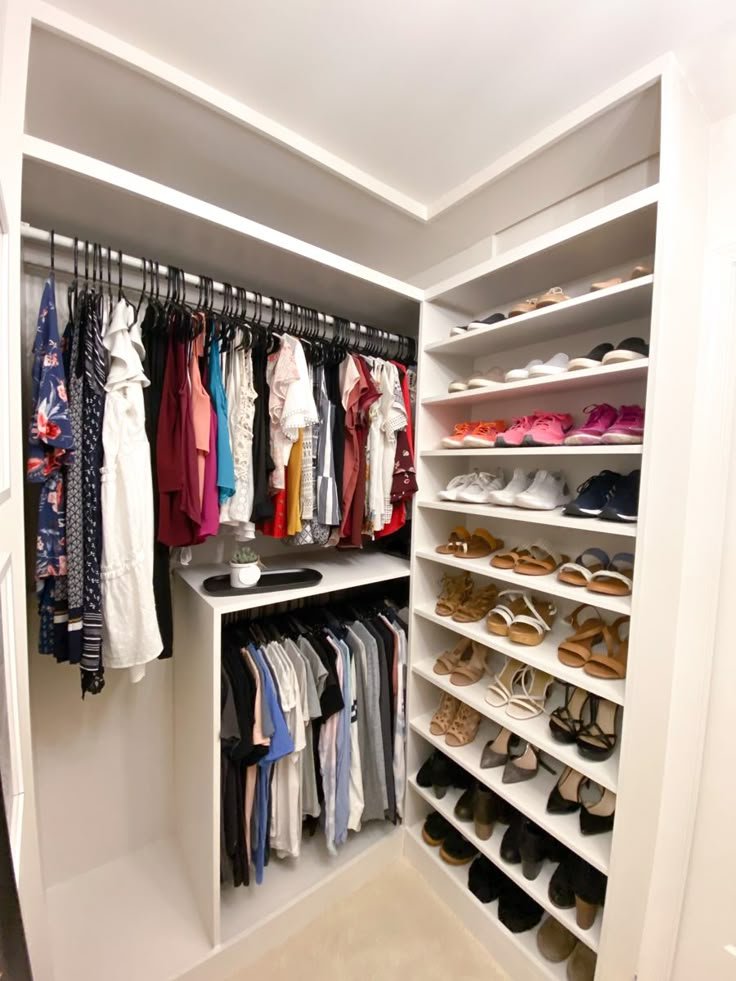
If your closet is already overwhelming, don’t try to fix it all at once by moving random items around. That usually just creates a cleaner-looking mess.
Step 1: Empty the problem areas first
You don’t always need to empty the entire closet. Start with the areas that frustrate you most. That might be the shoe section, top shelf, or the pile of clothes that never stays folded.
This is more realistic than a full closet overhaul, and it gives you faster wins.
Step 2: Sort by use, not just by item type
Yes, group like with like. But also sort by how often you actually use things.
For example:
- Wear weekly.
- Wear sometimes.
- Rarely wear but need to keep.
- Don’t wear.
This matters because organization should reflect real life, not fantasy life. The dress you might wear someday should not take up the same easy-access space as the jeans you wore three times last week.
Step 3: Measure before buying anything
This is one of the most ignored small walk-in closet organization ideas, and it saves so much frustration. Don’t buy bins, shoe racks, shelf risers, or drawer units based on guesswork.
Measure:
- Shelf width and depth.
- Hanging clearance.
- Floor space.
- Awkward corners.
- Vertical wall space.
A product that’s even slightly too wide or too deep can make a small closet feel tighter instead of better.
Step 4: Put back only what supports the space
Once you’ve sorted everything, be selective about what goes back into the prime zones. Start with your daily and weekly items. Then place occasional-use items. The least-used things should go higher, farther back, or out of the closet entirely.
This is where a lot of transformation happens. The closet starts feeling calmer because it’s no longer trying to do too much.
Smart Storage Ideas That Actually Help in a Small Walk-In Closet
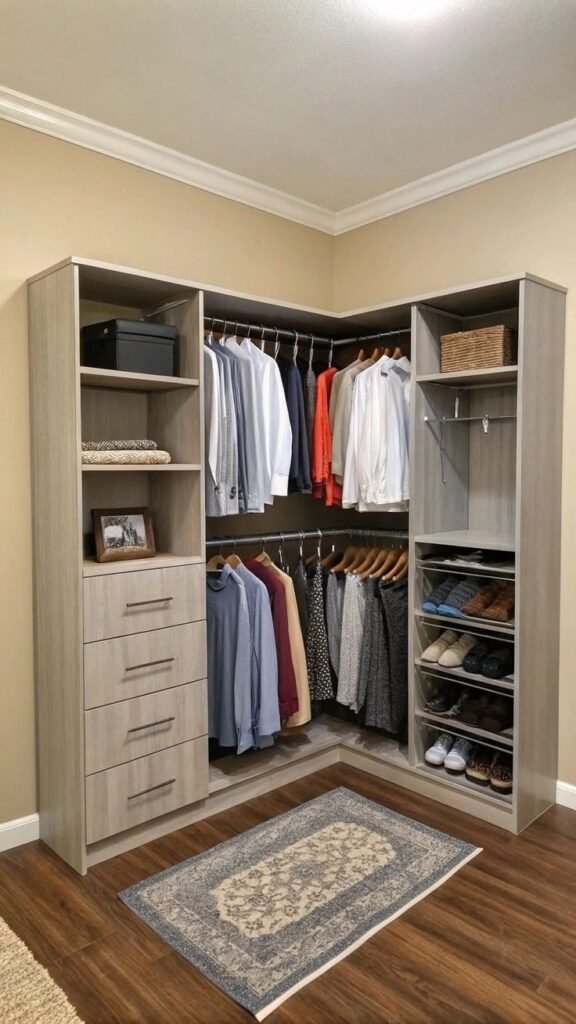
Some storage tools are genuinely useful. Others just look good in photos. Here are the ones that tend to make the biggest difference.
Double hanging rods
If your closet has one long rod and a lot of shorter items like shirts, blouses, or folded pants, adding a second hanging rod below can almost double that section’s capacity.
Why it works: short garments don’t need full-length hanging space. So instead of wasting vertical room, you’re using it intentionally.
Shelf dividers
Shelf dividers are underrated. They stop sweaters, jeans, or bags from slumping into each other, and they make open shelving feel more controlled.
They’re especially helpful if you share a closet or have narrow shelves where stacks easily slide around.
Clear bins for top shelves
Top shelves are where things go to disappear. Clear bins solve that problem because you can see what’s inside without dragging everything down.
Use them for:
- Seasonal accessories.
- Special occasion shoes.
- Travel items.
- Backup toiletries or beauty storage if your closet doubles as dressing space.
Slim, matching hangers
This tip gets repeated a lot because it actually matters. Bulky hangers take up more room than people realize, and mixed hanger styles create uneven spacing.
Slim hangers give you back a surprising amount of rod space and help clothes hang more consistently. It’s a small change, but in a tight closet, those small changes add up.
Hooks on empty wall space
If your small walk-in closet has even a little blank wall, use it. Hooks are great for hats, frequently used bags, tomorrow’s outfit, or a robe.
Most people overlook wall space because they focus only on shelves and rods. But vertical storage is usually where the extra function comes from.
How to Organize Specific Closet Categories Without Wasting Space
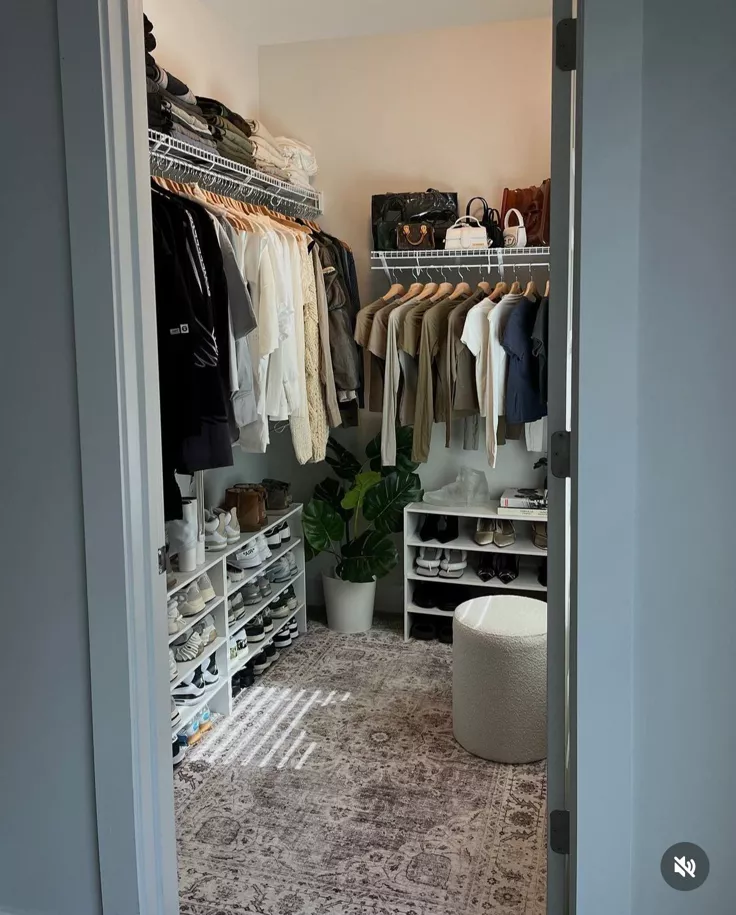
Different items need different storage. Treating everything the same is where organization starts falling apart.
Shoes
Shoes are one of the hardest categories in a small closet because they’re bulky and awkward. Don’t keep every pair at eye level. That space is too valuable.
A better setup:
- Daily shoes at floor level.
- Occasion shoes on upper shelves.
- Out-of-season shoes in labeled bins.
- Boots stored upright with inserts or supported so they don’t collapse.
If your floor fills up too quickly, a low-profile shoe shelf usually works better than lining pairs along the wall.
Sweaters and denim
These are often better folded than hung. Hanging heavy sweaters can stretch them out, and denim takes up a lot of rod space.
Use shelves, bins, or drawer units for these categories. Keep stacks short and visible so you don’t have to dig through them.
Handbags
Handbags can become shelf clutter almost instantly. The trick is to give each one enough space to stay upright and visible.
What works well:
- One shelf for everyday bags.
- Dust bags or clear dividers for nicer bags.
- Stuffing bags lightly so they keep shape.
- Hooks only for casual totes you use often.
Jewelry and small accessories
Tiny items need shallow storage. Deep bins are a bad idea here because everything gets tangled or buried.
Use trays, inserts, small divided boxes, or wall-mounted organizers. If you can see it, you’re more likely to wear it and put it back.
What to Do If Your Closet Still Feels Too Full
Sometimes the issue is not organization. It’s simply volume.
Here’s the honest advice: if your small walk-in closet is packed wall to wall and nothing has breathing room, you may be trying to store too much in it. No organizer fixes overcrowding.
Rotate more often
Instead of keeping all seasons and all “just in case” items in the same closet, rotate things in and out every few months. This keeps your current wardrobe easier to see and use.
Move non-clothing items out
A lot of closets end up storing random extras like suitcases, gift wrap, old linens, or beauty overflow. If those things don’t need to live there, relocate them.
Closet space should go to the items that actually support your daily routine.
Edit the low-value pieces
Most people already know which items they never choose. The uncomfortable shoes, the jeans that almost fit, the tops that require too much adjusting. Those pieces take up space and create decision fatigue.
What actually works is keeping the closet full of things you genuinely wear, not things you feel guilty about.
Easy Habits That Keep a Small Walk-In Closet Organized
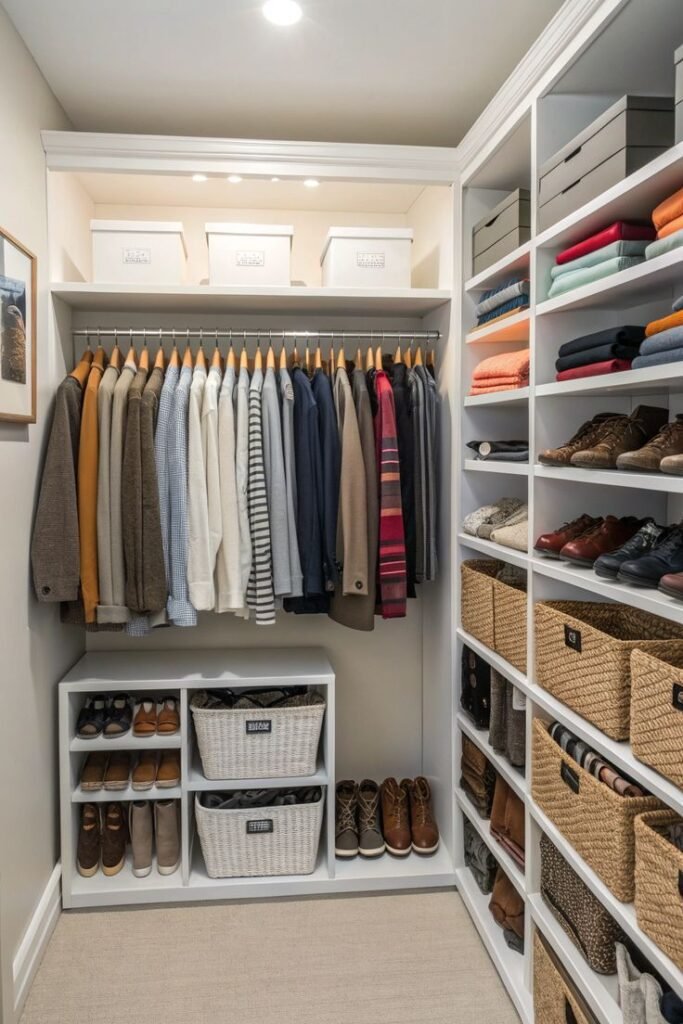
The best small walk-in closet organization ideas are the ones you can maintain without thinking too hard.
Reset the closet once a week
Take five or ten minutes once a week to put things back, rehang items, fix shelves, and clear the floor. This prevents a full closet meltdown later.
Use the one-in, one-out rule when needed
If your closet is close to capacity, this rule helps. When something new comes in, something old needs to leave. Not in a strict, dramatic way. Just enough to keep things balanced.
Don’t let the closet become a holding area
This is a big one. The second your closet starts collecting returns, dry cleaning, laundry piles, or random household clutter, the system breaks down.
A closet works best when it has a clear job and sticks to it.
In the end, organizing a small walk-in closet is less about making it look perfect and more about making it easy to live with. That’s the difference. If your space supports your real routine, it will stay functional a lot longer. Start with the areas that annoy you most, create simple zones, and be honest about what deserves space. You do not need a huge custom closet to make things work well. You just need a setup that makes everyday life easier.