
Small kitchens have a way of making everyday cooking feel harder than it should. One overflowing drawer turns into cluttered countertops, cabinets become impossible to close, and suddenly you’re moving three appliances just to reach a mixing bowl. If you’ve ever felt like your kitchen is simply too small to stay organized, you’re definitely not alone.
Here’s the thing, though—most small kitchens actually have more storage potential than people realize. The problem usually isn’t the square footage. It’s how the space is being used. Tiny gaps, empty vertical space, overcrowded cabinets, and duplicate items quietly steal valuable storage without you even noticing.
The good news is that you don’t need a full kitchen remodel to make a dramatic difference. A few smart changes can completely transform how your kitchen functions and make it feel much larger than it really is.
In this guide, I’ll show you exactly how to organize a small kitchen for maximum storage using practical ideas that are easy to implement, budget-friendly, and realistic for everyday life. Whether you’re dealing with a tiny apartment kitchen or simply wish your cabinets worked harder, these tips can help you create a kitchen that feels calmer, cleaner, and much easier to cook in.
Start by Clearing Out What Doesn’t Belong
Most people immediately start buying organizers.
That’s actually backwards.
Storage solutions only work when you’re organizing things you genuinely use. Otherwise, you’re just creating prettier clutter.
Take everything out of one cabinet at a time and ask yourself a few simple questions.
- Have I used this in the last year?
- Would I buy this again today?
- Do I already own another version that works just as well?
You’ll probably find duplicate spatulas, chipped mugs, old food containers without lids, and gadgets you forgot existed.
Every item you remove creates room for something you actually need.
Don’t try to declutter the entire kitchen in one afternoon. Working cabinet by cabinet makes the process much less overwhelming and helps you make better decisions.
Think Vertically Instead of Horizontally
One of the biggest mistakes people make when trying to organize a small kitchen for maximum storage is ignoring vertical space.
Look inside your cabinets.
Notice all the empty air above your dishes?
That’s valuable storage you’re not using.
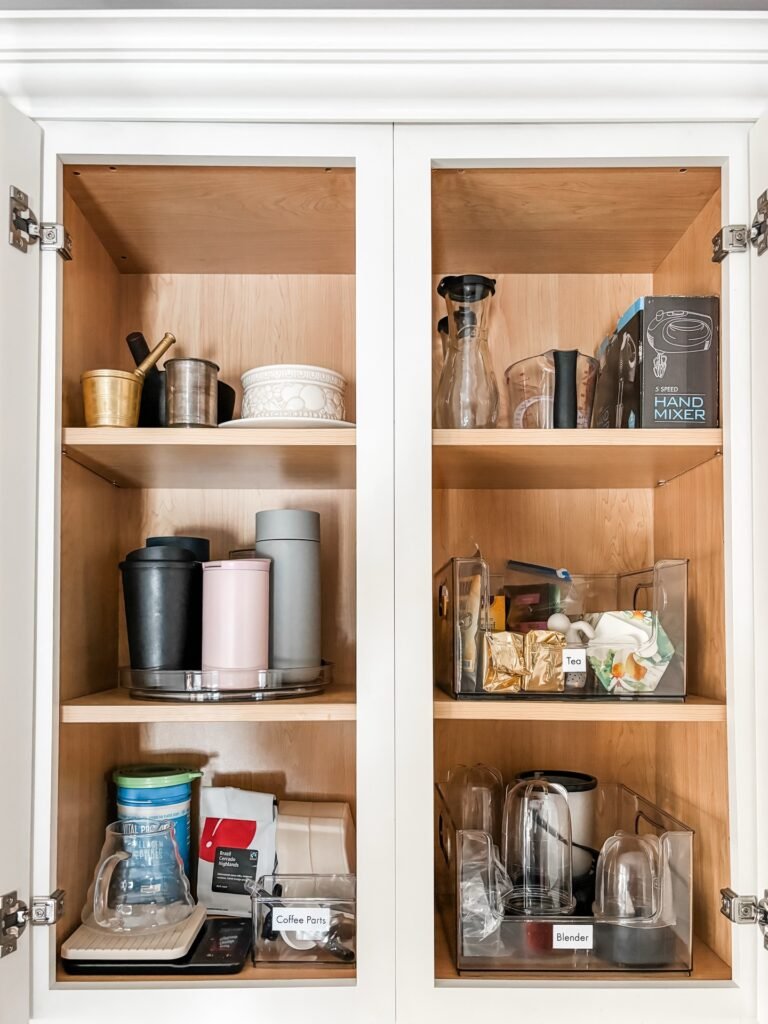
Instead of stacking items higher, divide that space into multiple levels.
Add Shelf Risers
Shelf risers instantly create another layer inside cabinets.
Instead of piling bowls on top of plates, you can separate them into different levels, making everything easier to reach.
It also prevents those unstable towers of dishes that always seem ready to fall.
Install Under-Shelf Baskets
The underside of a cabinet shelf is often wasted space.
Sliding baskets underneath can hold:
- Tea towels
- Sandwich bags
- Foil
- Paper plates
- Small pantry items
It’s a simple upgrade that doesn’t require any drilling.
Use the Full Height of Pantry Shelves
Tall pantry shelves often become messy because everything gets pushed to the back.
Try grouping foods inside clear bins instead.
Instead of searching through twenty snack bags, you simply pull out one basket labeled “Snacks.”
It’s faster, cleaner, and surprisingly satisfying.
Stop Stacking Deep Cabinets Like a Storage Unit
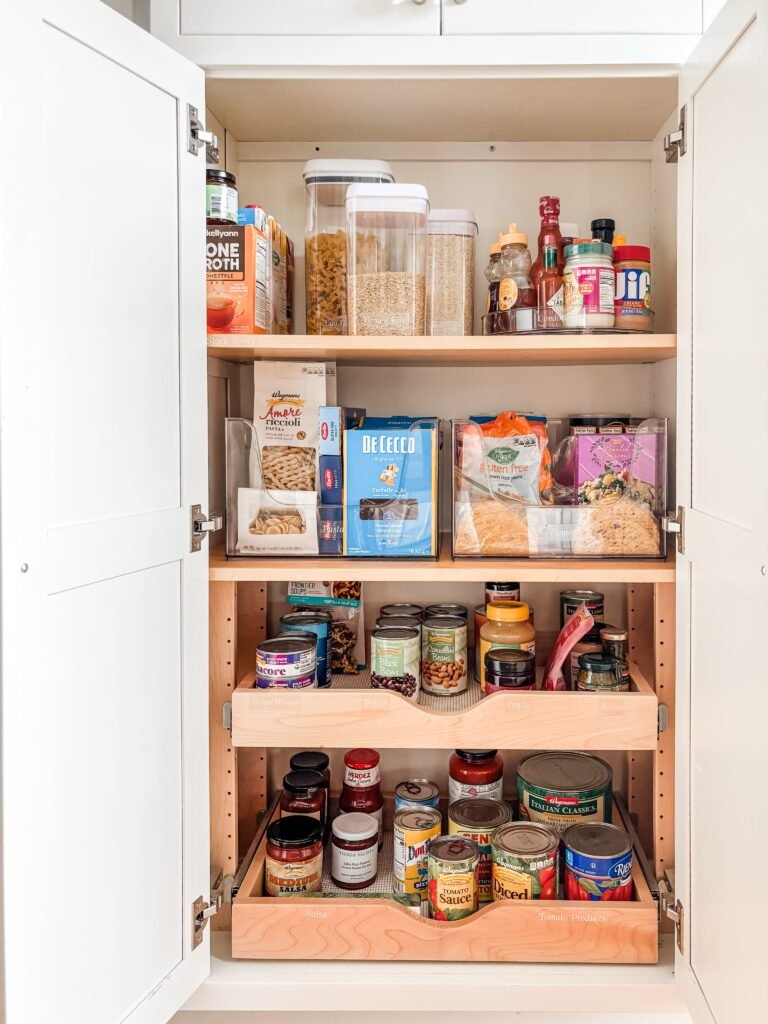
Deep cabinets seem spacious until you actually need something from the back.
Most people lose half their storage simply because items disappear behind everything else.
What actually works is creating zones.
For example:
Baking Zone
Keep together:
- Mixing bowls
- Measuring cups
- Rolling pin
- Cake pans
- Cooling rack
Now you’re grabbing everything at once instead of opening five different cabinets.
Cooking Zone
Store near the stove:
- Oils
- Salt
- Pepper
- Cooking utensils
- Frequently used spices
Keeping related items together saves both time and frustration.
Coffee or Breakfast Zone
Dedicate one cabinet for:
- Coffee
- Tea
- Mugs
- Sweeteners
- Breakfast supplies
Morning routines instantly become smoother.
Make Cabinet Doors Work Harder
Here’s a storage trick that people often overlook.
Cabinet doors are basically free storage.
The inside of each door can hold lightweight items without taking up shelf space.
Some ideas include:
Adhesive Hooks
Perfect for hanging:
- Measuring cups
- Oven mitts
- Dish towels
- Small strainers
Narrow Door Organizers
Great for:
- Plastic wrap
- Aluminum foil
- Cleaning supplies
- Food storage bags
Just avoid overloading the doors with heavy items, since that can strain the hinges over time.
Use Drawer Space More Intentionally
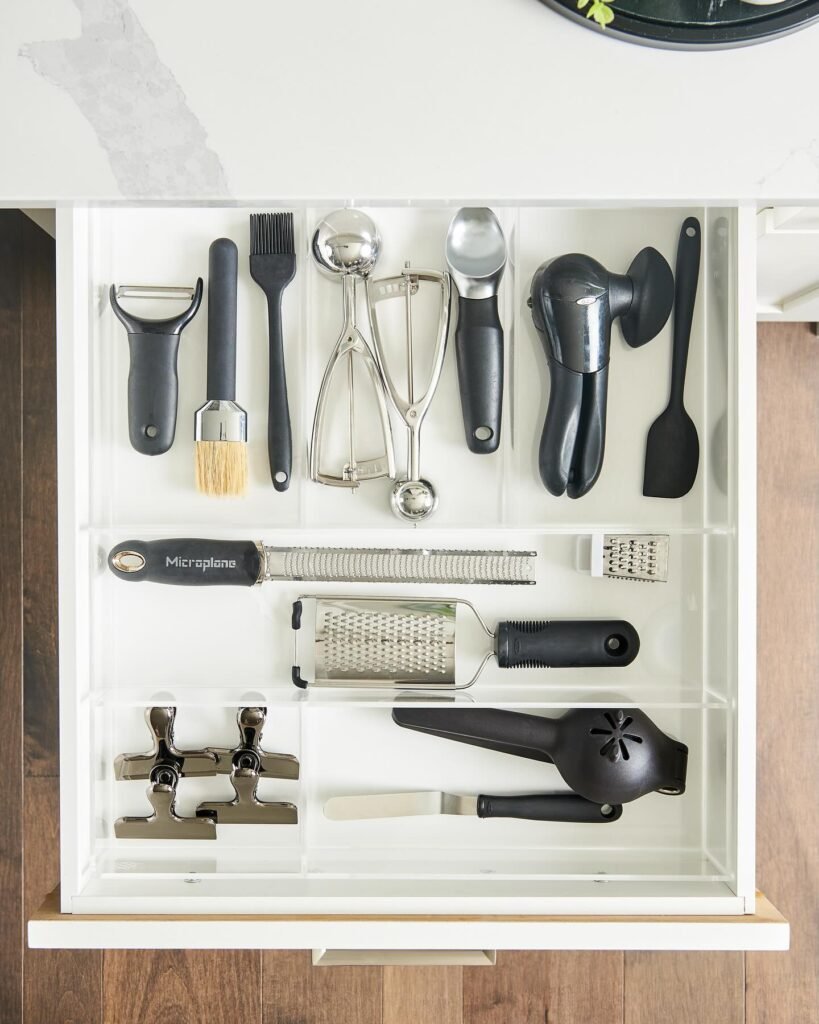
Kitchen drawers can become black holes surprisingly fast.
Utensils slide around, gadgets pile up, and suddenly you’re digging through a mess every time you cook.
Most people get this wrong because they think bigger drawers automatically hold more.
Actually, organized drawers hold more.
Divide Everything
Drawer dividers create designated spaces for every item.
Instead of one large pile, everything has a home.
That means less visual clutter and quicker cleanup.
Store Items Standing Up
Deep drawers are perfect for storing containers vertically instead of stacking them.
You’ll immediately see every lid and container instead of pulling apart unstable stacks.
Maximize Every Inch of Counter Space
Countertops often become accidental storage.
Mail.
Small appliances.
Random grocery bags.
Fruit bowls.
Water bottles.
It all adds up.
The less you store on your counters, the larger your kitchen feels.
Ask yourself which appliances you truly use every day.
For many households, that’s probably:
- Coffee maker
- Toaster
- Electric kettle
Everything else can usually live inside a cabinet until needed.
A cleaner countertop also makes meal prep much easier.
Take Advantage of Wall Space
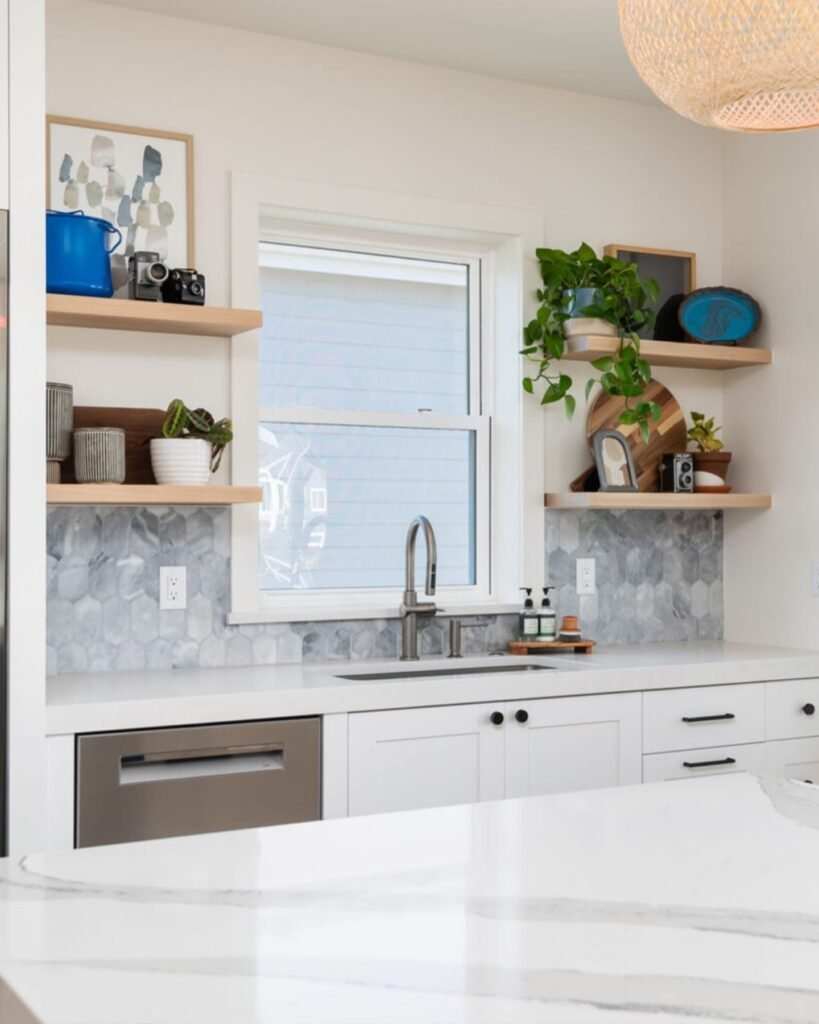
Walls are one of the most underused storage opportunities in a small kitchen.
Instead of filling cabinets even more, move frequently used items onto the wall.
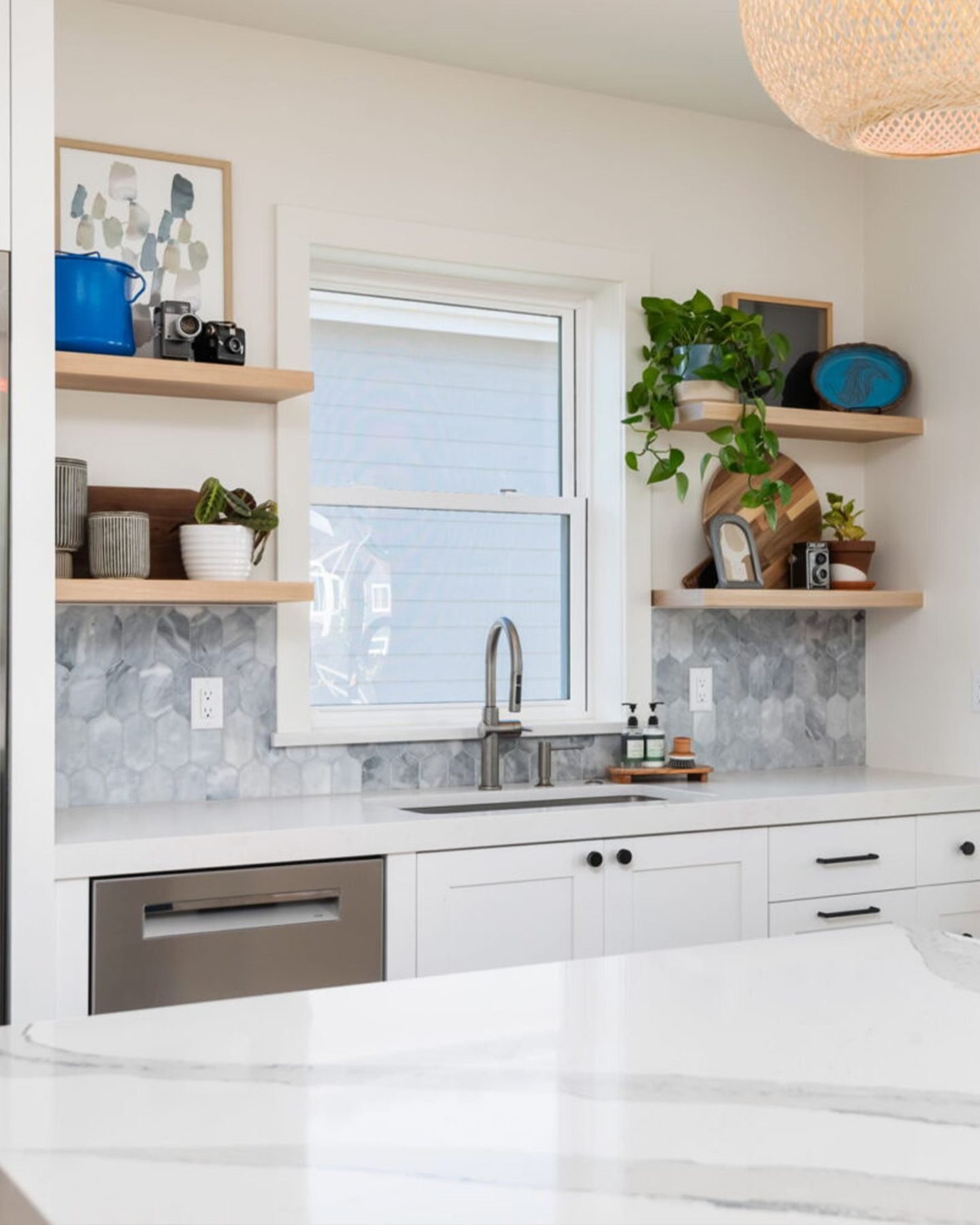
Install Floating Shelves
Open shelving works well for:
- Everyday dishes
- Glasses
- Cookbooks
- Decorative bowls
- Small plants
Just avoid overcrowding them.
Open shelves look best when they’re functional without becoming cluttered.
Hang a Rail System
A simple rail near your stove can hold:
- Cooking utensils
- Measuring spoons
- Small baskets
- Pot holders
It keeps essentials within easy reach while freeing drawer space.
Magnetic Knife Strip
Knife blocks occupy valuable counter space.
A magnetic strip stores knives safely while opening up room for food prep.
Organize Your Pantry Like a Grocery Store
One reason pantries become messy is because similar items end up scattered everywhere.
Instead, think like a grocery store.
Group foods by category.
For example:
- Pasta together
- Baking supplies together
- Breakfast foods together
- Canned goods together
- Snacks together
Once categories exist, maintaining order becomes much easier.
Adding simple labels also helps everyone in the household put things back where they belong.
Choose Storage Containers That Actually Save Space
Not all containers improve organization.
Odd-shaped packaging wastes a surprising amount of shelf space.
Square or rectangular containers fit tightly together and create cleaner rows.
Clear containers also let you quickly see what you’re running low on.
This is especially helpful for:
- Flour
- Sugar
- Rice
- Pasta
- Oats
- Cereal
You’ll spend less time digging around and reduce food waste because ingredients don’t get forgotten.
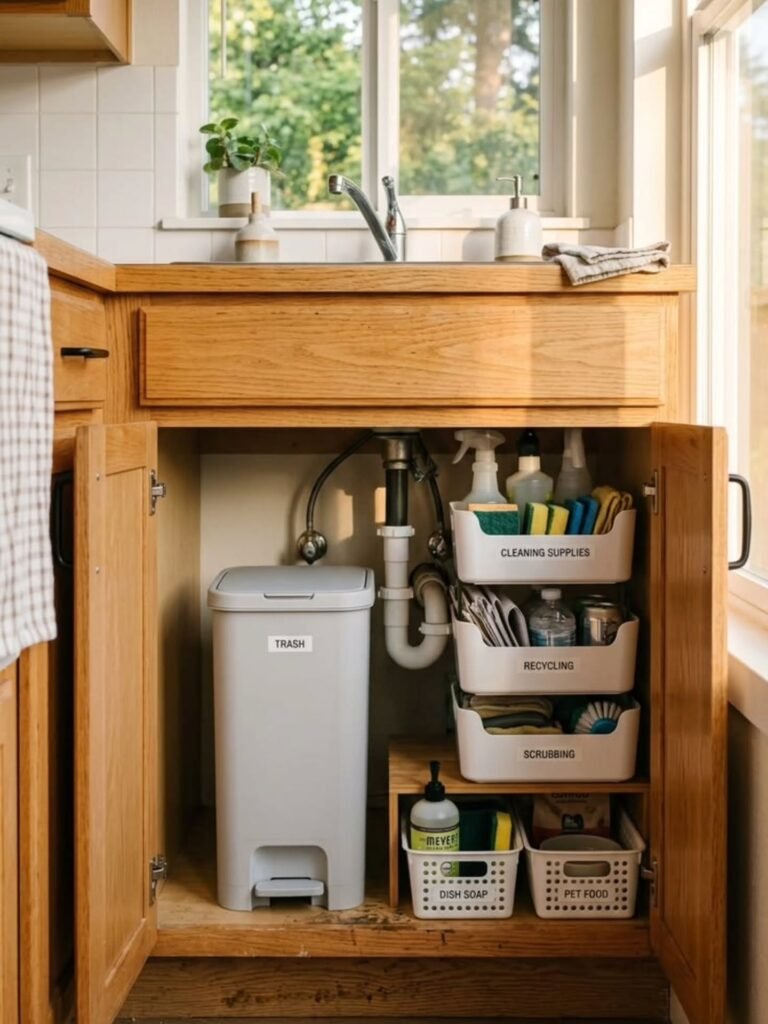
Use the Space Under the Sink Wisely
The cabinet beneath the sink often becomes one giant pile of cleaning products.
Because of plumbing, it’s an awkward space—but it can still be incredibly useful.
Instead of stacking bottles, use stackable bins or small drawers.
Keep everyday supplies in front and backup products toward the back.
Adding a tension rod can also create a handy spot for hanging spray bottles, leaving the cabinet floor free for other supplies.
Don’t Forget About Awkward Spaces
Small kitchens usually have tiny gaps that go unused.
Look around carefully.
You might notice:
- A narrow gap beside the refrigerator
- Empty space above cabinets
- Unused refrigerator sides
- The side of a kitchen island
These areas can become valuable storage.
A slim rolling cart beside the refrigerator is perfect for canned goods, spices, or oils.
The top of cabinets works well for storing seasonal serving dishes or appliances you only use during holidays.
Even the side of your refrigerator can hold magnetic spice racks or organizers.
Those forgotten spaces add up quickly.
Keep Frequently Used Items Easy to Reach
One habit that makes organization fall apart is storing everyday items in inconvenient places.
If you use something daily, it shouldn’t require climbing on a chair or moving three other things first.
Store according to frequency.
Eye-level shelves should hold your most-used items.
Higher shelves are better for occasional appliances.
Lower cabinets work well for heavier cookware.
This simple adjustment makes cooking feel far less frustrating because everything naturally flows with your routine.
Create Simple Daily Habits That Prevent Clutter
Even the most organized kitchen won’t stay tidy without small daily habits.
The goal isn’t perfection.
It’s consistency.
A few five-minute routines make a huge difference.
For example:
- Empty the dishwasher before breakfast.
- Wipe counters after dinner.
- Return items to their zones immediately.
- Toss expired pantry items once a week.
- Do a quick reset before going to bed.
These tiny habits stop clutter from snowballing into another weekend-long cleaning project.
Avoid Buying Organizers Too Soon
This might sound surprising coming from an organization article, but resist the urge to buy storage products right away.
It’s tempting to fill your online shopping cart with bins, baskets, lazy Susans, and drawer inserts before you’ve even sorted your kitchen.
The problem is that you don’t yet know what your kitchen actually needs.
Live with your newly decluttered space for a week or two first.
Pay attention to the spots that still feel messy or inconvenient.
Then buy organizers that solve those specific problems instead of hoping they’ll magically create organization.
You’ll spend less money and end up with solutions that genuinely improve your kitchen instead of adding more stuff.
Final Thoughts
Learning how to organize a small kitchen for maximum storage isn’t about fitting more things into every cabinet. It’s about making your kitchen work better for the way you actually cook and live.
Start by clearing out what you don’t use, then focus on creating logical zones, making better use of vertical space, and giving every item a permanent home. You don’t have to overhaul the entire kitchen in one weekend, either. Even tackling one cabinet or drawer at a time can create noticeable improvements.