
Have you ever looked at your living room and felt like something was just…off? The couch looks nice. The rug works. The throw pillows are doing their job. But then your eyes land on the coffee table, and suddenly everything feels a little messy or unfinished.
If that sounds familiar, you’re definitely not alone. A coffee table often becomes the place where remotes pile up, yesterday’s mail sits for days, and random mugs somehow multiply. Even in an otherwise beautiful room, a cluttered or empty coffee table can throw off the entire space.
The good news is that styling a coffee table isn’t about buying expensive decor or copying perfectly staged magazine photos. It’s about creating balance, adding personality, and making your living room feel intentionally put together without sacrificing everyday function.
Here’s the thing: interior designers aren’t using secret decorating tricks. They simply understand a few design principles that make a table feel layered, inviting, and effortless. Once you know those principles, styling your own coffee table becomes surprisingly easy.
Whether your style leans modern, cozy farmhouse, minimalist, or somewhere in between, these ideas will help you create a coffee table that looks polished while still feeling like a real home.
Why Most Coffee Tables Never Look Finished
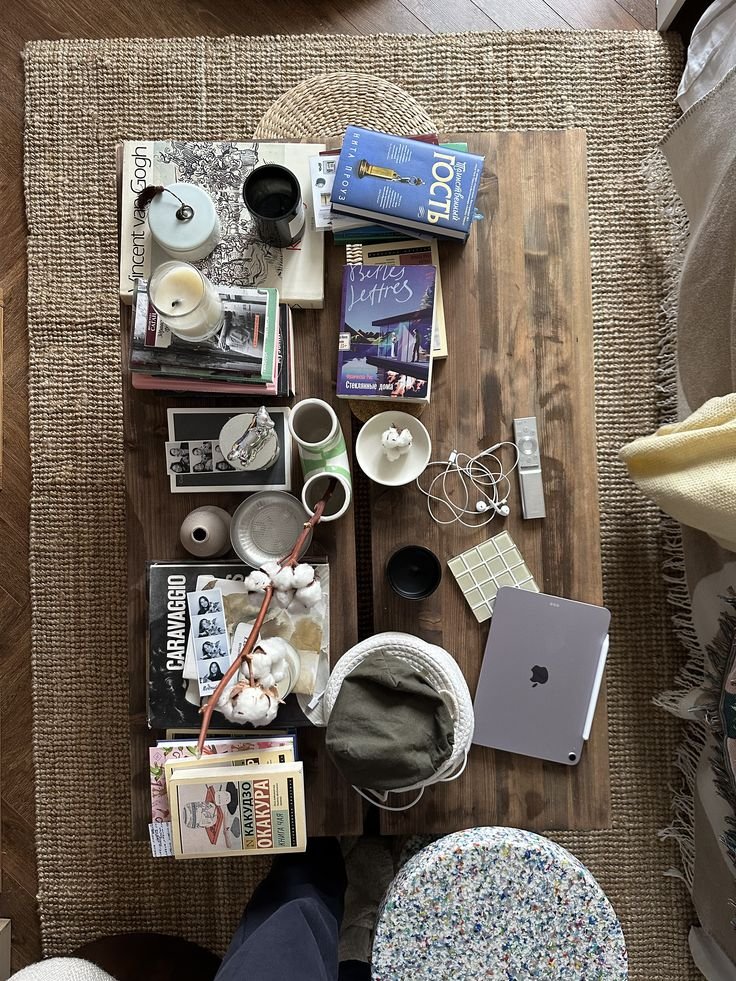
Most people get this wrong because they think decorating means filling every inch of space.
In reality, great styling has much more to do with editing than adding.
When every decorative object competes for attention, nothing stands out. Your eye doesn’t know where to focus, so the entire arrangement feels busy.
On the flip side, an almost empty table often feels forgotten instead of intentional. One lonely candle sitting in the middle rarely creates the warm, collected look people are trying to achieve.
Professional designers look for balance instead of symmetry.
That means mixing different heights, textures, materials, and shapes while still leaving breathing room between objects.
Think about walking into your favorite boutique hotel or a beautifully designed Airbnb. Their coffee tables never feel crowded, yet they don’t feel empty either. Every piece looks like it belongs there for a reason.
That’s the mindset you want to copy.
The Five Design Principles Interior Designers Always Use
Start With Something That Grounds the Arrangement
Every well-styled coffee table needs an anchor.
Without one, small accessories end up looking scattered across the tabletop.
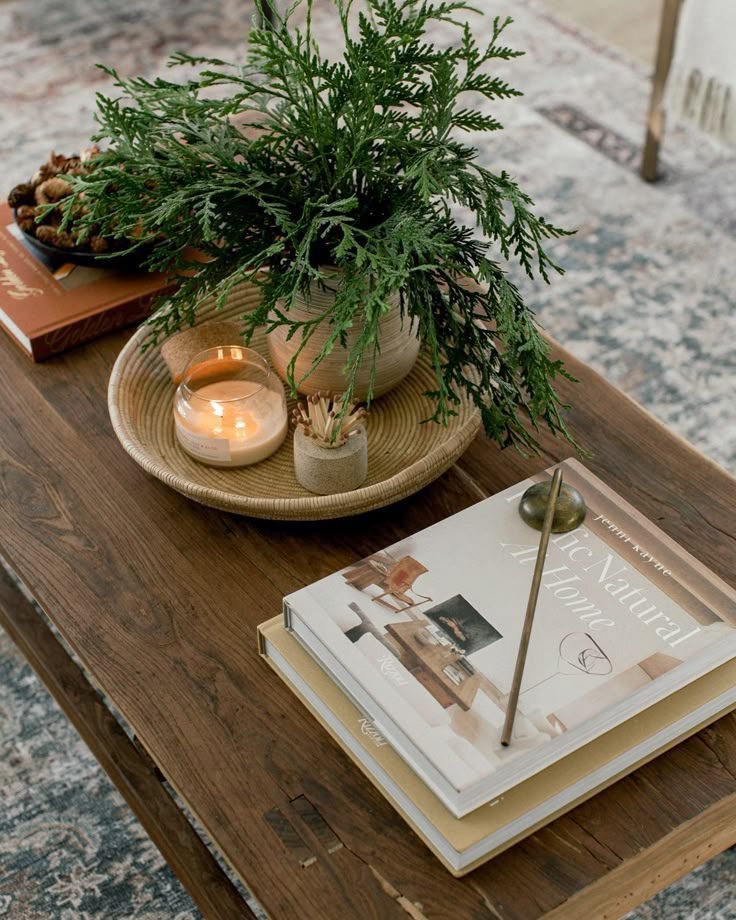
A decorative tray is one of the easiest ways to create that anchor. It visually groups smaller objects together so they feel like one intentional arrangement instead of random pieces.
Books can also work as a foundation.
A stack of two or three beautiful coffee table books immediately adds height while giving smaller accessories somewhere to sit.
If your table is large, you might even create two separate styling zones instead of placing everything in the middle.
The goal isn’t filling the surface—it’s creating structure.
Mix Heights Instead of Keeping Everything Flat
One of the quickest ways to make a coffee table look professionally styled is by creating visual movement.
Imagine every object on your table being exactly the same height.
A candle.
A small bowl.
A short vase.
Nothing catches your eye because everything sits on the same visual line.
Instead, combine taller and shorter pieces.
For example:
- A vase with fresh greenery
- A stack of books
- A decorative bead garland
- A candle
- A small ceramic bowl
Notice how each object sits at a different height.
That variety keeps the arrangement interesting without making it feel cluttered.
Here’s what actually works: let one piece become the tallest object while the others gradually step down in height.
Your eyes naturally travel through the arrangement instead of stopping abruptly.
Combine Different Textures
Texture is what makes a room feel layered.
Without it, even expensive decor can feel flat.
Interior designers constantly mix materials because contrast creates interest.
Think about pairing:
- Smooth ceramic
- Warm wood
- Woven rattan
- Clear glass
- Natural stone
- Matte metal
- Linen-covered books
Each material reflects light differently, making the arrangement feel much richer.
For example, placing a rough woven tray underneath a sleek glass candle instantly creates more depth than using matching materials everywhere.
The same idea applies throughout your living room.
When every accessory has the same finish, the space starts looking like it came straight from a furniture showroom instead of an actual home.
How to Style Your Coffee Table Step by Step
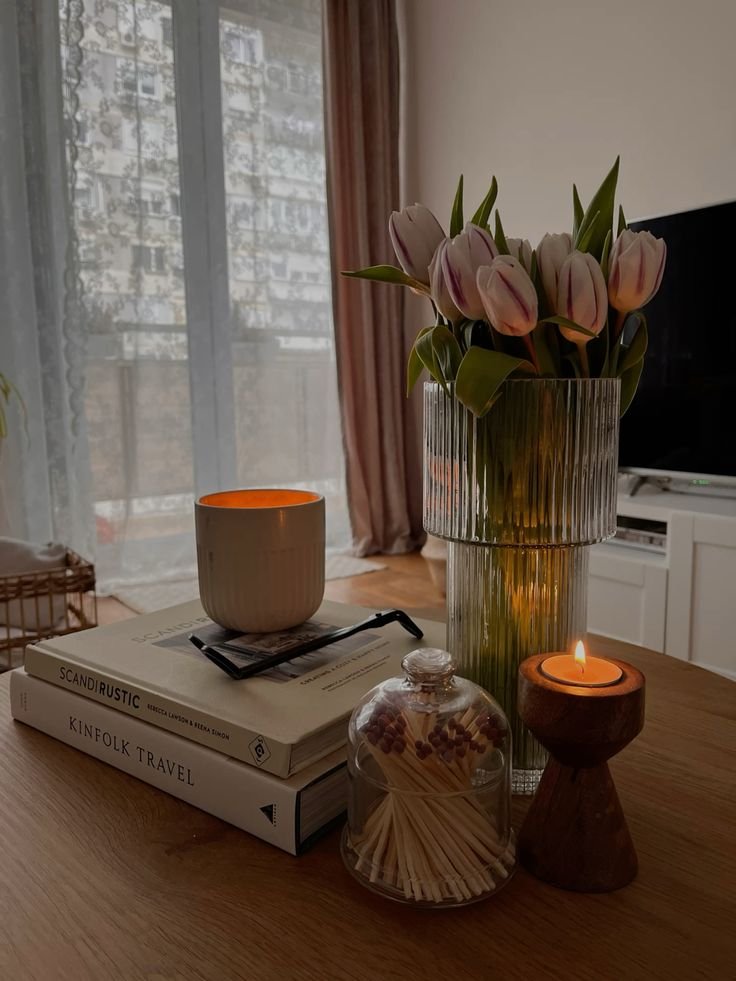
Now let’s put everything together.
Interior designers often follow a simple layering process rather than decorating randomly.
Once you understand this order, styling becomes much easier.
Step 1: Clear Everything Off
Yes, everything.
Even if you think you’ll reuse most of it.
Starting with a blank surface helps you see the proportions of your table much more clearly.
It also forces you to make intentional choices instead of working around clutter.
You might be surprised how many items have slowly accumulated that don’t actually belong there.
Step 2: Add Your Largest Piece First
This becomes your foundation.
Depending on your style, that could be:
- A rectangular tray
- A round woven tray
- A large stack of books
- A decorative bowl
- A sculptural centerpiece
Starting with the biggest item immediately establishes the layout.
Everything else becomes easier to place afterward.
Trying to squeeze a large tray into an already decorated table almost never works.
Step 3: Build Upward Instead of Outward
Here’s one of the biggest differences between amateur decorating and professional styling.
Many people spread accessories across the entire tabletop.
Designers stack.
A candle might sit on top of books.
A small decorative object might rest beside the candle.
A tiny bowl could overlap the tray slightly.
Layering creates depth.
Spreading everything apart creates clutter.
This simple shift makes even inexpensive decor feel thoughtfully collected.
Step 4: Add Something Living
Nothing brings a coffee table to life faster than greenery.
Fresh eucalyptus.
Olive branches.
Seasonal flowers.
Even a realistic faux stem can soften an arrangement.
Plants introduce natural movement and organic shapes that contrast beautifully with hard furniture lines.
If your living room doesn’t get much sunlight, high-quality faux greenery is perfectly fine.
Most people won’t know the difference unless they touch it.
The important part is adding something that makes the arrangement feel fresh rather than static.
Step 5: Leave Empty Space
This is probably the hardest step.
Once people start decorating, they naturally want to keep adding.
Another candle.
Another decorative box.
One more little object.
Before long, the table feels crowded.
Professional designers stop sooner than most homeowners do.
That empty space isn’t wasted.
It’s what allows your favorite pieces to stand out.
Your coffee table also needs room for everyday life—a cup of coffee, a board game, snacks during movie night, or a laptop when you’re working from the couch.
Beautiful styling should still leave room to actually use the table.
How to Style Different Coffee Table Shapes
One mistake people make is following the same styling formula no matter what kind of coffee table they have. The truth is, the shape of your table changes how your eye moves across it, so the layout should change too.
Rectangular Coffee Tables
Rectangular tables are the easiest to style because they naturally give you room to create separate zones.
Instead of placing everything in one large cluster, think of the table as being divided into thirds.
One section might hold a stack of books with a candle on top. Another could feature a vase with greenery. The last section might include a decorative bowl or a small tray that can also hold remotes.
This approach keeps the table balanced without making it feel too formal. It also leaves open space between each grouping, which helps the arrangement breathe.
Square Coffee Tables
Square tables usually work best with one larger arrangement in the center.
A round tray is often a great choice because it softens all the straight lines around it. From there, layer in a candle, a small plant, and one or two decorative accessories.
If your square table is oversized, you can divide it into four visual quadrants. Just make sure the pieces relate to each other instead of looking like four completely separate displays.
Round Coffee Tables
Round tables naturally encourage a softer look.
Since there aren’t any corners, avoid lining objects up in straight rows. Instead, create a loose circular arrangement that follows the shape of the table.
A round tray paired with a vase, a candle, and a small decorative object usually feels effortless. The goal is to keep the center visually interesting while allowing the curved edges to remain visible.
Ottoman Coffee Tables
An ottoman has to work harder because it serves two purposes—it looks decorative, but it’s also a place to put your feet or set down a tray.
A sturdy tray becomes almost essential here.
It creates a stable surface for drinks while making the entire arrangement easy to move when you need extra seating or table space.
Soft accessories like fabric-covered books, woven baskets, or linen-wrapped boxes also complement the upholstered texture beautifully.
The Decor Pieces Interior Designers Reach for Again and Again
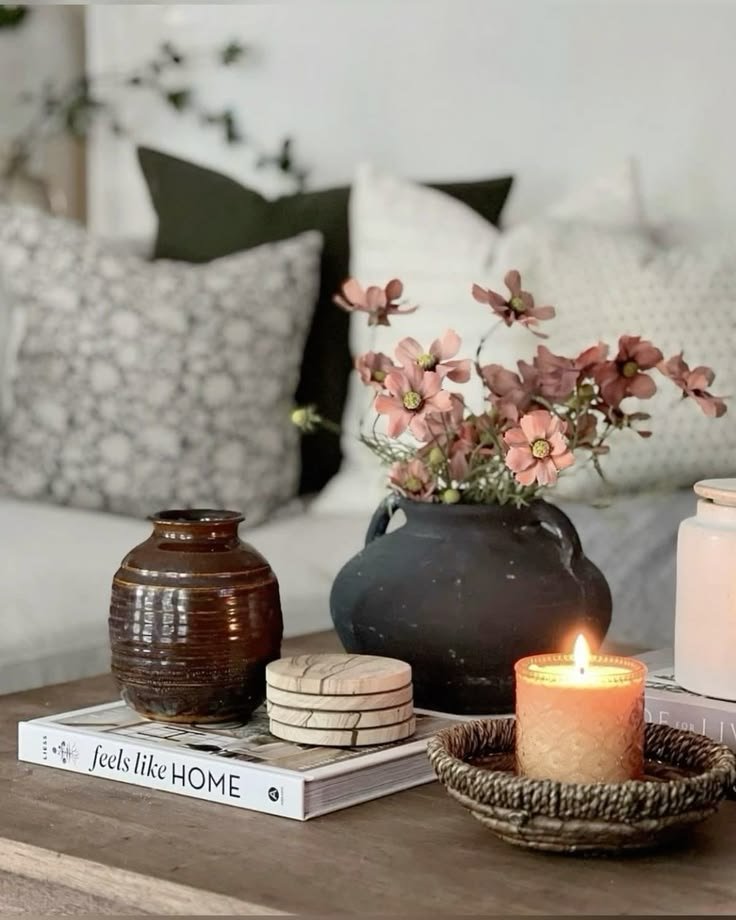
Here’s the thing: designers aren’t constantly buying trendy accessories. They build a collection of timeless pieces that work in different rooms and different seasons.
Coffee table books are one of those staples.
Choose books that genuinely interest you, whether that’s travel, architecture, fashion, cooking, or photography. They add height, color, and personality all at once, and they’re something guests will actually enjoy flipping through.
Candles are another favorite because they instantly make a room feel warmer. Even when they’re not lit, they add texture and a polished finish to the arrangement.
A small vase with fresh flowers or greenery adds life without taking over the table. You don’t need a huge bouquet. A few simple stems often look more elegant than an oversized arrangement.
Decorative bowls are surprisingly useful too. They hold matches, coasters, or small everyday items while still looking intentional.
Natural materials like wood, marble, ceramic, and woven rattan tend to age well and pair with almost any decorating style. That’s why you’ll see them over and over again in professionally designed homes.
Common Coffee Table Styling Mistakes to Avoid
Sometimes improving your coffee table is less about buying something new and more about removing what isn’t working.
Everything Matches Too Perfectly
Buying an entire decor set sounds convenient, but it often makes a room feel flat.
When every accessory has the same material, color, and finish, nothing stands out.
Instead, mix old and new pieces. Pair ceramic with wood, glass with woven textures, or vintage finds with modern decor. Those little contrasts make the arrangement feel collected over time rather than purchased all at once.
Decorating for Photos Instead of Real Life
We’ve all seen gorgeous living rooms online with perfectly styled coffee tables.
What you don’t see is what happened five minutes after the photo was taken.
Your home needs to function for your everyday routine.
If you regularly enjoy coffee while watching TV, leave enough room for a mug. If your family plays board games in the living room, make sure you can easily clear the table when needed.
A beautiful coffee table shouldn’t make your life less convenient.
Ignoring Scale
Tiny accessories disappear on a large table.
Oversized decor can overwhelm a small one.
Pay attention to proportion.
If your coffee table is large, use fewer but bigger pieces instead of filling it with dozens of small objects. Larger decor creates more impact while keeping the arrangement clean.
Forgetting About Color
Not every decorative object has to match your living room exactly, but it should feel connected.
Pull one or two colors from nearby pillows, artwork, or your rug and repeat them subtly through your accessories.
This creates a sense of harmony without looking overly coordinated.
Easy Ways to Refresh Your Coffee Table Throughout the Year
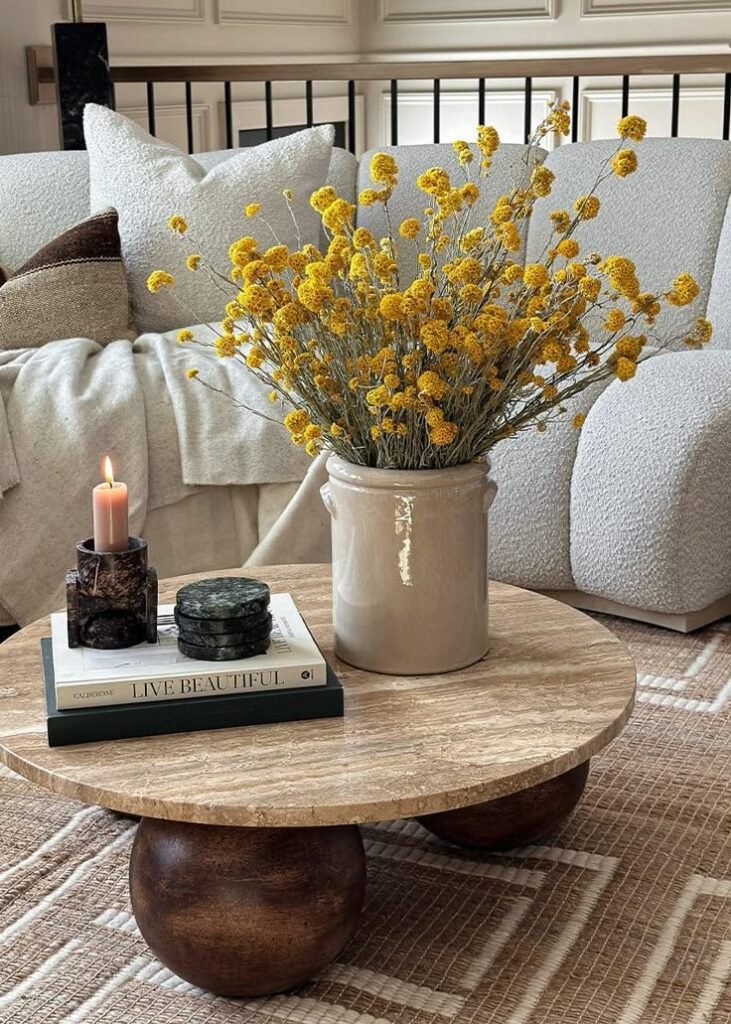
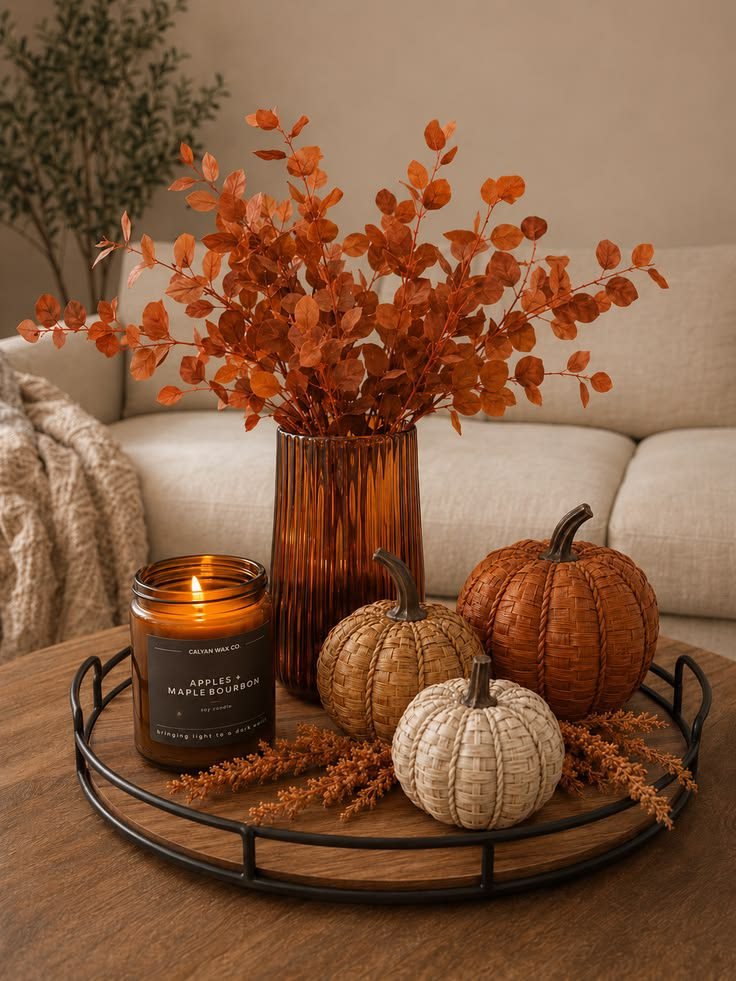
One of the biggest decorating myths is that you need completely new decor every season.
You really don’t.
Most people can completely change the look of their coffee table by swapping just one or two items.
In spring, try fresh flowers and lighter-colored candles.
During summer, add a bowl filled with natural shells, coral-inspired decor, or bright greenery.
Fall is the perfect time for warm wood tones, amber glass, dried branches, and textured pumpkins.
For winter, layer in evergreen stems, pinecones, brass accents, or a candle with a cozy seasonal scent.
Your core pieces—books, trays, bowls, and decorative boxes—can stay exactly the same all year. It’s the small seasonal touches that make the arrangement feel fresh without spending a fortune.
Small Details That Make a Big Difference
If you really want your coffee table to look like it was styled by an interior designer, pay attention to the finishing touches.
Stack books instead of lining them up.
Slightly overlap objects instead of spacing everything evenly.
Turn one book at an angle instead of keeping every edge perfectly straight.
Mix shiny and matte finishes.
Include one personal item, like a small souvenir from a trip, a handmade ceramic piece, or a framed family photo.
These little details give your coffee table character.
The most beautiful homes don’t feel like furniture showrooms. They tell a story about the people who live there.
That’s what makes a space memorable.
Final Thoughts
Learning how to style a coffee table like an interior designer isn’t about following a strict formula or buying expensive accessories. It’s about understanding balance, layering different heights and textures, and choosing pieces that reflect your personal style while still leaving room for everyday life.
Start with a clean surface, build your arrangement one layer at a time, and don’t be afraid to edit as you go. In many cases, removing one unnecessary item has a bigger impact than adding another decorative object.