
Your master bedroom should feel like your escape from the rest of the world. It’s the first room you see when you wake up and the last place you spend time before falling asleep, yet it’s often one of the most overlooked spaces in the house.
Maybe your bedroom feels a little outdated. Maybe it lacks personality, or perhaps it just doesn’t have that cozy, inviting atmosphere you see in home decor magazines and Pinterest boards. The good news? Creating a beautiful bedroom doesn’t always require a complete renovation or a massive budget.
A few smart design choices can make a surprisingly big difference. Whether you love clean modern spaces, warm and cozy retreats, or elegant hotel-inspired bedrooms, there are plenty of ways to create a room that feels both stylish and comfortable.
These 15 master bedroom ideas are packed with inspiration to help you refresh your space, add character, and create a room you’ll genuinely look forward to spending time in. From statement headboards and calming color palettes to clever lighting and cozy textures, you’ll find ideas that work for bedrooms of all sizes and styles.
1. Create a Hotel-Inspired Bedroom
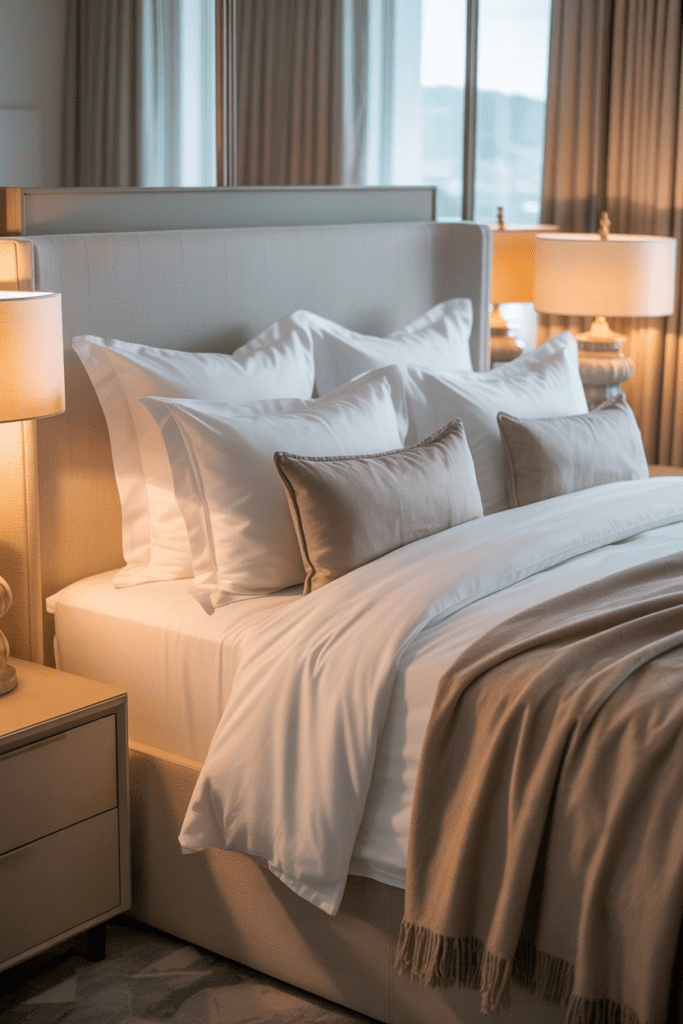
If you want something that actually works, borrow ideas from luxury hotels.
Hotels are designed to help people relax instantly, and many of their design choices are surprisingly simple to recreate at home. Think crisp white bedding, layered pillows, soft lighting, and minimal clutter.
Start with quality bedding in neutral colors. Add a duvet, a few decorative pillows, and matching bedside lamps. Keep surfaces clean and organized instead of filling every corner with decor.
The result feels polished, calming, and surprisingly expensive—even if you’re decorating on a budget.
2. Add a Statement Headboard
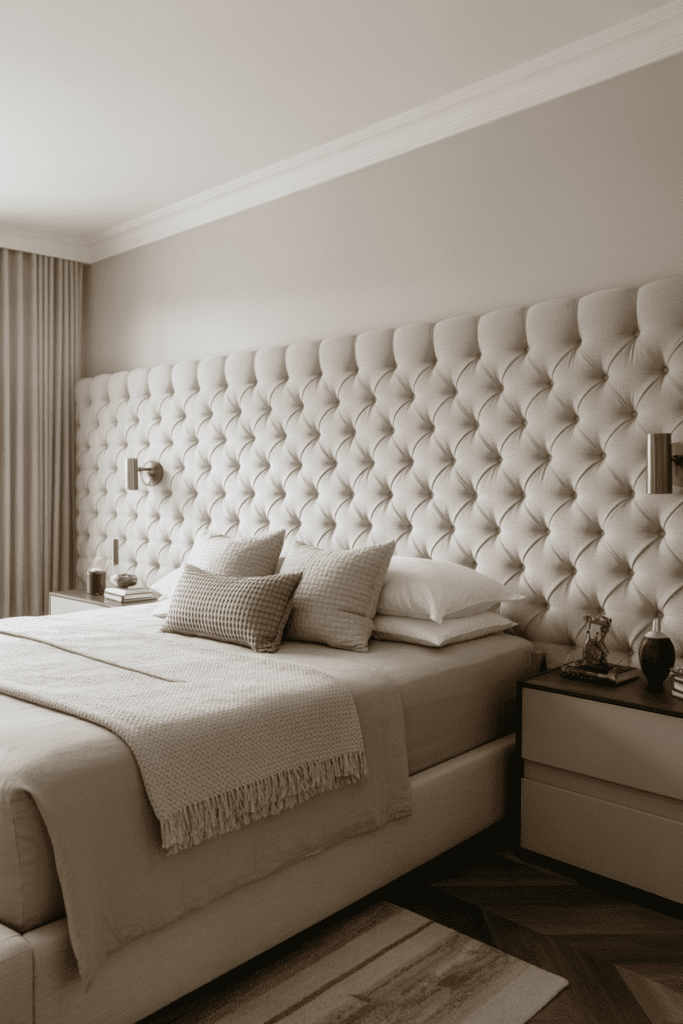
A statement headboard can completely change the look of your master bedroom without requiring a full makeover.
Whether you choose upholstered fabric, natural wood, cane, or a dramatic tufted design, the headboard instantly becomes the room’s focal point.
This works because it draws the eye toward the bed and creates a stronger sense of structure within the space.
For a budget-friendly version, consider a DIY wood slat wall or even peel-and-stick panels behind the bed to create a similar effect.
3. Layer Different Textures
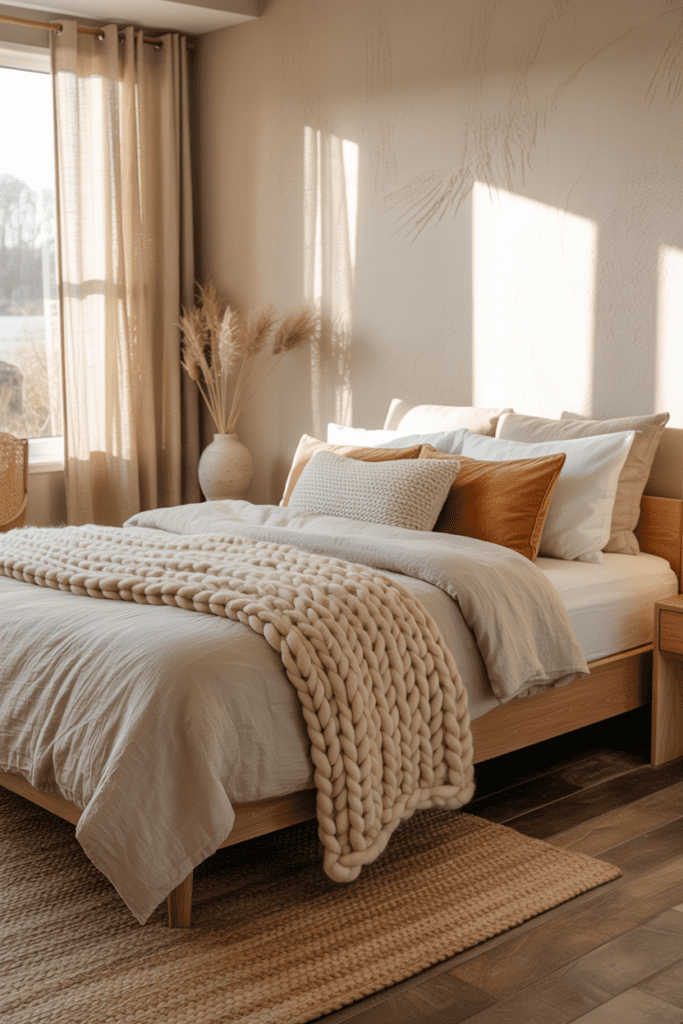
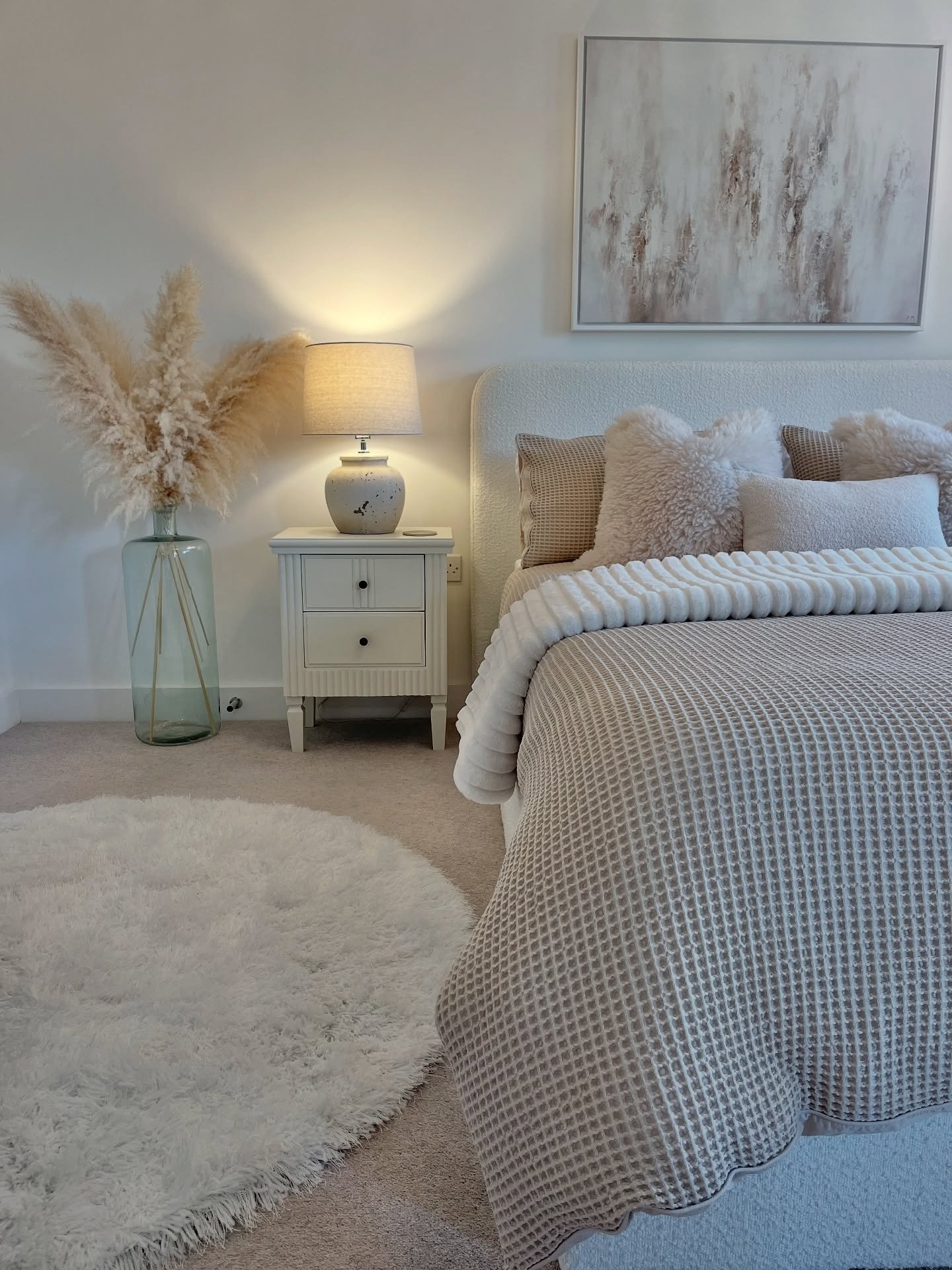
One of the biggest reasons bedrooms feel flat is because everything has the same texture.
A room with cotton bedding, a woven rug, velvet pillows, linen curtains, and a chunky knit throw instantly feels richer and more inviting.
The best part is that texture works regardless of your decorating style. Modern, farmhouse, boho, coastal, and traditional spaces all benefit from layered materials.
Try combining soft and natural elements to create visual interest without relying on bold colors.
4. Choose a Calming Neutral Color Palette
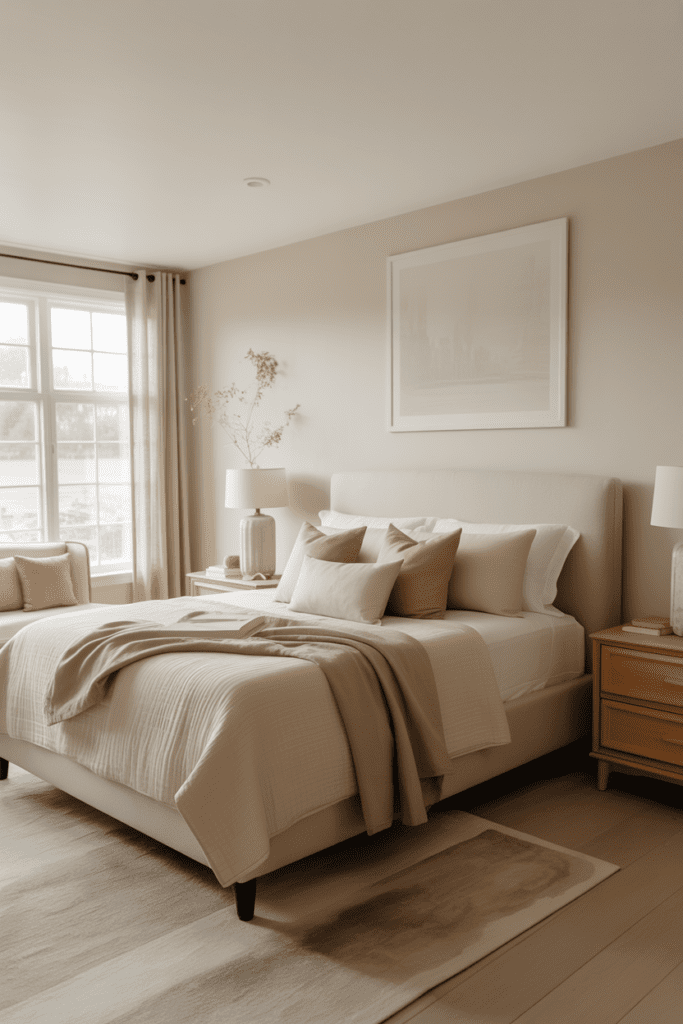
There’s a reason neutral bedrooms remain popular year after year.
Soft whites, warm beiges, greige tones, taupe, and muted earth colors create an atmosphere that feels relaxing rather than overwhelming.
A neutral palette also gives you flexibility. You can easily swap seasonal decor, pillows, or artwork without needing to repaint.
If plain white feels too sterile, look for warmer shades with creamy undertones to keep the room feeling cozy.
5. Install Wall Sconces Instead of Table Lamps
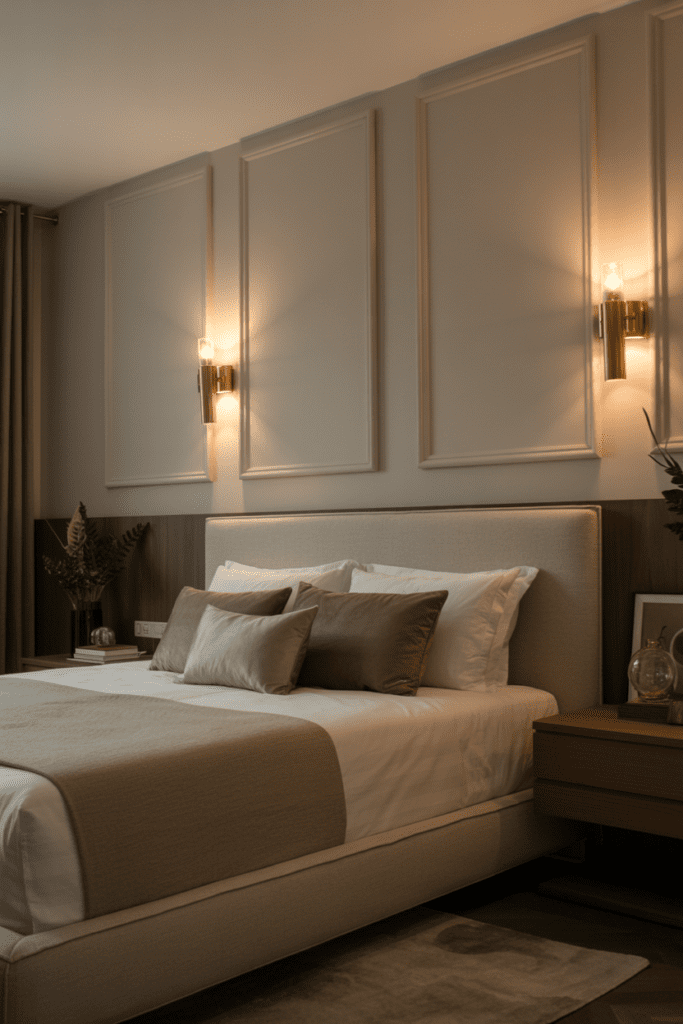
This is one of those master bedroom ideas that looks custom but can actually be quite practical.
Wall sconces free up valuable nightstand space while adding a sophisticated designer feel. They’re especially useful in smaller bedrooms where every inch counts.
Modern plug-in sconces make installation much easier than many homeowners expect.
Position them slightly above shoulder height when sitting in bed for comfortable reading light and balanced visual proportions.
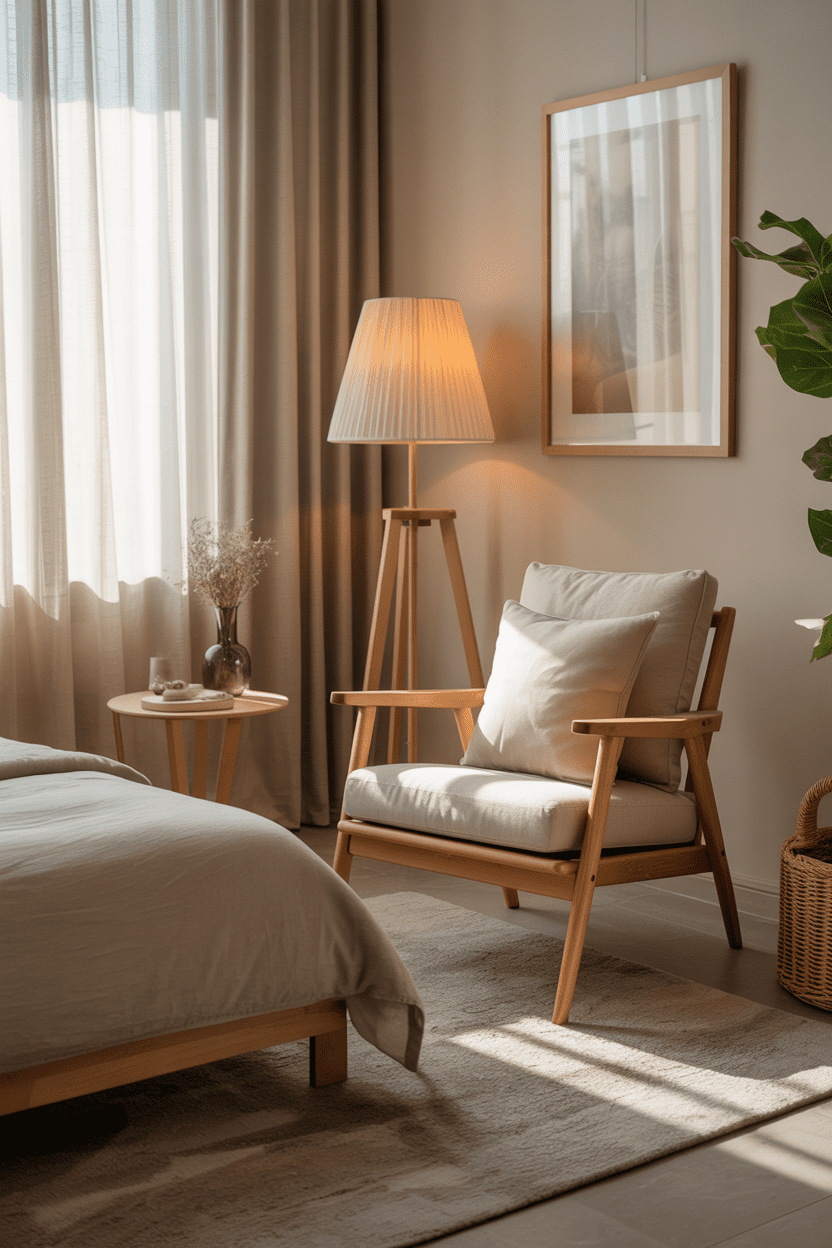
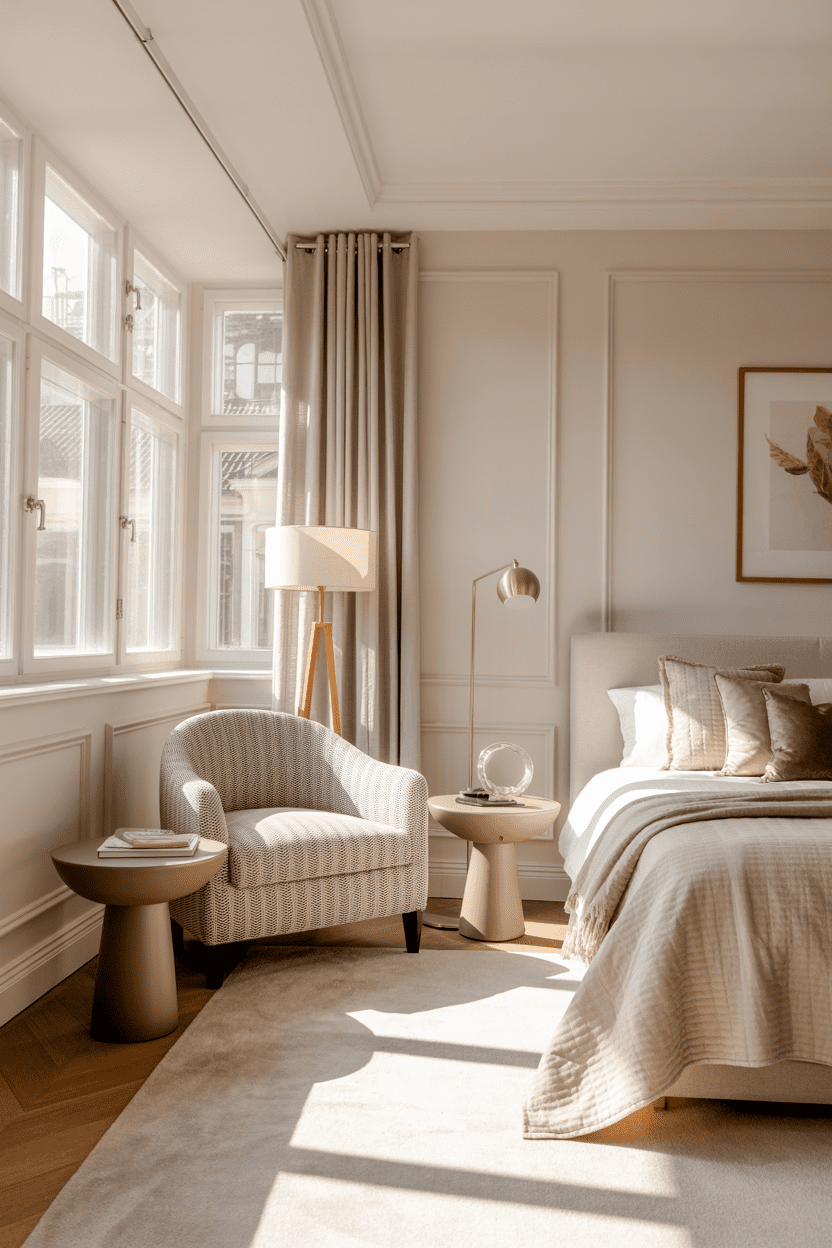
6. Add a Cozy Sitting Area
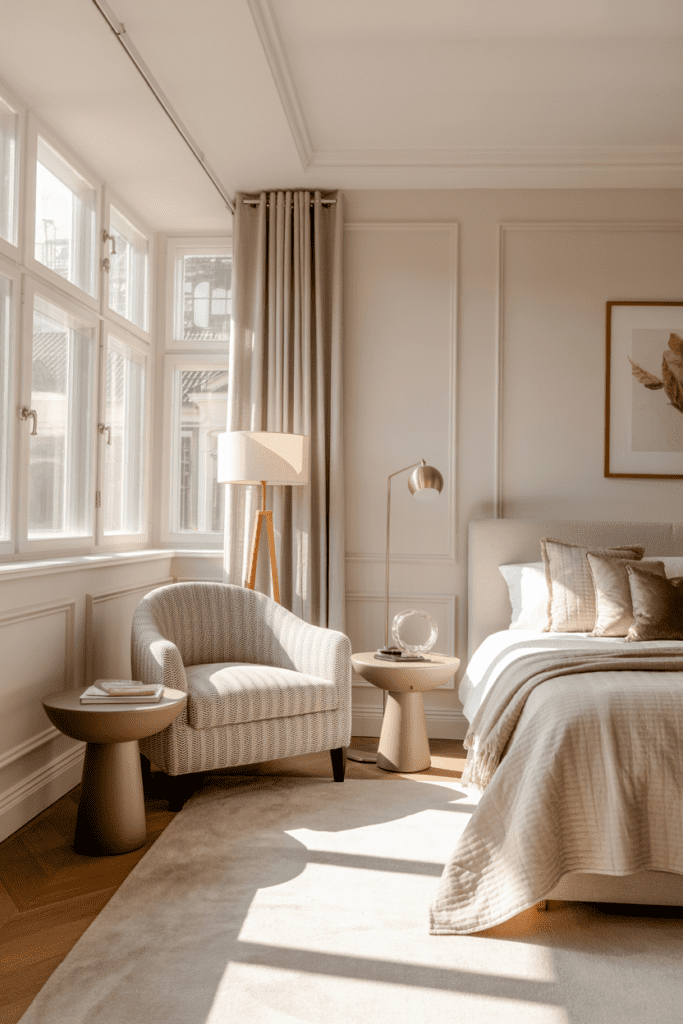
If your bedroom has extra space, consider creating a small seating zone.
A pair of accent chairs, a chaise lounge, or even a simple upholstered bench can make the room feel more luxurious and functional.
This area becomes a place to read, enjoy morning coffee, or simply relax without immediately climbing into bed.
Even a small corner can work beautifully when styled with a comfortable chair, side table, and floor lamp.
7. Use Floor-to-Ceiling Curtains
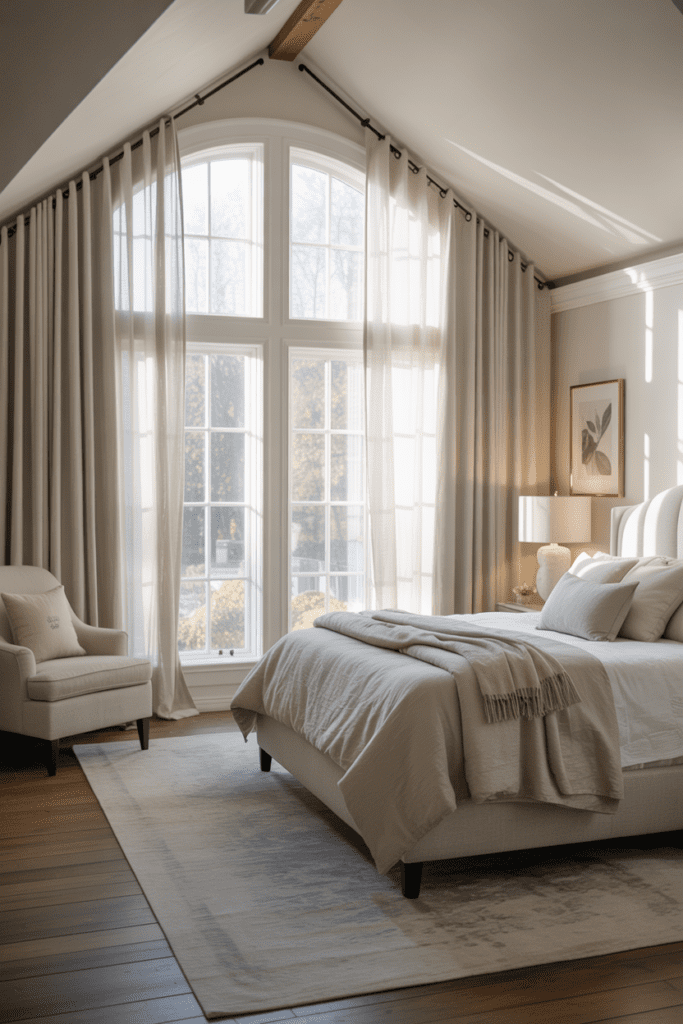
Want your ceilings to look taller without touching the architecture?
Hang curtains as close to the ceiling as possible.
This simple design trick creates the illusion of height while making windows appear larger and more dramatic.
Choose fabrics that complement your overall style. Linen panels create a relaxed feel, while velvet curtains add warmth and elegance.
The difference is often much bigger than people expect.
8. Bring in Warm Wood Tones
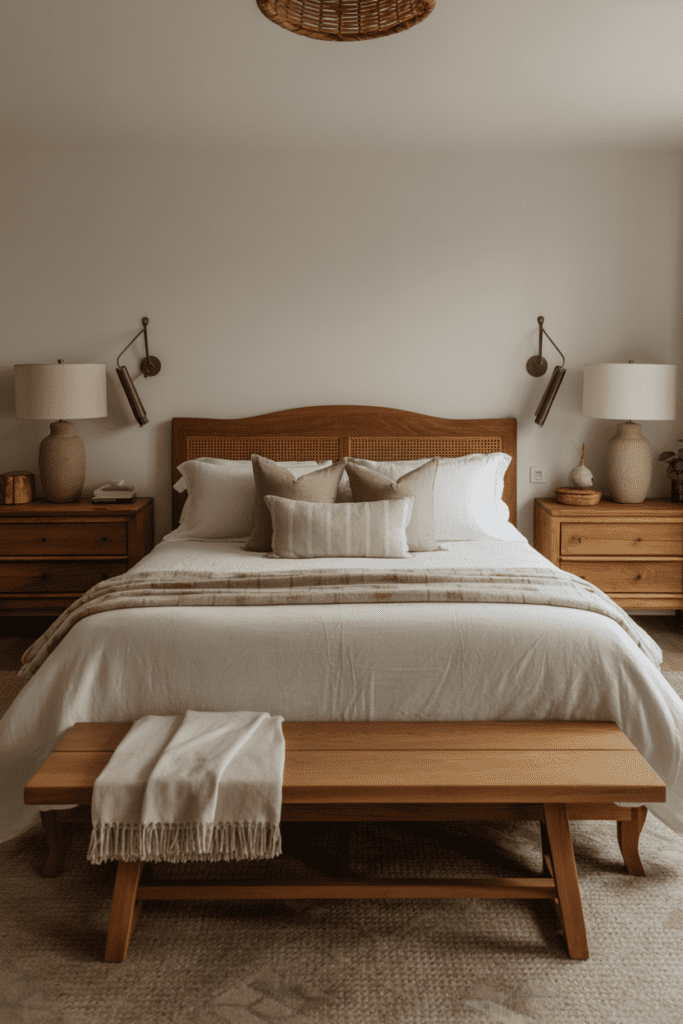
Bedrooms filled entirely with gray, white, or black can sometimes feel cold.
Adding natural wood helps balance those cooler elements and introduces warmth that makes the room feel more welcoming.
Nightstands, dressers, benches, and wood-framed mirrors are all easy ways to incorporate this look.
Mixing wood tones can also add character. Furniture doesn’t have to match perfectly to feel cohesive.
In fact, slightly varied finishes often make a room feel more collected and natural.
9. Create a Feature Wall Behind the Bed
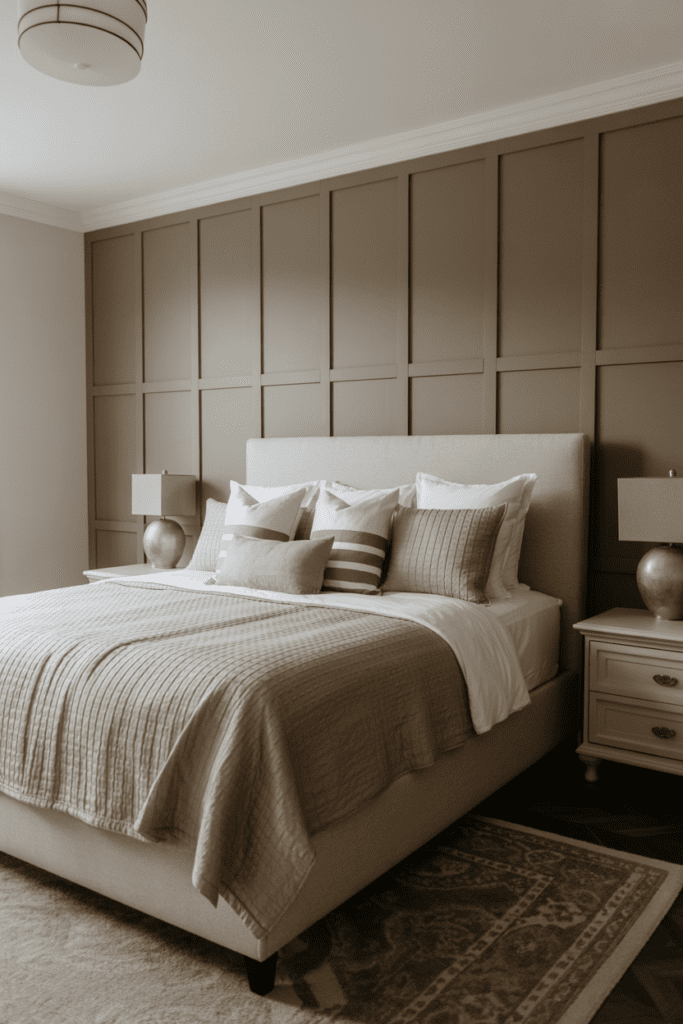
The wall behind your bed is prime decorating real estate.
A feature wall helps define the sleeping area and creates visual impact without overwhelming the room.
Options include board and batten molding, shiplap, wallpaper, wood slats, painted accent walls, or textured wall panels.
Choose a treatment that complements your overall style rather than competing with it.
A well-designed feature wall often makes the entire room feel more intentional.
10. Upgrade Your Bedding Layers
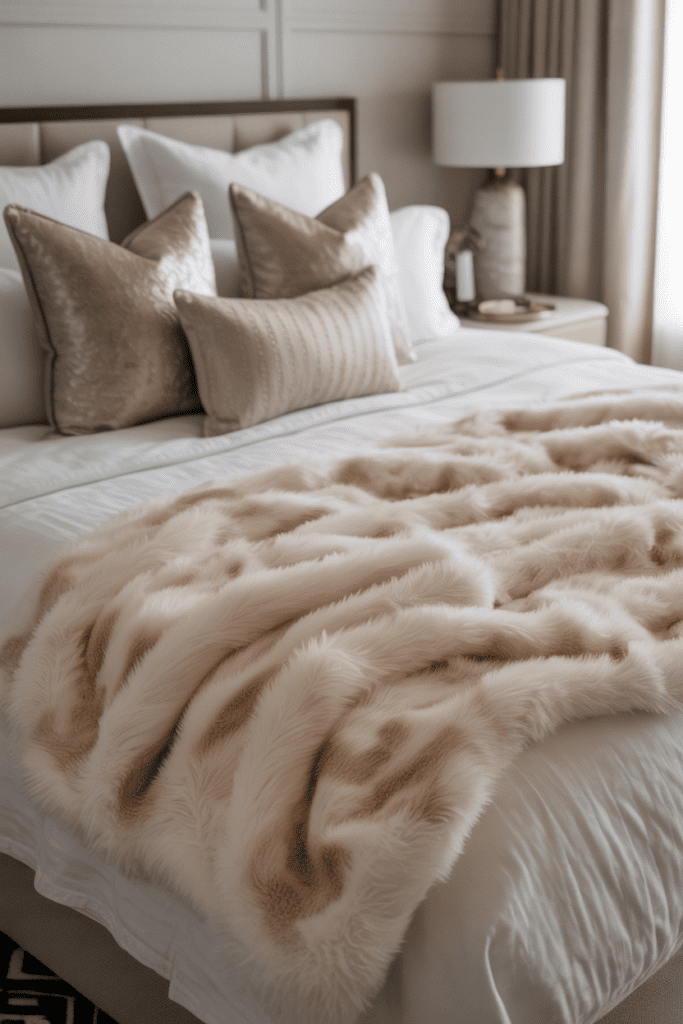
Honestly, bedding does most of the heavy lifting in a bedroom.
If your bed doesn’t feel inviting, the entire room suffers.
Start with high-quality sheets, add a fluffy comforter or duvet, then layer decorative pillows and a throw blanket at the foot of the bed.
The goal isn’t to create a mountain of pillows you’ll throw on the floor every night. Instead, focus on thoughtful layers that add comfort and visual depth.
Simple upgrades here can make a dramatic difference.
11. Incorporate Soft Ambient Lighting
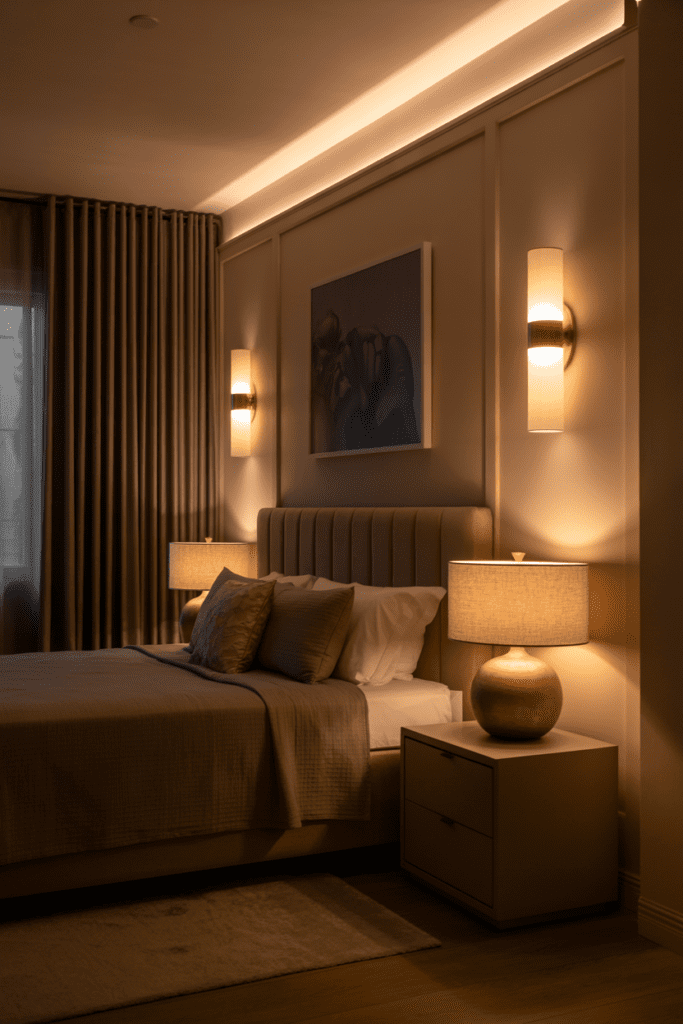
Overhead lights alone rarely create a cozy atmosphere.
Layering different light sources helps the room feel more comfortable and functional throughout the day.
Consider bedside lamps, sconces, floor lamps, or subtle LED lighting behind a headboard.
Warm white bulbs typically create a softer, more relaxing mood compared to cool-toned lighting.
Being able to adjust lighting levels instantly changes how the room feels.
12. Add an Oversized Area Rug
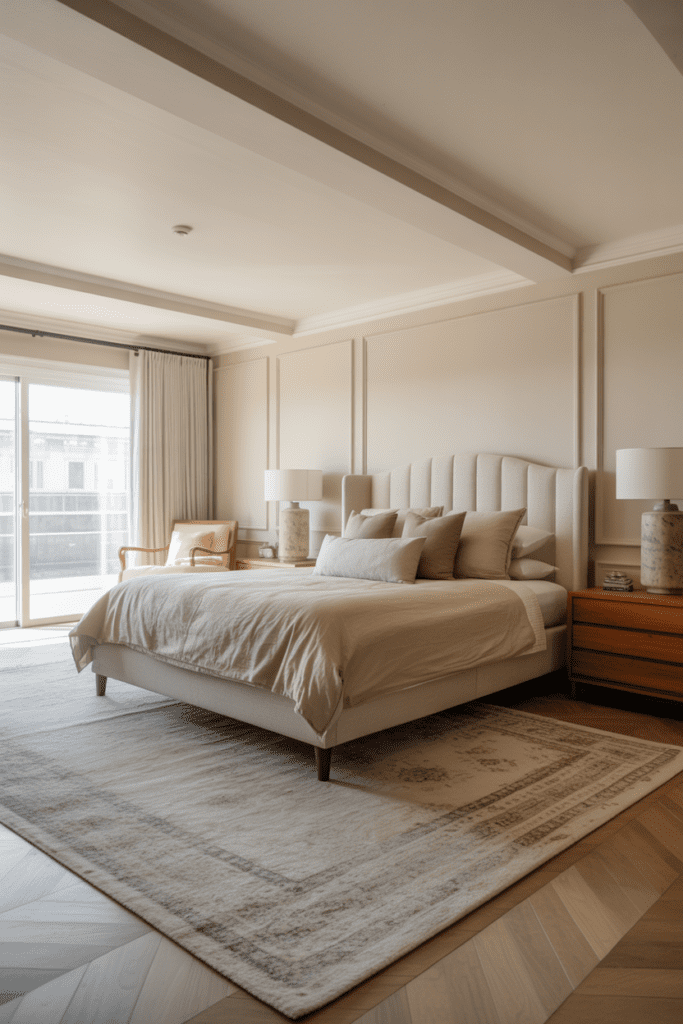
A rug can anchor the entire bedroom and make the space feel more finished.
One common mistake is choosing a rug that’s too small.
Ideally, the rug should extend beyond both sides of the bed and remain visible at the foot.
Large rugs create better balance and make the room feel larger overall.
Plus, stepping onto a soft rug first thing in the morning simply feels better than cold flooring.
13. Decorate With Meaningful Artwork
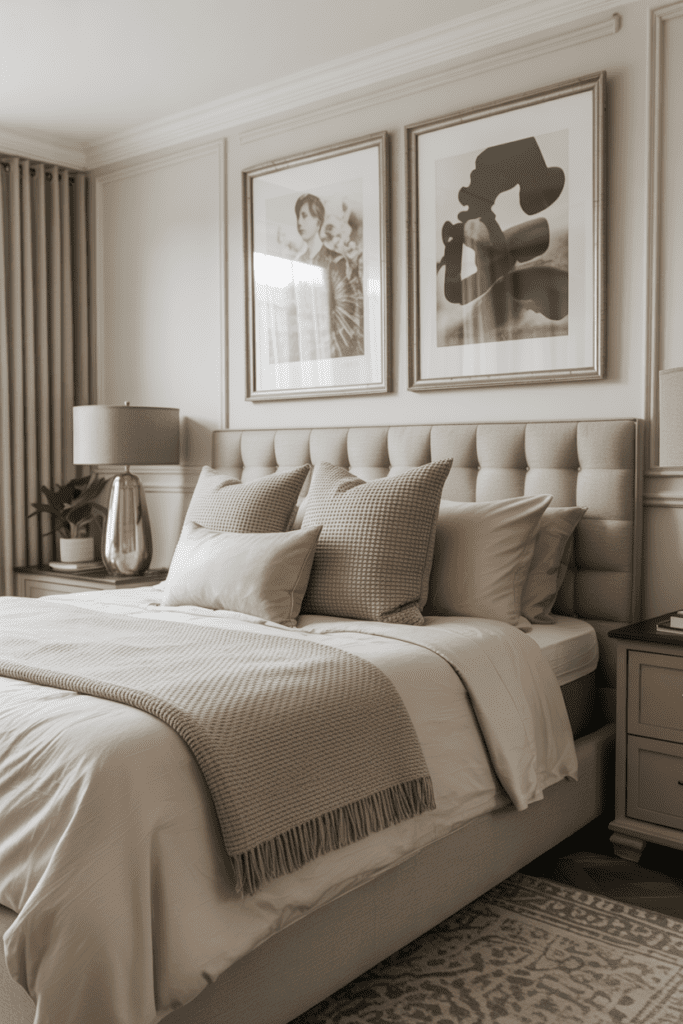
Artwork gives a bedroom personality.
Rather than filling walls with generic pieces, choose art that reflects your style, memories, or interests.
Large-scale artwork above the bed often creates a stronger impact than several small pieces scattered around the room.
Black-and-white photography, abstract paintings, landscapes, and framed textile art all work beautifully.
The key is selecting pieces that make the room feel personal rather than staged.
14. Keep Nightstands Functional and Beautiful
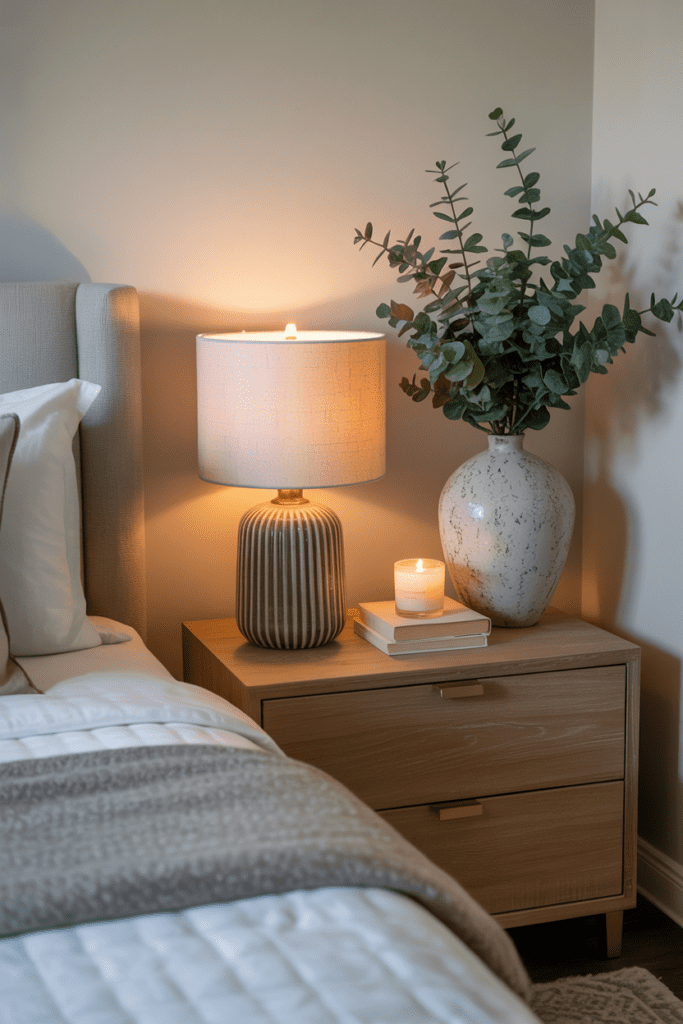
Nightstands often become clutter magnets.
Instead of treating them as storage zones for random items, style them intentionally.
A lamp, small tray, book, candle, and a touch of greenery usually provide the right balance between function and aesthetics.
When surfaces remain tidy, the entire bedroom feels calmer.
Sometimes reducing visual clutter has a bigger impact than buying new furniture.
15. Bring Nature Into the Space
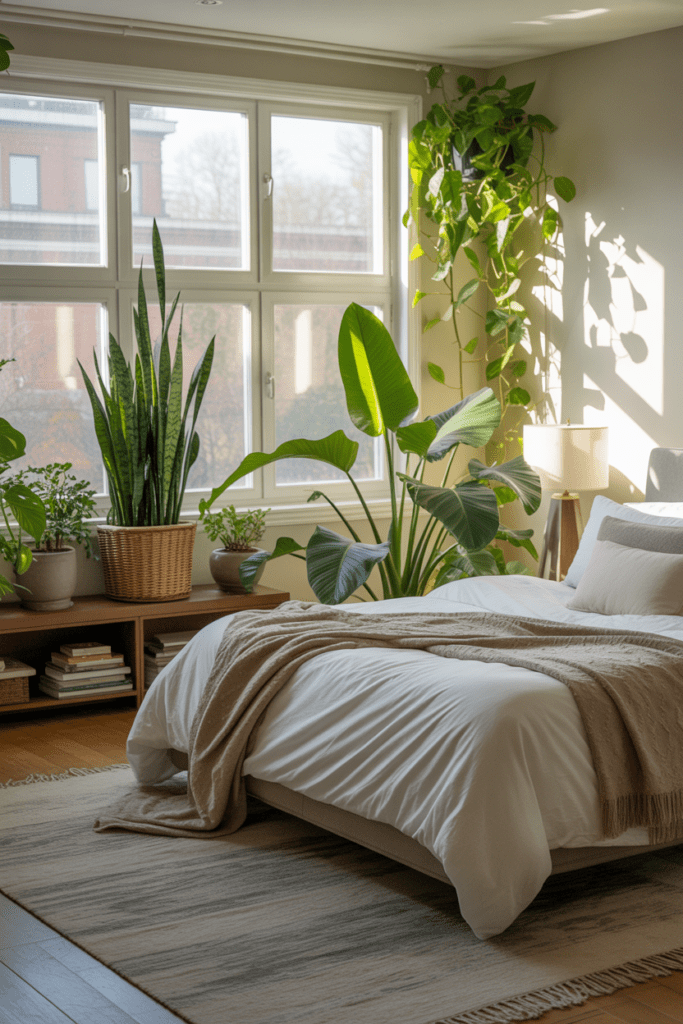
Plants can instantly make a master bedroom feel fresher and more inviting.
They introduce color, texture, and life without requiring major decorating changes.
Low-maintenance options like snake plants, pothos, ZZ plants, and peace lilies are popular choices because they thrive indoors.
If live plants aren’t your thing, realistic faux greenery can still provide a similar visual effect.
Even a single plant placed strategically can soften a room and make it feel more relaxed.
Quick Tips for Designing a Better Master Bedroom
Before you start decorating, keep these simple tips in mind:
- Prioritize comfort before aesthetics.
- Choose fewer high-quality pieces instead of filling the room with furniture.
- Leave enough walking space around the bed.
- Use layered lighting instead of relying solely on overhead fixtures.
- Stick to a consistent color palette for a more cohesive look.
- Invest in quality bedding whenever possible.
- Avoid overcrowding surfaces with unnecessary decor.
Small decisions often create the biggest improvements over time.
Conclusion
The best master bedroom ideas aren’t necessarily the most expensive ones. They’re the ideas that make your space feel comfortable, functional, and genuinely enjoyable to spend time in.
Maybe that means adding a statement headboard, creating a cozy reading corner, upgrading your bedding, or finally replacing those outdated curtains. Small changes can completely shift the mood of a room.
Start with one or two ideas that fit your style and budget, then build from there. Before long, your bedroom can feel less like an afterthought and more like the relaxing retreat you’ve been wanting all along.